Staging Site!

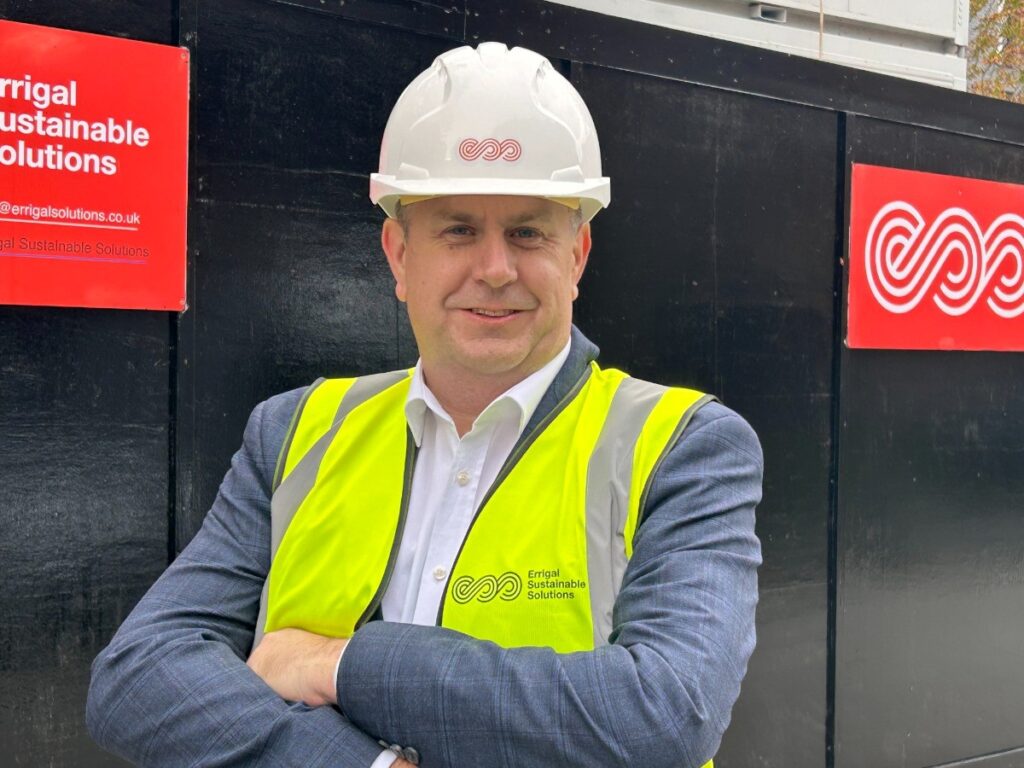
Ray Toft, Managing Director at Errigal Sustainable Solutions - Firebuyer.com

PlanRadar appointed digital partner for Errigal Sustainable Solutions

PlanRadar has been appointed by Errigal Sustainable Solutions (ESS) as its long-term digital partner to support building safety and compliance across fire remediation projects. Supporting Building Safety Act requirements The partnership follows a six-month evaluation process, with ESS selecting PlanRadar to streamline compliance with the Building Safety Act, particularly at Gateway 2 and 3 stages. As a specialist residential contractor working with housing associations, local authorities and private developers, ESS will implement the platform from the ground up. The system will consolidate multiple specialist tools, including fire stopping records and quality checks, into a single centralised digital hub. This approach is designed to provide full visibility across ESS’s project portfolio while maintaining a consistent “Golden Thread” of data throughout the building lifecycle. Improving quality monitoring and reducing rework A key driver behind the decision was PlanRadar’s ability to improve quality monitoring. By digitising site inspections, ESS aims to reduce rework and ensure critical fire safety tasks are completed correctly first time, supporting both resident safety and cost control. Ray Toft, Managing Director at ESS, said: “We are a quality-led, relationship-driven business that views itself as a service provider first. “Partnering with PlanRadar allows us to embed Tier 1-level digital systems from the start, rather than retrofitting legacy technology. “PlanRadar is not a ‘one-size-fits-all’ solution. Its adaptability means we can evolve the platform alongside our team. “We were particularly impressed by its AI capabilities, having a system that learns from our data to validate compliance documentation could be a game-changer for fire remediation.” Driving operational efficiency Rob Norton, UK Director at PlanRadar, added: “We are pleased to partner with Errigal Sustainable Solutions. “Their vision and experience demonstrate how technology can tackle the industry’s most pressing regulatory challenges. “By using PlanRadar to standardise quality monitoring and gain real-time visibility across all projects, ESS is ideally positioned to minimise rework and drive operational efficiency. “Together, we aim to not just meet compliance requirements but deliver superior transparency and service to their clients.”

PlanRadar appointed digital partner for Errigal Sustainable Solutions Read More »
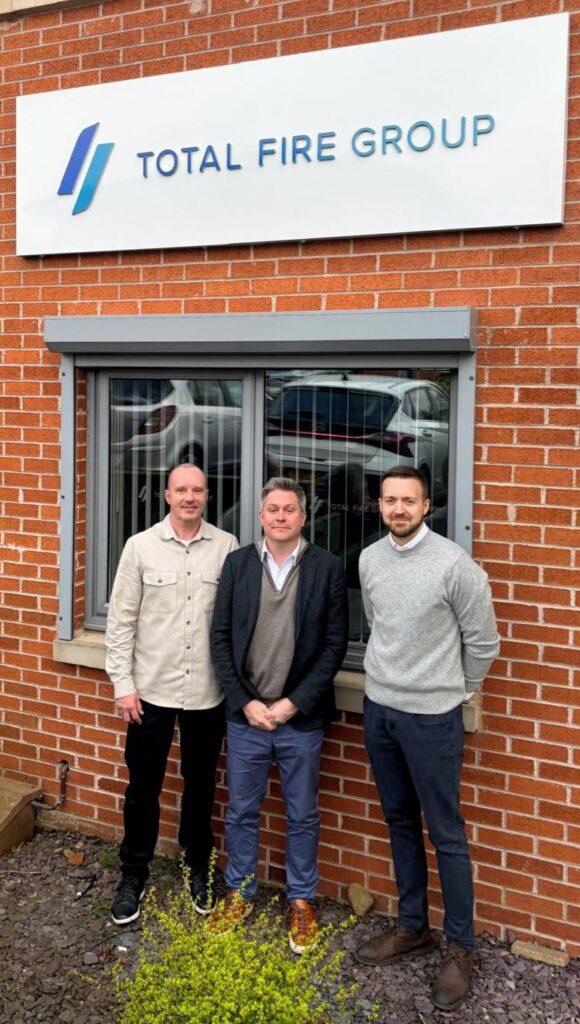
From right: Darren Baird; Managing Director - Total Fire Group, Mark Bridges; CEO - Ranger FS, Ian Teader; CSO - Ranger FS - Firebuyer.com

Ranger Fire and Security acquires Total Fire Group

Ranger Fire and Security has acquired Total Fire Group, a Bolton-based consultancy with more than 20 years of experience in the sector. The acquisition represents a key milestone in Ranger’s strategy to build a fully integrated, national fire and security platform. Expanding fire risk assessment and consultancy services Total Fire’s expertise will be used to enhance Ranger’s consultancy services, enabling customers to access support across the full lifecycle, from initial risk assessment through to design, installation and ongoing safety management. Total Fire has established a strong reputation across the North West for delivering fire risk assessments, fire risk management and consultancy services. Its founder, Darren Baird, is a former firefighter who held senior roles within the fire service. He will continue to lead the business while supporting Ranger’s wider strategy on risk mitigation. Leadership continuity and sector expertise Mark Bridges, CEO of Ranger Fire and Security, said: “Bringing Total Fire Group into Ranger is a critical step in strengthening our overall fire and security offering. “As customer expectations and regulatory requirements continue to increase, having deep expertise in fire risk assessment and ongoing risk management is essential. “Darren Baird and the team at Total Fire will help us to significantly enhance Ranger’s support for customers from the earliest stage of identifying and understanding risk, through to delivering the right solutions and long-term support. “By working with local ‘hero’ businesses like Total Fire, we can ensure customers receive expert fire risk advice, with any issues seamlessly addressed through our wider team of experts. “This strengthens our existing capabilities while unlocking further cross-selling opportunities, as we continue to build a national one-stop solution for all fire and security needs.” Darren Baird, Founder and Group Director of Total Fire Group, said:“Our focus has always been on helping organisations understand and manage their fire risk in a practical and effective way. “By becoming part of Ranger, we can now take that approach further and at a larger scale, combining our consultancy expertise with Ranger’s extensive delivery capabilities. “There is a clear opportunity to support customers more holistically, from identifying risks and then helping ensure they are properly addressed and managed over time. Being part of Ranger also gives us the platform to expand our reach and bring our services to more customers across the UK.” The acquisition of Total Fire Group marks Ranger’s 17th acquisition since its formation in early 2024, and the fourth of 2026.

Ranger Fire and Security acquires Total Fire Group Read More »

Fire buyer March 2026 issue - firebuyer.com

International Fire Buyer unveils March 2026 issue

International Fire Buyer is pleased to announce the March edition is out now. Released ahead of FDIC International (April 20 to April 25 2026 at the Indiana Convention Center and Lucas Oil Stadium in Indianapolis), this issue explores the latest in innovations in technology and firefighting apparatus. A central highlight is the Big Interview with Dr Jaime Parejo García, inventor of the Arcón Method and recipient of the Innovation of the Year Award at the International Fire Buyer Awards 2025. The feature explores the application of specialist detection dogs in search and rescue operations, including their deployment in disaster zones such as the Turkey earthquakes of 2023, demonstrating how structured training methodologies can significantly enhance rescue outcomes. The Innovator feature focuses on Fergus Mayne, UK and Ireland Country Manager at Motorola Solutions, who discusses the role of mission critical communications in modern fire and rescue services. His insights address key operational priorities including resilience, interoperability, and the growing influence of AI in emergency response environments. This month’s cover comes courtesy of Performance Advantage Company who highlight the latest developments in tool mounting solutions. This issue also includes three Ask the Experts features, centred on advancements in detection, decontamination and pump solutions, alongside Product Spotlights from Hochiki Europe and Podab, highlighting the latest technologies entering the market. Editorial features explore several core operational themes. In search and rescue, the magazine examines modern extrication techniques, including the transition to battery powered tools, evolving approaches to scene management, and the challenges posed by contemporary vehicle construction. A dedicated analysis of pump engineering follows, assessing how digitalisation, AI and robotics are being applied to meet increasingly complex risk profiles. The feature Beyond the Turnout addresses PPE procurement, focusing on the need for equipment that supports both operational performance and long term firefighter health in hazardous environments. Complementing this, a training feature explores the integration of digital technologies, including live burn simulation and data driven performance monitoring, into firefighter development programmes. A Special Focus investigates fire prevention strategies for data centres, examining the risks associated with these critical infrastructure environments and the combination of prevention and protection systems required to mitigate downtime. This issue also includes a preview of FDIC International. This major industry event serves as a focal point for innovation in firefighting apparatus and technology, with additional coverage later in the magazine outlining what attendees can expect from the show. The International Fire Buyer team will be at the show and looks forward to meeting some of our readers and leaders within the sector. Further event coverage includes a preview of AFAC26, taking place in Melbourne from August 18 to August 21 2026, alongside a broader round up of key fire safety events worldwide. The issue concludes with the Quick Fire interview featuring Ryan Johnston from Fireaway Inc, offering a personal perspective on fire safety and current industry trends. Read now!

International Fire Buyer unveils March 2026 issue Read More »

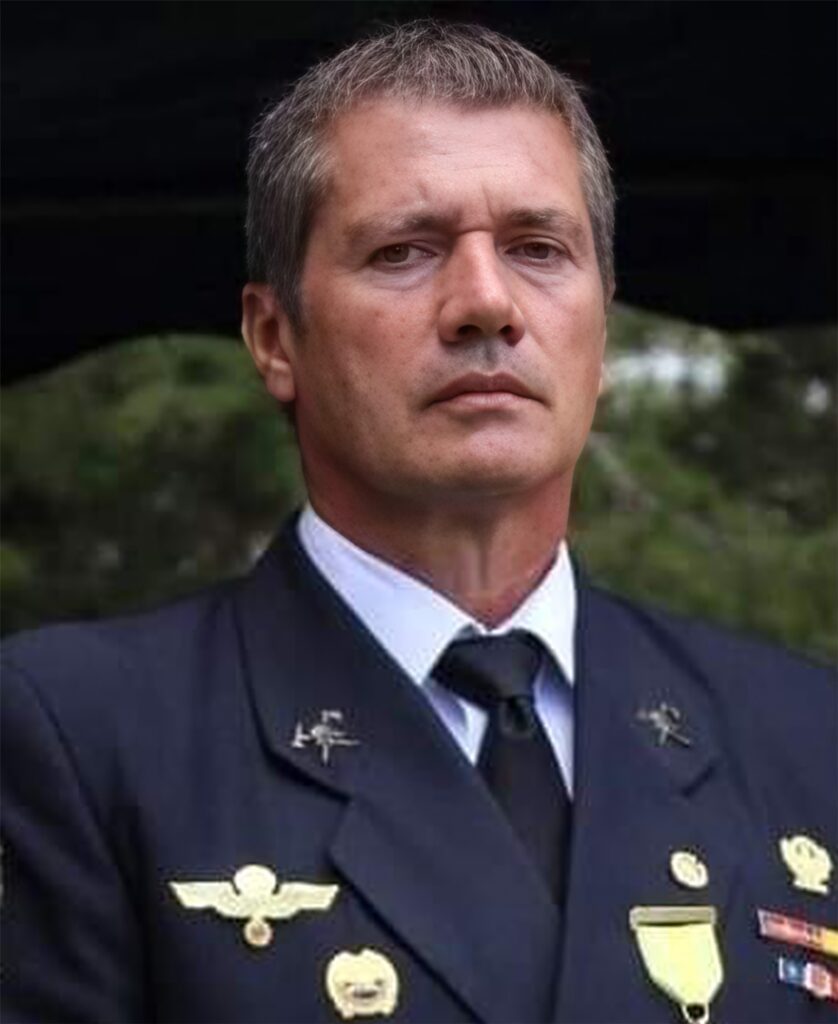
Dr. Jaime Parejo García, inventor of the Arcón Method - Firebuyer.com

Big Interview – Dr. Jaime Parejo García

Dr. Jaime Parejo García, inventor of the Arcón Method, explains how his revolutionary canine detection method is applied in the field of search and rescue.  You established the Arcón Method in 1994 following 12 years of research. In the 30 years since its foundation, what challenges and opportunities have you faced in establishing your method within search and rescue circles?   Once I confirmed in Seville that the Arcón Method truly optimised the effectiveness of canine detection, I decided to develop two humanitarian projects. One was the Andalusian Canine Rescue Unit for the region, one of the most seismic areas of Spain and where I live. The second was developing a strategic plan for the Arcón Method in Latin America, aimed at countries with some of the highest seismic risks in the world, in what is known as the Pacific Ring of Fire.   My priority from the beginning of my research was to increase the preservation of human life. Many of the countries at greatest risk from earthquakes and landslides are in Latin America. Through this initiative, we created international training centres, secured official governmental recognition of the method, and specialised canine units in several countries.   My main objectives were to have official training centres whereby universities, firefighter schools, the armed forces and police forces would be accredited to teach the Arcón Method. In total, 14 training centres were accredited. Secondly, governmental approval was necessary to ensure the Arcón Method was accredited as the official system for training canine rescue teams. The main obstacle I encountered was the high complexity and the difficulty of learning scientific advances.   Prior to undertaking your research, what motivations did you have for establishing a new way of training detection dogs?    There were three strong motivations. Firstly, since childhood I have felt an innate interest in observing and studying animal behaviour. Secondly, I felt a deep motivation for saving lives. Lastly, I discovered limitations in the traditional training system used worldwide for detection dogs.   The traditional system is based on operant conditioning. We already know a dog can be trained with the expectation that correct activity will be followed by a reward. I discovered that when the scent level was minimised or when there were adverse conditions, a dog who had been trained with the traditional system often failed to detect the scent. I was motivated by the opportunity to optimise and maximise the cognitive processes in the dog which would directly influence the development of the dog’s olfactory perception. If these are not optimised, in a large percentage of real operations in which we are dealing with buried survivors, they will not be detected.   When I gave a conference to 300 firefighters, military personnel police officers in El Carmen, Ecuador, many of the attendees expressed the limitations they had observed in their dogs who had been trained in the traditional system. The conference was after an earthquake and they told me their dogs missed people who were buried under rubble, which they knew having used an excavator machine to uncover people. Using the Arcón Method, we have been able to detect survivors who had not been detected using thermal cameras or dogs trained using traditional systems. TO READ THE FULL ARTICLE READ THE LATEST ISSUE HERE.

Big Interview – Dr. Jaime Parejo García Read More »

Cover story - Performance Advantage Company - Firebuyer.com

Cover story – Performance Advantage Company

Performance Advantage Company continues to refine mounting solutions for emergency services, combining engineering precision, product innovation and real world insight. Engineering Foundations and Industry Context  Since its founding in 1992, Performance Advantage Company has built a reputation grounded in practical engineering and a clear understanding of emergency service requirements. Operating within a sector where reliability is non negotiable, the company has focused on designing mounting systems that prioritise safety, accessibility and durability. Fire departments, EMS units and fleet operators rely on equipment that must remain secure under movement while remaining instantly deployable in high pressure scenarios. This balance between stability and accessibility has shaped the company’s design philosophy from the outset. Rather than producing generic solutions, Performance Advantage Company has consistently aligned its product development with the realities of front line use. This approach reflects a wider trend within the fire industry, where equipment design is increasingly driven by operational feedback, evolving vehicle layouts and the growing complexity of tools carried on modern apparatus.  Company Evolution and Market Position  Performance Advantage Company has established itself as a respected and innovative provider of equipment mounting solutions, particularly within the fire service industry. Since its founding in 1992, the company has built a reputation for engineering-driven solutions, high-quality manufacturing, and a deep understanding of the real-world needs of emergency professionals and fleet operators. Over the years, Performance Advantage Company has grown from a small operation into a trusted industry partner known for reliability, customisation and customer focused design.  Founding Vision and Design Philosophy  The company was founded with a clear vision: to design and manufacture equipment mounting systems that improve safety, efficiency and organisation for emergency responders and vehicle operators. Early on, the company recognised that fire departments, EMS units and service fleets needed durable, well-engineered mounting solutions that could withstand demanding environments while keeping tools and equipment secure and easily accessible. This focus on practical problem solving became the foundation of the company’s philosophy and continues to guide product development today.  Product Development and System Design  Performance Advantage Company equally focuses on designing purpose-built systems for real world tools and environments. This includes not only specific tool mounting brackets, but also storage solutions, compartment management and adaptable solutions capable of outfitting multiple types of tools, expanding the versatility of their product line. Each product is developed with durability, ease of installation and functionality in mind.  Product Innovation: Ironslok HD Kit  A specific example of this is the newly redesigned Ironslok HD kit. Previously, PAC had offered a standard Ironslok kit as well as a more robust Ironslok HD kit. The latest iteration (part number K5003-HD) combines the best features of both previous models. Capable of handling standard smaller sized irons, such as Halligans and fire axes, the redesign allows for larger irons such as The Pig and the Fire Maul. The updated end modules are molded from high quality thermoplastics and feature a keyhole type design for proper fitment. Accompanying the end modules and securing the tools is Performance Advantage Company’s FastLok positive locking bracket. The quick release cam levered strap maintains the tools securely into the unit yet allows for ease of release, even when wearing gloves. These components are mounted to Performance Advantage Company’s MINIDUAL aluminum extrusion and at 84cm with the ability to be mounted vertically or horizontally, this unit is extremely cab friendly.  TO READ THE FULL ARTICLE READ THE LATEST ISSUE HERE.

Cover story – Performance Advantage Company Read More »

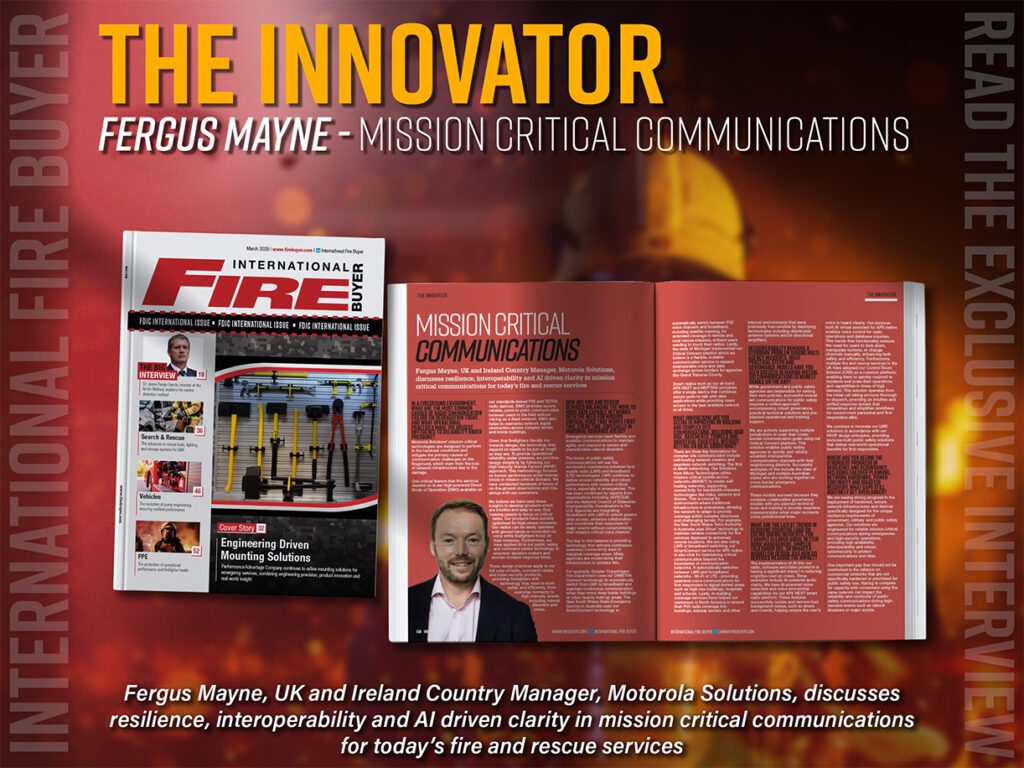
Innovator - Fergus Mayne - Firebuyer.com

Innovator – Fergus Mayne

Fergus Mayne, UK and Ireland country manager, Motorola Solutions, discusses resilience, interoperability and AI driven clarity in mission critical communications for today’s fire and rescue services.  In a fireground environment, what are the most common causes of radio communication failure or degradation today, and what operational practices make the biggest difference to reliability under pressure?  Motorola Solutions’ mission-critical technologies are designed to perform in the harshest conditions and mitigate the primary causes of communication challenges on the fireground, which stem from the loss of network infrastructure due to fire damage.  One critical feature that fire services depend on is our high-powered Direct Mode of Operation (DMO) available on our standards-based P25 and TETRA radio devices. DMO provides secure, reliable, point-to-point communication between users in the field without relying on a fixed network. DMO also helps to overcome network signal obstruction across complex terrain and inside buildings.  Given that firefighters literally run towards danger, the technology they depend on needs to be just as tough as they are. To provide operational reliability under pressure, we prioritise design simplicity by following our High Velocity Human Factors (HVHF) approach. This methodology focuses on human performance under intense stress in mission-critical domains. We have conducted hundreds of hours of on-the-ground observations and ride-alongs with our customers.  We believe we have used these insights to develop products which are intuitive and easy to use, thus helping people to focus on critical tasks. Our products have suitably optimised for high-stress moments. Our radios can be easily operated with gloved hands or controlled via voice while firefighters focus on their missions. Furthermore, we have applied AI in our public safety and command centre technology to empower decision-makers and shorten incident response times.  These design practices apply to our full suite of radio, command centre and video security products, providing firefighters with technology they need to work safely and efficiently, from everyday moments to high intensity events including natural disasters and crises.  How are fire and rescue services balancing the move to more data capable networks with the need for mission critical voice that works first time, every time, especially in marginal coverage areas?  Emergency services need flexible and scalable communications to maintain agility and respond to severe and unpredictable natural disasters.  The future of public safety communications will see the successful coexistence between land mobile radio (LMR) and broadband (LTE) technologies. LMR continues to deliver proven reliability and robust performance with mission-critical voice, especially in emergencies. This has been confirmed by reports from organisations including SAFECOM and the National Council of Statewide Interoperability Coordinators in the U.S. Agencies are integrating broadband with LMR to unlock greater data access, enhance collaboration and coordinate their responses to major events without compromising their mission critical voice channel.  The key to this balance is providing technology that delivers continuous, seamless connectivity even in marginal coverage areas. Many agencies are modernizing their infrastructure to achieve this.  For example, Greater Copenhagen Fire Department uses our DIMETRA Connect technology to automatically switch from LMR to broadband and maintain continuous communication when they move deep inside buildings or other heavily built-up areas. The New South Wales State Emergency Service in Australia uses our SmartConnect technology to automatically switch between P25 voice channels and broadband, including satellite roaming, for extended coverage in remote and rural rescue missions, without users needing to touch their radios. Lastly, the state of Michigan implemented our Critical Connect solution which we believe is a flexible, scalable communication service to expand interoperable voice and data exchange across borders for agencies like Grand Traverse County.  Smart radios such as our all-band APX NEXT and MXP7000 portables offer a single device that combines secure push-to-talk with data applications while providing users access to the best available network at all times.     TO READ THE FULL ARTICLE READ THE LATEST ISSUE HERE.

Innovator – Fergus Mayne Read More »

Siemens launches next generation fire detection systems - Firebuyer.com

Siemens launches next generation fire detection systems

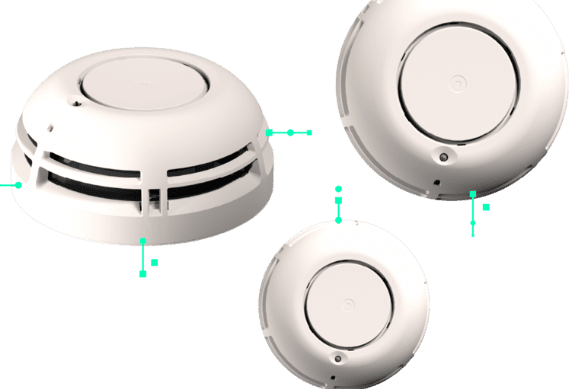
Siemens Smart Infrastructure has unveiled its Sinteso Nova and Cerberus Nova fire detector portfolio, designed to transform fire safety into a proactive, connected system supporting the development of autonomous buildings. IoT connectivity and predictive maintenance capabilities The new detectors are fully IoT enabled, offering 24/7 self checks, real time monitoring, remote diagnostics and predictive maintenance through cloud connectivity. Integration with Siemens Building X Fire Apps provides shared data insights for facility teams and service providers. Key technologies include Disturbance Free Testing, which enables continuous automated system checks, and Smoke Entry Supervision, which monitors smoke entry points in real time. ASAplus technology, combining multi wavelength optical and dual thermal detection, reduces false alarms and minimises unnecessary evacuations. In healthcare environments, the systems support continuous autonomous detection while reducing downtime. In data centres, where overheating and electrical faults present risks, the detectors provide condition transparency and enable rapid, proactive response. For higher education and commercial real estate, the portfolio enables centralised monitoring across multiple sites, supporting consistent protection standards and reducing operational disruption. Industry perspective on autonomous building safety The systems support stepwise upgrades with existing fire panels, enabling plug and play integration without full replacement. Manufactured in Switzerland, the detectors carry Siemens EcoTech labelling, incorporating recycled plastics and supporting circular economy principles. Peter Nebiker, Head of Fire Safety at Siemens Smart Infrastructure Buildings, said: “The launch of our Sinteso Nova and Cerberus Nova fire detection portfolio is a game-changer in ensuring all alarms are accurate as best as possible. “By moving from periodic checks to continuous, data-driven, self-supervising systems, we’re laying the foundation for truly human-centric, autonomous buildings. “By automating testing, delivering real-time insights, and enabling remote action, these solutions protect people while freeing up staff to focus on strategic priorities. “This shift isn’t just about innovation – it’s about smarter, safer, and more efficient operations.”

Siemens launches next generation fire detection systems Read More »

The Regulator of Social Housing (RSH) has published its latest survey results - Firebuyer.com

Social housing regulator publishes fire safety survey findings

The Regulator of Social Housing (RSH) has published its latest survey on fire safety in buildings over 11 metres. Life critical defects and remediation progress Of 17,010 buildings reported, 1,924 were identified with a life critical fire safety defect linked to external wall systems. More than 99.5% of buildings have undergone a fire risk assessment. Of 2,723 buildings identified with LCFS defects since June 2017, 970 (35.6%) have been remediated or completed awaiting assessment. A further 1,468 buildings, or 76.3%, are expected to be remediated within five years. According to the government website, LCFS are defined as defects, shrinkages, faults or other failings in a building that give rise to fire safety risks identified by a Fire Risk Appraisal of External Wall construction or a fire risk assessment (or equivalent) undertaken to industry standards. Regulator response and oversight Will Perry, Director of Strategy at RSH, said: “Landlords must act swiftly to address fire safety defects so tenants are, and feel, safe in their homes. “We will continue to closely monitor progress, engage through our regulatory work, and follow up with any landlord whose plans or pace of remediation raise concerns.”

Social housing regulator publishes fire safety survey findings Read More »

Minister for Building Safety, Fire and Democracy Samantha Dixon - Firebuyer.com

Government launches consultation on fire risk assessor certification

The UK government has launched a consultation on introducing mandatory certification for fire risk assessors, as part of its response to the Grenfell Tower tragedy and ongoing fire safety reform. Fire risk assessors play a central role in identifying hazards and ensuring appropriate fire safety measures are in place across residential, commercial and public buildings. Strengthening competency and professional standards Currently, Responsible Persons, typically building owners or landlords, can carry out assessments themselves or appoint a fire risk assessor to assist. The consultation aims to strengthen standards across the profession, ensuring those undertaking assessments have the appropriate competencies and capabilities. It also represents a key step in delivering Recommendation 26 of the Grenfell Tower Inquiry Phase 2 report, which calls for a mandatory certification system. Minister calls for industry engagement Minister for Building Safety, Fire and Democracy, Samantha Dixon MP, said: “Fire risk assessors play a vital role keeping our communities safe from fires. “I would strongly encourage you to respond to this consultation, to help us introduce the right measures to make sure we have consistent competency across the profession.” The consultation seeks views on several areas, including defining the role of fire risk assessors and their protected assistance duties, and considering the Responsible Person’s ability to conduct their own assessments. Further proposals include developing a competency framework with robust methods for verifying competence, establishing clear career pathways through apprenticeships and a proficient workers scheme and ensuring appropriate regulatory powers are in place for effective implementation. Timeline and next steps The consultation opened today and will run for 12 weeks, closing on Thursday, June 18. It is available via the GOV.UK platform. The outcome is expected to shape future regulation, supporting a more consistent, accountable and professionalised fire risk assessment sector across the UK.

Government launches consultation on fire risk assessor certification Read More »

European Commission launches wildfire strategy - Firebuyer.com

European Commission launches wildfire strategy

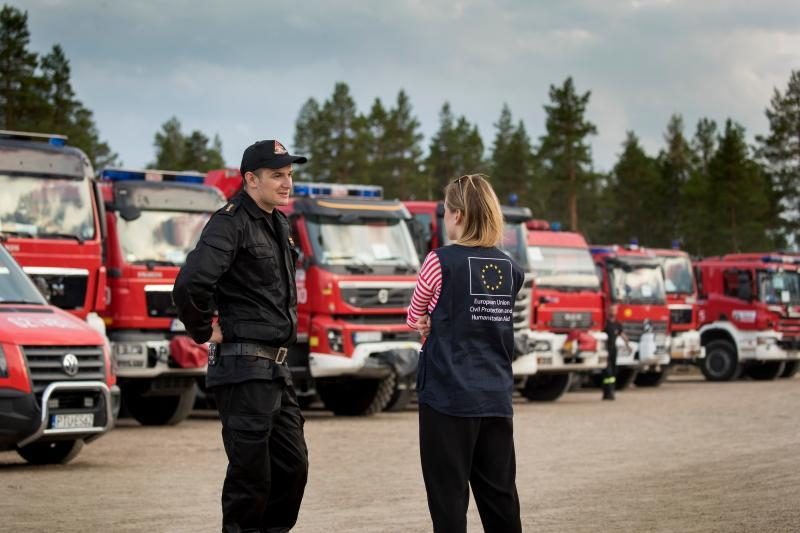
The European Commission has presented a new integrated approach to wildfire risk management, covering prevention, preparedness, response and recovery, as wildfires across Europe continue to increase in scale and intensity. Rising wildfire risk and climate impact across Europe In 2025, Europe experienced its worst wildfire season on record, with over one million hectares scorched. The Commission states that climate change and other drivers are accelerating wildfire frequency and severity, placing greater pressure on infrastructure, ecosystems and communities. To address this, the strategy emphasises ecosystem-based prevention, recognising that healthy landscapes are more resilient to fire. A new guidance document on Natura 2000-protected sites and climate change outlines structured approaches to adaptation, including resilient landscape planning and wildfire risk reduction aligned with conservation objectives. Strengthening prevention, preparedness and public awareness Hadja Lahbib, Commissioner for Equality, Preparedness and Crisis Management, said: “Wildfires know no borders, and neither should our response. “Today’s measures demonstrate Europe’s unwavering commitment to standing together in the face of climate-driven crises. “By strengthening prevention, sharing resources, and investing in resilience, we are protecting lives, livelihoods, and the future of our continent. The Commission will update risk assessment guidelines for Member States and expand public engagement, including education programmes, youth initiatives and volunteering opportunities to improve preparedness. Investment in firefighting capacity and technology Preparedness measures include pre-positioning firefighters, increasing expert exchanges and expanding the rescEU fleet with 12 firefighting planes and five helicopters. The first rescEU helicopter, delivered to Romania in January 2026, will be operational for the 2026 wildfire season. The Commission will also enhance the European Forest Fire Information System using Copernicus satellite data, alongside developing AI-assisted wildfire modelling and pan-European risk modelling tools. Long term resilience and recovery planning Jessika Roswall, Commissioner for Environment, Water Resilience and a Competitive Circular Economy, said: “Wildfires are becoming more ferocious and more destructive across Europe, with catastrophic consequences for our lives, environment and economies. “It shows how our economic resilience is directly linked to the health of our ecosystems, and how protecting one, protects the other. “By investing in prevention, restoring nature and creating fire-resilient landscapes, we can avoid economic damage worth billions of Euros.” The strategy also includes plans for a European firefighting hub in Cyprus and improved data collection on firefighter health risks, alongside strengthened post fire recovery and ecosystem restoration measures.

European Commission launches wildfire strategy Read More »

Scroll to Top