Modern fire protection relies on seamless integration. Rebecca Spayne examines how intelligent detection, alarm and communication systems create complete, compliant life-saving protection
Modern fire safety demands more than standalone detection. In an era defined by complex mixed-use buildings, phased construction and changing risk profiles, a fire system must deliver continuous communication between sensors, control panels and alarms. A single detector sounding in isolation no longer represents compliance or assurance. It must be part of an integrated alarm and evacuation sequence.
Today’s manufacturers are reshaping the design and operation of fire detection and alarm networks. Through interoperable devices, hybrid connectivity and intelligent alarm management, these companies offer the components of a unified life-safety strategy that aligns with current standards and operational expectations.
Why Detection Alone is No Longer Enough
Historically, fire protection centred on detection: a sensor identified smoke or heat, a panel registered the signal, and an alarm sounded. That linear model still underpins regulation, but the buildings it serves have changed. Multi-tenanted offices, hospitals, mixed-use towers, temporary construction sites and heritage refurbishment projects each impose different technical constraints.
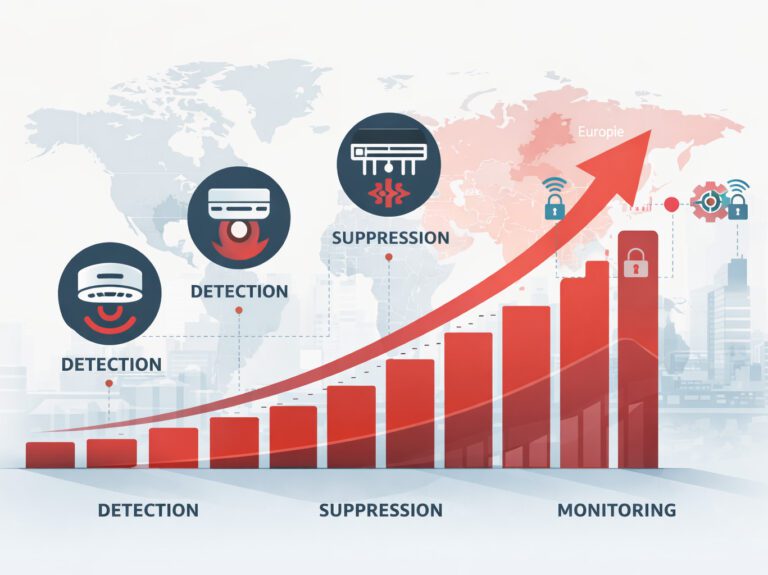
Cabling routes may be limited. Wireless communication may be essential. Occupants may require phased evacuation or places for refuge. Critical equipment may need very early warning before visible smoke appears. These realities mean that fire detection has evolved into a networked ecosystem where sensors, control logic, sounders, voice communication and alarm outputs can operate as one. The focus has shifted from simply detecting fire to managing how that information is conveyed and acted upon.
Regulatory change has reinforced this trend. The latest iterations of BS 5839 and the Building Safety Act require greater integration between active and passive fire protection measures. Building operators must demonstrate not only that alarms sound, but that the sequence of responses, alerting occupants, summoning assistance, guiding evacuation, is consistent, traceable and recorded. This has placed greater emphasis on the interoperability of detection and alarm systems and on the reliability of their communication paths.
The Detection Layer
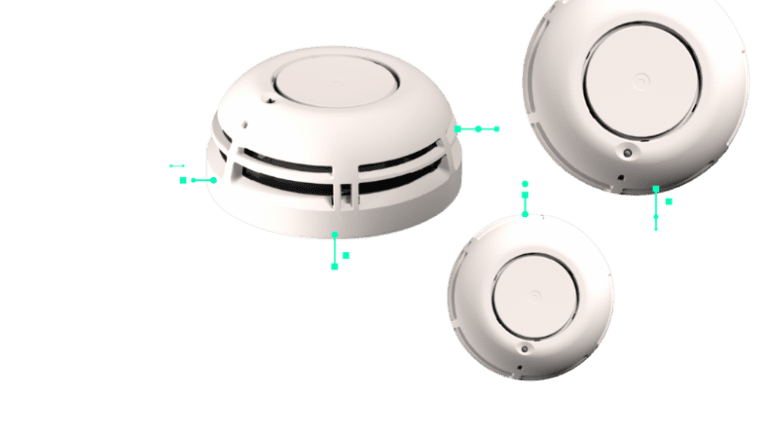
At the core of any system lies the detector network. Hochiki’s HFP system provides a comprehensive analogue addressable and conventional platform capable of supporting hybrid and wireless devices. It forms a stable backbone for large or multi-building sites. Hochiki’s emphasis on global approvals and flexible system networks allows specifiers to tailor installations while maintaining EN 54 compliance.
Apollo Fire Detectors extends that capability across multiple architectures. Its ranges cover conventional and addressable devices as well as the AlarmSense two-wire system, which combines detection and alarm signalling on a single pair of wires. The REACH Wireless platform adds further flexibility by providing hybrid connectivity that links directly into addressable loops.
TO READ THE FULL ARTICLE SEE OUR LATEST ISSUE HERE