
WEBER RESCUE SYSTEMS explores advances in hydraulic lifting technology which are improving control, reducing physical strain and enhancing operational efficiency.
Lifting operations remain a constant challenge in technical rescue. Whether at road traffic collisions, industrial incidents or structural collapses, crews are frequently required to move heavy loads in environments that are unstable, confined and time critical. In these situations, the balance between force and control becomes essential. Applying lifting power is only part of the task. The ability to do so precisely, with minimal physical strain and maximum safety, is what ultimately defines operational effectiveness.
Reduction of physical demands on responders
Recent developments in hydraulic lifting technology suggest a clear direction of travel. Manufacturers are focusing not only on increasing performance, but also on improving handling and reducing the physical demands placed on responders. One example of this approach can be seen in the HYDRAULIC JACK B 10 ALU from WEBER RESCUE SYSTEMS.
The device reflects a shift toward lighter construction without compromising lifting capacity, addressing a long-standing concern among rescue teams. Reducing weight has practical implications on scene. Equipment that is easier to transport and position can save valuable time during deployment. It also reduces fatigue, particularly in prolonged operations or when working with limited personnel.
Lukas Mugrauer, Product Manager at WEBER RESCUE SYSTEMS, said: “Reducing weight is not just about comfort or vehicle payload; it directly improves how fast and safely crews can deploy equipment on scene.”
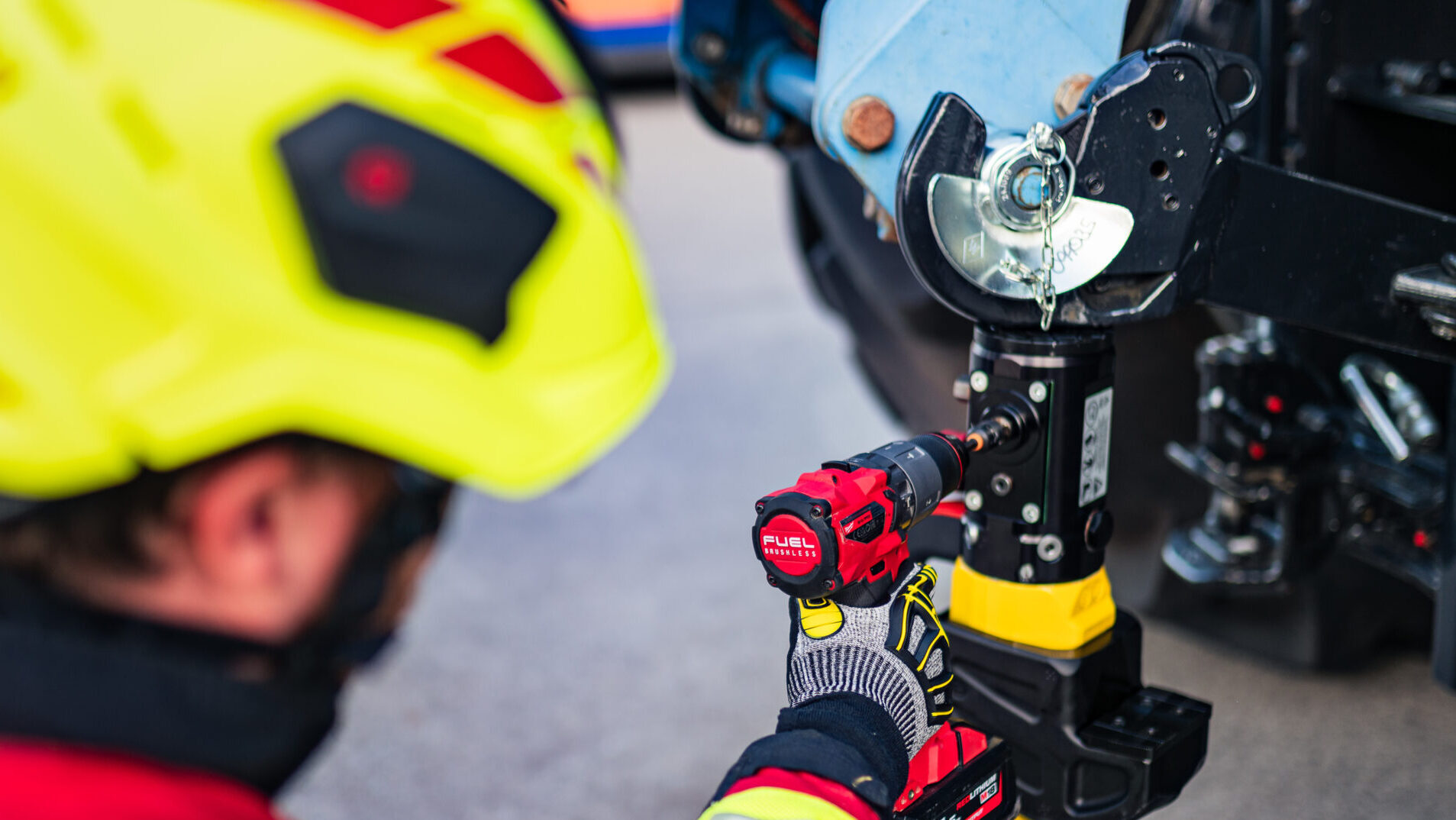
At the same time, control remains a critical factor. Lifting often takes place in close proximity to casualties or within unstable structures, where even small, uncontrolled movements can create additional risks. The move toward alternative operating methods, such as using standard cordless drills instead of manual pumping, highlights another area of development. These solutions aim to provide more consistent, controlled movement while reducing the physical effort required from operators.
Performance under harsh conditions
Flexibility is equally important. Rescue scenarios rarely follow predictable patterns, and equipment must be adaptable to different situations. Features that allow multiple positioning options or varied points of application can support more efficient workflows on scene.
Lukas added: “Switching from manual pumping to a standard cordless drill makes lifting more precise, less exhausting and faster, freeing up focus for the patient and the load.”
Durability continues to underpin all these advancements. Rescue tools must perform reliably under harsh conditions, from extreme weather to heavy mechanical stress. For many organisations, long-term reliability and low maintenance requirements remain key considerations when evaluating new equipment. Taken together, these developments point to a broader trend within the sector.
There is a growing emphasis on solutions that combine performance with usability, enabling crews to work more efficiently without increasing complexity. For procurement professionals, this means looking beyond headline specifications. Factors such as ergonomics, ease of operation and adaptability are becoming increasingly relevant in decision-making processes.
As rescue environments continue to evolve, so too must the tools used within them. The focus is shifting toward equipment that not only delivers power but does so in a way that supports the people using it in real-world conditions.