Staging Site!

Fire buyer April 2026 issue - firebuyer.com

International Fire Buyer unveils April 2026 issue

Hand Media International is pleased to release the April issue of International Fire Buyer. This issue arrives at a key moment in the industry calendar as preparations intensify for The Fire Safety Event 2026 which is being held at the NEC Birmingham between Tuesday, April 28 and Thursday, April 30. The event provides a timely platform to assess the technologies, solutions and innovations currently shaping the global fire sector. This issue features an in-depth discussion on risk, regulation and operational pressures with Hertfordshire County Council’s Chief Fire Officer, Alex Woodman. The conversation provides valuable insight into firefighter safety, evolving compliance requirements and the broader challenges facing the sector. The Innovator spotlight highlights Anthony D. Parfitt of Ci Global, who examines advancements in early electrical fire fault detection and reflects on how the Grenfell tragedy has influenced industry perspectives on risk and prevention. Product innovation is further explored through two Product Spotlights from Super Vac and Holmatro, both focusing on the growing role of battery-powered ventilation solutions in modern firefighting operations. This month’s cover story is led by Hytrans, showcasing its advanced mobile water transport systems ahead of its presence at Interschutz in Hanover. The feature examines how large-scale water delivery capabilities continue to evolve to meet complex emergency response demands. Elsewhere, the Marine Fire Safety feature explores the integration of specialist detection and suppression systems, addressing operational constraints and emerging risks in maritime environments. The Suppression feature provides a detailed overview of the technologies deployed in fire scenarios, assessing their application across increasingly complex risk profiles. Complementing this, the International Water Mist Association contributes expert insight into the use of water mist systems in battery storage and public transport applications. In Detection, the issue examines the ongoing evolution of detection technologies and their practical deployment across a range of environments. This is followed by a focus on Emergency Lighting and Evacuation Systems, analysing how integrated solutions support safe and efficient building evacuation in complex structures. The issue concludes its feature content with an examination of the regulatory and environmental pressures affecting firefighting foams, alongside an assessment of how manufacturers are responding to these challenges. This feature is sponsored by 3FFF. The Fire Safety Event, taking place at the NEC Birmingham from Tuesday April 28 to Thursday April 30, is previewed in this issue. The event will bring together more than 300 exhibitors, offering opportunities for networking, live demonstrations and direct engagement with the latest products and solutions across the fire safety landscape. Additional highlights include a Quick Fire interview with Joe Lewis, OEM Commercial Director at Allegion UK, alongside a comprehensive round-up of the latest industry news and product developments shaping the market. Read now! 

International Fire Buyer unveils April 2026 issue Read More »
Big Interview Alex Woodman - Firebuyer.com

Big Interview – Alex Woodman

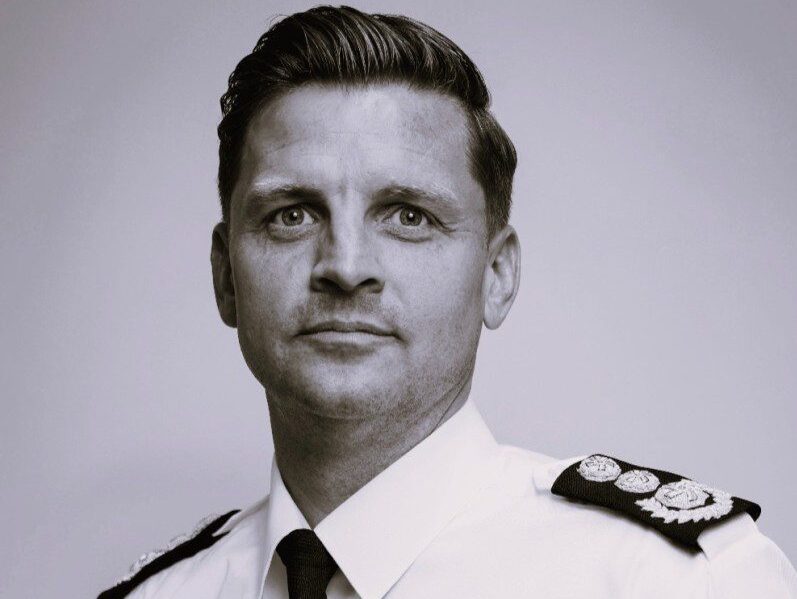
Alex Woodman, Chief Fire Officer and Executive Director of Community Protection Services, Hertfordshire County Council, outlines evolving risks, regulatory gaps and operational pressures. Firstly, can you introduce yourself and say a little about your background in Fire Safety and your work at Hertfordshire County Council? I’ve been the Chief Fire Officer and Executive Director of Community Protection in Hertfordshire for over five years. I also serve as Chair of the Hertfordshire Local Resilience Forum, sit on the National Fire Chiefs Council as Lead for Local Resilience, and I am an Ambassador for the National Emergencies Trust. Before joining Hertfordshire, I held a range of public sector roles in London, including frontline service delivery and senior leadership posts. I served as Chief of Staff during both the Grenfell Tower fire response and the COVID-19 response, both experiences that shaped my approach to crisis leadership and multi-agency working. My background spans community-focused services, including engagement, risk and compliance operations and strategic change management. Today, I provide executive counsel to council members and colleagues on emergency and crisis management while leading a diverse portfolio covering fire and rescue, trading standards, emergency planning and resilience, public health and wider community protection services. Fire services worldwide are facing an increasingly complex risk landscape. From your perspective, what are the most significant operational challenges firefighters are facing today? Firefighters are dealing with rapidly changing risk environments. Climate-driven wildfires now occur more frequently and burn with greater intensity. In Hertfordshire, hotter, drier conditions increase the likelihood of rapid fire spread, requiring sustained resourcing, specialist equipment and strong coordination with partners such as the National Farmer’s Union. Alongside our fire engines, we are enhancing our fleet with high pressure misting systems, 4×4 vehicles and water bowsers. Flooding has also become more demanding, with crews facing simultaneous rescues, road closures and infrastructure impacts. Lithium-ion battery incidents are a major emerging challenge. Fires involving EVs, e-scooters and bikes can behave unpredictably and reignite repeatedly, requiring large amounts of water and specialist tactics. Exposure to hazardous substances requires enhanced decontamination processes, while increasingly complex building construction and confined access routes can affect response times. Together, these factors create a complex risk landscape that demands new thinking, equipment and operational approaches. Regulation and guidance around fire safety have evolved rapidly in recent years. Do you believe regulation is now keeping pace with real world fire risk, or are there still gaps? The regulatory landscape has strengthened, particularly for higher risk residential buildings. Clearer legal frameworks, improved oversight and increased accountability are positives. The Fire Safety Act 2021 and the Building Safety Act have removed ambiguity and made it easier to hold people to account. However, gaps remain. Enforcement capacity has not grown at the same pace as regulatory demands, placing pressure on fire protection teams. Older building stock - especially low rise or complex multi-occupancy buildings - remain difficult to manage within existing frameworks. Cultural change is also lagging; some building owners still approach fire safety from a minimum compliance perspective rather than a safety led one. Progress has been made, but regulation has not fully caught up with the complexity of modern fire risk. TO READ THE FULL ARTICLE READ THE LATEST ISSUE HERE.

Big Interview – Alex Woodman Read More »

Ryan Johnston – SVP of Business Development MEAI, Fireaway Inc - Firebuyer.com

Quick Fire – Ryan Johnston, Fireaway Inc

Ryan Johnston – SVP of Business Development MEAI, Fireaway Inc.  What does fire safety mean to you? Fire safety to me is fundamentally about stewardship.  We anticipate the worst-case scenarios and try to provide a suitable mitigation plan, so these scenarios are never experienced.  We deal with hazards that do not give second chances and therefore have a responsibility to ensure we are manufacturing, designing and supplying products and systems which are fit for purpose and meet all relevant codes and standards. The protection of people, property and business continuity provides a great sense of satisfaction, and I am extremely proud to be a part of it. What has been your most embarrassing moment professionally? My most embarrassing moment professionally occurred several years ago when I was sent on a training course in the US.  After around 25 hours of travel, I was suffering from severe jetlag and fell asleep in my hotel room whilst running bath which flooded my room and the one below.  I may have gotten away with just a cleaning fee, but the room below belonged to another attendee participating in the training course. What is your most important fire safety tip? My most important fire safety tip would be, “Never assume someone else is responsible”. Whether you are a facility manager, technician or a resident in an apartment block, we all have a responsibility to ensure the safety of those around us.  Technology is powerful but it cannot replace vigilance. We are all grateful that firefighting and fire suppression systems are deployed in our everyday lives, but it is always better to not need them. If you see something that could be a fire hazard, report it to the relevant authority for a resolution. What do you consider to be your greatest success, either professionally or outside of work? I think my greatest achievement professionally is knowing that I have had a positive impact in the world. Over the years, I have been involved in the specifications, design and deployment of critical safety systems in numerous high-profile projects across the Middle East region.  Much of the work of fire safety professionals is carried out in the background and our goal is for our solutions to never be required but available when needed. Being able to walk into a building or use a service where I know my solutions have been implemented is a fantastic feeling.  Are there any particular trends you are seeing in the industry today? Two major trends in the industry today are the rise of environmentally-responsible fire suppression technologies and digital transformation.  As sustainability becomes a global priority, industries are moving away from legacy chemical solutions and towards solutions which will protect both their assets and the environment. Digital transformation is reshaping the world of maintenance and compliance. The ability to monitor a whole range of environmental factors inside a facility through IoT systems and devices will allow us to further mitigate fire risk and business interruption. Being able to identify system health issues rather than reacting to failures, we are preventing fire before they occur. TO READ THE FULL ARTICLE READ THE LATEST ISSUE HERE.

Quick Fire – Ryan Johnston, Fireaway Inc Read More »

Anthony D. Parfitt, Chairman & Founder of Ci Global - International Fire Buyer

Innovator – Anthony D. Parfitt

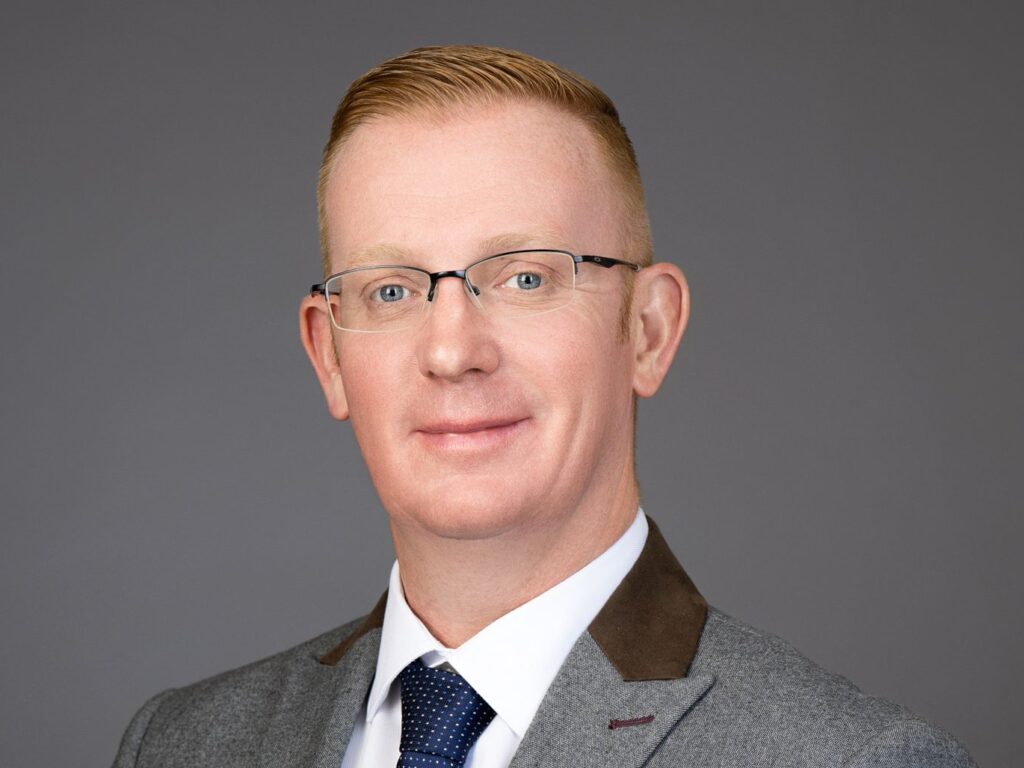
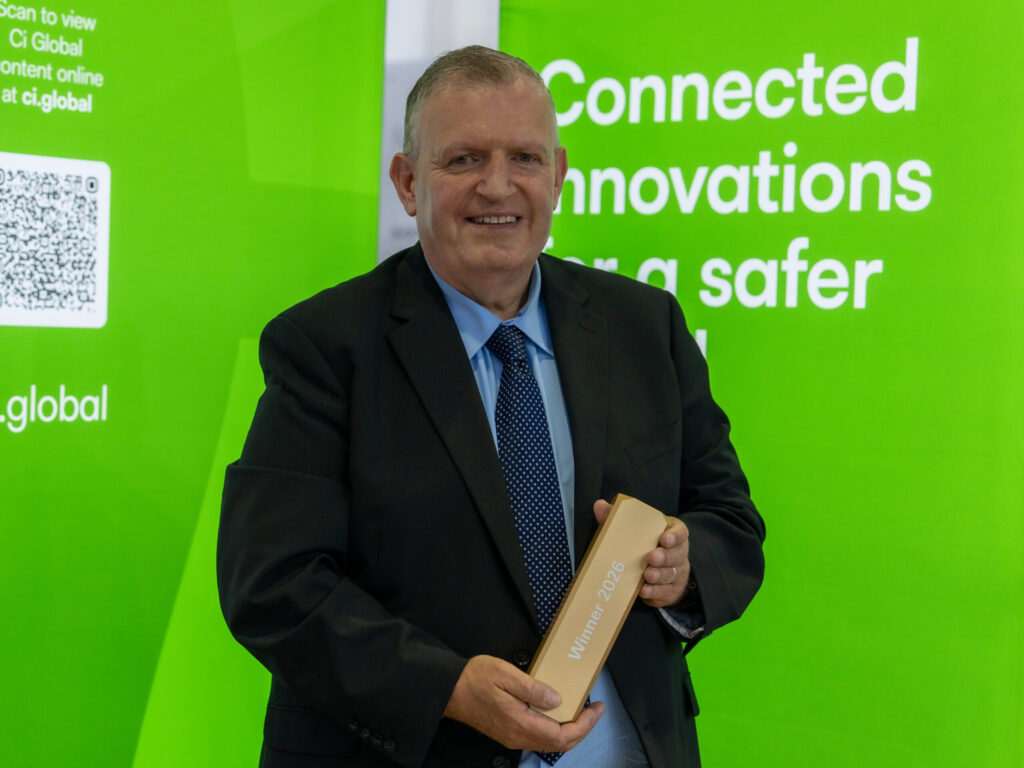
Anthony D. Parfitt, Chairman and Founder of Ci Global, explains how early-stage electrical fault detection, integrated infrastructure and regulatory reform are redefining fire prevention. Please introduce yourself and tell us about your background in fire safety. I’m Anthony D. Parfitt Founder of Ci Global. For decades, I have designed safety-critical fire and security systems. I was involved in the development and installation of early intelligent fire alarm systems, working across large commercial and public buildings in the UK for major PLCs. I went on to form a company delivering technology for the UK Government, Network Rail, the DVLA and police forces in the UK and overseas, including developing the first Home Office-approved ANPR system.   The turning point came later, after a near-miss electrical fire at home. A water leak caused an electrical fault that blew the appliance. That is what led me to build the first Ci Safe prototype on my kitchen table, but I didn’t take it any further.   Then the Grenfell tragedy happened. Learning that it had been caused by an electrical fault changed everything. I realised I already knew how to stop a fire like that from starting. Doing nothing wasn’t an option. From that point on, it became my mission.   From your experience, what’s the single most important mindset change the fire safety industry must embrace to prioritise prevention over traditional response-focused approaches? We must stop treating electrical fires as inevitable. For decades, the industry has assumed fires can’t be fully prevented, so the focus has been on detection, evacuation and response. That mindset runs through regulation, procurement and training.   But electrical fires don’t start with flames. They start with faults: overheating, abnormal load behaviour, electrical arcing and connections degrading over time. If we can see those warning signs early and act on them, prevention stops being an aspiration and becomes a responsibility. The real question isn’t how fast we respond once something has  gone wrong, it’s why we are allowing risk to build up in the first place.   In your view, why has the industry historically overlooked early-stage risk detection, and what needs to happen for that to become mainstream practice globally? Because early-stage electrical risk hasn’t been visible. Traditional fire safety systems are designed to detect outcomes – smoke, heat and flame – not causes. Electrical fires start much earlier, with faults developing inside plugs, sockets and appliances.   For electrical fire prevention to become mainstream, it must be built into the infrastructure itself – automatic, certifiable and always on – and designed to work alongside existing safety systems.   Ultimately, that means it must be written into standards and building regulations. Electrical fire prevention technology needs to be treated in the same way as earthing or RCDs, something that’s simply expected to be there. When it is part of the standard, not a choice, that’s when it scales.   How do you think building safety cultures – from architects to facilities managers to policymakers – need to evolve to support prevention-first systems at scale? Safety systems need to be built in from the start, at the design stage. Architects and developers make decisions early that shape risk for decades. Facilities managers and emergency crews are left managing the consequences, often with limited visibility. Government and regulators typically step in once outcomes are visible, not while conditions are forming.   A prevention-first culture closes that loop. It asks what intelligence a building should have from day one, what risks it should be able to detect and isolate autonomously, and where accountability should sit when something starts to go wrong. That requires collaboration across disciplines and much clearer responsibility for prevention.     TO READ THE FULL ARTICLE READ THE LATEST ISSUE HERE.

Innovator – Anthony D. Parfitt Read More »

Greater Manchester Fire and Rescue Service (GMFRS) is rolling out over 200 body worn video cameras across its operations following recommendations from the Manchester Arena Inquiry - firebuyer.com

Greater Manchester Fire and Rescue Service launches body worn cameras

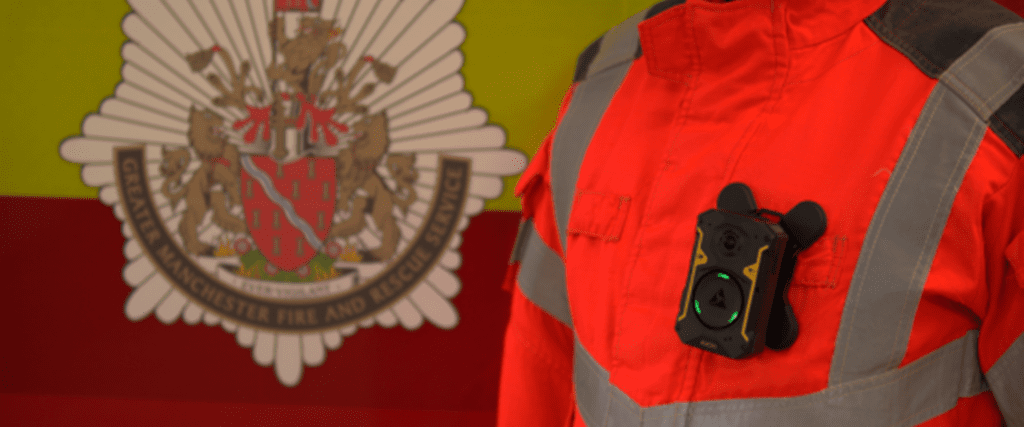
Greater Manchester Fire and Rescue Service (GMFRS) is rolling out over 200 body worn video cameras across its operations following recommendations from the Manchester Arena Inquiry. Improving incident recording and decision making The Inquiry highlighted the importance of capturing clear information and recording decision making during major incidents, particularly where multiple emergency services respond to complex and fast moving situations. The new cameras – 233 in total – will provide a real time record of what crews see, hear and communicate while attending incidents. The devices are capable of recording high definition video and audio, as well as livestreaming footage to senior officers, enabling improved oversight and support during incidents. This is expected to strengthen information sharing and enhance decision making at critical moments. Phased rollout across stations and teams All 52 fire appliances across 41 stations will be equipped with cameras. Frontline officers will receive the devices first, followed by prevention and protection teams and the incident command academy as the rollout progresses. The technology will be used across a range of incidents, from house fires and road traffic collisions to major emergencies. Footage will support operational learning, training and transparency, while also helping to improve safety for firefighters and the public. Industry response and operational benefits Deputy Chief Fire Officer, Carlos Meakin, said: “Introducing body worn cameras is a significant step forward for our Service. It’s about giving firefighters the tools they need to work safely and effectively at complex or fast-moving incidents, while also helping to protect our crews by providing a clear record of the challenges they face on the frontline. “The ability to livestream footage and review it afterwards will strengthen how we support crews on the ground, improve training, and enhance how we respond to major emergencies.  “This investment reflects our commitment to learning from the Manchester Arena Inquiry and continuing to strengthen how we respond to incidents across Greater Manchester.” Fire Brigades Union representative, Dave Pike, said: “The Fire Brigades Union played an active part in supporting its members throughout the Manchester Arena Inquiry and supports the outcomes that were reached. The FBU position nationally on body worn cameras changed significantly after the Inquiry and was shaped in part with feedback from Greater Manchester officials. “It’s important that new technology supports our members in doing their jobs safely and provides a clear and accurate record of incidents. These cameras will help protect our members, support learning and ensure there is transparency about what happens at incidents.”

Greater Manchester Fire and Rescue Service launches body worn cameras Read More »

NFSA supports campaign to reopen National Fire Academy - firebuyer.com

NFSA supports campaign to reopen National Fire Academy

The National Fire Sprinkler Association (NFSA) has announced its support for the National Fallen Firefighters Foundation (NFFF) in efforts to reopen the National Fire Academy campus for Memorial Weekend 2026. Funding lapse threatens Memorial Weekend access Due to a lapse in funding at the US Department of Homeland Security, access to the training campus in Emmitsburg, Maryland, remains uncertain. The site is home to the National Fallen Firefighters Memorial, where 204 firefighters from 43 states are due to be commemorated over Memorial Weekend (Saturday, May 23 to Monday, May 25). The uncertainty risks preventing families from attending, which represents a unique opportunity to visit the place where their loved ones’ service is permanently recognised. Impact on families and national recognition If access is restricted, the Foundation will relocate the Memorial Ceremony and Candlelight Service. While alternative arrangements will be made, the significance of the national memorial setting cannot be replicated. The event represents a central moment of national recognition, bringing together families, the fire service and the wider community to honour sacrifice and service. Call to action for government support NFSA President, Shane Ray, said: “Our call to action encourages everyone to join us in contacting their members of Congress and ask them to support re-opening the National Fallen Firefighters Memorial for the 2026 Memorial Weekend. “This is an example of ‘Fire Service One Voice’ in action and we are happy to support the NFFF and stand united with our plea to everyone for support.” NFFF CEO, Victor Stagnaro, said: “Ensuring access to this sacred space is not optional. It is essential. “We are very grateful to NFSA and all fire service organisations who are working to help us reach policy makers in time to help. We know first-hand the importance of this annual service, and we hope our pleas are heard.” Founded in 1905, NFSA works to promote fire sprinkler systems and improve fire safety awareness across all building types.

NFSA supports campaign to reopen National Fire Academy Read More »

Stephen Murdock, Senior Manager, Utilities Solutions at OroraTech USA - firebuyer.com

OroraTech named in environmental risk and resilience innovators list

OroraTech has been named in Darcy Partners’ Top 10 Innovators in Environmental Risk and Resilience list for 2025, recognising its role in delivering space-based wildfire intelligence to support fire response and risk management. Supporting fire agencies with real time thermal data The Denver-based company provides real time thermal data to utility operators, land managers and wildland firefighters across North America, helping address increasingly severe and unpredictable fire seasons. Darcy Partners selected the companies based on innovation, impact, scalability and alignment with industry needs, alongside activity across its network. Satellite technology addressing wildfire detection gaps OroraTech’s inclusion reflects the performance of its Wildfire Solution platform, which aggregates thermal data from more than 35 satellites. This includes its proprietary FOREST constellation, the first satellite network specifically dedicated to wildfire detection and monitoring. The platform is designed to track fires in real time and address gaps in traditional satellite coverage, including the “Afternoon Gap”, a critical period of peak burn when visibility is often limited. By maintaining continuous, high resolution monitoring through smoke and haze, the system supports early ignition detection, fire spread prediction and accurate burnt area assessment, reducing reliance on manual mapping. Industry recognition and operational impact Stephen Murdock, Senior Manager, Utilities Solutions at OroraTech USA, said: “Putting sensors in space is part of our business, but what we are really doing is building a lifeline for the incident commanders and utility operators making high-stakes decisions on the ground. “Being recognised by Darcy Partners validates our commitment to delivering the operational intelligence that American fire agencies and risk managers need to detect ignitions early, predict fire spread and ultimately protect our communities and wildlands. “Our goal is to support firefighters on the ground. This acknowledgment from Darcy Partners signals that our approach to fire resilience is working and bridging the gap between cutting-edge orbital technology and the rugged, tactical needs of the fireline.”

OroraTech named in environmental risk and resilience innovators list Read More »

Record numbers of e-bike and e-scooters in the UK - firebuyer.com

E-bike and e-scooter fires reach record high

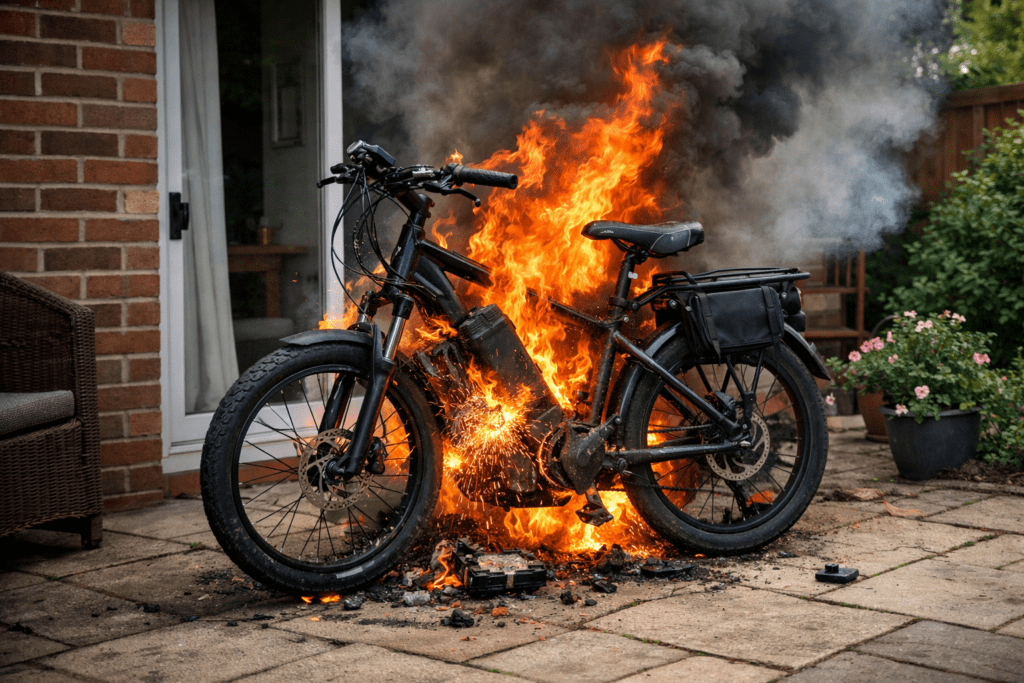
E-bike and e-scooter fires in the UK reached a record high last year. FOI data reveals national trends Figures reveal there were 432 e-bike fires in 2025 which was a 38% increase from the previous year. Meanwhile, there were 147 e-scooter fires, a 20% rise. The statistics were obtained from Freedom of Information (FOI) requests carried out by the PA news agency. PA sent FOIs to all 49 fire and rescue services in the UK, asking for the number of incidents recorded between 2021 and 2025. The highest number was recorded by the London Fire Brigade, followed by Greater Manchester and Nottinghamshire. Battery failures and product risks identified Experts say the rise is down to failing batteries, conversion kits and chargers. Products which have been purchased from online marketplaces are more at risk of malfunctioning and often aren’t subject to the same regulations as other retailers. On Tuesday, March 31, the Government announced a consultation on new measures to protect consumers from unsafe products. This includes products sold online. The Government says the reforms will mean consumers will benefit from better protections from products which are deemed unsafe.

E-bike and e-scooter fires reach record high Read More »

Ten-8 Fire & Safety and Emergency Equipment Professionals (EEP) have joined forces to expand service, support and apparatus sales capabilities across Alabama and Mississippi - Firebuyer.com

Pierce dealer network expands across Alabama and Mississippi

Pierce Manufacturing has announced an update to its independent dealer network, confirming that Emergency Equipment Professionals (EEP) is now part of Ten-8 Fire and Safety, expanding dealership coverage across Alabama and Mississippi. As a result of the integration, Ten-8 Fire and Safety will extend its Pierce dealership presence and enhance apparatus sales, service and support capabilities for fire departments across both states. The company will also provide sales and service support for Oshkosh Airport Products in the region. Integration of teams and continuity of local service The majority of EEP’s workforce, comprising more than 75 employees, will be integrated into Ten-8 Fire and Safety. Existing locations will continue operating locally under the Ten-8 name, ensuring continuity of service and established customer relationships. EEP has built a strong reputation for delivering high quality emergency vehicle solutions and dependable service across Alabama and Mississippi, supported by long standing relationships within the fire service community. Building on experience and customer focused approach Ten-8 Fire and Safety brings more than four decades of experience serving the fire industry across Florida and Georgia. The company is recognised for its customer first approach, experienced personnel and comprehensive service offering. Keith Chapman, President and CEO of Ten-8 Fire and Safety, said: “We are committed to building on the strong foundation established by the EEP team by maintaining local relationships, investing in service capabilities and ensuring departments have access to the high-quality apparatus and support they rely on.” Enhanced support for fire departments in the southeast Marty Bass, President of Pierce Manufacturing, said: “Together, they are well-positioned to deliver an even higher level of support, resources and expertise to customers across the Southeast.” Fire departments in Alabama and Mississippi will now be supported by Ten-8 Fire and Safety as their Pierce dealer, with expanded resources designed to keep fleets operational and mission ready.

Pierce dealer network expands across Alabama and Mississippi Read More »

The Institution of Fire Engineers (IFE) has launched a new suite of qualifications - Firebuyer.com

IFE launches new Fire Risk Assessment qualification series

The Institution of Fire Engineers (IFE) has launched a new suite of Fire Risk Assessment qualifications. The new qualifications are aligned with BS 8674:2025 and developed in response to the UK government’s framework for Fire Risk Assessor competency. Structured pathway for competency and career development The new suite includes the Level 3 Award in Fire Risk Assessment, Level 3 Certificate in Fire Risk Assessment and Level 4 Certificate in Fire Risk Assessment. These qualifications are designed to support a range of experience levels, from new entrants to professionals working in complex environments. Successful candidates completing the Level 3 and Level 4 Certificates will gain access to the IFE’s Fire Risk Register and meet the academic requirements for Technician membership. Industry launch at Fire Safety Event 2026 The qualifications will be formally launched at The Fire Safety Event, taking place at the NEC Birmingham from Tuesday, April 28 to Thursday, April 30. The IFE team will be available on stand 4/A90. IFE Chief Execitive, Steve Hamm and Member and Education Services Director, Jo Tedd, will present in the event’s compliance theatre on professional standards and regulatory change. Supporting national standards and global accessibility Steve Hamm said: “Our new fire risk assessment qualifications have been carefully developed by the IFE and our team of fire risk assessment and fire safety specialists from across the private and public sectors. “These qualifications launch at a critical time and support the BS 8674 tiered framework – Foundation, Intermediate and Advanced – ensuring assessors demonstrate the skills, knowledge and behaviours required to meet nationally recognised competency benchmarks. “The qualifications form the latest addition to the IFE’s online exam suite which has been developed over the past two years. “This forward-thinking approach ensures greater flexibility and inclusivity, enabling candidates across the globe to complete their qualifications at a time and place that suits them. “By removing barriers to access, the IFE is making professional development more convenient, equitable, and future-ready.” October 2026 exam launch and booking details David Escudier, Chair of the IFE’s Education Panel, said: “Clear, recognised qualifications are essential for maintaining trust and raising standards across the sector. “The IFE’s new Fire Risk Assessment exams provide a much-needed pathway that supports both individual development and the wider profession.” The qualifications will launch in the October 2026 exam session, with bookings opening on Monday, June 1.

IFE launches new Fire Risk Assessment qualification series Read More »

Scroll to Top