
A new report led by the University of East London has revealed that while record numbers of women are joining the UK fire service, training and injury prevention protocols remain overwhelmingly designed around male physiology.
The research highlights how tailored training programmes and female specific health support could improve safety, performance and career longevity for women firefighters.
PPE and Injury Risks Highlighted
Researchers warn that the long-standing assumption that male based training principles deliver identical outcomes for women is flawed and potentially harmful.
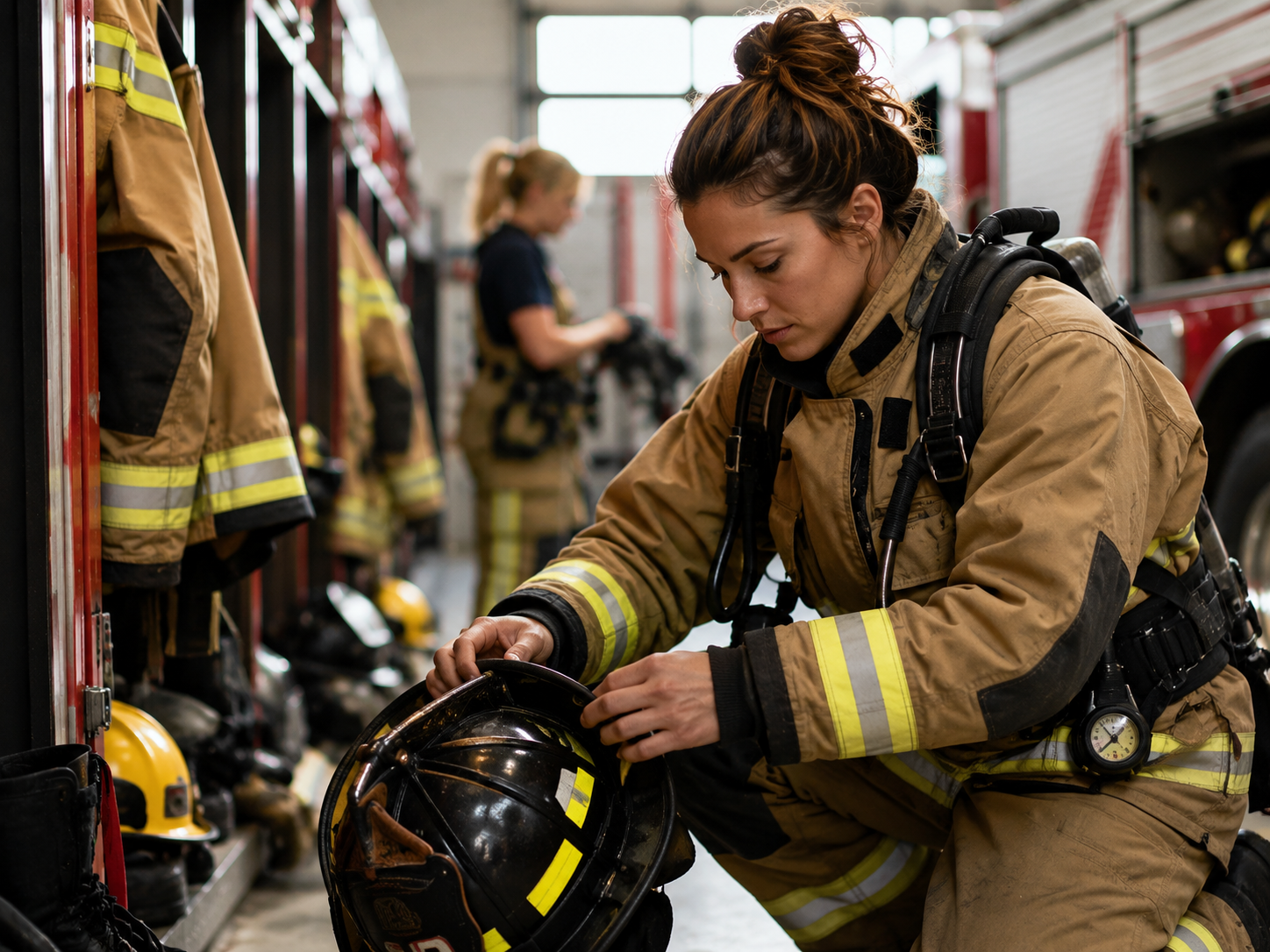
According to the study, nearly 80% of female firefighters work in ill fitting PPE compared with 20.9% of male firefighters.
Researchers state that poor fitting PPE, combined with a lack of sex specific training and recovery guidance, significantly increases injury risks.
Co-author of the report, Dr Lee Brown, Senior Lecturer and Researcher at the University of East London, said: “Currently, women make up 8% of firefighters across the UK, and while recruitment numbers are rising, retention remains a challenge.
“Most services currently don’t have policies regarding female-specific physical training and drastically lack research and policy to support women through key life stages such as pregnancy, postpartum and menopause.
“This research and the involvement of services such as the Kent Fire and Rescue Service in this type of initiatives is a step in the right direction, and it is prompting immediate, real-world change.”
The report also found that many services lack policies supporting women through pregnancy, postpartum recovery and menopause.
Kent Fire and Rescue Implements Changes
Dr Brown is now working with Chief Executive Ann Millington at Kent Fire and Rescue Service, which will introduce sex specific training recommendations this year.
Ann Millington, Chief executive at Kent Fire and Rescue Service, said:“Our goal is to be an employer of choice where every firefighter has the tools to thrive.
“By adopting these sex-specific training and PPE protocols, we are telling our female colleagues that their health and careers are a top priority. We’re proud to lead the way in creating a fire service that is fit for the future.”
Published in the NSCA TSAC Report, the study calls for mandatory female fitted PPE, targeted injury prevention and recovery programmes that consider hormonal fluctuations, shift work fatigue and sleep deprivation.
Sophie Bulmer, Firefighter at Canterbury Fire Station, said: “This research has helped raise awareness of the challenges and unique issues female firefighters face.
“In particular, it has focussed on understanding strength and fitness performance and on developing practical, evidence-based solutions that could help create a more supportive environment for women in the fire service.
“We’re thrilled to be part of this work, which has potential to help ensure standards that are both achievable and sustainable.”