Staging Site!

Super Vac - firebuyer.com

High Performance Battery Ventilation

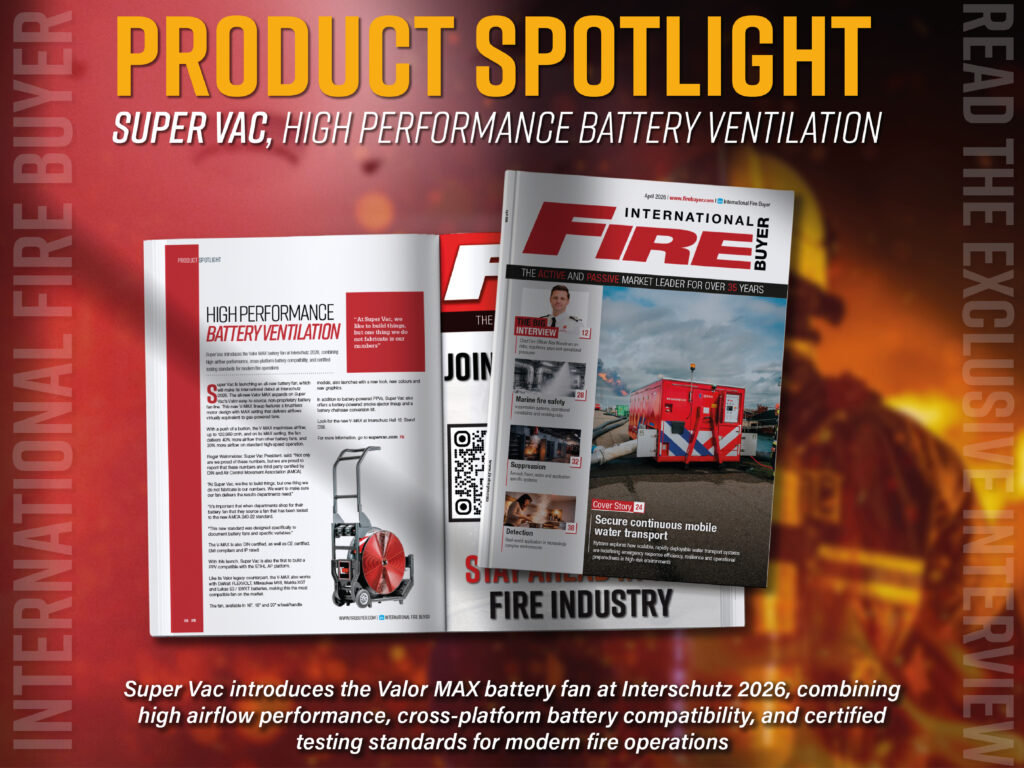
Super Vac is launching an all-new battery fan, which will make its international debut at Interschutz 2026. The all-new Valor MAX expands on Super Vac’s Valor easy-to-source, non-proprietary battery fan line. This new V-MAX lineup features a brushless motor design with MAX setting that delivers airflows virtually equivalent to gas-powered fans.   With a push of a button, the V-MAX maximises airflow, up to 122,989 cmh, and on its MAX setting, the fan delivers 40% more airflow than other battery fans, and 30% more airflow on standard high-speed operation.   Roger Weinmeister, Super Vac President, said: “Not only are we proud of these numbers, but we are proud to report that these numbers are third-party certified by DIN and Air Control Movement Association (AMCA).   “At Super Vac, we like to build things, but one thing we do not fabricate is our numbers. We want to make sure our fan delivers the results departments need.”   “It’s important that when departments shop for their battery fan that they source a fan that has been tested to the new AMCA 240-22 standard.   “This new standard was designed specifically to document battery fans and specific variables.”   The V-MAX is also DIN certified, as well as CE certified, EMI compliant and IP rated.  With this launch, Super Vac is also the first to build a PPV compatible with the STIHL AP platform.   Like its Valor legacy counterpart, the V-MAX also works with DeWalt FLEXVOLT, Milwaukee M18, Makita XGT and Lukas/ EWXT batteries, making this the most compatible fan on the market.    The fan, available in 16”, 18” and 20” wheel/handle models, also launches with a new look, new colours and new graphics.  In addition to battery-powered PPVs, Super Vac also offers a battery-powered smoke ejector lineup and a battery chainsaw conversion kit.   Look for the new V-MAX at Interschutz Hall 12, Stand D36.  For more information, go to supervac.com 

High Performance Battery Ventilation Read More »

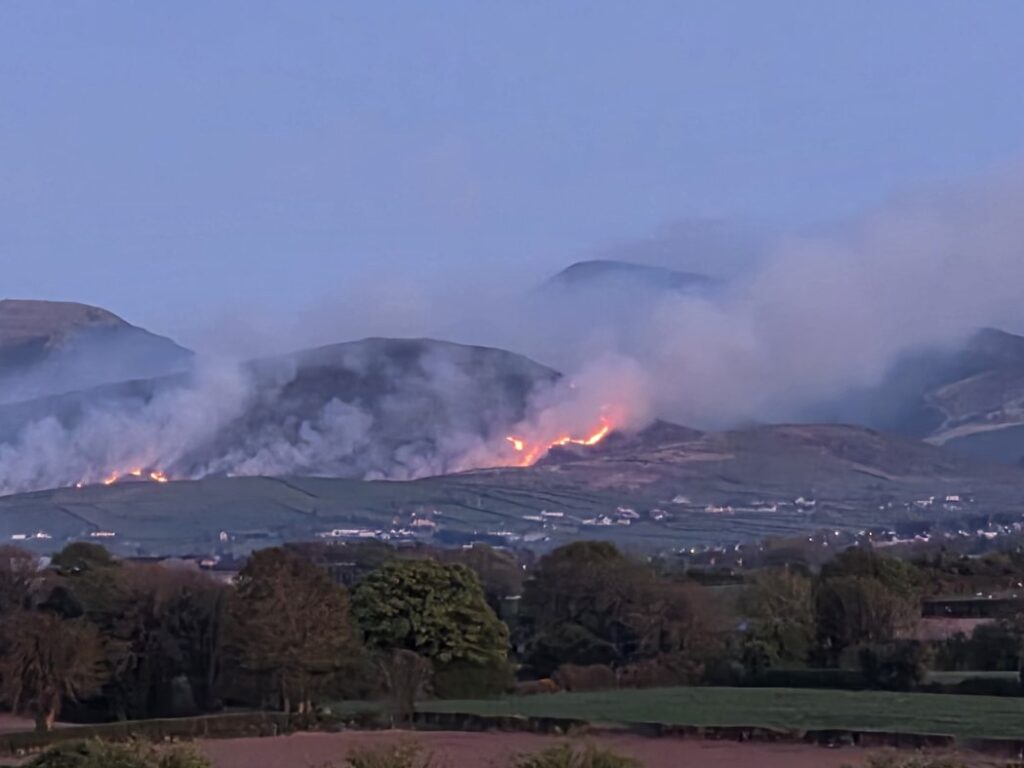
Wildfires in Mourne Mountains, Northern Ireland. Picture: David Scott on X

Scores of firefighters tackle wildfires in Northern Ireland

Firefighters have been tackling multiple wildfires in a mountainous area of Northern Ireland. Members of the public have been asked to avoid the Polly’s Brae Road area of Dungiven. Mourne Mountains Wildfires Northern Ireland Fire & Rescue Service (NIFRS) issued an update on Thursday, April 30, saying firefighters were in the area tackling a fire front spanning approximately 500 metres. It comes after several wildfires broke out around the Mourne Mountains in County Down, with the first one happening on Sunday, April 26 in Hilltown. The wildfire spanned 1,500 hectares and continued into Thursday. At its height, 50 firefighters were involved. A further two wildfires broke out on Chimney Rock Mountain, Newcastle and Cranny Road, Mullaghbawn. The cause of the fire at Chimney Rock Mountain is being investigated, whilst the wildfire at Cranny Road is thought to have begun as a result of deliberate ignition. Amber Weather Warning A statement from NIFRS said: “There is an amber weather warning in place for wildfires today so please remain vigilant and follow our fire safety advice. If you see a fire, call 999 immediately.” The Police Service of Northern Ireland asked the public to stay away from the Mournes, which is an Area of Outstanding Natural Beauty. Sergeant Kenny Gracey said: “I can’t stress highly enough how important it is for visitors to stay clear of the Mournes area until these fires are dealt with. “Just being in the area can put individuals at risk, impede emergency services in their work and can also tie up crucial resources that may be needed elsewhere. “We appreciate your patience and understanding at this time.”

Scores of firefighters tackle wildfires in Northern Ireland Read More »

Todd O'Hara and John O'Hara - firebuyer.com

Todd O’Hara Appointed Chief Executive Officer

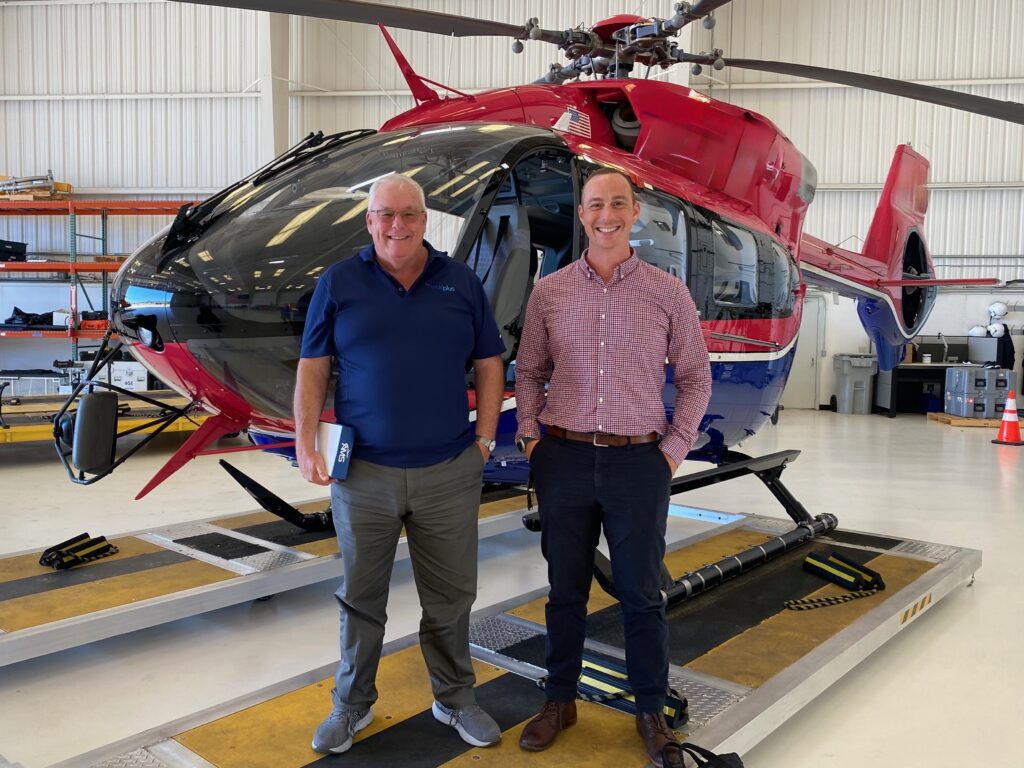
TracPlus, the company behind the operational data and insights platform trusted by the world’s leading aerial firefighting agencies, announced the appointment of Todd O’Hara as Chief Executive Officer, effective 1 May 2026. John O’Hara, CEO since 2024, will assume the role of President and continue to lead the company’s strategic partnerships and senior agency relationships. The appointment is the conclusion of a six-month leadership transition designed to position the company for its next phase of growth. As Chief Commercial Officer, Todd O’Hara has led TracPlus through its most significant period of expansion, including the onboarding of CAL FIRE and the rollout of the FireFlyte solution that now underpins the company’s largest deployments. His appointment reflects a deliberate progression from commercial leadership into business leadership at a moment of accelerating demand across the industry, as fire seasons grow longer, aerial fleets grow larger, and the agencies managing them are asked to account for every dollar and every decision with a precision the industry has never had to deliver before. Todd O’Hara has been a member of the TracPlus executive team since 2020 and central to building the relationships, product direction, and commercial discipline that define the business today. His career has been built at the intersection of aviation, safety, and mission-critical technology, with prior leadership roles at Spidertracks and Airways New Zealand, and earlier service with the New Zealand Defence Force. A pilot and flight instructor rated across helicopters, fixed-wing aircraft, and gliders, he brings first-hand operational aviation experience into the leadership of the company. John O’Hara joined TracPlus as Chairman in 2020 and took on the CEO role in 2024. Under his leadership the company established itself as the trusted operational data partner to the world’s leading fire agencies, and built the organisational foundation to deliver at that scale for the long term. As President he will continue to drive the company’s most senior agency engagements and strategic partnerships, working alongside Todd and the executive team. Todd O’Hara says he is proud to be stepping into the role at a moment when the work matters more than ever, and that the opportunity in front of TracPlus is defined by what its customers are being asked to deliver. Todd O’Hara Comments: “Our customers are protecting communities against fires that are getting bigger, faster, and harder to fight every season, and they are being asked to do it with more accountability than ever before. The opportunity in front of us is to keep raising the standard of what the industry can measure, defend, and improve. The team we have is the best in the world at this work, and I am proud to be leading them into what comes next,” says Todd. John O’Hara says the appointment reflects the strength of the foundation the business now stands on, and the natural progression of the leader who helped build it. “TracPlus has become the system of record the industry depends on. CAL FIRE runs its dispatch, tracking, and billing reconciliation on our platform. Australia and New Zealand’s national fire agencies use it to manage their entire aerial firefighting fleets. That is the foundation we are handing forward, and Todd has been at the centre of building it. This is a natural progression, and the right one. I am looking forward to continuing the work alongside him and the team, focused where I can add the most value for our agency partners,” says John. Mark Vivian Comments: Mark Vivian, Chair of the Board, says that TracPlus today stands on the strongest foundation in its history, and that Todd O’Hara is the right leader to build on it. “Under John’s leadership, TracPlus has become the trusted operational partner to the agencies fighting the world’s most demanding fires. The platform now captures what every contracted aircraft did on every incident and turns that into the data agencies need to run their missions, reconcile their billing, and defend their spending when the questions come. That is a remarkable thing to have built, and it is a privilege to have John continuing in the business as President. Todd has been central to that work alongside him, and the Board has full confidence in his leadership as TracPlus moves into its next phase of growth,” says Mark.

Todd O’Hara Appointed Chief Executive Officer Read More »

Drying PPE the right way

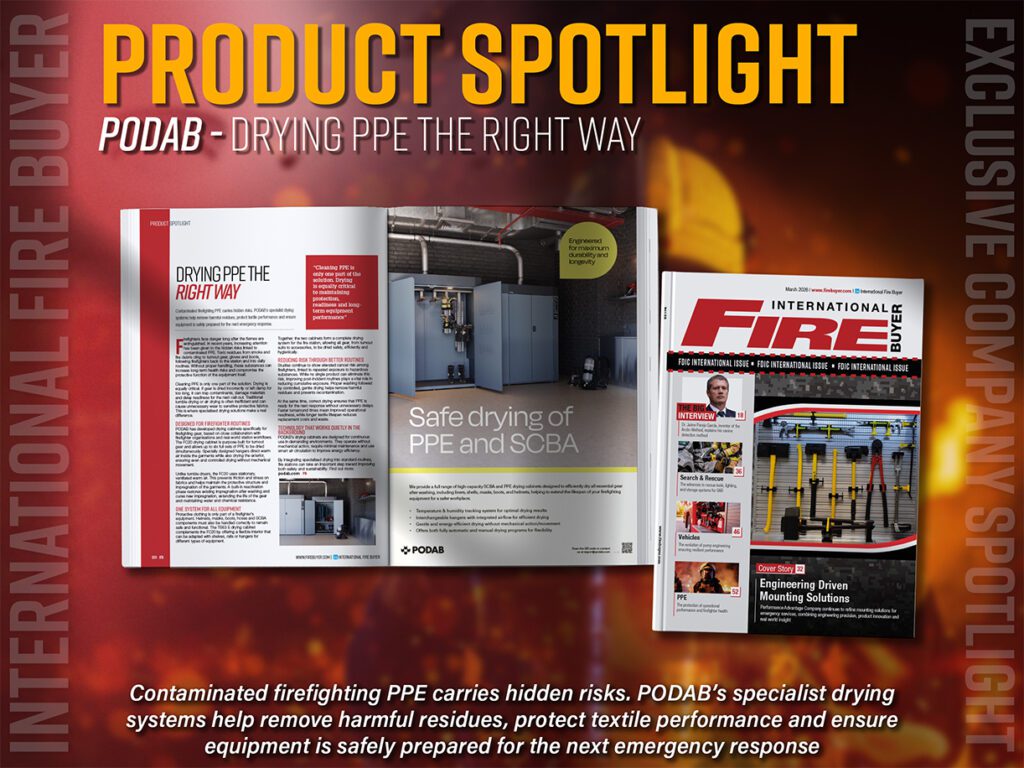
Contaminated firefighting PPE carries hidden risks. PODAB’s specialist drying systems help remove harmful residues, protect textile performance and ensure equipment is safely prepared for the next emergency response.  Firefighters face danger long after the flames are extinguished. In recent years, increasing attention has been given to the hidden risks linked to contaminated PPE. Toxic residues from smoke and fire debris cling to turnout gear, gloves and boots, following firefighters back to the station and into daily routines. Without proper handling, these substances can increase long-term health risks and compromise the protective function of the equipment itself.  Cleaning PPE is only one part of the solution. Drying is equally critical. If gear is dried incorrectly or left damp for too long, it can trap contaminants, damage materials and delay readiness for the next call-out. Traditional tumble drying or air drying is often inefficient and can cause unnecessary wear to sensitive protective fabrics.  This is where specialised drying solutions make a real difference.  Designed for firefighter routines PODAB has developed drying cabinets specifically for firefighting gear, based on close collaboration with firefighter organisations and real-world station workflows. The FC20 drying cabinet is purpose-built for turnout gear and allows up to six full sets of PPE to be dried simultaneously. Specially designed hangers direct warm air inside the garments while also drying the exterior, ensuring even and controlled drying without mechanical movement.  Unlike tumble dryers, the FC20 uses stationary, ventilated warm air. This prevents friction and stress on fabrics and helps maintain the protective structure and impregnation of the garments. A built-in reactivation phase restores existing impregnation after washing and cures new impregnation, extending the life of the gear and maintaining water and chemical resistance.  One system for all equipment Protective clothing is only part of a firefighter’s equipment. Helmets, masks, boots, hoses and SCBA components must also be handled correctly to remain safe and functional. The TS63 E drying cabinet complements the FC20 by offering a flexible interior that can be adapted with shelves, rails or hangers for different types of equipment.  Together, the two cabinets form a complete drying system for the fire station, allowing all gear, from turnout suits to accessories, to be dried safely, efficiently and hygienically.  Reducing risk through better routines Studies continue to show elevated cancer risk among firefighters, linked to repeated exposure to hazardous substances. While no single product can eliminate this risk, improving post-incident routines plays a vital role in reducing cumulative exposure. Proper washing followed by controlled, gentle drying helps remove harmful residues and prevents recontamination.  At the same time, correct drying ensures that PPE is ready for the next response without unnecessary delays. Faster turnaround times mean improved operational readiness, while longer textile lifespan reduces replacement costs and waste.  Technology that works quietly in the background PODAB’s drying cabinets are designed for continuous use in demanding environments. They operate without mechanical action, require minimal maintenance and use smart air circulation to improve energy efficiency.  By integrating specialised drying into standard routines, fire stations can take an important step toward improving both safety and sustainability.  Find out more: podab.com

Drying PPE the right way Read More »

Trident emergency Products - firebuyer.com

Rethinking Priming and Thermal Protection

Scott Kiernan from Trident Emergency Products’ outlines how air-powered priming and intelligent thermal management are improving reliability, reducing maintenance and protecting fire pumps during high-demand operational scenarios.  Please introduce yourself and give us an insight into Trident? I am Scott Kiernan and I am Sales Manager at Trident Emergency Products in Hatboro, Pennsylvania. With over a decade of hands-on experience supporting fire departments and apparatus manufacturers across the U.S., I’ve seen firsthand how the right plumbing and hardware can make the difference between a successful operation and a challenge on the fireground. Trident was founded by four industry veterans with a combined 130 years of fire service knowledge. Our mission has always been simple yet powerful: listen to what firefighters and builders truly need, then deliver innovative, NFPA compliant solutions that exceed expectations. We specialise in fire truck plumbing and hardware, everything from adapters and valves to our flagship patented products that solve long-standing problems like unreliable priming and pump overheating. We pride ourselves on user-friendly designs that are easy to install, maintain and afford, all backed by an upstanding warranty and fast nationwide delivery. Today, thousands of fire apparatus rely on Trident components daily, and we’re proud to keep water flowing reliably when it matters most.   Looking at the last 10 years, what would you say are the key innovations in priming systems? Over the past decade, priming systems have undergone a quiet revolution, moving away from the limitations of older electric-motor or oil-lubricated designs toward more reliable, maintenance-free air-operated technology. The biggest shift has been the widespread adoption of venturi-based, air-powered primers like our AirPrime™ system, which we introduced early and continuously refine in response to customer feedback. Key innovations include automatic priming controls that activate only when the pump is engaged, multi-location priming for pre-priming, and integrated lift gauges that give operators real-time visual feedback on vacuum and priming progress. These systems tie seamlessly into modern electronic pump panels, using the chassis air brake supply with a pressure-protection valve so they never compromise braking safety. Noise levels have dropped dramatically. AirPrime operates super quietly compared to screaming electric units, while weight and space requirements have shrunk, making retrofits far easier. Environmentally, the move to oilless designs has eliminated messy lubrication, contamination risks and disposal issues. As of recent years, over 50,000 AirPrime units are in service, proving that these advancements have become the new standard for reliability, especially in rural departments relying on static water sources or high-lift drafts. The result? Faster, more consistent priming that reduces cavitation and pump damage during critical initial attack.   What are the benefits of AirPrime™ over traditional primers? Traditional rotary vane primers, common in older apparatus, rely on electric motors and draw significant current from the vehicle’s electrical system. They could overheat if left running, seize up, or fail during extended operations. AirPrime™ changed everything by using compressed air from the chassis brake system (or a regulated cylinder) to power a multi-stage venturi that creates vacuum without any moving parts in the primer itself, no electricity draw and zero lubrication needed. It’s completely oilless and environmentally safe, only air and water are discharged. Operators love that it’s super quiet with the lowest dB in the industry, and it’s lightweight, compact for tight pump panels and self-draining. It eliminates freeze-up worries in cold climates. As it has no electrical load, it protects alternators and batteries, improving overall apparatus reliability. It can run continuously without overheating, making it perfect for pre-priming multiple intakes or maintaining prime during long lays. Automatic versions activate when the pump is engaged, while manual push-to-prime buttons allow targeted control. Cost wise, it’s lower maintenance and often less expensive long-term than replacing worn electric motors, all backed by a 10-year warranty. Plus, it’s fully NFPA compliant and brass-constructed for corrosion resistance. Firefighters tell us it primes faster and more reliably, especially on high-lift or LDH intakes, reducing cavitation and giving them confidence when every second counts.   What advancements have you seen in thermal management? Thermal management for fire pumps has evolved from basic wax element relief valves or none-at-all to sophisticated, sensor-driven systems that actively protect equipment and conserve resources. Trident’s ThermaGuard™ line represents the latest leap forward. The base TRV (Thermal Relief Valve) uses a precise thermistor sensor to monitor pump water temperature in real time, automatically opening at user-adjustable setpoints to dump or recirculate hot water before damage occurs. It includes self-check diagnostics on startup, LED alerts for quick status checks, and optional audible alarms. The upgraded ThermaGuard™ TMS (Thermal Management System) takes it further with selectable bypass modes: dump-to-ground, recirculate-to-tank, or both.   This flexibility allows operators to optimise water conservation while maintaining optimal pump water temperatures. IP67-rated components handle harsh environments, and setpoint memory ensures settings return during power cycles. These systems integrate directly with the pump plumbing, providing proactive protection where older setups left pumps vulnerable to overheating from prolonged recirculation. The advancement lies in proven modern components which are automated, precise and adaptable rather than reactive. This not only prevents impeller and seal damage but also protects operators from scalding risks and extends apparatus life dramatically.   What are some challenges one can expect when dealing with pump priming and thermal protection during a high demand incident? High-demand incidents - think rural structure fires with long hose lays – multiple handlines flowing at once or drafting from static sources can amplify classic problems. Priming challenges include air entrapment in suction hoses or intakes, leading to rapid loss of prime, cavitation that erodes impeller and noisy, inefficient operation that wastes time. On large pumps or with LDH, a single primer location often isn’t enough, and operators struggle to pre-prime intake quickly. Thermal issues compound this: closed-loop recirculation without relief causes water temperature to spike rapidly, risking pump overheating, seal failure, or even warping. In freezing weather, dumped water can create ice hazards; in drought, wasting water is unacceptable. Operator workload skyrockets monitoring vacuum gauges, temperature, and multiple controls while coordinating with command leaving room for error. Equipment strain can lead to downtime mid-incident, and electrical failures in older systems add unreliability. The result? Delayed water delivery, increased fatigue and potential apparatus damage that hit budgets hard.   How do Trident’s solutions help address these operational challenges? Trident’s AirPrime™ and ThermaGuard™ systems directly tackle these pain points with proven, firefighter-focused engineering. AirPrime’s automatic mode senses and clears air pockets instantly when the pump engages, while push-to-prime buttons and multi-location setups let operators pre-prime front intakes or auxiliaries without losing prime elsewhere, eliminating cavitation and speeding water delivery. The lift gauge provides instant visual confirmation of successful prime, helping operators diagnose leaks or issues on the fly. As it runs continuously without damage and draws zero electrical power, it stays ready during prolonged high-flow operations. Pairing that with ThermaGuard, the thermistor sensor monitors temperature proactively, triggering relief exactly when needed. TMS mode selection lets crews recirculate the tank, conserving water

Rethinking Priming and Thermal Protection Read More »

Oshkosh to showcase USAF Striker firebuyer.com

Oshkosh Airport Products to Showcase Striker at FDIC 2026

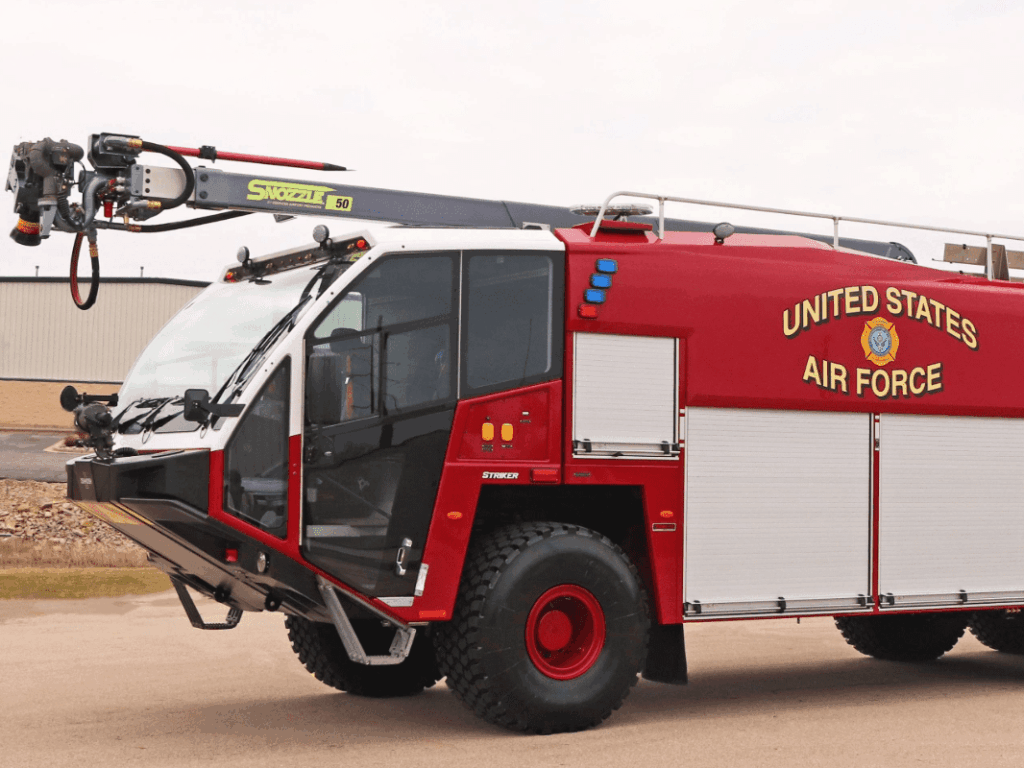
Oshkosh Airport Products, an Oshkosh Corporation (NYSE:OSK) business, will showcase at FDIC International 2026 in Indianapolis, Indiana, from April 22-25. They will share a Striker® 6×6 Aircraft Rescue and Fire Fighting (ARFF) vehicle, configured with a 50-foot Snozzle® High Reach Extendable Turret (HRET). The vehicle, built for the United States Air Force (USAF), demonstrates advanced firefighting performance designed for demanding operational environments. It will be on display outside the convention center, at Booths #15717-19. The Striker ARFF provides exceptional reach and precision for firefighting operations. It enables responders to deliver fire suppression agent directly to elevated or hard-to-access areas. The turret extends operational capability for aircraft incidents and structural firefighting scenarios, supporting rapid suppression and complete incident control. Built on a 6×6 chassis and powered by a Scania DC16 engine, the vehicle delivers responsive acceleration and strong performance. It features a water capacity of 3,170 gallons (12,000 liters) and a foam capacity of 444 gallons (1,680 liters), providing extended firefighting capability during critical operations. Additional features include: • Oshkosh Eco-EFP™ Foam System • Structural firefighting system for extensive operational versatility • Cast iron water pump for durability and performance • Rear steer capability for excellent maneuverability • Disc brakes for reliable stopping performance

Oshkosh Airport Products to Showcase Striker at FDIC 2026 Read More »

Waterous - firebuyer.com

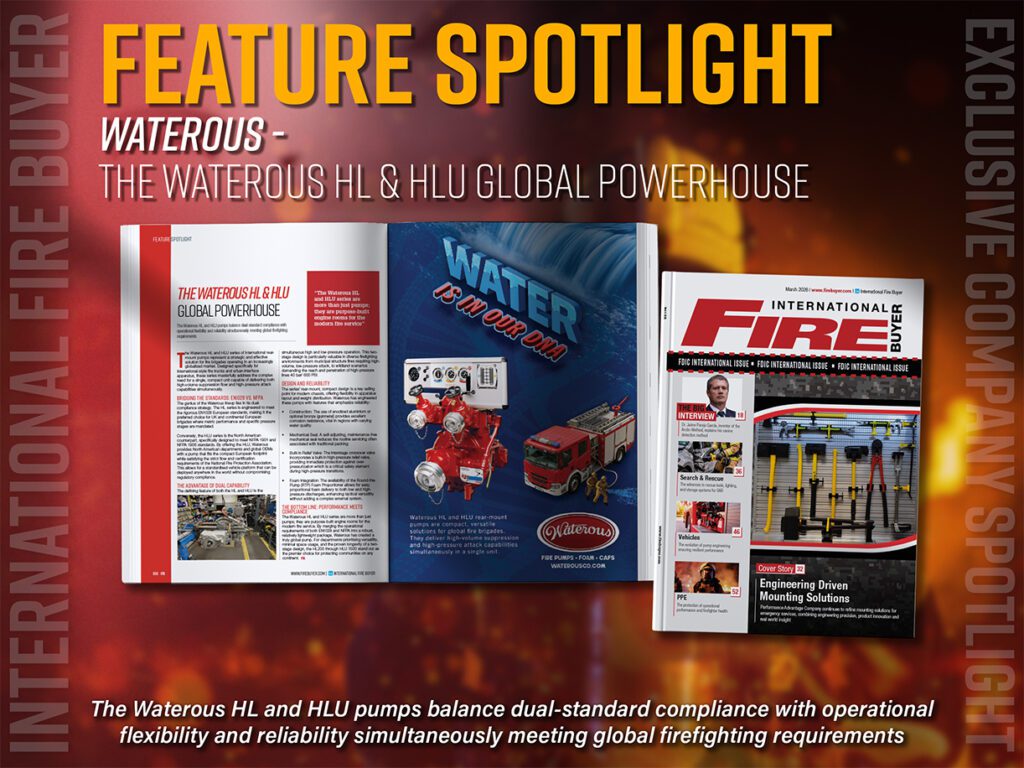
The Waterous HL & HLU Global Powerhouse

The Waterous HL and HLU pumps balance dual-standard compliance with operational flexibility and reliability simultaneously meeting global firefighting requirements.   The Waterous HL and HLU series of international rear-mount pumps represent a strategic and effective solution for fire brigades operating in an increasingly globalised market. Designed specifically for international-style fire trucks and urban-interface apparatus, these series masterfully address the complex need for a single, compact unit capable of delivering both high-volume suppression flow and high-pressure attack capabilities simultaneously.  Bridging the Standards: EN1028 vs. NFPA The genius of the Waterous lineup lies in its dual-compliance strategy. The HL series is engineered to meet the rigorous EN1028 European standards, making it the preferred choice for UK and continental European brigades where metric performance and specific pressure stages are mandated.  Conversely, the HLU series is the North American counterpart, specifically designed to meet NFPA 1901 and NFPA 1906 standards. By offering the HLU, Waterous provides North American departments and global OEMs with a pump that fits the compact European footprint while satisfying the strict flow and certification requirements of the National Fire Protection Association. This allows for a standardised vehicle platform that can be deployed anywhere in the world without compromising regulatory compliance.  The Advantage of Dual Capability The defining feature of both the HL and HLU is the simultaneous high and low-pressure operation. This two-stage design is particularly valuable in diverse firefighting environments from municipal structure fires requiring high-volume, low-pressure attack, to wildland scenarios demanding the reach and penetration of high-pressure lines 40 bar/ 600 PSI.   Design and Reliability The series’ rear-mount, compact design is a key selling point for modern chassis, offering flexibility in apparatus layout and weight distribution. Waterous has engineered these pumps with features that emphasize reliability:  Construction: The use of anodized aluminium or optional bronze (gunmetal) provides excellent corrosion resistance, vital in regions with varying water quality.  Mechanical Seal: A self-adjusting, maintenance-free mechanical seal reduces the routine servicing often associated with traditional packing.  Built-in Relief Valve: The interstage crossover valve incorporates a built-in high-pressure relief valve, providing immediate protection against over-pressurization which is a critical safety element during high-pressure transitions.  Foam Integration: The availability of the Round-the-Pump (RTP) Foam Proportioner allows for easy, proportional foam delivery to both low and high-pressure discharges, enhancing tactical versatility without adding a complex external system.  The Bottom Line: Performance Meets Compliance The Waterous HL and HLU series are more than just pumps; they are purpose-built engine rooms for the modern fire service. By merging the operational requirements of both EN1028 and NFPA into a robust, relatively lightweight package, Waterous has created a truly global pump. For departments prioritising versatility, minimal space usage, and the proven longevity of a two-stage design, the HL200 through HLU 1500 stand out as the premier choice for protecting communities on any continent.  

The Waterous HL & HLU Global Powerhouse Read More »

crescor Ask the Expert - firebuyer.com

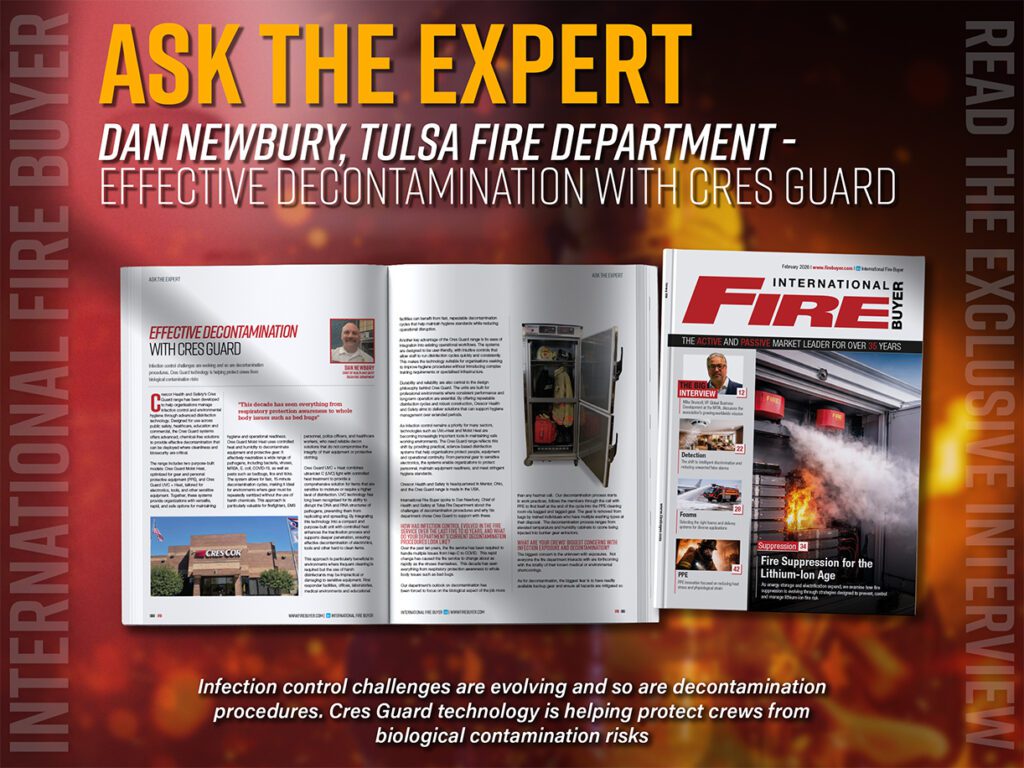
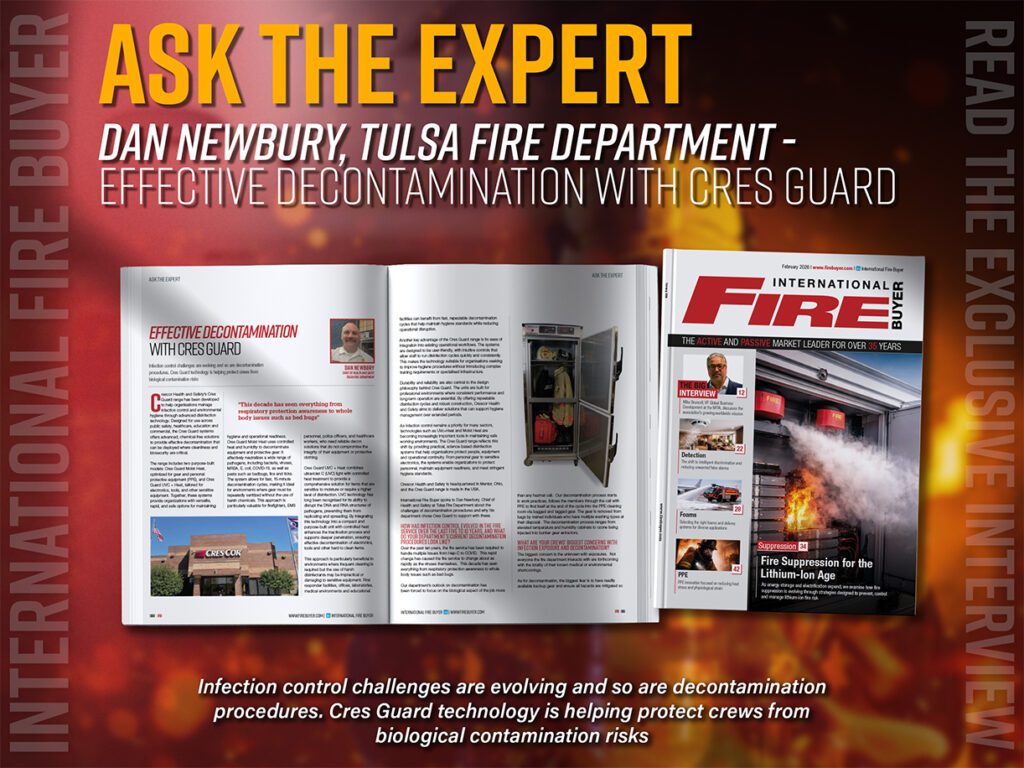
Effective decontamination with Cres Guard

Infection control challenges are evolving and so are decontamination procedures. Dan Newbury, Chief of Health and Safey at Tulsa Fire Department  explores how Cres Guard technology is helping protect crews from biological contamination risks.  Crescor Health and Safety’s Cres Guard range has been developed to help organisations manage infection control and environmental hygiene through advanced disinfection technology. Designed for use across public safety, healthcare, education and commercial, the Cres Guard systems offers advanced, chemical-free solutions to provide effective decontamination that can be deployed where cleanliness and biosecurity are critical.  The range includes two purpose-built models: Cres Guard Moist Heat, optimized for gear and personal protective equipment (PPE), and Cres Guard UVC + Heat, tailored for electronics, tools, and other sensitive equipment. Together, these systems provide organizations with versatile, rapid, and safe options for maintaining hygiene and operational readiness.  Cres Guard Moist Heat uses controlled heat and humidity to decontaminate equipment and protective gear. It effectively neutralizes a wide range of pathogens, including bacteria, viruses, MRSA, E. coli, COVID-19, as well as pests such as bedbugs, lice and ticks. The system allows for fast, 15-minute decontamination cycles, making it ideal for environments where gear must be repeatedly sanitized without the use of harsh chemicals. This approach is particularly valuable for firefighters, EMS personnel, police officers, and healthcare workers, who need reliable decon solutions that do not compromise the integrity of their equipment or protective clothing.   Cres Guard UVC + Heat combines ultraviolet C (UVC) light with controlled heat treatment to provide a comprehensive solution for items that are sensitive to moisture or require a higher level of disinfection. UVC technology has long been recognised for its ability to disrupt the DNA and RNA structures of pathogens, preventing them from replicating and spreading. By integrating this technology into a compact and purpose-built unit with controlled heat enhances the inactivation process and supports deeper penetration, ensuring effective decontamination of electronics, tools and other hard to clean items.  This approach is particularly beneficial in environments where frequent cleaning is required but the use of harsh disinfectants may be impractical or damaging to sensitive equipment. First responder facilities, offices, laboratories, medical environments and educational facilities can benefit from fast, repeatable decontamination cycles that help maintain hygiene standards while reducing operational disruption.  Another key advantage of the Cres Guard range is its ease of integration into existing operational workflows. The systems are designed to be user-friendly, with intuitive controls that allow staff to run sanitisation cycles quickly and consistently. This makes the technology suitable for organisations seeking to improve hygiene procedures without introducing complex training requirements or specialised infrastructure.  Durability and reliability are also central to the design philosophy behind Cres Guard. The units are built for professional environments where consistent performance and long-term operation are essential. By offering repeatable disinfection cycles and robust construction, Crescor Health and Safety aims to deliver solutions that can support hygiene management over extended periods.  As infection control remains a priority for many sectors, technologies such as UVc+Heat and Moist Heat are becoming increasingly important tools in maintaining safe working environments. The Cres Guard range reflects this shift by providing practical, science-based disinfection systems that help organisations protect people, equipment and operational continuity. From personal gear to sensitive electronics, the systems enable organizations to protect personnel, maintain equipment readiness, and meet stringent hygiene standards.  Crescor Health and Safety is headquartered in Mentor, Ohio, and the Cres Guard range is made in the USA.   International Fire Buyer spoke to Dan Newbury, Chief of Health and Safety at Tulsa Fire Department about the challenges of decontamination procedures and why his department chose Cres Guard to support with these. How has infection control evolved in the fire service over the last five to 10 years, and what do your department’s current decontamination procedures look like? Over the past ten years, the fire service has been required to handle multiple issues from Hep-C to COVID.  This rapid change has caused the fire service to change about as rapidly as the viruses themselves.  This decade has seen everything from respiratory protection awareness to whole body issues such as bed bugs.     Our department’s outlook on decontamination has been forced to focus on the biological aspect of the job more than any hazmat call.  Our decontamination process starts in work practices, follows the members through the call with PPE to find itself at the end of the cycle into the PPE cleaning room via bagged and tagged gear. The gear is removed from bags by trained individuals who have multiple washing types at their disposal.  The decontamination process ranges from elevated temperature and humidity cabinets to ozone being injected into bunker gear extractors.   What are your crews’ biggest concerns with infection exposure and decontamination? The biggest concern is the unknown with exposures.  Not everyone the fire department interacts with are forthcoming with the totality of their known medical or environmental shortcomings.   As for decontamination, the biggest fear is to have readily available backup gear and ensure all hazards are mitigated so as not to spread the issue to their family, be it immediate or fire family.  Where are the biggest contamination risks in your daily operations: on scene, in transport or back at the station? The biggest contamination factor is the people we interact with daily.  Job-town fires are important to decontamination but leave identifiable evidence of contamination.  An airborne virus or microscopic bedbug egg is almost impossible to protect oneself after exposure occurs.   Have you tracked lost time due to infections, like how you track injuries on the job? Yes, infections and exposures are tracked for lost time to protect the members and all their required rights in accordance with OSHA requirements   What percentage of your runs are EMS versus fire, and how does that mix, along with high call volumes affect compliance with safety procedures? It is split between 55% EMS and 45% fire, hazmat, rescue and other   High call volume should not affect the outlook on safety procedures in the field. High call volume does affect the ability to keep PPE stocked quickly and efficiently.  Funding is also affected by the elevated cost of safety equipment and the multiplier of larger fire department membership…. Read the full article here.

Effective decontamination with Cres Guard Read More »

Lakeland Fire + Safety Launches New FireFlex Elite L-100 Structural Firefighting Boot firebuyer.com

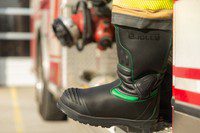
Lakeland Fire + Safety Launches New FireFlex Firefighting Boot

Lakeland Industries, Inc. (“Lakeland Fire + Safety” or “Lakeland”) (NASDAQ: LAKE), announced that today the new Lakeland FireFlex Elite-L100 Structural Firefighting Boot has officially achieved NFPA 1970:2025 certification. This further strengthens Lakeland’s NFPA certified head-to-toe firefighter Personal Protective Equipment (PPE) portfolio. This certification follows ongoing NFPA 1970:2025 certifications for a range of products across Lakeland’s brand portfolio. The certification sets the new consolidated standard for firefighting boots, focusing on enhanced structural and proximity protection, stringent third-party certification, and specific safety requirements. Key criteria include minimum 8-inch height, melt-resistant soles, flame-resistant components, and puncture protection. The new FireFlex Elite-L100 Structural Firefighting Boot combines mobility, protection, and durability firefighters rely on in demanding structural firefighting conditions. As part of Lakeland’s growing head-to-toe PPE offering, it gives departments a high-performance footwear solution backed by a trusted protective gear provider. CEO of Lakeland comments on the new certification “We continue to rapidly advance our NFPA 1970:2025 full head-to-toe certification pipeline, with the new FireFlex Elite-L100 Boot. This adds to recent certifications for Gloves, Hoods, Helmets, Structural Turnout and Proximity Gear,” said Jim Jenkins, President and CEO of Lakeland. “We expect to begin Boot production quickly and begin fulfilling pre-orders. This reflects our strong reputation and ability to deliver products with the highest levels of quality and safety. A second Boot in the NFPA product line is planned for mid- to late fall and is already prototyped and in prototype production, with a third boot likely to follow in less than a year. “With our products gaining strong traction in the market, certification builds on that success for customers with NFPA 1970:2025 certified gear across our entire brand portfolio. Ongoing certifications for our head-to-toe product portfolio also strengthens our market position as a premier innovator in firefighter PPE and establishes new industry benchmarks for performance and safety. We look forward to showcasing new certified products and expanded PPE options at FDIC 2026 taking place next week April 20-25, in Indianapolis, including gear designed to meet the latest NFPA 1970 turnout gear standards,” concluded Jenkins.

Lakeland Fire + Safety Launches New FireFlex Firefighting Boot Read More »

LEADER GROUP at INTERSHUTZ 2026 firebuyer.com

Designing technologies that help save lives

Every second counts in emergency situations. Behind every intervention, there are technologies designed to protect, support, and ultimately — save lives. For 40 years, LEADER GROUP has been developing equipment used daily by firefighters and rescue teams operating in some of the most demanding environments. From high-performance ventilation systems that clear the path, to thermal imaging cameras that locate unconscious victims in zero-visibility conditions, and advanced extinguishing solutions that strike with precision — every LEADER GROUP technology serves one mission: saving lives. 40 years of innovation dedicated to safety Since its creation, the Group has continuously invested in innovation to meet the evolving challenges faced by emergency services: Development of patented technologies improving operational efficiency Continuous enhancement of equipment performance and reliability Strong focus on real-life operational conditions Today, LEADER GROUP brings together multiple areas of expertise, covering firefighting, ventilation, foam solutions, and search & rescue equipment. INTERSCHUTZ 2026: bringing innovation to life At INTERSCHUTZ 2026, LEADER GROUP will present its latest innovations and demonstrate how its technologies contribute to safer and more efficient interventions. Visitors will discover a complete ecosystem of solutions designed to support emergency professionals in critical situations.

Designing technologies that help save lives Read More »

Scroll to Top