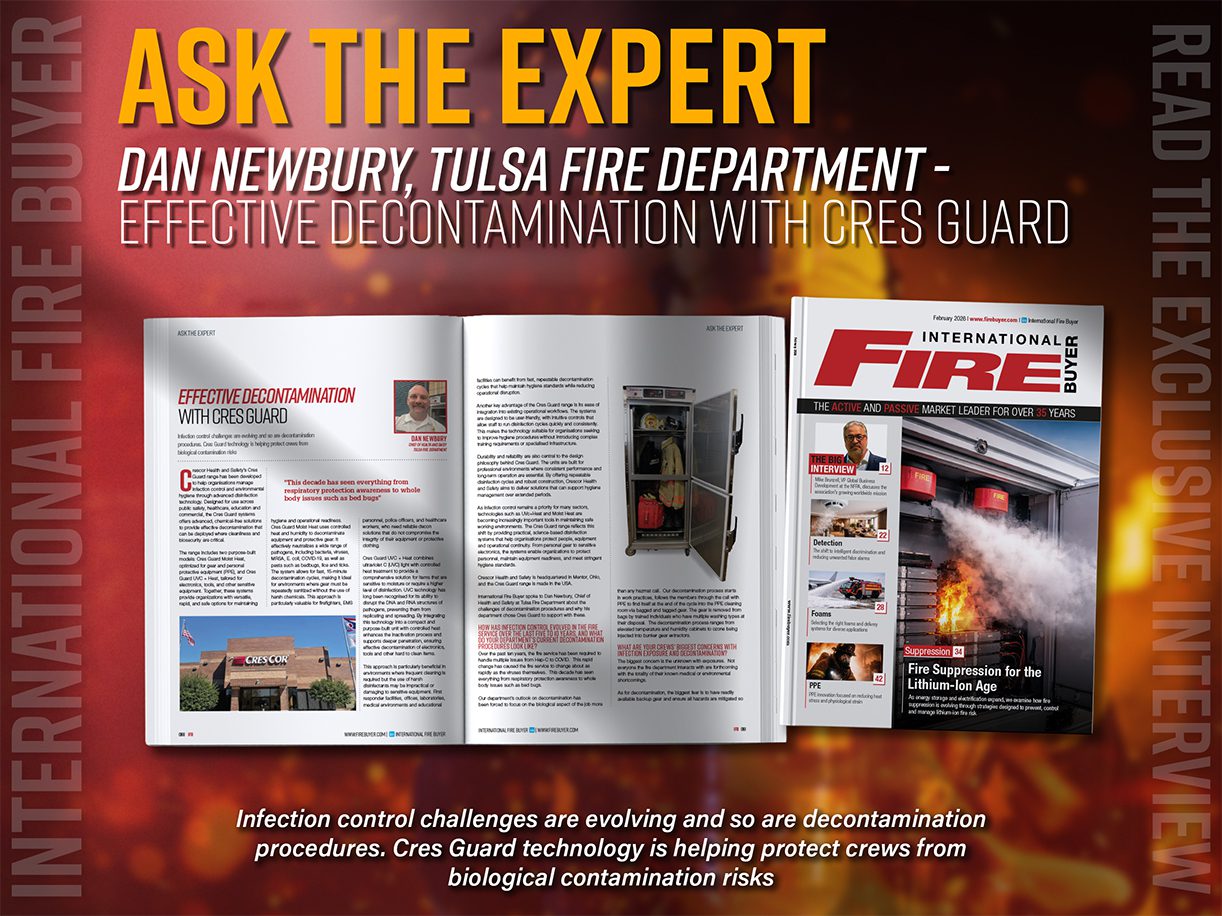

Infection control challenges are evolving and so are decontamination procedures. Dan Newbury, Chief of Health and Safey at Tulsa Fire Department explores how Cres Guard technology is helping protect crews from biological contamination risks.
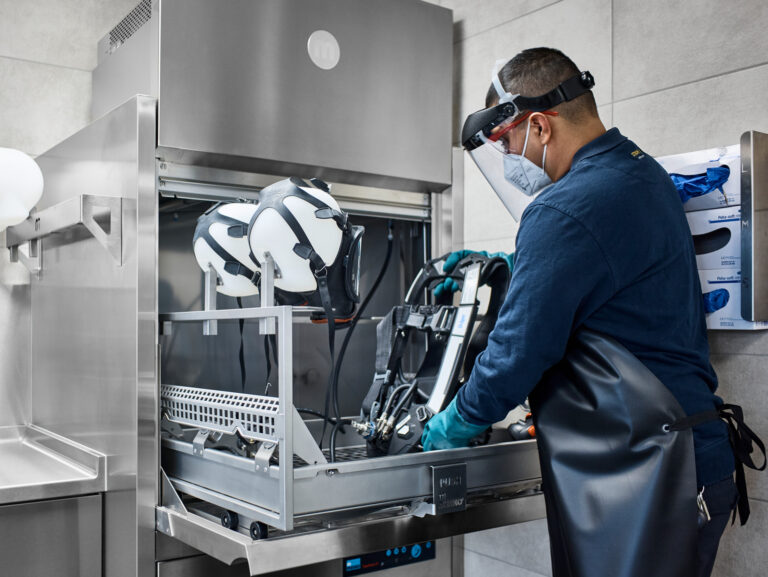
Crescor Health and Safety’s Cres Guard range has been developed to help organisations manage infection control and environmental hygiene through advanced disinfection technology. Designed for use across public safety, healthcare, education and commercial, the Cres Guard systems offers advanced, chemical-free solutions to provide effective decontamination that can be deployed where cleanliness and biosecurity are critical.
The range includes two purpose-built models: Cres Guard Moist Heat, optimized for gear and personal protective equipment (PPE), and Cres Guard UVC + Heat, tailored for electronics, tools, and other sensitive equipment. Together, these systems provide organizations with versatile, rapid, and safe options for maintaining hygiene and operational readiness.
Cres Guard Moist Heat uses controlled heat and humidity to decontaminate equipment and protective gear. It effectively neutralizes a wide range of pathogens, including bacteria, viruses, MRSA, E. coli, COVID-19, as well as pests such as bedbugs, lice and ticks. The system allows for fast, 15-minute decontamination cycles, making it ideal for environments where gear must be repeatedly sanitized without the use of harsh chemicals. This approach is particularly valuable for firefighters, EMS personnel, police officers, and healthcare workers, who need reliable decon solutions that do not compromise the integrity of their equipment or protective clothing.
Cres Guard UVC + Heat combines ultraviolet C (UVC) light with controlled heat treatment to provide a comprehensive solution for items that are sensitive to moisture or require a higher level of disinfection. UVC technology has long been recognised for its ability to disrupt the DNA and RNA structures of pathogens, preventing them from replicating and spreading. By integrating this technology into a compact and purpose-built unit with controlled heat enhances the inactivation process and supports deeper penetration, ensuring effective decontamination of electronics, tools and other hard to clean items.
This approach is particularly beneficial in environments where frequent cleaning is required but the use of harsh disinfectants may be impractical or damaging to sensitive equipment. First responder facilities, offices, laboratories, medical environments and educational facilities can benefit from fast, repeatable decontamination cycles that help maintain hygiene standards while reducing operational disruption.
Another key advantage of the Cres Guard range is its ease of integration into existing operational workflows. The systems are designed to be user-friendly, with intuitive controls that allow staff to run sanitisation cycles quickly and consistently. This makes the technology suitable for organisations seeking to improve hygiene procedures without introducing complex training requirements or specialised infrastructure.
Durability and reliability are also central to the design philosophy behind Cres Guard. The units are built for professional environments where consistent performance and long-term operation are essential. By offering repeatable disinfection cycles and robust construction, Crescor Health and Safety aims to deliver solutions that can support hygiene management over extended periods.
As infection control remains a priority for many sectors, technologies such as UVc+Heat and Moist Heat are becoming increasingly important tools in maintaining safe working environments. The Cres Guard range reflects this shift by providing practical, science-based disinfection systems that help organisations protect people, equipment and operational continuity. From personal gear to sensitive electronics, the systems enable organizations to protect personnel, maintain equipment readiness, and meet stringent hygiene standards.
Crescor Health and Safety is headquartered in Mentor, Ohio, and the Cres Guard range is made in the USA.
International Fire Buyer spoke to Dan Newbury, Chief of Health and Safety at Tulsa Fire Department about the challenges of decontamination procedures and why his department chose Cres Guard to support with these.
How has infection control evolved in the fire service over the last five to 10 years, and what do your department’s current decontamination procedures look like?
Over the past ten years, the fire service has been required to handle multiple issues from Hep-C to COVID. This rapid change has caused the fire service to change about as rapidly as the viruses themselves. This decade has seen everything from respiratory protection awareness to whole body issues such as bed bugs.
Our department’s outlook on decontamination has been forced to focus on the biological aspect of the job more than any hazmat call. Our decontamination process starts in work practices, follows the members through the call with PPE to find itself at the end of the cycle into the PPE cleaning room via bagged and tagged gear. The gear is removed from bags by trained individuals who have multiple washing types at their disposal. The decontamination process ranges from elevated temperature and humidity cabinets to ozone being injected into bunker gear extractors.
What are your crews’ biggest concerns with infection exposure and decontamination?
The biggest concern is the unknown with exposures. Not everyone the fire department interacts with are forthcoming with the totality of their known medical or environmental shortcomings.
As for decontamination, the biggest fear is to have readily available backup gear and ensure all hazards are mitigated so as not to spread the issue to their family, be it immediate or fire family.
Where are the biggest contamination risks in your daily operations: on scene, in transport or back at the station?
The biggest contamination factor is the people we interact with daily. Job-town fires are important to decontamination but leave identifiable evidence of contamination. An airborne virus or microscopic bedbug egg is almost impossible to protect oneself after exposure occurs.
Have you tracked lost time due to infections, like how you track injuries on the job?
Yes, infections and exposures are tracked for lost time to protect the members and all their required rights in accordance with OSHA requirements
What percentage of your runs are EMS versus fire, and how does that mix, along with high call volumes affect compliance with safety procedures?
It is split between 55% EMS and 45% fire, hazmat, rescue and other
High call volume should not affect the outlook on safety procedures in the field. High call volume does affect the ability to keep PPE stocked quickly and efficiently. Funding is also affected by the elevated cost of safety equipment and the multiplier of larger fire department membership….