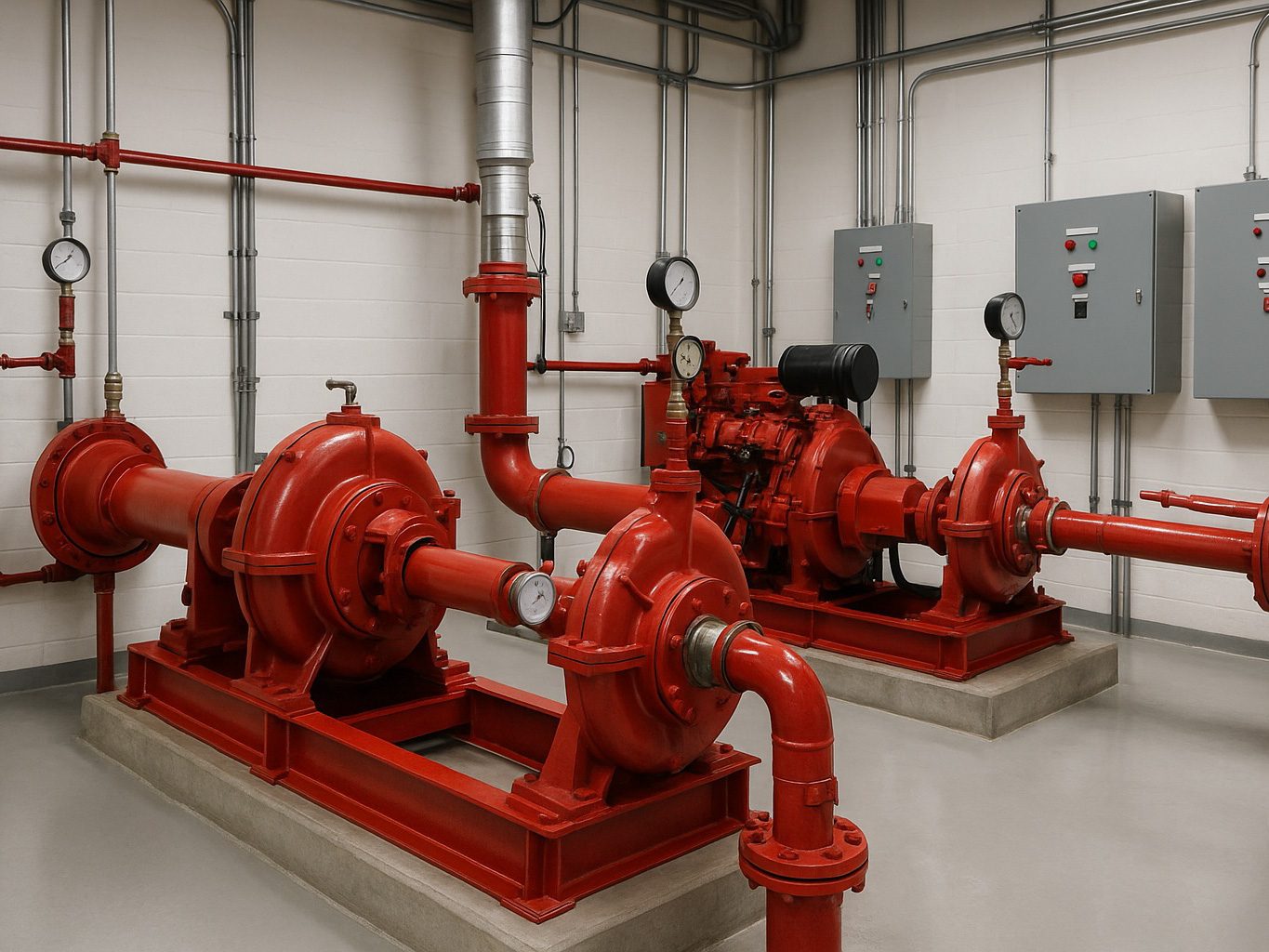

Reliable fire-pump systems underpin building and industrial fire protection. Ed Hill investigates how certified fixed installations, backed by mobile assets, can ensure continuous, fire-water delivery
In the world of fire-protection engineering, the term ‘fire pump’ often brings to mind the dramatic image of a fire engine pumping hoses. But in buildings, industrial facilities and infrastructure sites the true workhorse is the passive, fixed fire-pump installation.
These systems, usually permanently installed in a dedicated pump room, are on site and when the pressure in the fire-water network falls, they automatically pressurise the system so that sprinklers, hydrants or standpipes can perform. The challenge for specifiers and risk-managers is ensuring this equipment is both reliable and certified, that the whole pump-room ecosystem meets fire-safety codes, and that downtime or future modifications do not compromise coverage.
In many modern risk-settings the specification also recognises that a fixed pump system must be resilient: it must withstand mains outages, maintenance periods and changing demand conditions. This leads to the built-in solution: a robust fixed system accompanied by mobile or contingency assets. A portfolio of manufacturers can contributing to the ecosystem of fixed pump sets, drivers, controllers, packaged modules and mobile support.
Regulatory and Technical Landscape
At the heart of this specification world lies NFPA 20 (Standard for the Installation of Stationary Pumps for Fire Protection) which, although US-based, is widely referenced in global high-risk and industrial fire design. The standard requires that fire-pump installations deliver adequate water under emergency conditions, include proper drivers, controllers and water supplies, and be installed and maintained to a high standard.
In the UK and Europe, designers will also reference EN 12845 and local codes but a growing number of international industrial projects adhere to NFPA 20 criteria for clarity and insurance compliance. One technical guide states: “Fire pump systems are the backbone of fire protection in high-rise buildings, industrial plants and commercial facilities. Every fire pump must be listed for fire protection service.”
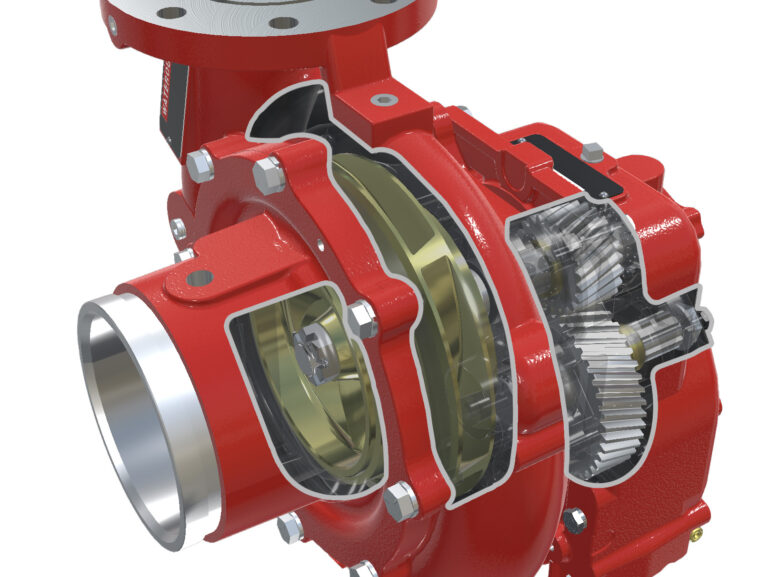
Key considerations include correct pump type (horizontal split-case, vertical turbine, end-suction or in-line), suction supply and layout of suction piping, driver choice (electric or diesel), control panel design, test headers and maintenance provisions. For example, NFPA 20 stipulates that a fire pump’s shut-off pressure cannot exceed 140% of rated pressure and that at 150% of flow the discharge pressure must not fall below 65% of rated pressure.
In practice this means specifiers must insist on full certification, test documentation and compliance with manufacturer and code guidance.
TO READ THE FULL ARTICLE SEE OUR LATEST ISSUE HERE