
LICO’s custom made heat and overheat detection systems focus on early thermal intelligence to prevent fires before ignition occurs
Fire detection has traditionally focused on identifying smoke or flame once an incident is already underway. While effective as part of a wider fire strategy, this approach often means intervention begins only after conditions have escalated. In industrial, hazardous, and maritime environments, that delay can carry serious consequences. Increasingly, the focus is shifting toward earlier thermal monitoring that identifies abnormal heat or overheat conditions before ignition occurs.
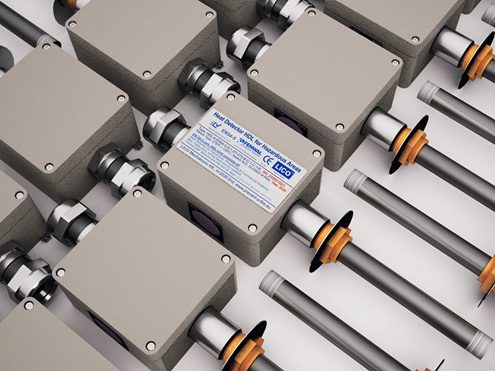
LICO specialises in this preventative approach, providing custom made heat and overheat detector units designed specifically for high temperature, high risk applications. Rather than reacting to fire, LICO systems are engineered to prevent it, enabling operators to address abnormal conditions before they develop into smoke, flame, or explosion.
Shifting from fire response to fire prevention
This preventative philosophy is particularly relevant as normal operating temperatures continue to rise across modern industrial processes. In environments where elevated heat is expected, traditional electronic fire detectors can struggle with reliability, false alarms, or premature failure. Passive heat detection solutions, designed for stability and accuracy at high temperatures, are therefore becoming an increasingly important part of fire risk management strategies.
LICO’s HDL product range is built entirely around bespoke design. Every unit is custom made in close collaboration with the customer and, where applicable, the local system integrator. This ensures each solution is precisely matched to the operational environment, temperature profile, and system architecture in which it will be deployed.
The application scope is extensive. HDL detectors are used across industrial settings such as engine rooms, transformer stations, wind turbines, saunas, and commercial kitchens. They are also deployed in hazardous locations including paint shops, gas turbines, offshore platforms, oil refineries, and nuclear power facilities. Maritime applications form another key area, with installations spanning shipyards, ports, container vessels, yachts, and naval assets including aircraft carriers.
Certified reliability without electronic dependency
Certification underpins this breadth of use. LICO heat and overheat detection systems carry approvals including ATEX, EN 54-5, DNV MED, DNV Type Approval, CE, and ISO 9001, ensuring compliance across demanding regulatory environments and safety critical sectors.
TO READ THE FULL ARTICLE SEE OUR LATEST ISSUE HERE: