
UK fire brigades are now responding to a lithium-ion battery fire once every five hours, equivalent to 4.8 fires each day, according to new research.
The number of incidents has risen by 147% since 2022, when brigades attended the equivalent of two lithium-ion battery fires per day.
E bikes and EV fires increase significantly
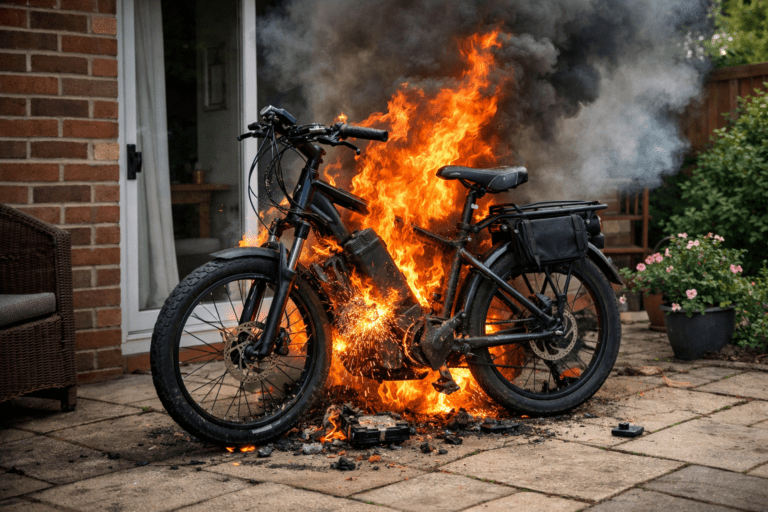
Research from insurer QBE revealed e bikes accounted for 520 fires during 2025, more than triple the number recorded in 2022 and representing around 30% of all lithium-ion battery fires.
London Fire Brigade attended 230 of those incidents, accounting for 44% of all e-bike fires nationally. Fire services reported that converted or retrofitted e-bikes were involved more frequently than officially manufactured models.
Fires involving electric vehicles (EVs) also increased, rising from 120 incidents in 2022 to 279 in 2025, although the number of EVs on UK roads tripled during the same period to almost two million vehicles.
Homes remain the highest risk location
Almost half of all lithium-ion battery fires occurred in residential properties, with 31% outdoors and 23% in commercial premises. Devices including mobile phones, tablets, laptops and power packs accounted for 45% of incidents.
QBE warned that lithium-ion battery fires are often caused by thermal runaway, a chemical reaction triggered by overheating, overcharging or physical damage. These fires spread rapidly and are difficult to extinguish.
London Fire Brigade recorded the highest number of incidents in 2025 with 522 fires, followed by West Yorkshire and Lancashire.
Bedfordshire and Luton was the only service to report a year on year reduction following updated safety guidance introduced in 2023.
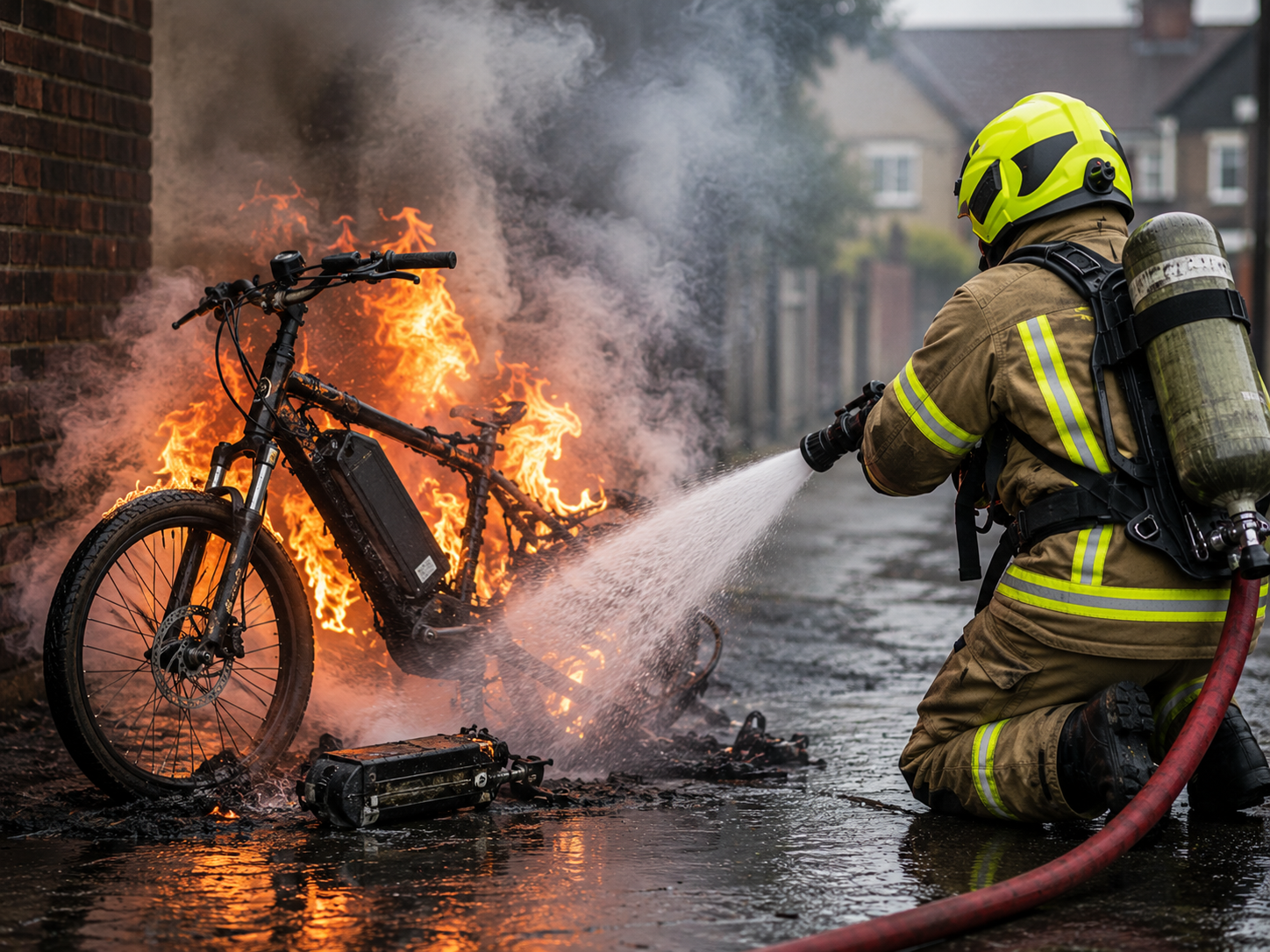
Adrian Simmonds, Risk Manager at QBE Insurance, said: “Lithium-ion battery fires continue to increase. It’s vital that people and businesses take action to better manage this growing risk. Thermal runaway caused by these types of batteries burns differently, takes much longer to tackle and can require up to 10 times more water to contain.
“Awareness of safe charging, storage and disposal is essential to keeping people and property safe. People should use only certified e-bikes and batteries, charge them away from escape routes and avoid charging items overnight.
“The statistics suggest retrofitted bikes are more prone to these incidents, so we would encourage people to stick to reputable companies when purchasing and avoid unregulated devices.”