
Dr James Edmondson, Research Director at IDTechEx explores the different types of fire protection materials for EV batteries.
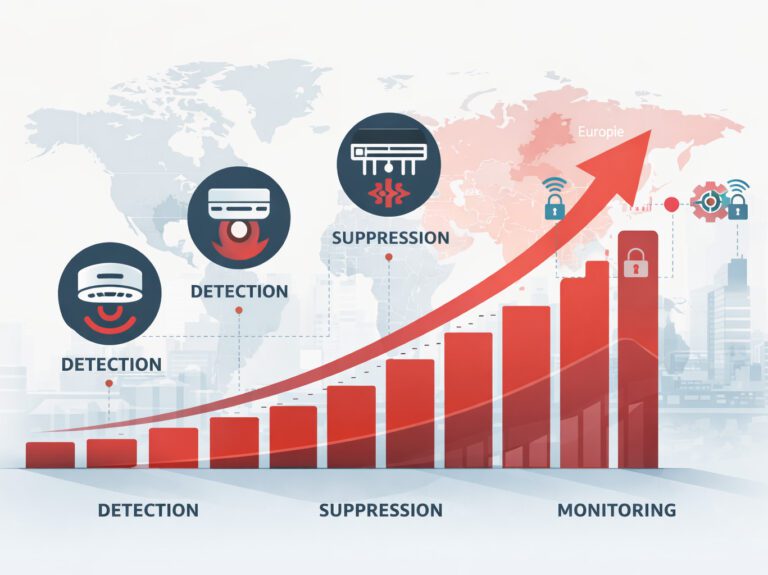
Electric vehicle (EV) sales continued to increase in 2024, admittedly with some significant regional disparity, but IDTechEx found that globally, EV sales increased 24% in 2024 over 2023. With EVs becoming an increasingly large part of the fleet, their safety becomes evermore important. Despite the fact that most data shows EV fires are less common than combustion engine vehicles, safety cannot be overlooked in any rate of occurrence. As test methods and regulations continue to evolve, IDTechEx’s “Fire Protection Materials for EV Batteries 2025-2035: Markets, Trends, and Forecasts” report finds that the materials will grow with a CAGR of 15% between 2024 and 2035.
This article aims to discuss some of the key factors and some of the potential materials that EV battery designers may consider.
Cell form factor
One of the first considerations is the battery cell form factor. IDTechEx found that in 2024 around 58% of the market was using prismatic cells followed by 22% cylindrical, and the rest pouch. The cell form factor may not impact protection at a module or pack level, but will certainly impact inter-cell materials.
It is typical to see sheet-type materials applied between the cells in prismatic or pouch cell systems, with encapsulating foams being a popular choice for cylindrical cell systems. Sheets can certainly be applied to cylindrical cell systems, too, and encapsulating foams can be used for pouch or prismatic; these are just less common.
The failure mode will also vary by cell type, with cylindrical and prismatic cells generally venting through the vents on the top of the cells, making the placement of fire protection materials a bit more predictable.
Thermal management concept
How the temperature of the cells is managed is another critical decision. A popular approach is through a cold plate that sits at the top or bottom of the cells through which water-glycol coolant is passed. Then, the cells are thermally insulated from one another; this aids with maintaining the temperature within the cells in cold conditions but is also beneficial in preventing heat transfer between a cell in thermal runaway and the rest in the pack.
A second option is to cool the sides of the cells too or have heat spreading materials between the cells to transfer as much heat away from the cells as possible. Depending on which approach is taken, this will impact what material or combination of materials are chosen to be placed between the cells. For example, foams and aerogels have a very low thermal conductivity, whereas encapsulants or phase change materials tend to have a higher thermal conductivity.
Material choices
Even once the cell form factor and thermal management strategy are decided, there are a host of different material categories and chemistries that could be valid options.
On key metrics like low thermal conductivity and density, aerogels, ceramic blankets, and encapsulating foams perform well. However, this does not tell the entire story, often, a combination of materials may be needed to meet structural requirements and/or meet UL2596 test requirements. This will typically increase the density required. The UL2596 tests are challenging, with the torch and grit test exposing the sample to an alternating high-temperature flame (1200°C) and alumina particle blasts.
For this reason, material suppliers are generally trying to produce materials that perform multiple functions and can prevent the need for multiple assembly steps. An increasingly popular option from suppliers is polymer/composite components with fire protective and/or intumescent properties that can be made into structural components of modules, cell holders, or an inter-cell spacer. These may appear less thermally insulating and higher density in normal operation but can replace the need for multiple other materials while providing good insulation at high temperatures. Examples include companies like SABIC, Pyrophobic Systems, Asahi Kasei, and several others.
A primary concern for battery designers is system cost. The addition of fire protection materials increases costs, but the additional cost can vary widely between material options. Part of the calculation is material cost, not just per kg, but by how much is required to achieve the required performance. Mica has proven a very low cost material with strong electrical insulation properties, but is usually required in thicker (and heavier) layers to provide sufficient fire protection. Historically, aerogels have been limited by their costs, but in the right implementation can provide excellent thermal insulation and fire protection. As mentioned above, if a material can provide multiple functionalities, then its additional costs can reduce its impact on overall system cost.
Summary and outlook
A large variety of factors will go into the choice of fire protection material, and it will include factors like cell form factor, pack design, thermal management approach, material costs, system costs, regulation to be met, and a wide variety of other factors. Each material has its own tradeoffs and needs to be evaluated for each battery design.
In terms of the current market, encapsulating foams and mica currently dominate material demand. However, as the market progresses IDTechEx is predicting that newer emerging options will start to eat into this market share. Some of these newer options include aerogels, and intumescent polymers and coatings. IDTechEx’s new report, “Fire Protection Materials for EV Batteries 2025-2035: Markets, Trends, and Forecasts”, includes discussion, market adoption, players, and forecasts for material categories including ceramic blankets/sheets, mica, aerogels, coatings, encapsulants, encapsulating foams, compression pads (with fire protection), phase change materials, and polymers (with fire protection).
To read more exclusive articles and latest news, see our last issue here.
Never miss a story… Follow us on:
LinkedIn: International Fire Buyer
Twitter (X): @Firebuyer
YouTube: @FireBuyerTV
Media Contact
Rebecca Spayne Managing Editor, International Fire Buyer
Tel: +44 (0) 1622 823 920
Email: editor@firebuyer.com