
Fire Buyer editorial board member, Brent Brooks, Acting District Chief and High-Rise specialist, provides the technical tactics needed for high-rise search and rescue operations
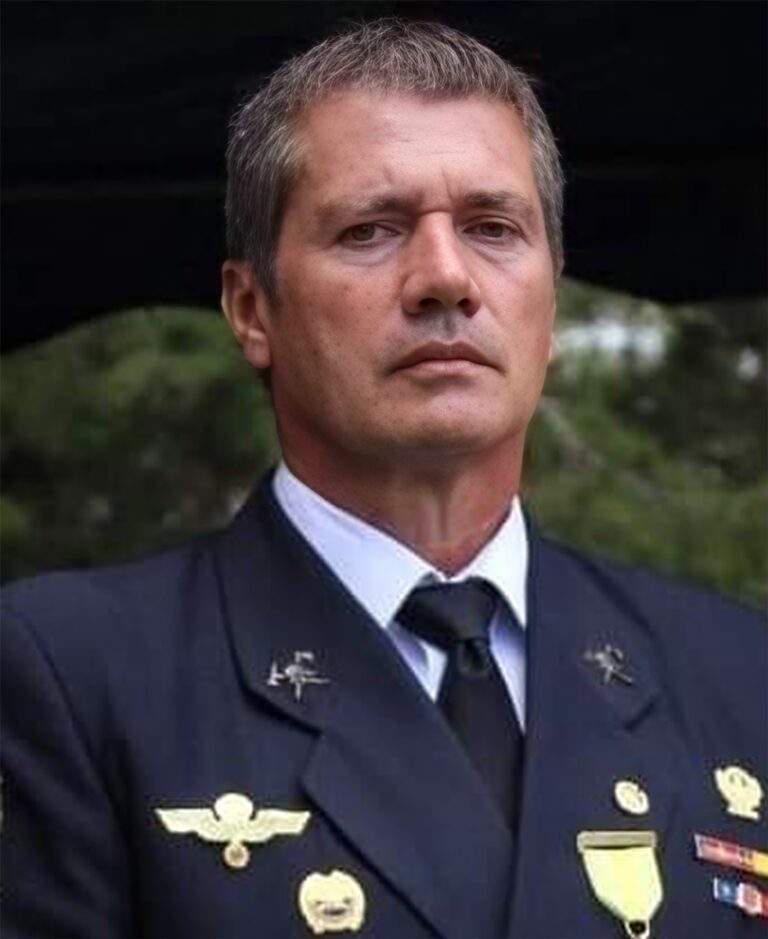
Brent Brooks is presently an Acting District Chief with 29 years of service. Brent’s 31-year career in firefighting began at Pearson International Airport and continued working with the De Havilland and Bombardier Aero Space Crash Fire Rescue teams. Brent is a proud retired member of the Canadian Armed Forces.
Brent’s High Rise Unit assignment has enabled him to enhance High-Rise Operations through innovative research and development, improving Incident Management System and operational training.
Brent is a proponent of best practices in the fire service and has specialised in high-rise firefighting. He has served on various committees and has been a speaker at national and international engagements in Great Britain, Dubai, Singapore, Kuala Lumpur, and the USA. Brent founded the High-Rise Round Table in Toronto, hosted the Toronto and Montreal High-Rise Summit, and is a Chicago-based Council of Tall Buildings member. He represents Canada as a member of the London, England-based T70 Tall Building Safety Committee.
Brent’s Community of Practice has a wide reach, providing lectures and hands-on training throughout Ontario, Canada, and internationally. He aims to educate the next generation of firefighters on best practices for occupant survival and firefighter safety in High-Rise firefighting.
In the world of firefighting, high-rise structures pose a unique set of challenges that demand innovative approaches for effective search and rescue operations. Traditional methods, while effective for smaller, residential buildings, fall short when applied to towering skyscrapers with hundreds of units. Brent sheds light on this critical issue. Drawing on his extensive experience, Brooks highlights the inefficiency of the conventional systematic right or left-hand search method in the context of high-rise buildings, assuming a search time of merely one minute per unit.
This daunting time frame underscores the urgency for alternative strategies that can significantly reduce search times while ensuring thoroughness and safety. Brooks is poised to introduce what he believes is the best practice for tackling this formidable challenge. Before delving into this innovative approach, he sets the stage by exploring the various scenarios encountered during high-rise search and rescue operations, preparing you for a comprehensive understanding of the complexities involved and the potential solutions at hand.
Search and Rescue in high-rise buildings
Search and rescue operations in high-rise buildings have always been challenging, even for the larger departments. The traditional search method commonly used for residential houses is known as a systematic right or left-hand search. However, this method is ineffective in a high-rise building as it may take up to 5 hours to search a building with 300 units, assuming a search time of one minute per unit. Therefore, it’s important to consider other options. We believe we have found the best practice, but before we delve into it, let’s explore the different scenarios.
Scenario#1
The fire is contained to the unit of origin, known as compartment 1. No smoke has migrated to the hallway. Firefighters arrive on the fire floor and clear the hallway of occupants, then perform an aggressive fire attack. Smoke will filter into the hallway, known as compartment 2. If the fire is extinguished quickly and the building performs as designed, we will perform a primary search of the fire unit, either a right or left-hand search. If a victim is located, they will be transported down one floor via the stairs to a crew position with medical equipment. Crews will clear smoke from the hallway out of the fire unit. Other occupant units on the fire floor should remain smoke-free if their doors are not opened. Once the smoke lifts, a secondary reach is completed, and wellness checks are done on all other units with a carbon monoxide detector.
Scenario#2
The fire is contained to the unit of origin (compartment 1); however, the unit’s automatic door closure did not function properly, or the occupant hose was used prior to the fire department’s arrival; something is preventing the fire unit door from closing completely. Smoke and heat are now in the common hallway (compartment 2). Firefighters are forced to use the standpipe outlet on the floor below the fire floor. Unfortunately, this will inevitably allow smoke into the stairwell (compartment 3) when the stairwell door to the fire floor is propped open for firefighting hoses. We are now on the clock to rapidly extinguish the fire. The hose line going down range to protect life and property is the same line propping open a door threatening life and property. Smoke is the killer in most fires. Smoke will continue to leave compartments 1 & 2 and contaminate compartment 3, the stairwell. The longer the fire can burn without compartmentalization control, the more smoke is spread throughout the building.
Compartment 3 is the most fragile compartment. It is our lifeline in and out of the building. In most cases, stairwells are connected to all other floors and compartments. Firefighters and occupants both need to use them. Once the stairwells are filled with smoke, occupants in the stairwells become incapacitated. Firefighters in full PPE, working in zero visibility, become slower and fatigued.
When smoke spreads in a building, it becomes a bigger problem as it invites more people into the emergency. This, in turn, increases the search areas for firefighters, which requires more resources to address the situation. I call this the building’s awakening; the more the building wakes, the more significant our problem becomes. It poses an immediate life safety issue because occupants cannot outrun smoke once it moves into a compartment, and firefighters can only work in a smoke-filled environment for a short time.
The fight-or-flight instincts that humans experience in stressful situations can lead to unpredictable behaviour. Those who need to evacuate during an emergency must be provided with a clear and safe evacuation route. Meanwhile, those who are sheltering in place require protection or rescue. However, this can be challenging since there is often more ground to cover than firefighters can manage on foot. Climbing stairs, wearing heavy bunker gear, carrying equipment, and relying on self-contained breathing apparatuses (SCBAs) can all make it difficult for firefighters to move quickly and efficiently.
Considering the occupancy numbers during a fire situation is important because they can significantly outnumber the available firefighters. For instance, if there are 300 units in a building and each unit contains 2 to 4 occupants, we could have 600 to 1200 people who need assistance. Rescuing just one person can require 2 to 4 firefighters, making it challenging to balance the need for rescue, containment, extinguishment, and evacuation. Focusing too much on one aspect can negatively impact the others…
To read the full article click here.
Never miss a story… Follow us on:
International Fire Buyer
@Firebuyer
Fire Buyer
Media Contact
Rebecca Spayne Managing Editor, International Fire Buyer
Tel: +44 (0) 1622 823 920
Email: editor@firebuyer.com