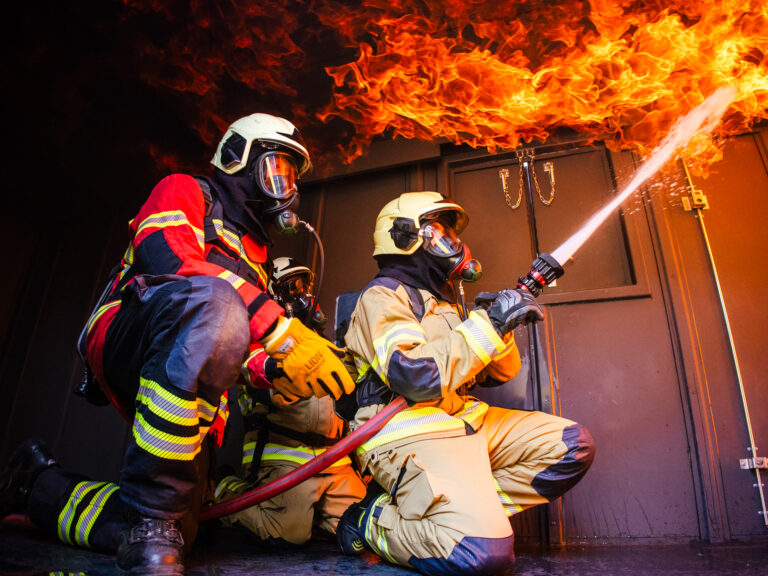

What different regulatory levels of protection must firefighters adorn to attend and fight a fire in a hazardous environment?
A hazmat suit (hazardous materials suit) is a piece of personal protective equipment that consists of an impermeable whole-body garment worn as protection against hazardous materials. Such suits are often combined with self-contained breathing apparatus (SCBA) to ensure a supply of breathable air. Hazmat suits are used by firefighters, emergency medical technicians, paramedics, researchers, personnel responding to toxic spills, specialists cleaning up contaminated facilities, and workers in toxic environments.
When working with toxic or dangerous substances, having the right protection matters. Potentially harmful materials are typically classified as HAZMAT, and there are many regulations regarding how they can be handled, transported, and properly disposed of. For workers, the best way to manage these substances is with a HAZMAT suit.
The term HAZMAT is a combination of the words hazardous (HAZ) materials (MAT). These materials can pose any kind of physical or biological threat to people, wildlife and the environment. Some examples of hazardous materials that require a HAZMAT designation include:
- Toxic Chemicals
- Nuclear Waste
- Industrial Pollution
- Infectious Diseases
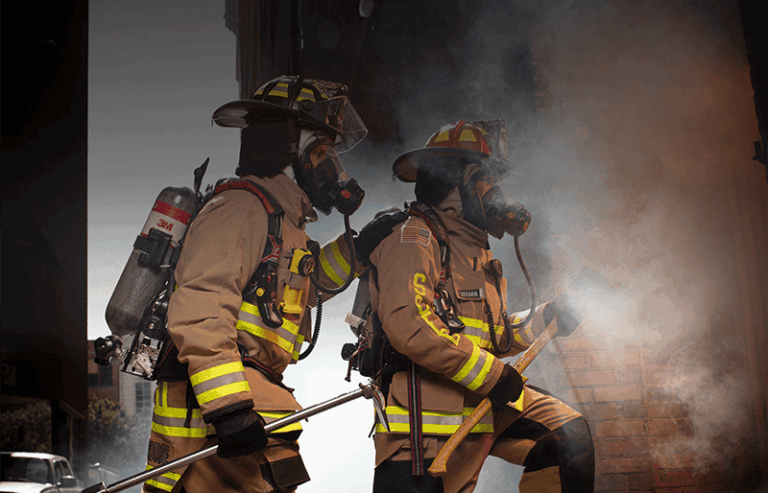
Because there is such a broad range of hazardous materials, there are numerous categories related to these substances, which are regulated and controlled by regulations. Firefighters must be prepared to enter into any dangerous environment, especially fires with additional chemicals or hazardous substances that can take a fairly simple fire into a destructive explosion. The firefighter must now be protected, not just from flame, but also the hazardous material itself to best fight the fire/spillage/explosion. Some of the categories related to substances include:
- Explosives
- Non-Flammable Gasses
- Flammable Liquids (and Solids)
- Poisons
- Radioactive materials
- Corrosive substances
Each of these classifications is represented by a HAZMAT warning label. Government bodies, for example the Department of Transportation (DOT) in the US, are in charge of these categories because they oversee how hazardous materials can be collected and transported throughout the country. Without these designations and safety regulations, it would be far too easy for dangerous materials to threaten people and the environment.
HAZMAT protection levels?
With such a wide range of hazardous materials, the Environmental Protection Agency (EPA) came up with a four-tier system to determine the right level of protection for individuals. These tiers are labelled A through D, and they have specific rules and regulations. Here is a breakdown of each of these HAZMAT levels.
Level A HAZMAT
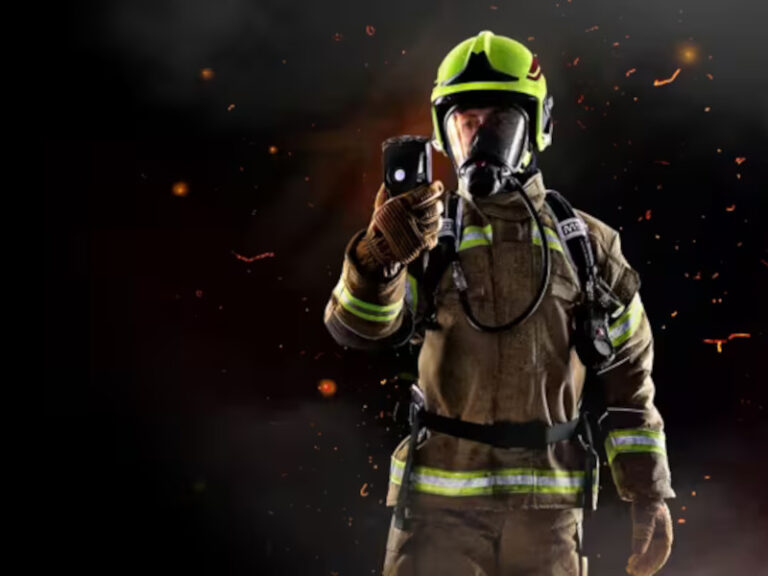
This is the most protected level, which means that it is designed to safeguard against highly toxic or dangerous substances, including those that may be radioactive or biological (i.e., an infectious disease). In this case, the hazardous material poses a threat to the respiratory system, eyes, and skin. Because of this, firefighters need to use the following personal protective equipment (PPE) to stay safe:
- Fully Encapsulated Chemical Protective Suit
- Positive Pressure Demand Full-Face Self-Contained Breathing Apparatus
- Inner and Outer Chemical Resistant Gloves
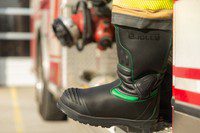
- Chemical Resistant Safety Boots
As you’ll notice, firefighters must have a supply of oxygen and a Level A HAZMAT suit that can withstand chemical substances without breaking down. If a person were to come into contact with a corrosive material that penetrated the suit, it could pose a substantial risk. Because Level A is the most secure, it protects against both liquids and gases.
Level B HAZMAT
At first glance, both levels A and B are similar. However, the primary difference is that level B does not necessarily protect against gases and vapours. This means that gaseous substances could get into a protective suit. However, if they are not toxic or corrosive, it is not considered dangerous. In this case, Level B HAZMAT suits protect against liquid splashes. The PPE required for Level B includes:
- Hooded Chemical-Resistant Clothing
- Full or Half-Mask Air-Purifying Respirator
- Inner and Outer Chemical Resistant Gloves
- Safety Boots
To read the full feature, please see our latest issue here.
Media contact
Rebecca Morpeth Spayne,
Editor, International Fire Buyer
Tel: +44 (0) 1622 823 922
Email: editor@firebuyer.com