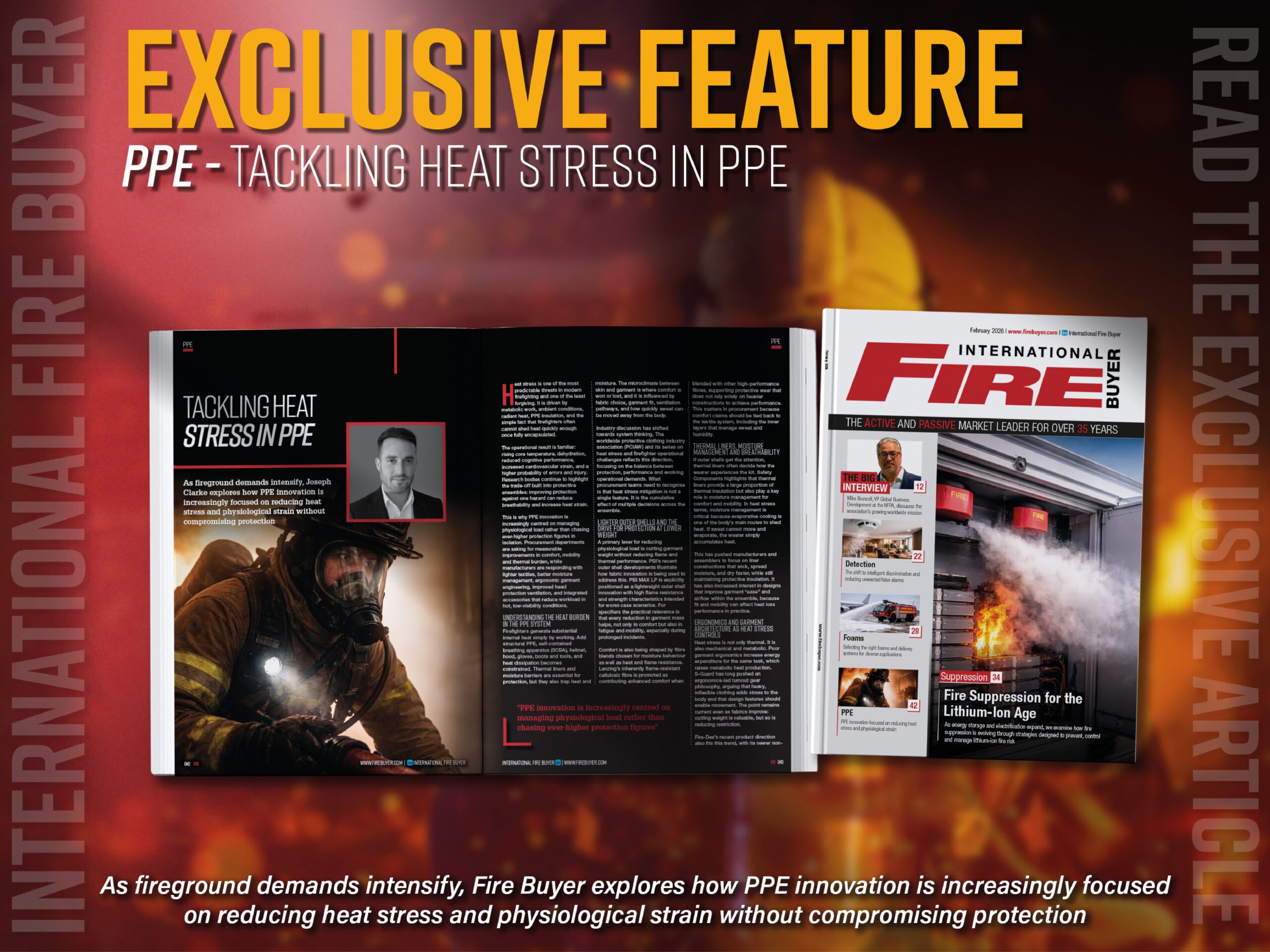

As fireground demands intensify, Joseph Clarke explores how PPE innovation is increasingly focused on reducing heat stress and physiological strain without compromising protection.
Heat stress is one of the most predictable threats in modern firefighting and one of the least forgiving. It is driven by metabolic work, ambient conditions, radiant heat, PPE insulation, and the simple fact that firefighters often cannot shed heat quickly enough once fully encapsulated.
The operational result is familiar: rising core temperature, dehydration, reduced cognitive performance, increased cardiovascular strain, and a higher probability of errors and injury. Research bodies continue to highlight the trade-off built into protective ensembles: improving protection against one hazard can reduce breathability and increase heat strain.
This is why PPE innovation is increasingly centred on managing physiological load rather than chasing ever-higher protection figures in isolation. Procurement departments are asking for measurable improvements in comfort, mobility and thermal burden, while manufacturers are responding with lighter textiles, better moisture management, ergonomic garment engineering, improved head protection ventilation, and integrated accessories that reduce workload in hot, low-visibility conditions.
Understanding the Heat Burden in the PPE System
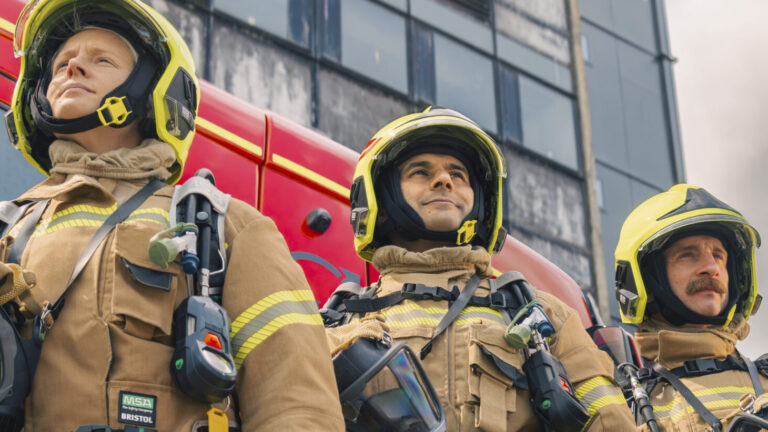
Firefighters generate substantial internal heat simply by working. Add structural PPE, self-contained breathing apparatus (SCBA), helmet, hood, gloves, boots and tools, and heat dissipation becomes constrained. Thermal liners and moisture barriers are essential for protection, but they also trap heat and moisture. The microclimate between skin and garment is where comfort is won or lost, and it is influenced by fabric choice, garment fit, ventilation pathways, and how quickly sweat can be moved away from the body.
Industry discussion has shifted towards system thinking. The worldwide protective clothing industry association (PCIAW) and its series on heat stress and firefighter operational challenges reflects this direction, focusing on the balance between protection, performance and evolving operational demands. What procurement teams need to recognise is that heat stress mitigation is not a single feature. It is the cumulative effect of multiple decisions across the ensemble.
Lighter Outer Shells and the Drive for Protection at Lower Weight
A primary lever for reducing physiological load is cutting garment weight without reducing flame and thermal performance. PBI’s recent outer shell developments illustrate how fabric innovation is being used to address this. PBI MAX LP is explicitly positioned as a lightweight outer shell innovation with high flame resistance and strength characteristics intended for worst-case scenarios. For specifiers the practical relevance is that every reduction in garment mass helps, not only in comfort but also in fatigue and mobility, especially during prolonged incidents.
Comfort is also being shaped by fibre blends chosen for moisture behaviour as well as heat and flame resistance. Lenzing’s inherently flame-resistant cellulosic fibre is promoted as contributing enhanced comfort when blended with other high-performance fibres, supporting protective wear that does not rely solely on heavier constructions to achieve performance. This matters in procurement because comfort claims should be tied back to the textile system, including the inner layers that manage sweat and humidity.
TO READ THE FULL ARTICLE READ THE LATEST ISSUE HERE.