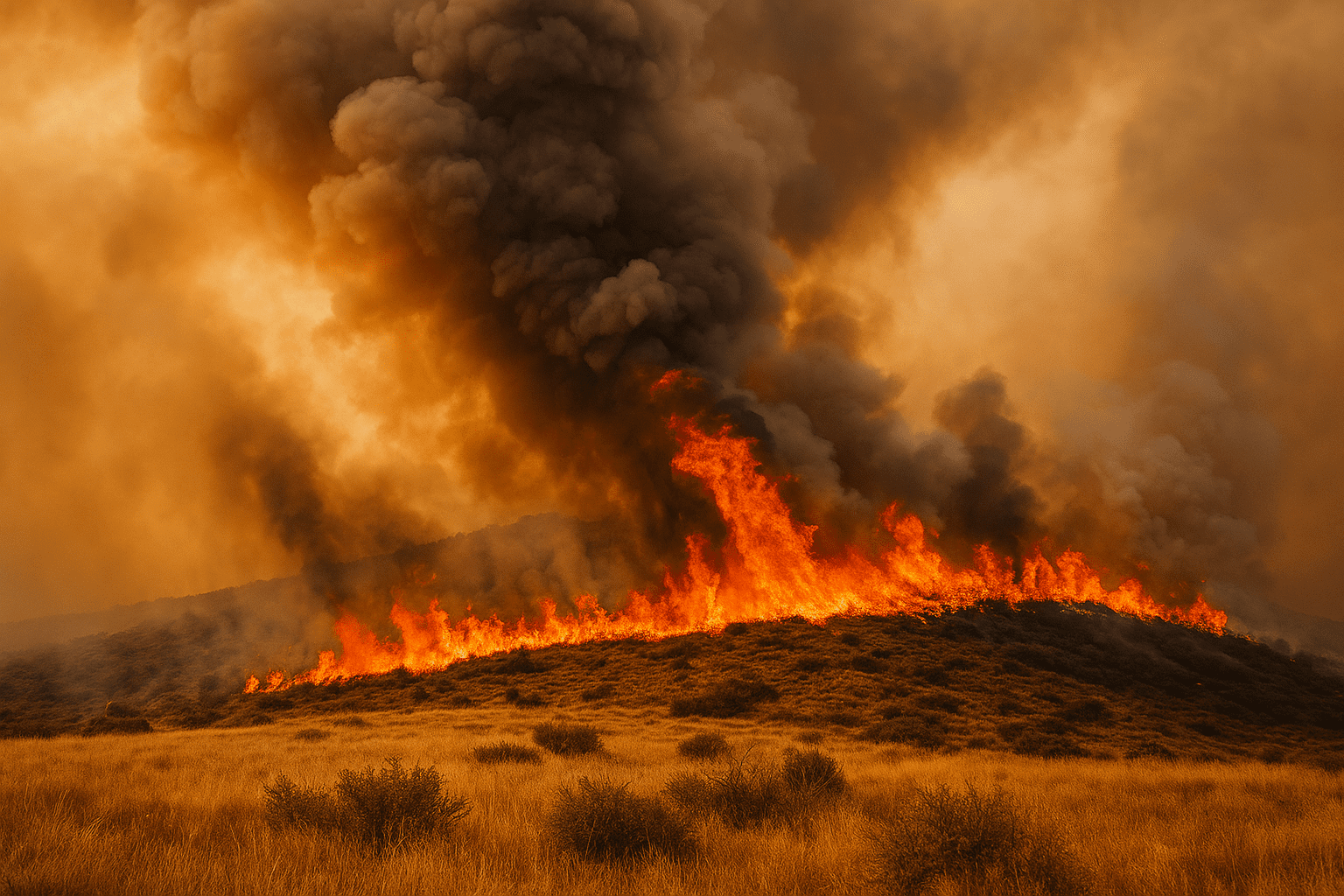

Spain’s devastating wildfires this August were fuelled by what meteorologists have confirmed as the country’s most intense heatwave on record, according to the state weather agency AEMET.
The fires, which have torn through parts of the north and west, come as a stark warning about the accelerating impacts of climate change.
Between 3 and 18 August, extreme temperatures and parched conditions created an environment ripe for combustion. AEMET recorded a maximum temperature anomaly of 4.6°C above the established heatwave threshold—making this period the hottest since at least 1950.
The agency noted that a 10-day stretch from 8–17 August was the hottest such period ever recorded in Spain, based on data dating back to the mid-20th century.
The heat intensified an already dangerous fire season. With vegetation dried to tinder under sustained heat, wildfires broke out in multiple regions, overwhelming emergency services and prompting evacuations. Some areas, particularly in the northwestern regions of Galicia and Castile and León, saw entire communities threatened as flames spread rapidly across forested terrain.
More than 1,100 excess deaths have been attributed to the heatwave, according to estimates from the Carlos III Health Institute. While heat-related mortality has become a recurring concern in Spanish summers, the deadly combination of extreme temperatures and out-of-control fires has underscored the need for urgent adaptation and mitigation strategies.
Spanish Prime Minister Pedro Sánchez visited the fire-affected province of Cáceres this week, calling the current crisis a wake-up call. “What we are experiencing now is no longer an anomaly—it is the new normal,” Sánchez said, urging more robust national planning to face climate-driven disasters.
Since 1975, AEMET has recorded 77 heatwaves in Spain. Six of these reached at least 4°C above the heatwave threshold, five of which have occurred since 2019. Scientists widely agree that climate change is increasing the frequency and intensity of such events, with hotter, longer summers creating ideal conditions for large-scale wildfires.
AEMET noted that while each year may not be hotter than the last, the long-term trend is undeniable. “Current summers are hotter than in previous decades,” the agency stated. “There is a clear trend towards much more extreme summers. What is key is adapting to, and mitigating, climate change.”
As firefighters continue to battle active blazes and communities assess the damage, calls are growing for long-term investments in wildfire resilience, including landscape management, early warning systems, and public education. For now, Spain’s experience serves as a warning to southern Europe and beyond: as the planet warms, fire seasons are no longer confined to the calendar—they are shaped by the climate.