Staging Site!

Ask The Expert-RainFire-Make it Rain-Firebuyer.com

Ask The Expert – RainFire

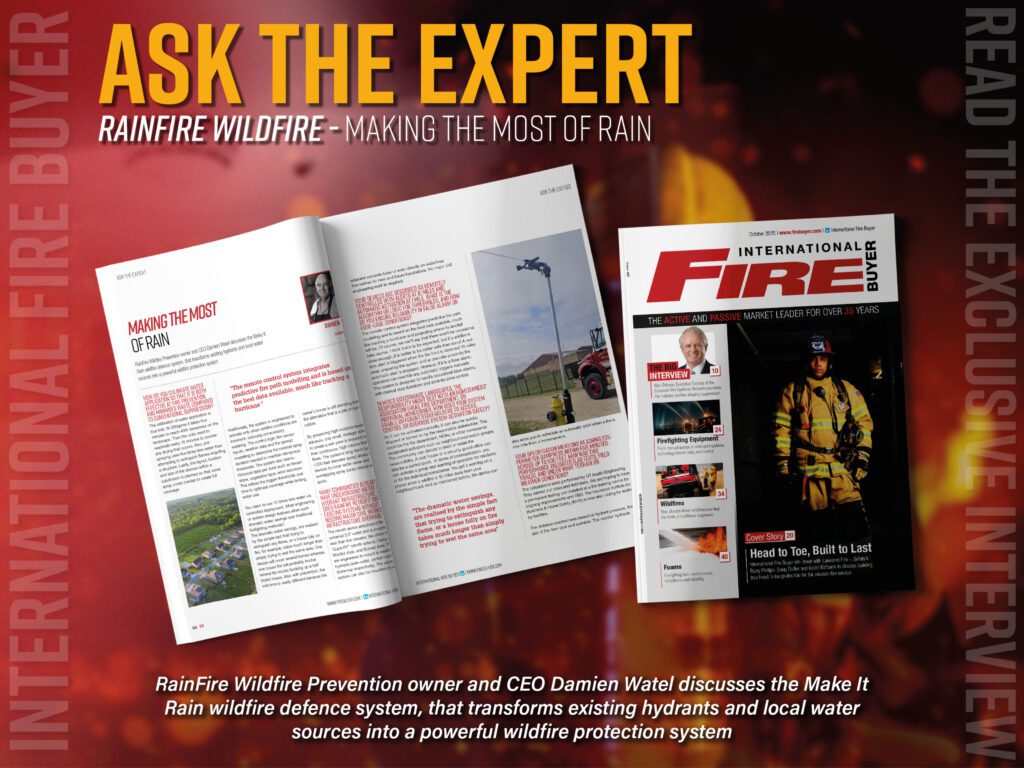
RainFire Wildfire Prevention owner and CEO Damien Watel discusses the Make It Rain wildfire defence system, that transforms existing hydrants and local water sources into a powerful wildfire protection system How do you calibrate water application so that it is both effective at fire prevention and minimises waste compared to conventional suppression? The calibration of water application is four-fold. At 200gpms it takes four minutes to reach 40% dampness on the landscape. Then the units need to reactivate every 15 minutes to counter any drying that occurs. Also, pre-spraying uses five times less water than attempting to extinguish flames engulfing a structure. Lastly, the layout, location and size of the devices within a subdivision is planned so that some spray zones overlap to create full coverage. Additionally, the system is engineered to activate only when wildfire conditions are imminent, reducing unnecessary watering. The control logic ties sensor inputs, weather data and fire spread modelling to determine the minimal spray duration needed to maintain dampness thresholds. The system also learns historical data per zone such as terrain slope, vegetation type, wind exposure. This refines the trigger thresholds over time to optimise coverage while limiting water use. You claim to use 10 times less water via controlled deployment. What engineering or system design features allow such dramatic water savings over traditional firefighting methods? The dramatic water savings, are realised by the simple fact that trying to extinguish any flame, or a house fully on fire, for example, takes much longer than simply trying to wet the same area. One device will cover several homes whereas one house fire will probably involve several fire trucks hooking up a half dozen hoses. Also with prevention, the outcome is vastly different because the owner’s house is still standing instead of the alternative that is a pile of burnt rubble. By preserving high moisture levels in advance, only small, strategic activation to create a wet zone is required rather than continuous, high-volume firefighting flows. The system’s long reach (up to 1,000 feet diameter spray) allows fewer devices to cover wider areas and overlapping spray zones reduce weak spots. Many communities already have underground water and hydrant infrastructure. How does RainFire retrofit onto existing systems without needing major civil works or infrastructure overhaul? The retrofit device attachment fits on the universal 2.5” outlet and is mounted in less than five minutes. We offers three ‘Quick-Fit”’ retrofit options: Clamp style, Monitor style, and Bonnet style. These are engineered to mount to existing hydrants (side-outlet, central nozzle, dome-top respectively). The various options can also be mounted on an adjacent concrete base or even directly on waterlines themselves for new and future installations. No major civil engineering work is required. TO READ THE FULL ARTICLE SEE OUR LATEST ISSUE HERE.

Ask The Expert – RainFire Read More »
The Big Interview-Alan Brinson-Firebuyer.com

The Big Interview – Alan Brinson

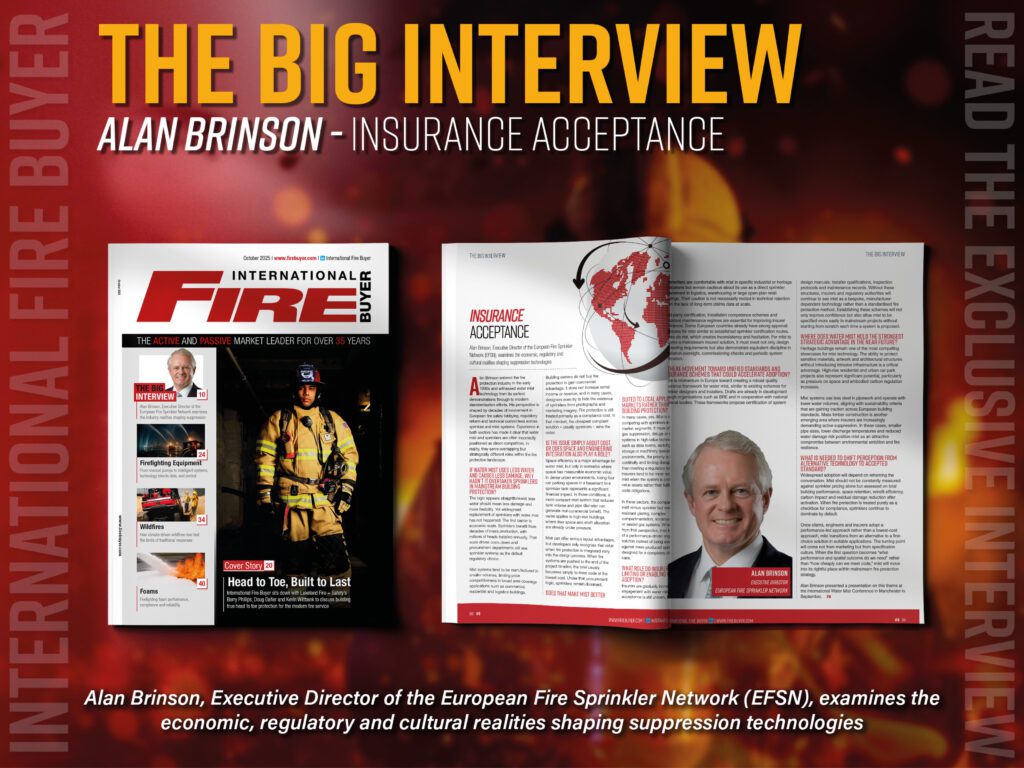
Alan Brinson, Executive Director of the European Fire Sprinkler Network (EFSN), examines the economic, regulatory and cultural realities shaping suppression technologies Alan Brinson entered the fire protection industry in the early 1990s and witnessed water mist technology from its earliest demonstrations through to modern standardisation efforts. His perspective is shaped by decades of involvement in European fire safety lobbying, regulatory reform and technical committees across sprinkler and mist systems. Experience in both sectors has made it clear that water mist and sprinklers are often incorrectly positioned as direct competitors. In reality, they serve overlapping but strategically different roles within the fire protection landscape. If water mist uses less water and causes less damage, why hasn’t it overtaken sprinklers in mainstream building protection? The logic appears straightforward: less water should mean less damage and more flexibility. Yet widespread replacement of sprinklers with water mist has not happened. The first barrier is economic scale. Sprinklers benefit from decades of mass production, with millions of heads installed annually. That scale drives costs down and procurement departments still see sprinkler systems as the default regulatory choice. Mist systems tend to be manufactured in smaller volumes, limiting price competitiveness in broad area coverage applications such as commercial, residential and logistics buildings. Building owners do not buy fire protection to gain commercial advantage. It does not increase rental income or revenue, and in many cases, designers even try to hide the existence of sprinklers from photographs and marketing imagery. Fire protection is still treated primarily as a compliance cost. In that mindset, the cheapest compliant solution – usually sprinklers – wins the order. Is the issue simply about cost, or does space and engineering integration also play a role? Space efficiency is a major advantage for water mist, but only in scenarios where space has measurable economic value. In dense urban environments, losing four car parking spaces in a basement to a sprinkler tank represents a significant financial impact. In those conditions, a more compact mist system that reduces tank volume and pipe diameter can generate real commercial benefit. The same applies to high-rise buildings, where riser space and shaft allocation are already under pressure. Mist can offer serious layout advantages, but developers only recognise that value when fire protection is integrated early into the design process. When fire systems are pushed to the end of the project timeline, the brief usually becomes simply to meet code at the lowest cost. Under that procurement logic, sprinklers remain dominant. Does that make mist better suited to local application markets rather than full building protection? In many cases, yes. Mist is rarely competing with sprinklers in its strongest market segments. It more often replaces gas suppression, deluge or spray systems in high-value technical risks such as data rooms, switchgear, energy storage or machinery spaces. In those environments, the priority is business continuity and limiting disruption rather than meeting a regulatory minimum. Insurers tend to be more receptive to mist when the system is protecting high-value assets rather than fulfilling building code obligations. In these sectors, the comparison is not mist versus sprinkler but mist versus fire-resistant glazing, complex compartmentation, advanced detection or sealed gas systems. When viewed from that perspective, mist becomes part of a performance-driven engineering solution instead of being assessed against mass-produced sprinkler heads designed for a completely different use case. TO READ THE FULL ARTICLE SEE OUR LATEST ISSUE HERE.

The Big Interview – Alan Brinson Read More »

From the Expert-Stat-x-Ultrasense-firebuyer.com

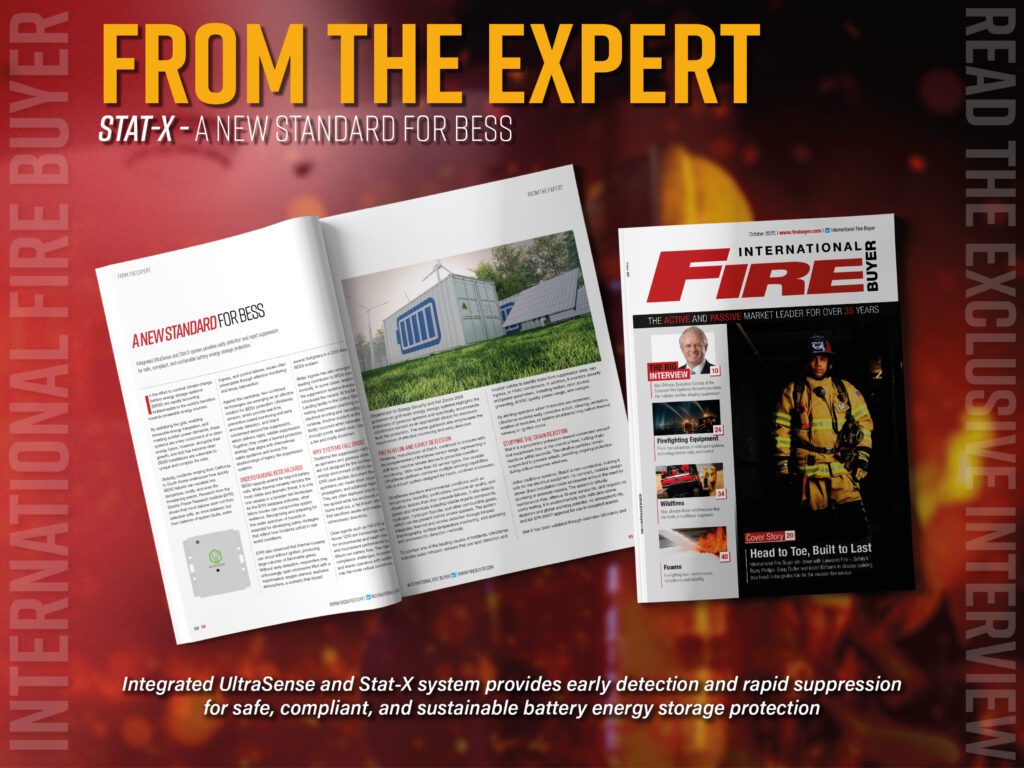
From the Expert – A New Standard For BESS

Integrated UltraSense and Stat-X system provides early detection and rapid suppression for safe, compliant, and sustainable battery energy storage protection In the effort to combat climate change, battery energy storage systems (BESS) are rapidly becoming indispensable to the world’s transition towards renewable energy sources. By stabilising the grid, enabling renewable energy integration, and meeting sudden power demands, these systems are a key component of a clean-energy future. However, alongside their growth, one fact has become clear: BESS installations are vulnerable to unique and complex fire risks. Globally, incidents ranging from California to South Korea underscore how quickly BESS failures can escalate into dangerous, costly, and even life-threatening events. Research from the Electric Power Research Institute (EPRI) shows that most failures stem not from defective cells, as once believed, but from balance-of-system faults, water ingress, and control failures, issues often preventable through effective monitoring and timely intervention. Against this backdrop, two combined technologies are emerging as an effective solution for BESS protection: UltraSense sensors, which provide real-time, prevention-based monitoring and early anomaly detection, and Stat-X condensed aerosol fire suppression, which delivers rapid, reliable suppression. Together, they create a layered protection strategy that aligns with international safety guidance and avoids the shortcomings of legacy fire suppression systems. Understanding BESS Hazards BESS hazards extend far beyond battery cells. While thermal runaway remains the most visible and dramatic threat, it is only one variable in a broader risk landscape. As the EPRI database indicates, other failure modes can compromise system resilience. Recognising and preparing for this wider spectrum of hazards is essential for developing safety strategies that reflect how incidents unfold in real-world conditions. EPRI also observed that thermal runaway can occur without ignition, producing large volumes of flammable gases. Without early detection, responders may unknowingly open enclosures filled with a superheated, oxygen-starved, explosive atmosphere, a scenario that injured several firefighters in a 2019 Arizona BESS incident. Water ingress has also emerged as a leading contributor to BESS incidents. Ironically, in some cases, water-based fire suppression systems themselves introduced the hazard. At the Moss Landing facility in the United States, leaking suppression plumbing caused electrical shorting and cascading thermal runaway. Another incident at the same facility occurred when rainwater entered through poorly sealed vents, leading to a fire and costly shutdown. Why Systems Fall Short Traditional fire suppression methods such as sprinklers and gaseous clean agents are not designed for the confined, high-energy environment of BESS enclosures. EPRI case studies document that sprinklers can cause short circuits, fire propagation, and additional hazards. They are often deployed only to prevent fire spread while the enclosure of origin burns itself out, a ‘let-it-burn’ strategy that sacrifices assets and creates unnecessary downtime. TO READ THE FULL ARTICLE SEE OUR LATEST ISSUE HERE.

From the Expert – A New Standard For BESS Read More »

Feature Sponsor-Waterax October25-Firebuyer.com

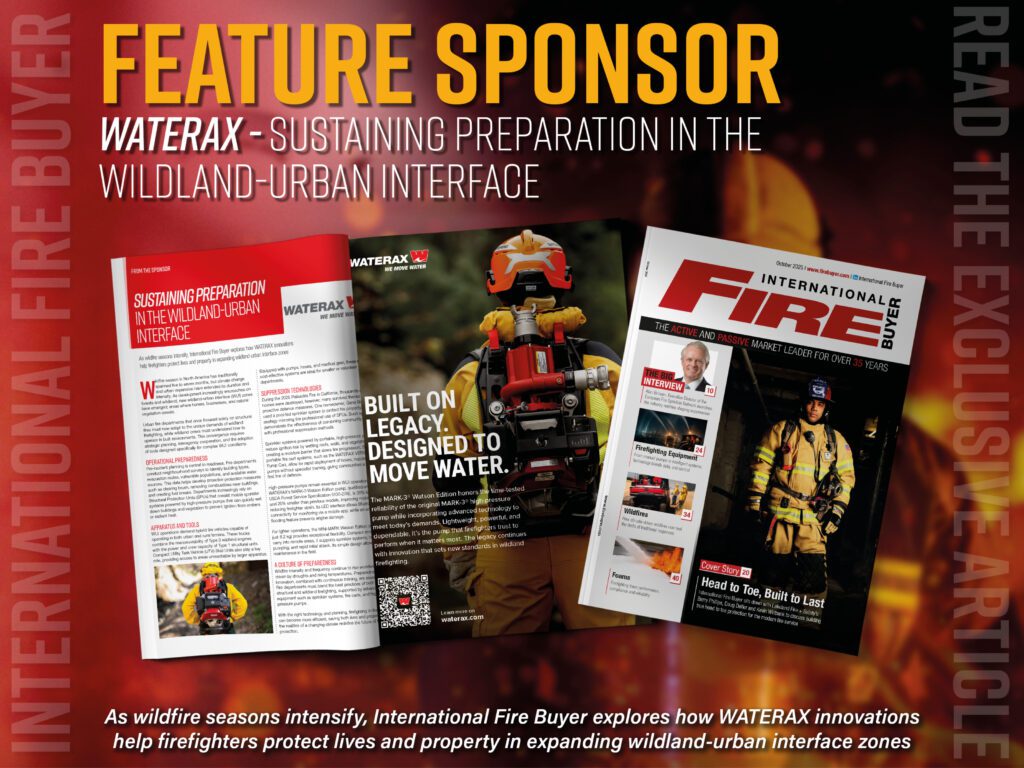
Feature Sponsor – WATERAX

As wildfire seasons intensify, International Fire Buyer explores how WATERAX innovations help firefighters protect lives and property in expanding wildland-urban interface zones Wildfire season in North America has traditionally spanned five to seven months, but climate change and urban expansion have extended its duration and intensity. As development increasingly encroaches on forests and wildland, new wildland-urban interface (WUI) zones have emerged; areas where homes, businesses, and natural vegetation coexist. Urban fire departments that once focused solely on structural fires must now adapt to the unique demands of wildland firefighting, while wildland crews must understand how to operate in built environments. This convergence requires strategic planning, interagency cooperation, and the adoption of tools designed specifically for complex WUI conditions. Operational Preparedness Pre-incident planning is central to readiness. Fire departments conduct neighbourhood surveys to identify building types, evacuation routes, vulnerable populations, and available water sources. This data helps develop proactive protection measures such as clearing brush, removing combustibles near buildings, and creating fuel breaks. Departments increasingly rely on Structural Protection Units (SPUs) that consist mobile sprinkler systems powered by high-pressure pumps that can quickly wet down buildings and vegetation to prevent ignition from embers or radiant heat. Apparatus and Tools WUI operations demand hybrid fire vehicles capable of operating in both urban and rural terrains. These trucks combine the manoeuvrability of Type 3 wildland engines with the power and crew capacity of Type 1 structural units. Compact Utility Task Vehicle (UTV) Skid Units also play a key role, providing access to areas unreachable by larger apparatus. Equipped with pumps, hoses, and medical gear, these small, cost-effective systems are ideal for smaller or volunteer departments. Suppression Technologies During the 2025 Palisades Fire in California, thousands of homes were destroyed, however, many survived thanks to proactive defence measures. One homeowner, Gene Golling, used a pool-fed sprinkler system to protect his property, a strategy mirroring the professional use of SPUs. Such systems demonstrate the effectiveness of combining community initiative with professional suppression methods. Sprinkler systems powered by portable, high-pressure pumps reduce ignition risk by wetting roofs, walls, and vegetation, creating a moisture barrier that slows fire progression. Similarly, portable fire cart systems, such as the WATERAX VERSAX Fire Pump Cart, allow for rapid deployment of hoses, nozzles, and pumps without specialist training, giving communities a practical first line of defence. High-pressure pumps remain essential in WUI operations. WATERAX’s MARK-3 Watson Edition pump, qualified under USDA Forest Service Specification 5100-274E, is 30% lighter and 20% smaller than previous models, improving mobility and reducing firefighter strain. Its LED interface allows Bluetooth connectivity for monitoring via a mobile app, while an anti-flooding feature prevents engine damage. For lighter operations, the MINI-MARK Watson Edition (weighing just 8.2 kg) provides exceptional flexibility. Compact enough to carry into remote areas, it supports sprinkler systems, tandem pumping, and rapid initial attack. Its simple design allows easy maintenance in the field. TO READ THE FULL ARTICLE SEE OUR LATEST ISSUE HERE.

Feature Sponsor – WATERAX Read More »

Carousel Feature Sponsor-Hytrans Oct25-Firebuyer.com

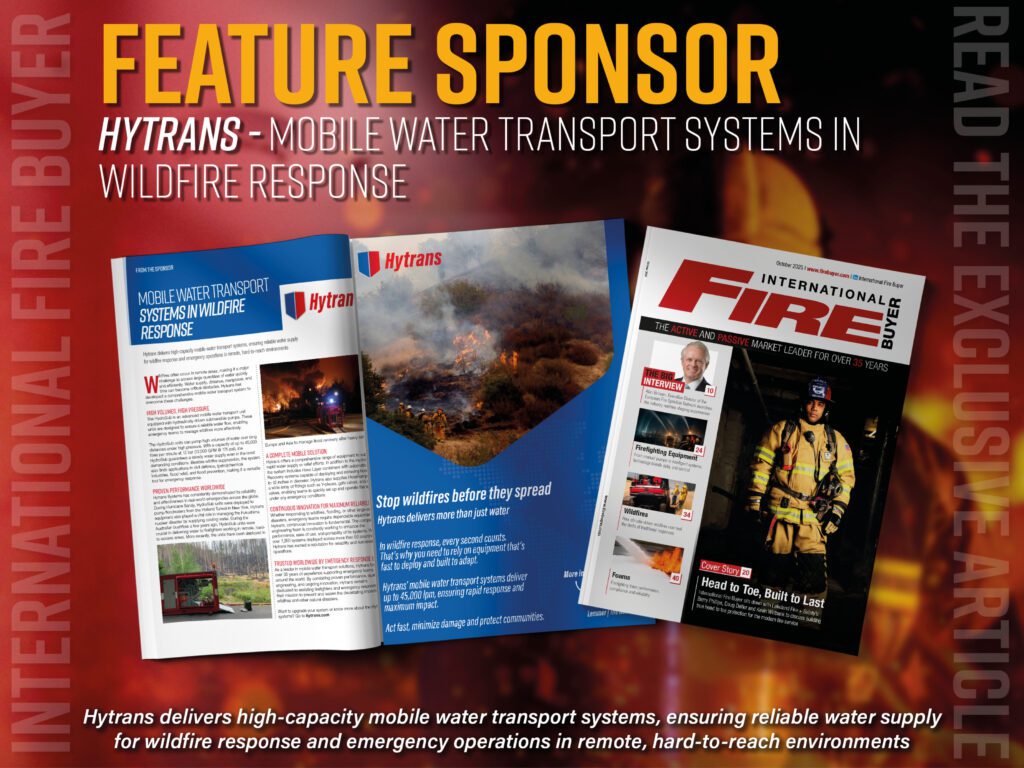
Feature Sponsor – Hytrans

Hytrans delivers high-capacity mobile water transport systems, ensuring reliable water supply for wildfire response and emergency operations in remote, hard-to-reach environments Wildfires often occur in remote areas, making it a major challenge to access large quantities of water quickly and efficiently. Water supply, distance, manpower, and time can become critical obstacles. Hytrans has developed a comprehensive mobile water transport system to overcome these challenges. High Volumes, High Pressure The HydroSub is an advanced mobile water transport unit equipped with hydraulically driven submersible pumps. These units are designed to ensure a reliable water flow, enabling emergency teams to manage wildfires more effectively. The HydroSub units can pump high volumes of water over long distances under high pressure. With a capacity of up to 45,000 litres per minute at 12 bar (12,000 GPM @ 175 psi), the HydroSub guarantees a steady water supply even in the most demanding conditions. Besides wildfire suppression, the system also finds applications in civil defence, (petro)chemical industries, flood relief, and flood prevention, making it a versatile tool for emergency response. Proven Performance Worldwide Hytrans Systems has consistently demonstrated its reliability and effectiveness in real-world emergencies across the globe. During Hurricane Sandy, HydroSub units were deployed to pump floodwaters from the Holland Tunnel in New York. Hytrans equipment also played a vital role in managing the Fukushima nuclear disaster by supplying cooling water. During the Australian bushfires a few years ago, HydroSub units were crucial in delivering water to firefighters working in remote, hard-to-access areas. More recently, the units have been deployed in Europe and Asia to manage flood recovery after heavy rains. A Complete Mobile Solution Hytrans offers a comprehensive range of equipment to support rapid water supply or relief efforts. In addition to the HydroSub, the system includes Hose Layer containers with automatic Hose Recovery systems capable of deploying and retrieving hoses up to 12 inches in diameter. Hytrans also supplies HoseRamps and a wide array of fittings such as Y-pieces, gate valves, and check valves, enabling teams to quickly set up and operate the system under any emergency conditions. Continuous Innovation for Maximum Reliability Whether responding to wildfires, flooding, or other large-scale disasters, emergency teams require dependable equipment. At Hytrans, continuous innovation is fundamental. The company’s engineering team is constantly working to enhance the performance, ease of use, and portability of its systems. With over 1,250 systems deployed across more than 50 countries, Hytrans has earned a reputation for reliability and successful operations. TO READ THE FULL ARTICLE SEE OUR LATEST ISSUE HERE.

Feature Sponsor – Hytrans Read More »

Dirk Sprakel-Innovater-Oct25-Firebuyer.com

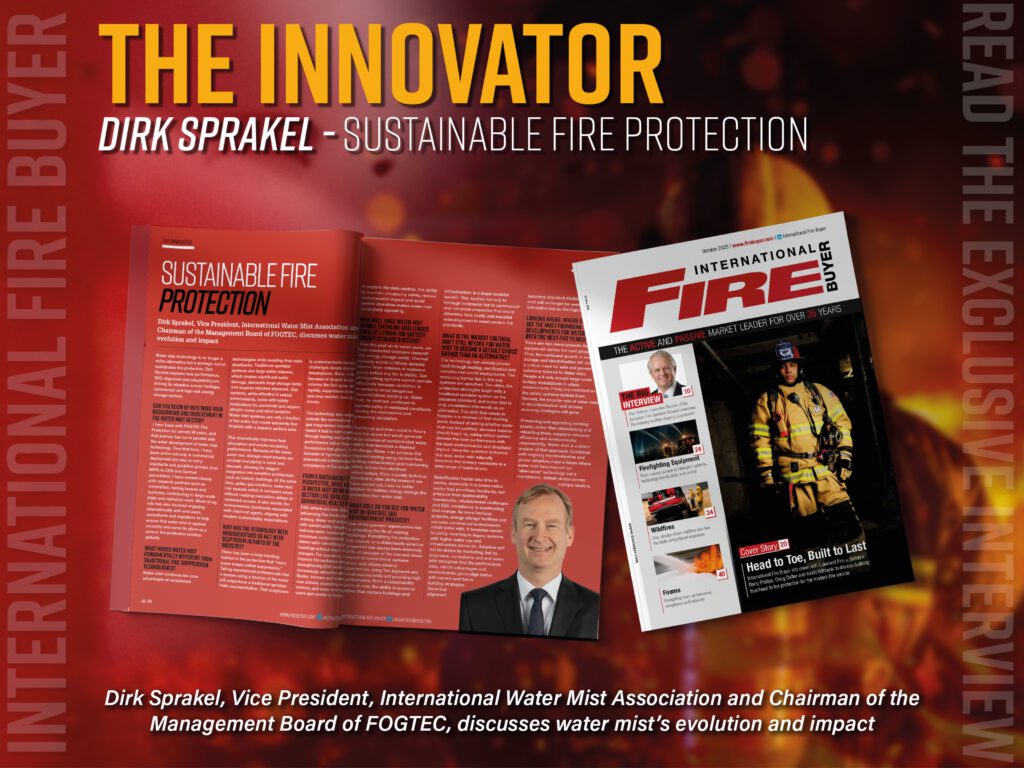
Innovator – Dirk Sprakel

Dirk Sprakel, Vice President, International Water Mist Association and Chairman of the Management Board of FOGTEC, discusses water mist’s evolution and impact Water mist technology is no longer a niche alternative but a strategic tool in sustainable fire protection. Dirk Sprakel explains how performance, ESG alignment and adaptability are driving its adoption across heritage, commercial and high-risk energy storage sectors. Can you begin by outlining your background and involvement in the water mist sector? I have been with FOGTEC Fire Protection for almost 30 years, and that journey has run in parallel with the wider development of water mist technology. Over that time, I have been active not only in commercial deployment but also in many standards and guideline groups, from NFPA to CEN and German committees. I have worked closely with research partners such as universities, testing houses and institutes, contributing to large-scale trials and validation work. Much of my role has also involved engaging internationally with end users, consultants and regulators to help ensure that water mist is applied correctly and earns its place as a serious fire protection solution globally. What makes water mist fundamentally different from traditional fire suppression technologies? Water mist combines the core advantages of established technologies while avoiding their main drawbacks. Traditional sprinkler systems use large water volumes, which creates significant water damage, demands large storage tanks and requires intrusive pipework. Gas systems, while effective in sealed environments, come with safety implications for personnel and require airtight rooms and strict isolation. Water mist systems use only a fraction of the water but create extremely fine droplets with a massive surface area. This dramatically improves heat absorption and smoke scrubbing performance. Because of the lower water use, storage requirements are minimal and piping is small and discreet, allowing for elegant integration into sensitive architecture such as historic buildings. At the same time, unlike gas solutions, water mist can operate safely in occupied areas without needing evacuation delays or restricted access. It also avoids the environmental drawbacks associated with chemical agents, aligning with modern sustainability expectations. Why has the technology been misunderstood or met with scepticism in parts of the industry? There has been a long-standing instinct in fire protection that “more water means better suppression.” Telling experienced professionals that a system using a fraction of the water will outperform a traditional sprinkler feels counterintuitive. That scepticism is understandable because it challenges deeply ingrained assumptions. Water mist works because of droplet behaviour, not volume; the fine spray extracts heat rapidly, suppresses flames efficiently and even washes toxic particles from smoke. The technology also originated from outside the conventional sprinkler and gas suppression industry, which meant it had to earn credibility through testing and proven performance rather than reputation. Acceptance has grown, but only because of rigorous fire testing, international collaboration and the consistency of the results. TO READ THE FULL ARTICLE SEE OUR LATEST ISSUE HERE.

Innovator – Dirk Sprakel Read More »

Pic of Manchester-Injecta Fire Barrier-Firebuyer.com

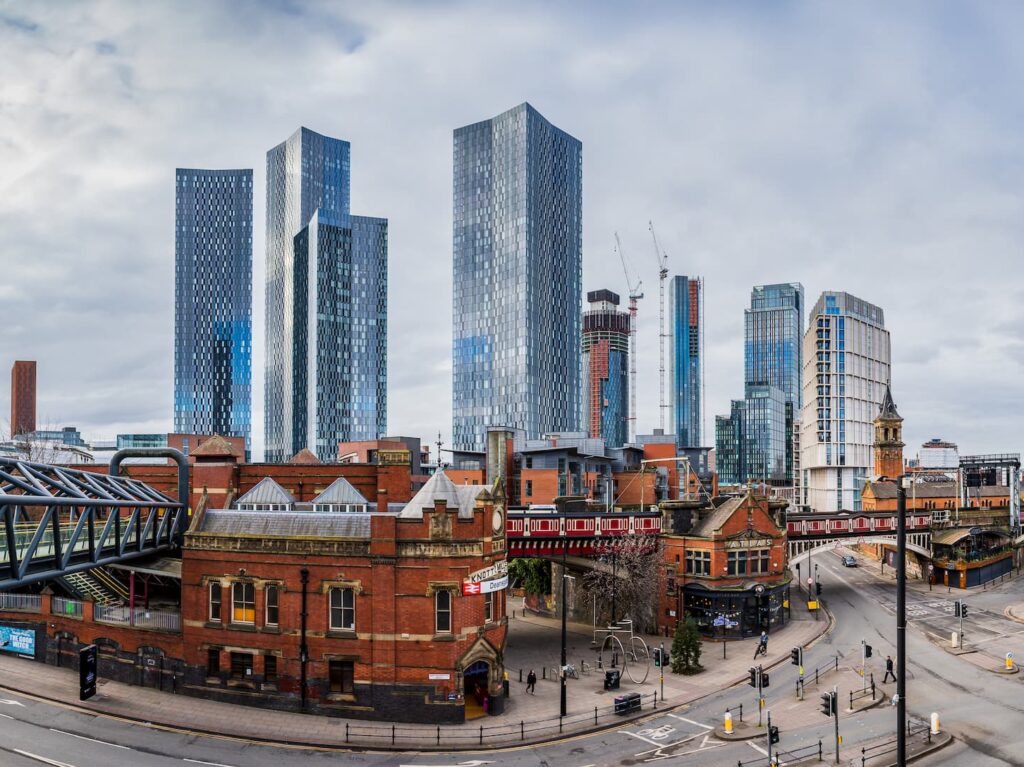
Injecta Fire Barrier begins new project in Manchester

Installer of passive fire barriers, Injecta Fire Barrier, has begun another major remediation project for a building in the heart of Manchester. Using the patented Injectaclad system, Injecta Fire Barrier are installing regulatory compliant cavity barriers between the horizontal and vertical cavities that divide the structure. Once installed, the system will provide enhanced fire protection to the building’s occupants while meeting the latest building regulations detailed in the Fire Safety Act (2021) and Building Safety Act (2022). “Another exciting project is underway! Given Manchester’s rich architectural heritage, it is vital to preserve the city’s character when carrying out structural renovations. Working from scaffolding, our team is installing the life-saving Injectaclad – delivering a solution that is not only safe, but minimally disruptive to the building’s exterior” says Shaun Tasker, Managing Director at Injecta Fire Barrier. Injectaclad is a regulatory compliant fire-retardant sealant that can be seamlessly inserted into a building’s vertical or horizontal cavities. As an intumescent material, it reacts to heat by expanding to approximately 20 times its volume, filling any gaps and slowing the spread of flames and smoke. Unlike traditional remediation methods, Injectaclad provides a non-intrusive, cost-effective solution that avoids removing existing façades while still meeting the latest fire safety standards. Recently, Injectaclad passed rigorous testing to certify a 50-year effective lifespan, which is more than triple the industry standard of passive fire barriers. “Removing only small brick sections every couple of metres, the product is pumped into a specialist mesh sock and inserted into the cavities before being reinstated – ensuring the building’s aesthetic remains intact” explains Shaun. Injecta Fire Barrier are the UK’s first independent approved installer of the patented Injectaclad system. With years of experience in passive fire protection, the company is helping property managers and building owners protect their structures, meet safety regulations and avoid costly and intrusive renovations associated from traditional fire safety remediation. “Once the project is complete, the team will restore the exterior brickwork to its original condition, delivering passive fire protection for the Manchester occupants for over 50 years!” Shaun concludes.

Injecta Fire Barrier begins new project in Manchester Read More »

Foam Feature Oct25-Firebuyer.com

Foams – Exploring the Next-Generation

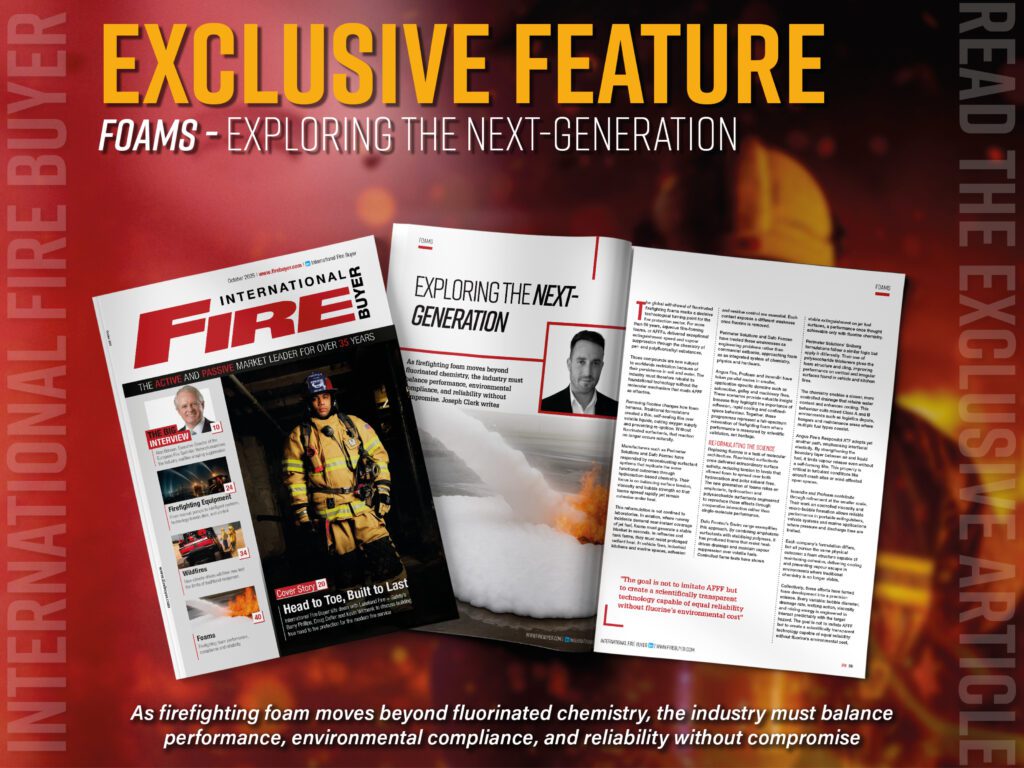
As firefighting foam moves beyond fluorinated chemistry, the industry must balance performance, environmental compliance, and reliability without compromise. Joseph Clarke writes. The global withdrawal of fluorinated firefighting foams marks a decisive technological turning point for the fire protection sector. For more than 50 years, aqueous film-forming foams, or AFFFs, delivered exceptional extinguishment speed and vapour suppression through the chemistry of per- and polyfluoroalkyl substances. Those compounds are now subject to worldwide restriction because of their persistence in soil and water. The industry must therefore rebuild its foundational technology without the molecular mechanism that made AFFF so effective. Removing fluorine changes how foam behaves. Traditional formulations created a thin, self-sealing film over volatile liquids, cutting oxygen supply and preventing re-ignition. Without fluorinated surfactants, that reaction no longer occurs naturally. Manufacturers such as Perimeter Solutions and Dafo Fomtec have responded by reconstructing surfactant systems that replicate the same functional outcomes through hydrocarbon-based chemistry. Their focus is on balancing surface tension, viscosity and bubble strength so that foams spread rapidly yet remain cohesive under heat. This reformulation is not confined to laboratories. In aviation, where runway incidents demand near-instant coverage of jet fuel, foams must generate a stable blanket in seconds. In refineries and tank farms, they must resist prolonged radiant heat. In vehicle fires, industrial kitchens and marine spaces, adhesion and residue control are essential. Each context exposes a different weakness once fluorine is removed. Perimeter Solutions and Dafo Fomtec have treated these weaknesses as engineering problems rather than commercial setbacks, approaching foam as an integrated system of chemistry, physics and hardware. Angus Fire, Profoam and Incendin have taken parallel routes in smaller, application-specific domains such as automotive, galley and machinery fires. These scenarios provide valuable insight because they highlight the importance of adhesion, rapid cooling and confined-space behaviour. Together, these programmes represent a full-spectrum reinvention of firefighting foam where performance is measured by scientific validation, not heritage. Reformulating the Science Replacing fluorine is a task of molecular architecture. Fluorinated surfactants once delivered extraordinary surface activity, reducing tension to levels that allowed foam to spread over both hydrocarbon and polar solvent fires. The new generation of foams relies on amphoteric, hydrocarbon and polysaccharide surfactants engineered to reproduce those effects through cooperative interaction rather than single-molecule performance. Dafo Fomtec’s Enviro range exemplifies this approach. By combining amphoteric surfactants with stabilising polymers, it has produced foams that resist heat-driven drainage and maintain vapour suppression over volatile fuels. Controlled flame tests have shown stable extinguishment on jet fuel surfaces, a performance once thought achievable only with fluorine chemistry. Perimeter Solutions’ Solberg formulations follow a similar logic but apply it differently. Their use of polysaccharide thickeners gives the foam structure and cling, improving performance on vertical and irregular surfaces found in vehicle and kitchen fires. TO READ THE FULL ARTICLE SEE OUR LATEST ISSUE HERE.  

Foams – Exploring the Next-Generation Read More »

Carousel Quick Fire Oct25-Firebuyer.com

Quick Fire – Iain Banks, Allegion UK

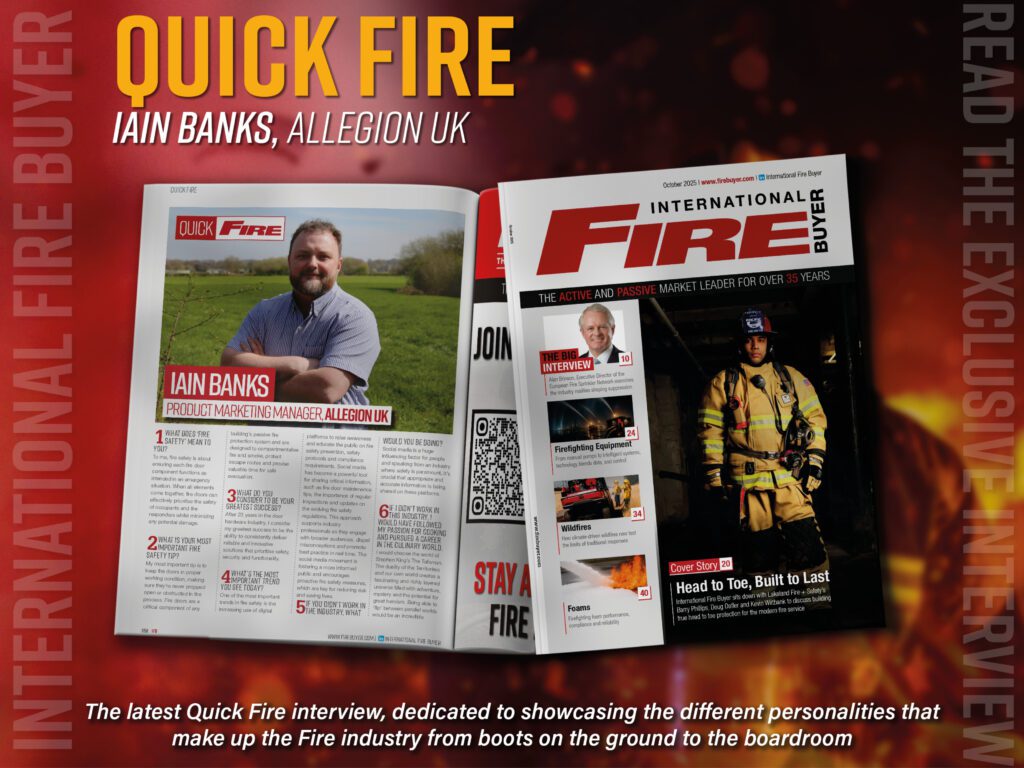
What does ‘fire safety’ mean to you? To me, fire safety is about ensuring each fire door component functions as intended in an emergency situation. When all elements come together, fire doors can effectively prioritise the safety of occupants and fire responders whilst minimizing any potential damage. What is your most important fire safety tip? My most important tip is to keep fire doors in proper working condition, making sure they’re never propped open or obstructed in the process. Fire doors are a critical component of any building’s passive fire protection system and are designed to compartmentalise fire and smoke, protect escape routes and provise valuable time for safe evacuation. What do you consider to be your greatest success? After 23 years in the door hardware industry, I consider my greatest success to be the ability to consistently deliver reliable and innovative solutions that prioritise safety, security and functionality. What’s the most important trend you see today? One of the most important trends in fire safety is the increasing use of digital platforms to raise awareness and educate the public on fire safety prevention, safety protocols and compliance requirements. Social media has become a powerful tool for sharing critical information, such as fire door maintenance tips, the importance of regular inspections and updates on the evolving fire safety regulations. This approach supports industry professionals as they engage with broader audiences, dispel misconceptions and promote best practice in real time. The social media movement is fostering a more informed public and encourages proactive fire safety measures, which are key for reducing risk and saving lives. If you didn’t work in the industry, what would you be doing? If I didn’t work in this industry, I would have followed my passion for cooking and pursued a career in the culinary world. If you could be part of any fictional universe, book, film or TV, what would it be? I would choose the world of Stephen King’s The Talisman. The duality of the Territorires and our own world creates a fascinating and richly layered universe filled with adventure, mystery and the potential for great heroism. Being able to ‘flip’ between parallel worlds would be an incredible experience! If you had a superpower, what would it be? That’s an easy one, I would choose the ability to fly. The freedom to soar through the skies would be unbelievable – I would see the world from a completely new perspective and reach places that might otherwise be inaccessible. What is your favourite activity to do (outside of work of course!)? Outside of work, my favourite activities revolve around quality time with my family, watching sports, exploring new places and enjoying outdoor adventures. TO READ THE FULL ARTICLE SEE OUR LATEST ISSUE HERE.

Quick Fire – Iain Banks, Allegion UK Read More »

Carousel-Equipment feature Oct25-Firebuyer

Firefighting Equipment – Power and Precision

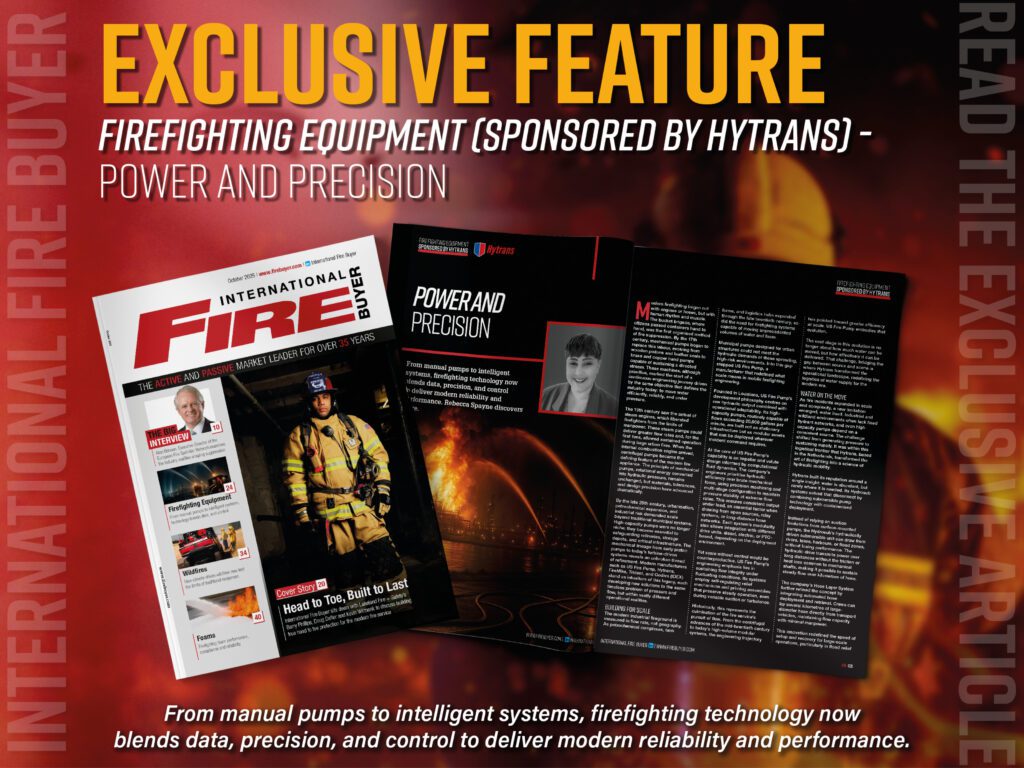
From manual pumps to intelligent systems, firefighting technology now blends data, precision, and control to deliver modern reliability and performance. Rebecca Spayne discovers more. Modern firefighting began not with engines or hoses, but with human rhythm and muscle. The bucket brigade, where citizens passed containers hand to hand, was the first organised method of fire suppression. By the 17th century, mechanical pumps began to replace this labour, evolving from wooden pistons and leather seals to brass and copper hand pumps capable of sustaining a directed stream. These machines, although primitive, marked the start of a continuous engineering journey driven by the same objective that defines the industry today: to move water efficiently, reliably, and under pressure. The 19th century saw the arrival of steam engines, which liberated firefighters from the limits of manpower. These steam pumps could deliver greater flow rates and, for the first time, allowed sustained operation during large urban fires. When the internal combustion engine arrived, centrifugal pumps became the defining feature of the modern fire appliance. The principle of mechanical pumps, rotational energy converted into hydraulic pressure, remains unchanged, but materials, tolerances, and design precision have advanced dramatically. By the late 20th century, urbanisation, petrochemical expansion, and industrial risk demanded scale beyond traditional municipal systems. High-capacity pumps were no longer niche; they became essential to safeguarding refineries, storage depots, and critical infrastructure. The mechanical lineage from early piston pumps to today’s turbine-driven systems reveals an unbroken thread of refinement. Modern manufacturers such as US Fire Pump, Hytrans, FireMiks, Trident, and Godiva (IDEX) stand as inheritors of this legacy, each developing new solutions to the same timeless problem of pressure and flow, but within vastly different operational realities. Building for Scale The modern industrial fireground is measured in flow rate, not geography. As petrochemical complexes, tank farms, and logistics hubs expanded through the late twentieth century, so did the need for firefighting systems capable of moving unprecedented volumes of water and foam. Municipal pumps designed for urban structures could not meet the hydraulic demands of these sprawling, high-risk environments. Into this gap stepped US Fire Pump, a manufacturer that redefined what scale means in mobile firefighting engineering. Founded in Louisiana, US Fire Pump’s development philosophy centres on raw hydraulic output combined with operational adaptability. Its high-capacity pumps, routinely capable of flows exceeding 20,000 gallons per minute, are built not as stationary infrastructure but as modular assets that can be deployed wherever incident command requires. At the core of US Fire Pump’s capability is an impeller and volute design informed by computational fluid dynamics. The company’s engineers prioritise hydraulic efficiency over brute mechanical force, using precision machining and multi-stage configuration to maintain pressure stability at extreme flow rates. This ensures consistent output under load, an essential factor when drawing from open sources, relay systems, or long-distance hose networks. Each system’s modularity also allows integration with different drive units, diesel, electric, or PTO-based, depending on the deployment environment. TO READ THE FULL ARTICLE SEE OUR LATEST ISSUE HERE.  

Firefighting Equipment – Power and Precision Read More »

Scroll to Top