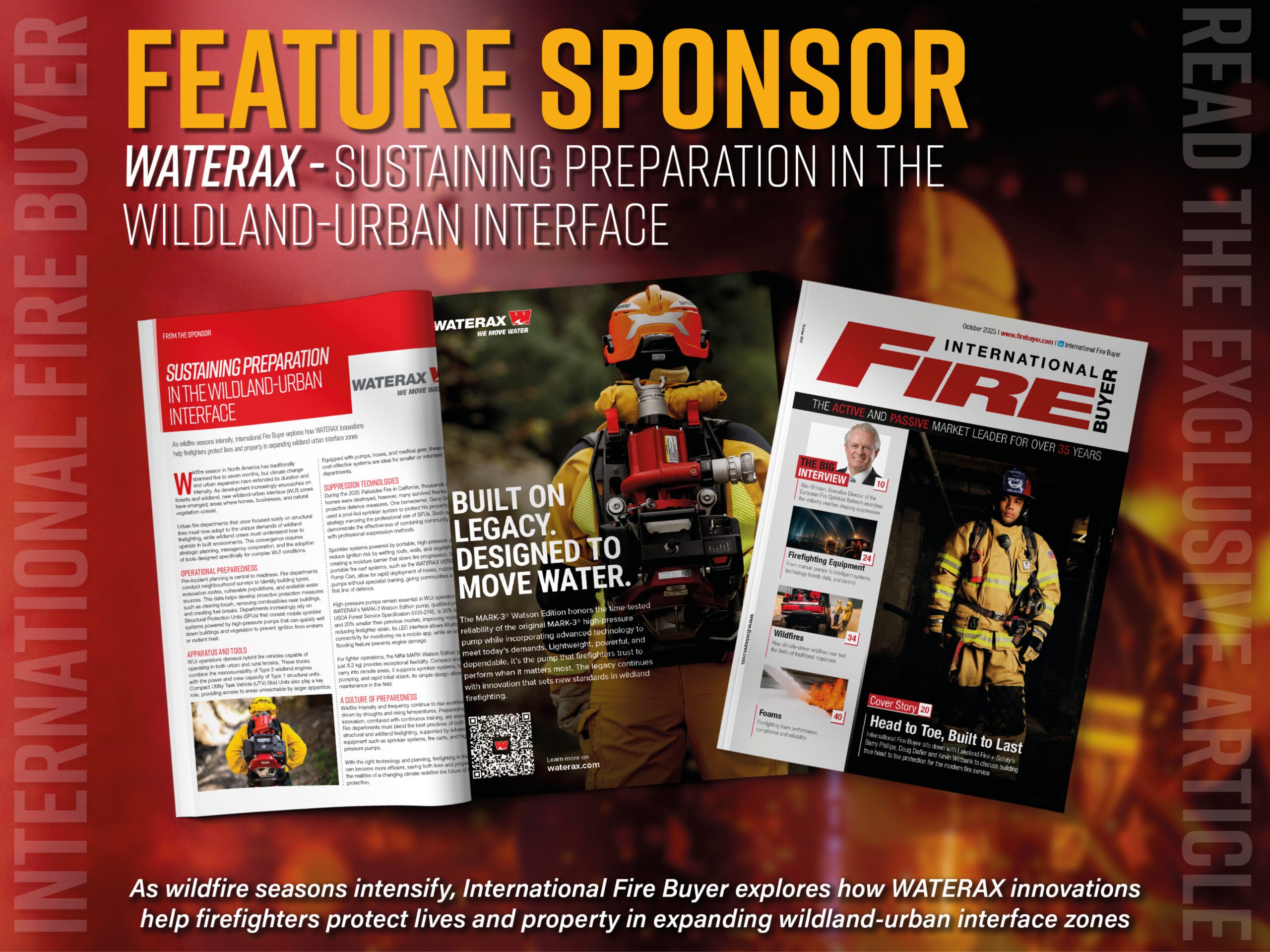

As wildfire seasons intensify, International Fire Buyer explores how WATERAX innovations help firefighters protect lives and property in expanding wildland-urban interface zones
Wildfire season in North America has traditionally spanned five to seven months, but climate change and urban expansion have extended its duration and intensity. As development increasingly encroaches on forests and wildland, new wildland-urban interface (WUI) zones have emerged; areas where homes, businesses, and natural vegetation coexist.
Urban fire departments that once focused solely on structural fires must now adapt to the unique demands of wildland firefighting, while wildland crews must understand how to operate in built environments. This convergence requires strategic planning, interagency cooperation, and the adoption of tools designed specifically for complex WUI conditions.
Operational Preparedness
Pre-incident planning is central to readiness. Fire departments conduct neighbourhood surveys to identify building types, evacuation routes, vulnerable populations, and available water sources. This data helps develop proactive protection measures such as clearing brush, removing combustibles near buildings, and creating fuel breaks. Departments increasingly rely on Structural Protection Units (SPUs) that consist mobile sprinkler systems powered by high-pressure pumps that can quickly wet down buildings and vegetation to prevent ignition from embers or radiant heat.
Apparatus and Tools
WUI operations demand hybrid fire vehicles capable of operating in both urban and rural terrains. These trucks combine the manoeuvrability of Type 3 wildland engines with the power and crew capacity of Type 1 structural units. Compact Utility Task Vehicle (UTV) Skid Units also play a key role, providing access to areas unreachable by larger apparatus. Equipped with pumps, hoses, and medical gear, these small, cost-effective systems are ideal for smaller or volunteer departments.
Suppression Technologies
During the 2025 Palisades Fire in California, thousands of homes were destroyed, however, many survived thanks to proactive defence measures. One homeowner, Gene Golling, used a pool-fed sprinkler system to protect his property, a strategy mirroring the professional use of SPUs. Such systems demonstrate the effectiveness of combining community initiative with professional suppression methods.
Sprinkler systems powered by portable, high-pressure pumps reduce ignition risk by wetting roofs, walls, and vegetation, creating a moisture barrier that slows fire progression. Similarly, portable fire cart systems, such as the WATERAX VERSAX Fire Pump Cart, allow for rapid deployment of hoses, nozzles, and pumps without specialist training, giving communities a practical first line of defence.
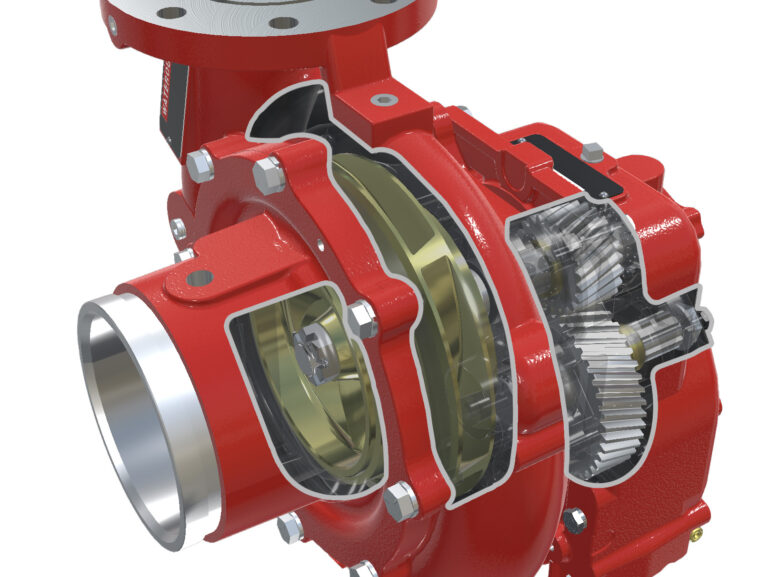
High-pressure pumps remain essential in WUI operations. WATERAX’s MARK-3 Watson Edition pump, qualified under USDA Forest Service Specification 5100-274E, is 30% lighter and 20% smaller than previous models, improving mobility and reducing firefighter strain. Its LED interface allows Bluetooth connectivity for monitoring via a mobile app, while an anti-flooding feature prevents engine damage.
For lighter operations, the MINI-MARK Watson Edition (weighing just 8.2 kg) provides exceptional flexibility. Compact enough to carry into remote areas, it supports sprinkler systems, tandem pumping, and rapid initial attack. Its simple design allows easy maintenance in the field.