Staging Site!

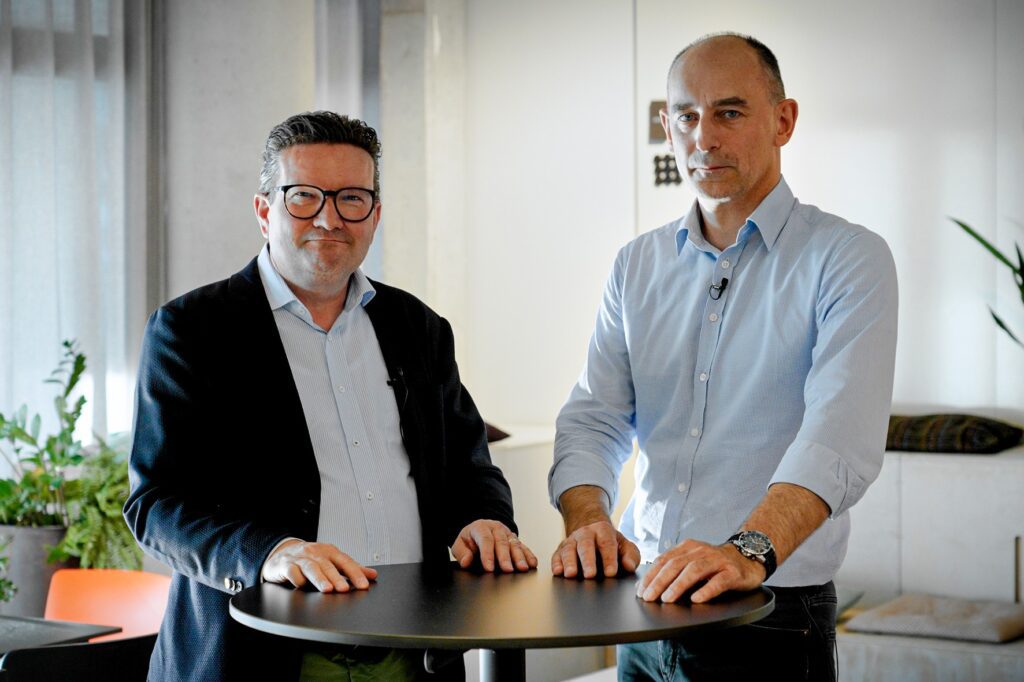
WAGNER chiefs - Photo by WAGNER - Fire Buyer

WAGNER Showcases Rail Safety at TRAKO

WAGNER is set to unveil its latest innovations for the railway industry at TRAKO 2025, one of Europe’s premier trade fairs for traffic systems and infrastructure. The event, taking place in Gdansk from 23 to 26 September, will serve as a key platform for the company to showcase its comprehensive portfolio of fire protection systems tailored to the unique demands of rolling stock. WAGNER Rail GmbH, based in Haar near Munich, has been developing dedicated solutions for fire safety in rail vehicles for over three decades. With a reputation as one of the global leaders in holistic fire protection for rail transport, the company is now strengthening its presence in Poland through closer collaboration with its regional subsidiary, WAGNER Poland Sp. z o.o. At booth B01, both companies will jointly exhibit for the first time at an international trade fair, a move that underscores WAGNER’s commitment to local market engagement and consulting in the native language. This strategic step responds to increasing demand for regional expertise and customer proximity in Poland. Ireneusz Bruski, Managing Director of WAGNER Poland, leads a team with deep technical knowledge in fire protection. This expertise will now extend to rail transport projects across the region. The approach has already gained traction with PKP Intercity S.A., which recently certified WAGNER Poland as a supplier, enabling access to the full range of WAGNER’s fire protection solutions for the rail sector. The company’s offering includes early fire detection systems designed to minimise false alarms, a water mist extinguishing system for passenger areas, and both gas and aerosol-based suppression technologies for technical compartments. These systems can be deployed as standalone units connected directly to the Train Control and Management System (TCMS), or as integrated configurations incorporating a fire alarm control panel with software interface to the TCMS. The flexible setup makes them particularly well suited to both new builds and retrofit applications. WAGNER’s global project list is extensive, with references including DB Regio’s PESA Link trains, ICE4 for Deutsche Bahn, Thameslink UK, ÖBB Railjet, Metro Glasgow, Indian Railways, and many more, spanning Asia, Europe, and North America. With its appearance at TRAKO 2025, WAGNER is reinforcing its role as a trusted partner for fire safety in rail transport—locally and worldwide.

WAGNER Showcases Rail Safety at TRAKO Read More »
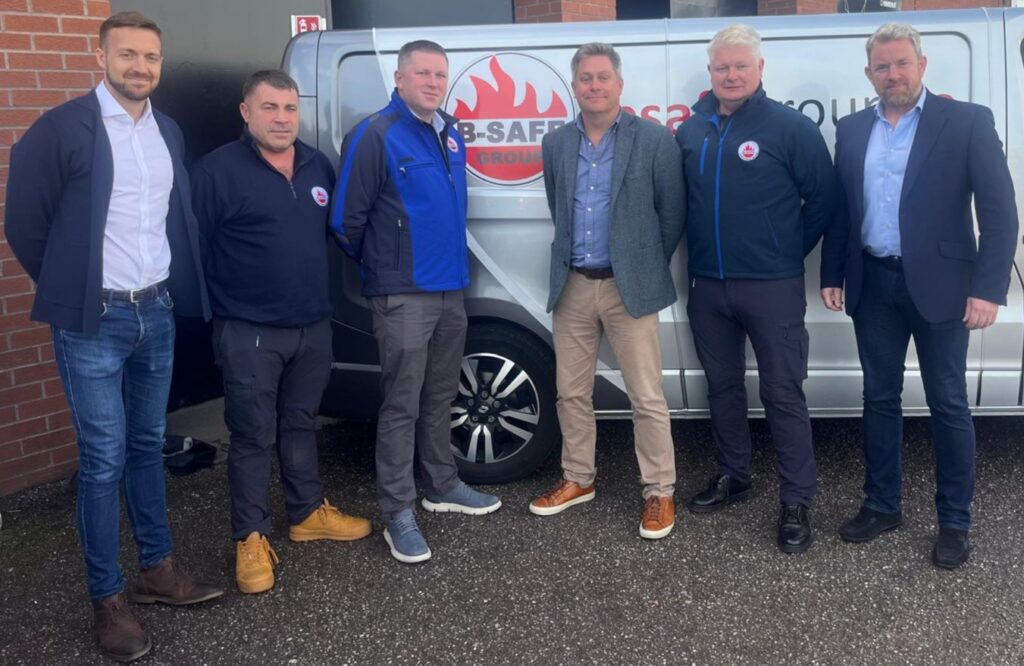
Picture of Rangers' B-Safe Group aquisition - Photo by Ranger Fire and Security - Fire Buyer

Ranger Acquires Ireland’s B-Safe Group

Ranger Fire and Security has announced the acquisition of Cork-based B-Safe Group, further strengthening its growing presence in Ireland. The move marks Ranger’s third acquisition in the country, following Aqua Fire Prevention and KSS Fire Suppression, as the business continues to expand its reach beyond the UK. B-Safe Group, founded in 2019 and built on fire safety expertise dating back to 1983, specialises in fire extinguisher servicing and supply, health and safety training, and fire consultancy. The company works with a wide range of clients, including some of Ireland’s largest pharmaceutical firms, offering tailored training courses such as fire awareness, extinguisher use, fire warden certification, emergency response training, first aid, and manual handling. The acquisition will enable Ranger to broaden its service offering across Ireland. B-Safe’s training capabilities, in particular, are expected to create valuable cross-selling opportunities across the wider Ranger Group, unlocking synergies and expanding its footprint in both fire safety and consultancy services. B-Safe Group will continue to be led by its existing leadership team, with Managing Director Damien Byrne, Director of Portables, Fire Alarm and Emergency Lighting Jason O’Brien, and Director of Operations and Suppression Aiden Bolster all remaining in post. Their continued presence ensures a stable transition and strategic continuity as the company enters this next phase of growth. Mark Bridges, CEO of Ranger Fire and Security, welcomed the acquisition, noting the significance of B-Safe’s training programmes and the value they bring to the wider Ranger network. He also highlighted the team’s longstanding relationship with Ranger Ireland and its respected reputation within the sector. Damien Byrne, Managing Director of B-Safe Group, expressed enthusiasm for the future, citing the opportunity to expand services, collaborate across the Ranger portfolio, and continue delivering trusted fire safety training to their loyal customer base. The addition of B-Safe Group brings Ranger’s total acquisitions to eleven since its launch in early 2024, and marks the company’s fourth deal this year. Supported by Hyperion Equity Partners, Ranger continues to build its mission of becoming the leading one-stop solution provider in fire and security services across the UK and Ireland, delivering comprehensive solutions with both national reach and local expertise.

Ranger Acquires Ireland’s B-Safe Group Read More »

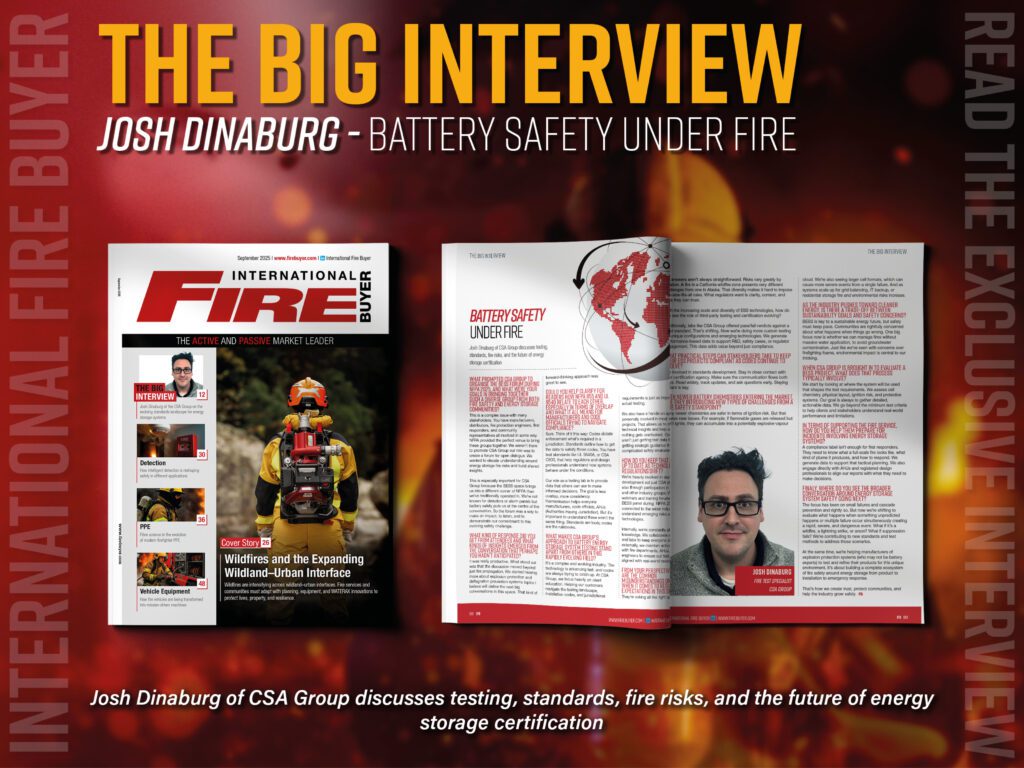
Big Interview – Josh Dinaburg

Josh Dinaburg of CSA Group discusses testing, standards, and fire risks in energy storage systems, outlining the evolving challenges, stakeholder concerns, and future of third-party certification. What prompted CSA Group to organise the BESS Forum during NFPA 2025, and what were your goals in bringing together such a diverse group from both fire safety and energy storage communities? This is a complex issue with many stakeholders. You have manufacturers, distributors, fire protection engineers, first responders, and community representatives all involved in some way. NFPA provided the perfect venue to bring these groups together. We weren’t there to promote CSA Group—our role was to create a forum for open dialogue. We wanted to elevate understanding around energy storage fire risks and build shared insights. This is especially important for CSA Group because the BESS space brings us into a different corner of NFPA than we’ve traditionally operated in. We’re not known for detectors or alarm panels—but battery safety puts us at the centre of the conversation. So the forum was a way to make an impact, to listen, and to demonstrate our commitment to this evolving safety challenge. What kind of response did you get from attendees and what kinds of insights emerged from the conversation that perhaps you hadn’t anticipated? It was really productive. What stood out was that the discussion moved beyond just fire propagation. We started hearing more about explosion protection and deflagration prevention systems—topics I believe will define the next big conversations in this space. That kind of forward-thinking approach was great to see. Could you help clarify for readers how NFPA 855 and UL 9540 relate to each other, especially in terms of overlap and what it all means for manufacturers and code officials trying to navigate compliance? Sure. Think of it this way: Codes dictate enforcement—what’s required in a jurisdiction. Standards outline how to get the data to satisfy those codes. You have test standards like UL 9540A, or CSA C800, that help regulators and design professionals understand how systems behave under fire conditions. Our role as a testing lab is to provide data that others can use to make informed decisions. The goal is less overlap, more consistency. Harmonisation helps everyone—manufacturers, code officials, AHJs (Authorities Having Jurisdiction). But it’s important to understand these aren’t the same thing. Standards are tools; codes are the rulebooks. What makes CSA Group’s approach to battery energy storage system testing stand apart from others in this rapidly evolving field? It’s a complex and evolving industry. The technology is advancing fast, and codes are always trying to catch up. At CSA Group, we focus heavily on client education. Helping our customers navigate the testing landscape, installation codes, and jurisdictional requirements is just as important as the actual testing. We also have a hands-on approach. I’m personally involved in most of our BESS projects. That allows us to offer real technical insights and help ensure nothing gets overlooked. Our clients aren’t just getting test data—they’re getting strategic guidance through a very complicated safety environment. To read the full article see our latest issue here.

Big Interview – Josh Dinaburg Read More »

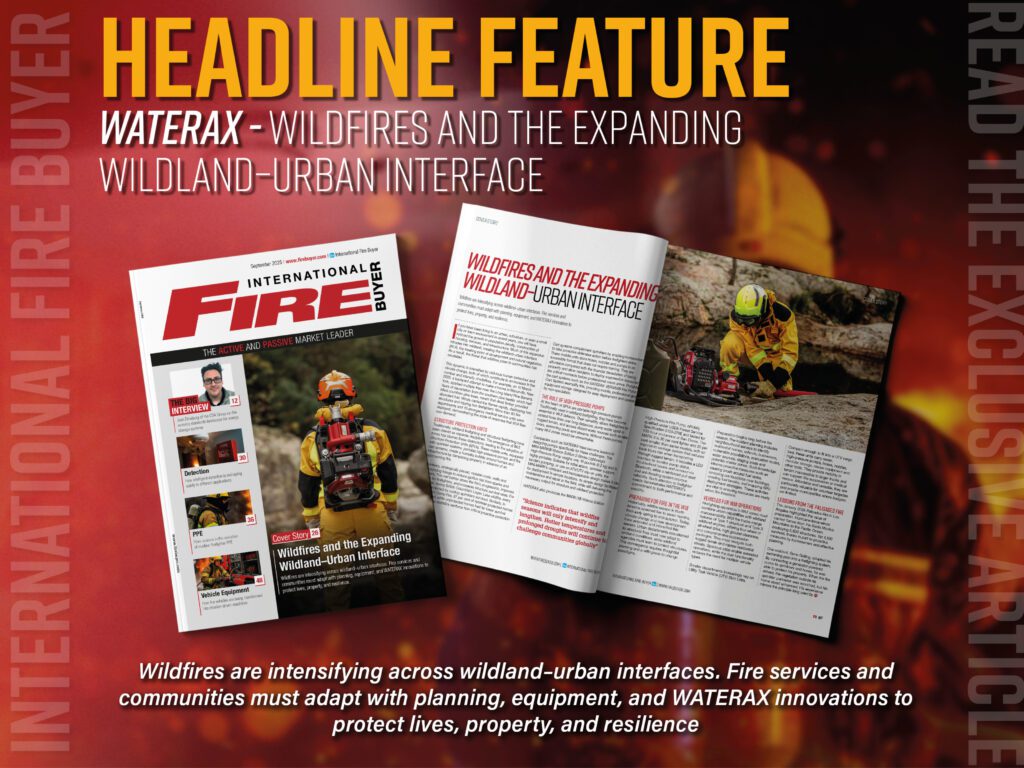
Cover Story – Waterax

Wildfires are intensifying across wildland–urban interfaces. Fire services and communities must adapt with planning, equipment, and WATERAX innovations to protect lives, property, and resilience. If you have been living in an urban, suburban, or even a small city or town environment in recent years, you will have noticed the growth in population density, construction of housing, services, and infrastructure. Much of this expansion intrudes into wildland, creating the wildland–urban interface (WUI), the meeting point of development and natural vegetation. As a result, the threat that wildfires pose to communities has escalated. This dynamic is intensified by oblivious human behaviour and climate change, both of which contribute to an increase in the number and intensity of wildfires. For example, on 10 March 2025, a backyard attempt to make s’mores in Manorville, New York, sparked multiple fires near the Long Island Pine Barrens. Years of devastation from the southern pine beetle, which had killed countless pine trees, meant that dead timber provided abundant fuel. Winds carried the flames rapidly, destroying two structures and injuring two firefighters. More than 80 fire departments and 10 emergency medical service units were deployed, demonstrating the scale of response that WUI fires now demand. Structure Protection Units Traditionally, wildland firefighting and structural firefighting have been viewed as separate disciplines. The emergence of WUI zones has blurred these distinctions, leading to the adoption of Structure Protection Units (SPUs). These mobile units, equipped with sprinkler systems, portable high‑pressure pumps, and fire cart systems, create a humidity bubble around homes and infrastructure by dampening property in advance of an approaching fire. Sprinklers, strategically placed, moisten roofs, walls and surrounding foliage to reduce ignition risk from sparks and embers. This wet barrier slows the fire’s progression, improves safety for firefighters, and increases structure survival rates. For example, during British Columbia’s Logan Lake wildfire, every home protected by rooftop sprinklers survived. Similarly, in California’s Camp Fire, 87 per cent of sprinkler‑protected homes were saved, while unprotected homes had far lower survival rates. These statistics reinforce how critical proactive protection can be. Cart systems complement sprinklers by enabling homeowners to take proactive defensive action before firefighters arrive. These mobile units store hoses, nozzles and pumps in an accessible format that does not require training. They are affordable compared with the financial devastation of losing property and allow residents to deploy suppression measures in the critical moments before professional crews arrive. Portable fire cart systems such as the WATERAX VERSAX® Fire Pump Cart System exemplify this, providing mobile, professional‑grade equipment storage designed for easy deployment and operation by non‑specialists. To read the full article see our latest issue here.

Cover Story – Waterax Read More »

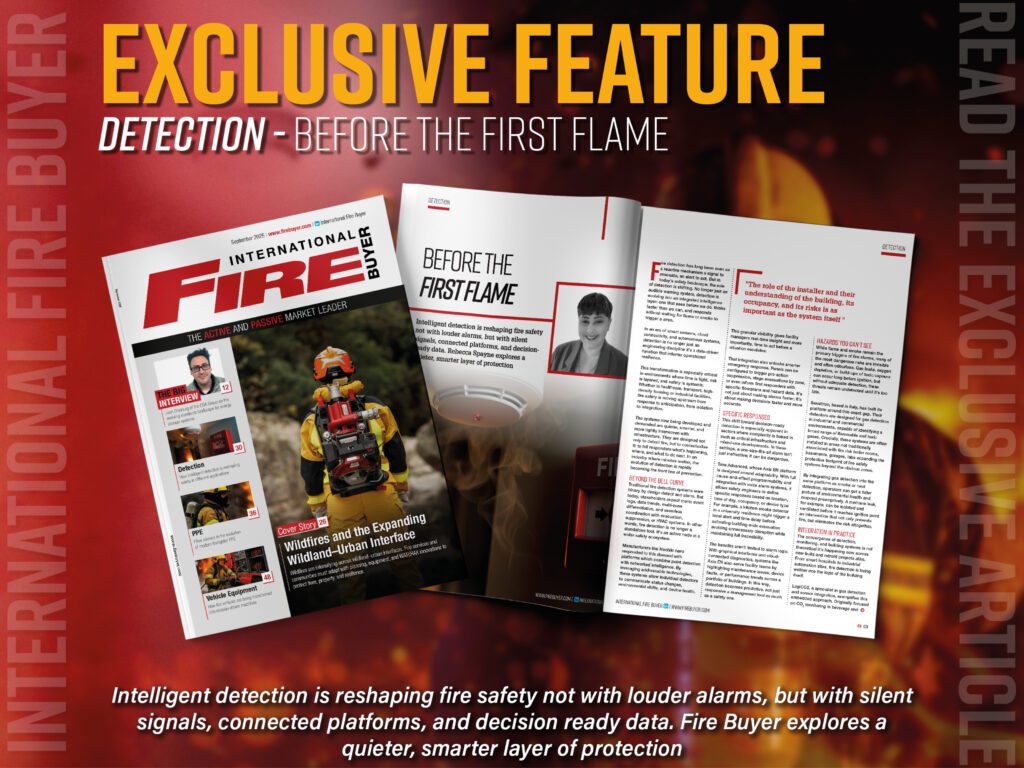
Detection – Before the First Flame

Intelligent detection is reshaping fire safety, not with louder alarms, but with silent signals, connected platforms, and decision-ready data. Rebecca Spayne explores a quieter, smarter layer of protection. Fire detection has long been seen as a reactive mechanism, a signal to evacuate, an alert to act. But in today’s safety landscape, the role of detection is shifting. No longer just an audible warning system, detection is evolving into an integrated intelligence layer: one that sees before we do, thinks faster than we can, and responds without waiting for flame or smoke to trigger a siren. In an era of smart sensors, cloud connectivity, and autonomous systems, detection is no longer just an engineering discipline, it’s a data-driven function that informs operational resilience. This transformation is especially critical in environments where time is tight, risk is layered, and safety is systemic. Whether in healthcare, transport, high-density housing or industrial facilities, fire safety is moving upstream, from response to anticipation, from isolation to integration. The systems now being developed, and demanded, are quieter, smarter, and more tightly interwoven with infrastructure. They are designed not only to detect fire, but to contextualise it: to tell responders what’s happening, where, and what to do next. In an industry where minutes matter, the evolution of detection is rapidly becoming the front line of prevention. Traditional fire detection systems were binary by design, detect and alarm. But today, stakeholders expect more: event logs, data trends, multi-zone differentiation, and seamless coordination with evacuation, suppression, or HVAC systems. In other words, fire detection is no longer a standalone tool. It’s an active node in a wider safety ecosystem. Manufacturers like Hochiki have responded to this demand with platforms which combine point detection with networked intelligence. By leveraging addressable technologies, these systems allow individual detectors to communicate status changes, environmental shifts, and device health. This granular visibility gives facility managers real-time insight, and more importantly, time to act before a situation escalates. That integration also unlocks smarter emergency response. Panels can be configured to trigger pre-action suppression, stage evacuations by zone, or even inform first responders with specific floorplans and hazard data. It’s not just about making alarms faster; it’s about making decisions faster, and more accurate. This shift toward decision-ready detection is especially apparent in sectors where complexity is baked in, such as critical infrastructure and mixed-use developments. In these settings, a one-size-fits-all alarm isn’t just ineffective; it can be dangerous. Take Advanced, whose Axis EN platform is designed around adaptability. With full cause-and-effect programmability and integration with voice alarm systems, it allows safety engineers to define specific responses based on location, time of day, occupancy, or device type. For example, a kitchen smoke detector in a university residence might trigger a local alert and time delay before activating building-wide evacuation, avoiding unnecessary disruption while maintaining full traceability. To read the full article see our latest issue here.

Detection – Before the First Flame Read More »

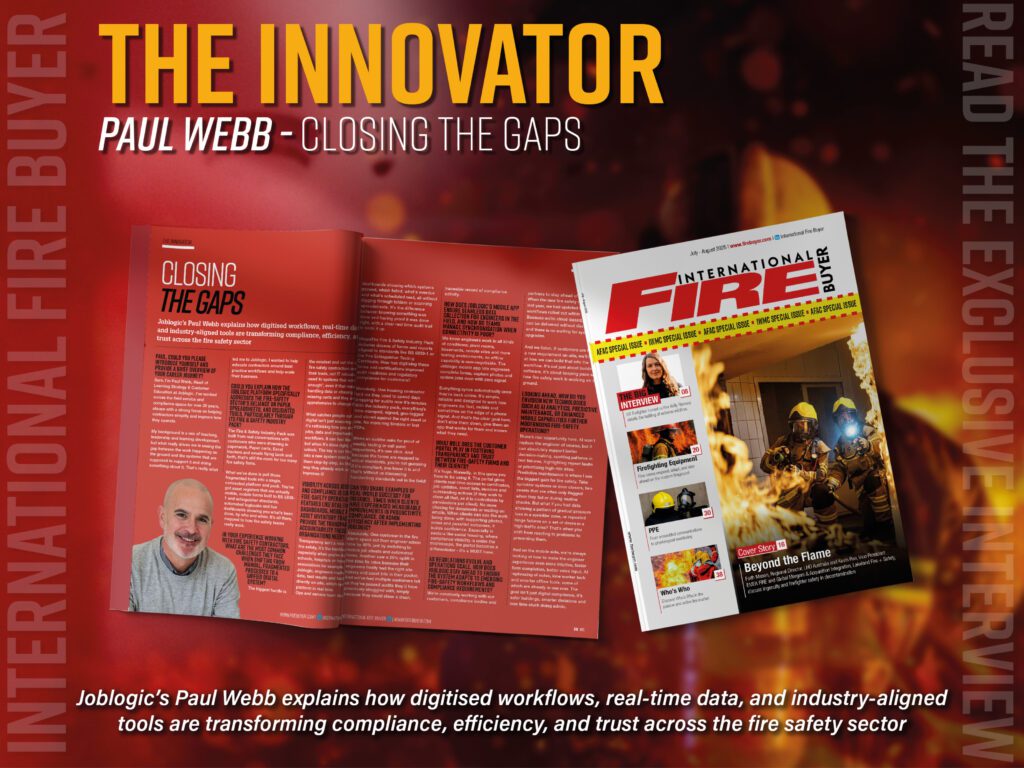
Innovator – Paul Webb

Joblogic’s Paul Webb explains how digitised workflows, real-time data, and industry-aligned tools are transforming compliance, efficiency, and trust across the fire safety sector,. Paul, could you please introduce yourself and provide a brief overview of your career journey? Sure, I’m Paul Webb, Head of Learning Strategy & Customer Education at Joblogic. I’ve worked across the field service and compliance space for over 20 years, always with a strong focus on helping contractors simplify and improve how they operate. My background is a mix of teaching, leadership and learning development, but what really drives me is seeing the gap between the work happening on the ground and the systems that are supposed to support it and doing something about it. That’s really what led me to Joblogic. I wanted to help educate contractors around best practice workflows and help scale their business. Could you explain how the Joblogic platform specifically addresses the fire‑safety sector’s reliance on paper, spreadsheets, and disjointed tools, particularly through its Fire & Safety Industry Pack? The Fire & Safety Industry Pack was built from real conversations with customers who were drowning in paperwork. Paper certs, Excel trackers and emails flying back and forth, that’s still the norm for too many fire safety firms. What we’ve done is pull those fragmented tools into a single, connected platform and pack. You’ve got asset registers that are actually usable, mobile forms built to BS 5839-1 and extinguisher standards, automated logbooks and live dashboards showing you what’s been done, by who and when. It’s all there, mapped to how fire safety teams really work. In your experience working with fire safety contractors, what are the most common challenges they face when shifting from manual, fragmented processes to a unified digital system? The biggest hurdle is the mindset and not the tech. Most fire safety contractors are experts in their trade, not IT rollouts. They’re used to systems that work “well enough”, even if that means triple handling data or chasing engineers for missing certs and they are apprehensive to change that. What catches people out is that going digital isn’t just scanning paperwork, it’s rethinking how you structure your jobs, data and importantly your workflows. It can feel like disruption, but when it’s done right, it’s a huge unlock. The key is not throwing people into a new system cold but guiding them step-by-step, so the tech fits the way they already work or ideally, improves it! Visibility across jobs, assets, and compliance is critical in fire-safety operations. How do features like real‑time dashboards, mobile forms, and asset inventory tracking provide the transparency and accountability these organisations need? Transparency isn’t a nice-to-have in fire safety, it’s the backbone of trust, especially when you’re dealing with schools, hospitals or housing associations for example. With Joblogic, engineers capture asset data, test results and fault logs directly on-site, which syncs into the platform in real time. To read the full article see our latest issue here.

Innovator – Paul Webb Read More »

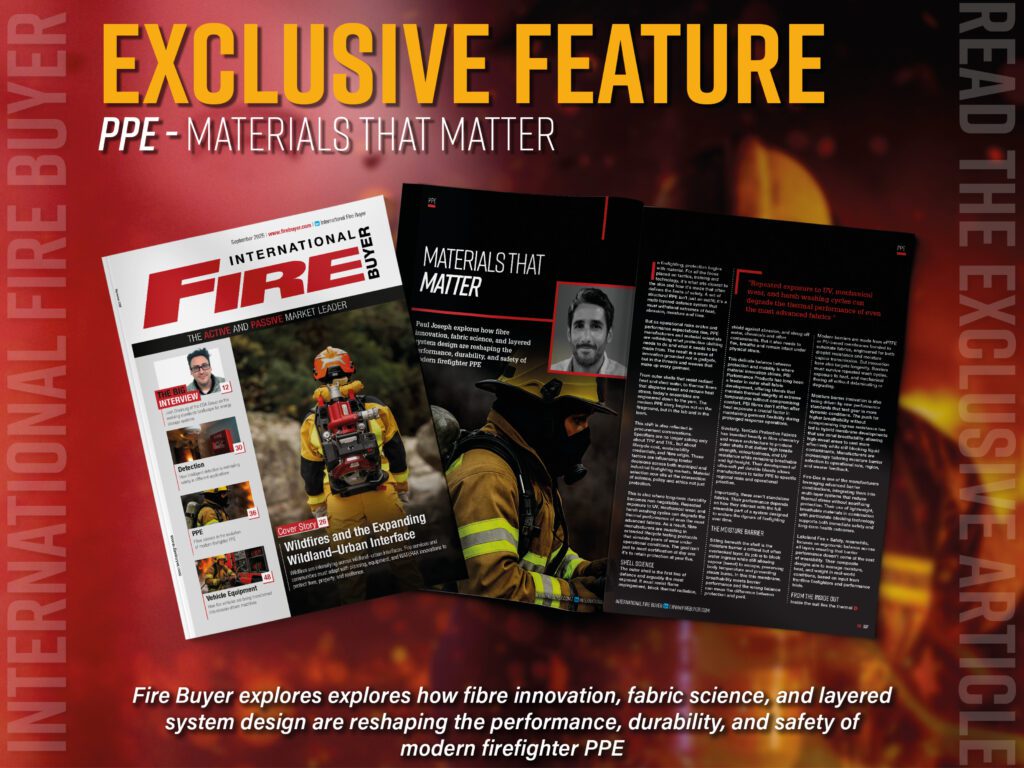
PPE – Materials that Matter

Paul Joseph explores how PPE fibre innovation, fabric science, and layered system design are reshaping the performance, durability, and safety of modern firefighter equipment. In firefighting, protection begins with material. For all the focus placed on tactics, training and technology, it’s what sits closest to the skin — and how it’s made — that often defines the limits of safety. A set of structural PPE isn’t just an outfit; it’s a multi-layered defence system that must withstand extremes of heat, abrasion, moisture and time. But as operational risks evolve and performance expectations rise, PPE manufacturers and material scientists are rethinking what protective clothing needs to do — and what it needs to be made from. The result is a wave of innovation grounded not in gadgets, but in the threads and weaves that make up every garment. From outer shells that resist radiant heat and shed water, to thermal liners that disperse sweat and reduce heat stress, today’s ensembles are engineered down to the yarn. The modern PPE story begins not on the fireground, but in the lab — and in the loom. This shift is also reflected in procurement conversations. Specifiers are no longer asking only about TPP and THL, but about lifecycle cost, sustainability credentials, and fibre origin. These factors are influencing tender decisions across both municipal and industrial firefighting markets. Material selection now sits at the intersection of science, policy and ethics — not just protection. This is also where long-term durability becomes non-negotiable. Repeated exposure to UV, mechanical wear, and harsh washing cycles can degrade the thermal performance of even the most advanced fabrics. As a result, fibre manufacturers are investing in extended lifecycle testing protocols that simulate years of wear under operational conditions. The goal isn’t just to meet certification at day one — it’s to retain protection at year five. The outer shell is the first line of defence — and arguably the most exposed. It must resist flame impingement, block thermal radiation, shield against abrasion, and shrug off water, chemicals and other contaminants. But it also needs to flex, breathe and remain intact under physical strain. This delicate balance between protection and mobility is where material innovation shines. PBI Performance Products has long been a leader in outer shell fabric development, offering blends that maintain thermal integrity at extreme temperatures without compromising comfort. PBI fibres don’t stiffen after heat exposure — a crucial factor in maintaining garment flexibility during prolonged response operations. Similarly, TenCate Protective Fabrics has invested heavily in fibre chemistry and weave architecture to produce outer shells that deliver high tensile strength, colourfastness, and UV resistance — while remaining breathable and lightweight. Their development of ultra-soft yet durable blends allows manufacturers to tailor PPE to specific regional risks and operational priorities. Importantly, these aren’t standalone fabrics. Their performance depends on how they interact with the full ensemble — part of a system designed to endure the rigours of firefighting over time. To read the full article see our latest issue here.

PPE – Materials that Matter Read More »

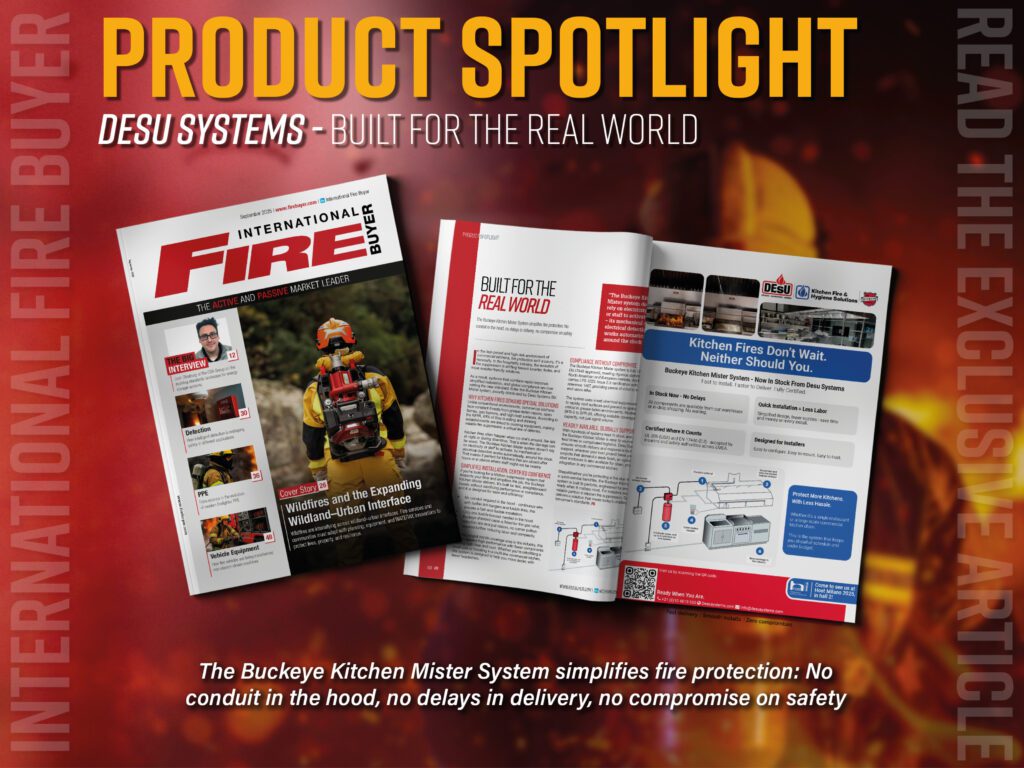
Product Spotlight – Desu Systems

The Buckeye Kitchen Mister System by Desu simplifies fire protection: No conduit in the hood, no delays in delivery, no compromise on safety. In the fast-paced and high-risk environment of commercial kitchens, fire protection isn’t a luxury, it’s a necessity. In the hospitality industry, the evolution of fire suppression is shifting toward smarter, faster, and more installer-friendly solutions. As a result, systems that combine rapid response, simplified installation, and global compliance are now setting the new standard. Enter the Buckeye Kitchen Mister system, proudly distributed by Desu Systems BV. Why Kitchen Fires Demand Special Solutions Unlike conventional environments, commercial kitchens face constant threats from grease-laden vapors, open flames, gas burners, and high-heat surfaces. According to the NFPA, 61% of fires in eating and drinking establishments are linked to cooking equipment, making reliable fire suppression a critical line of defense. Kitchen fires often happen when no one’s around, like late at night or during downtime. That’s when the damage can be worst. The Buckeye Kitchen Mister system doesn’t rely on electricity or staff to activate. Its mechanical or electrical detection works automatically, around the clock. That makes it perfect for kitchens that are closed after hours or in places where staff might not be nearby. Simplified Installation, Certified Confidence If you’re looking for a kitchen suppression system that respects your time and simplifies the job, the Buckeye Kitchen Mister delivers. It’s built for fast, straightforward installs without sacrificing performance or compliance, and it is designed for ease and efficiency. With the largest nozzle coverage area in the industry, this system delivers high performance with fewer components – saving both time and cost. Whether you’re retrofitting a small café or installing in a multi-line commercial kitchen, this system is designed to help you move faster, with fewer headaches. Compliance Without Compromise The Buckeye Kitchen Mister system is fully UL-300 and EN-17446 approved, meeting rigorous standards for both North American and European markets. Additionally, it carries LPS 1223: Issue 2.3 certification with LPCB reference 1467, providing peace of mind to installers and end users alike. The system uses a wet-chemical suppressant formulated to rapidly cool surfaces and prevent re-ignition, which is critical in grease-laden environments. Models range from BFR-5 to BFR-20, offering scalable coverage by flow point capacity, not just agent volume. Readily Available. Globally Supported With hundreds of systems kept in stock and ready to ship, the Buckeye Kitchen Mister is easy to source – no long lead times or complicated logistics. Desu Systems ensures smooth delivery and responsive technical support, wherever your next project takes you. For projects that demand a sleek finish, an optional stainless-steel enclosure is also available for clean, professional integration in any commercial kitchen. ShapeWhether you’re protecting a five-star restaurant or a quick-service franchise, the Buckeye Kitchen Mister system is built to perform, engineered for simplicity, and ready when it matters most. For installers seeking a reliable partner in kitchen fire suppression, Desu Systems delivers a solution that meets today’s challenges and tomorrow’s standards. To read the full article see our latest issue here.

Product Spotlight – Desu Systems Read More »

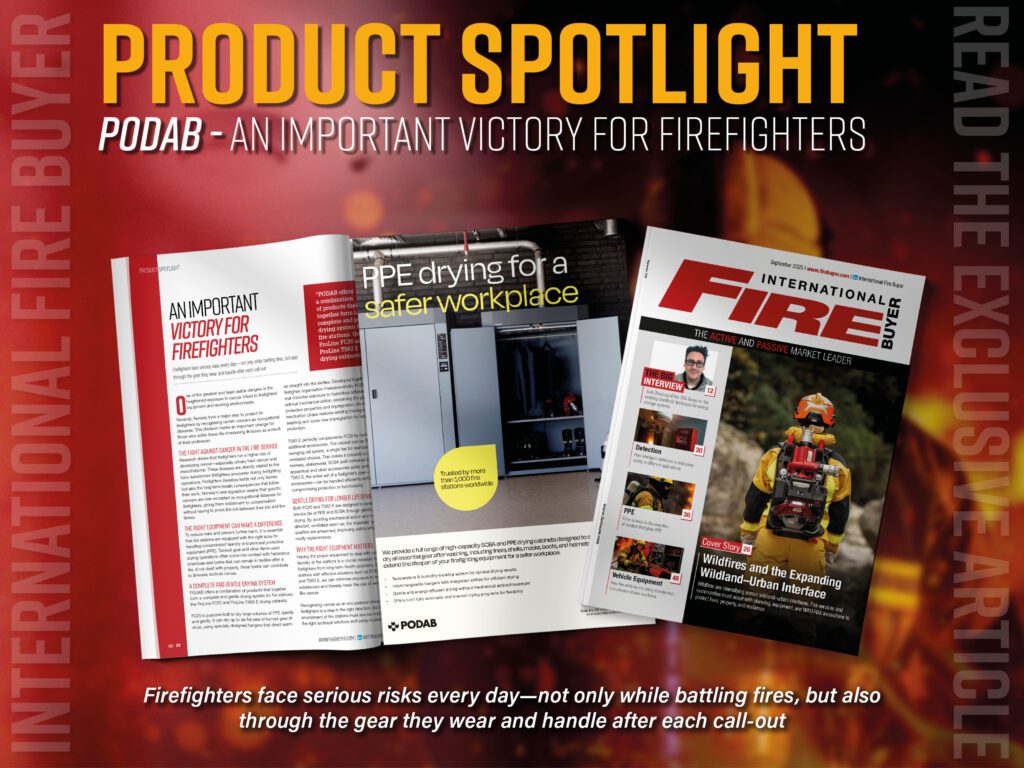
Product Spotlight – AB PODAB

Firefighters face serious risks every day—not only while battling fires, but also through the gear they wear and handle after each call-out. One of the greatest and least visible dangers is the heightened exposure to cancer linked to firefighters’ equipment and working environments. Recently, Norway took a major step to protect its firefighters by recognising certain cancers as occupational diseases. This decision marks an important change for those who suffer these life-threatening illnesses as a result of their profession. The fight against cancer in the fire service Research shows that firefighters run a higher risk of developing cancer—especially urinary tract cancer and mesothelioma. These illnesses are directly related to the toxic substances firefighters encounter during firefighting operations. Firefighters therefore battle not only flames but also the long-term health consequences that follow their work. Norway’s new legislation means that specific cancers are now accepted as occupational diseases for firefighters, giving them entitlement to compensation without having to prove the link between their job and the illness. The right equipment can make a difference To reduce risks and prevent further harm, it is essential that fire stations are equipped with the right tools for handling contaminated laundry and personal protective equipment (PPE). Turnout gear and other items used during operations often come into contact with hazardous chemicals and toxins that can remain in textiles after a fire. If not dealt with properly, these toxins can contribute to illnesses such as cancer. A complete and gentle drying system PODAB offers a combination of products that together form a complete and gentle drying system for fire stations: the ProLine FC20 and ProLine TS63 E drying cabinets. FC20 is purpose-built to dry large volumes of PPE quickly and gently. It can dry up to six full sets of turnout gear at once, using specially designed hangers that direct warm air straight into the textiles. Developed together with the firefighter organisation Friskabrandmän, FC20 fits routines that minimise exposure to hazardous substances. It dries without mechanical action, preserving the garments’ protective properties and impregnation. An integrated reactivation phase restores existing impregnation after washing and cures new impregnation for long-lasting protection. TS63 E perfectly complements FC20 by caring for additional accessories. The cabinet can be fitted with a swinging rail system, a single bar for standard hangers, or ventilated shelves. This makes it possible to dry masks, helmets, stationwear, SCBA (self-contained breathing apparatus) and other accessories safely and gently. With TS63 E, the entire set of a firefighter’s gear—including accessories—can be handled efficiently without compromising protection or functionality. Gentle drying for longer lifespan Both FC20 and TS63 E are designed to extend the service life of PPE and SCBA through gentle, efficient drying. By avoiding mechanical action and instead using directed, ventilated warm air, the materials’ protective qualities are preserved, improving safety while reducing costly replacements. Why the right equipment matters Having the proper equipment to deal with contaminated laundry at fire stations is a crucial measure for protecting firefighters from long-term health problems. By equipping stations with effective solutions such as PODAB’s FC20 and TS63 E, we can minimise exposure to hazardous substances and thereby lower the risk of serious diseases like cancer. Recognising cancer as an occupational disease for firefighters is a step in the right direction, but the working environment at fire stations must also be improved through the right technical solutions and safety routines. To read the full article see our latest issue here.

Product Spotlight – AB PODAB Read More »

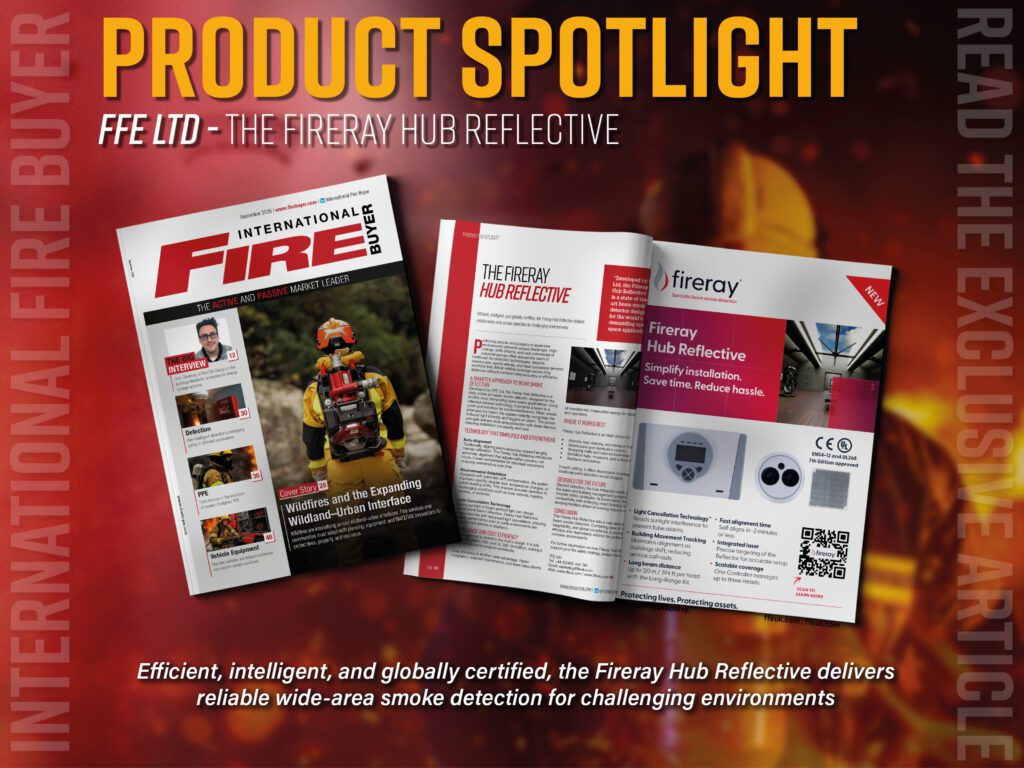
Product Spotlight – FFE

Efficient, intelligent, and globally certified, the Fireray Hub Reflective delivers reliable wide-area smoke detection for challenging environments. Protecting people and property in expansive environments presents unique challenges. High ceilings, wide atriums, and vast commercial or industrial spaces often exceed the reach of traditional fire detection technologies. Airports, warehouses, sports arenas, and retail complexes demand solutions that deliver reliable coverage across long distances without compromising accuracy or efficiency. A Smarter Approach to Beam Smoke Detection Developed by FFE Ltd, the Fireray Hub Reflective is a state-of-the-art beam smoke detector designed for the world’s most demanding open-space applications. Using reflective infrared technology, it projects a beam to a prism and monitors for smoke interference. When smoke interrupts the beam, the system instantly recognises the reduced light intensity and triggers an alarm. This proven principle delivers wide-area protection with fewer devices, lowering installation complexity and cost. Technology That Simplifies and Strengthens Auto-Alignment Traditionally, aligning beam detectors required lengthy manual calibration. The Fireray Hub Reflective introduces automatic alignment that adjusts within minutes, not hours. It even compensates for structural movement, reducing maintenance over time. Environmental Adaptation Equipped with automatic drift compensation, the system maintains stability despite dust, temperature changes, or subtle building shifts. This ensures accurate detection in challenging conditions such as busy airports, logistics centres, or factories. Light Cancellation Technology Strong sunlight or bright artificial light can disrupt conventional beam detectors. Fireray Hub Reflective overcomes this with advanced light cancellation, ensuring reliable performance even in sunlit environments like glass-fronted atriums or stadiums. Compliance and Cost Efficiency Global approval is central to the Hub’s design. It is fully certified to EN54, VdS, and UL 268 7th Edition, making it a trusted choice for projects worldwide. Cost efficiency is another clear advantage. Faster installation, reduced maintenance, and fewer false alarms all translate into measurable savings for facility owners and operators. Designed for the Future Beyond detection, the Hub integrates easily with existing fire alarm and building management systems, supporting broader safety strategies. Its future-ready design ensures compatibility with emerging smart-building technologies, keeping facilities ahead of evolving requirements. Conclusion The Fireray Hub Reflective sets a new benchmark in beam smoke detection. Combining ease of installation, adaptability, and global compliance, it provides a cost-effective and dependable solution for protecting large, complex environments. To read the full article see our latest issue here.

Product Spotlight – FFE Read More »

Scroll to Top