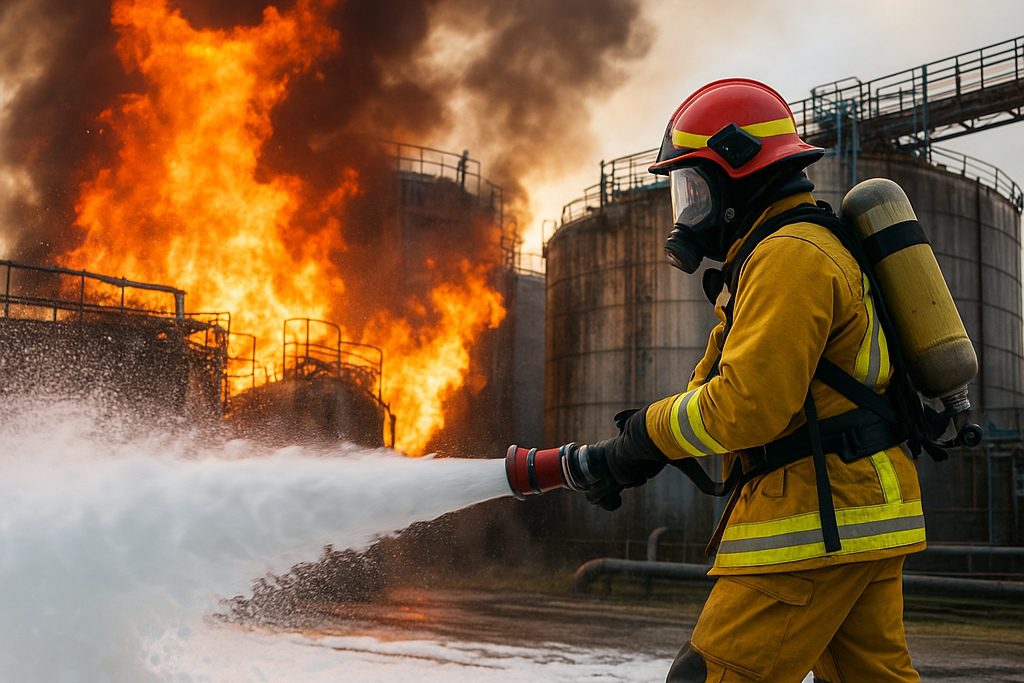

As the firefighting sector moves away from PFAS-based foams, Paul Joseph explores what it means to reformulate, requalify, and roll out safer suppressants under real-world conditions.
From North America to Europe, regulatory pressure is accelerating the transition away from PFAS-based firefighting foams. The European Chemicals Agency (ECHA) and the U.S. Environmental Protection Agency (EPA) have signalled clear intent: PFAS, with their persistence and toxicity, have no long-term place in suppression systems. But if the end goal is clear, the pathway there is anything but.
Across the industry, fire service leaders, industrial safety managers, and foam formulators are grappling with deadlines that do not always align with operational realities. For those tasked with specifying, procuring, and deploying Class B foams – especially in high-hazard sectors like aviation, petrochemicals, and defence – the transition is not just a matter of compliance. It’s a question of performance, infrastructure compatibility, and trust.
Legacy AFFF products earned their reputation in the field: rapid flame knockdown, vapour suppression, and reliability under pressure. Fluorine-free foams (F3), by contrast, are often judged against these same criteria – yet they behave differently, interact with surfaces differently, and require different application techniques.
Foam suppliers are focusing on third-party validation, real-world trials, and end-user education to build confidence in F3 formulations. Companies like Perimeter Solutions and Dafo Fomtec have invested heavily in refining the extinguishing capabilities of their fluorine-free products to meet recognised standards such as EN and ICAO level B.
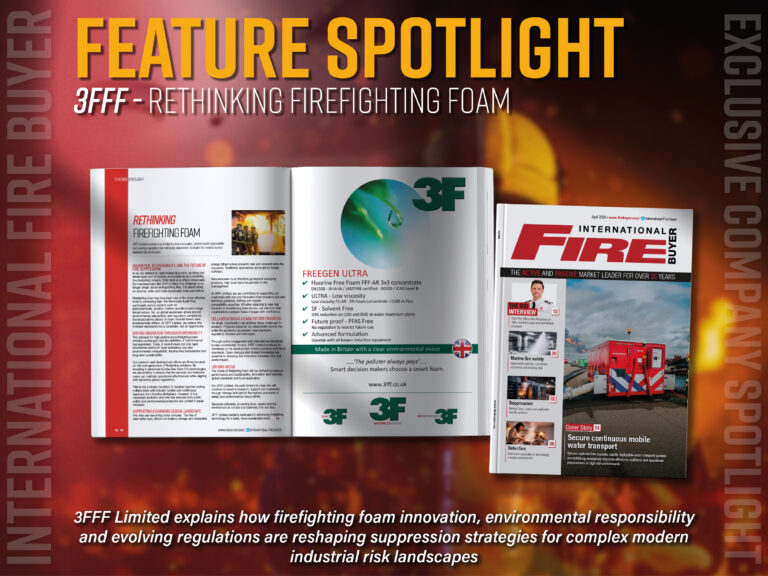
This tension – between lab test results and operational acceptance – has influenced the development priorities of firms like 3FFF and Bioex. These manufacturers have aimed to replicate the handling and application behaviour of AFFF while eliminating fluorinated content, reducing the learning curve for frontline users and minimising disruptions to standard operating procedures.
One of the least glamorous yet most consequential challenges in the F3 transition is hardware compatibility. Many fixed systems, from aircraft hangar deluge rigs to petrochemical tank farms, were calibrated for the unique viscosity, expansion rates, and drainage times of AFFF.
Switching to fluorine-free foam can require recalibration, new proportioning equipment, or full system replacement. For cash-strapped municipal services or legacy industrial sites, this cost barrier is significant. Angus Fire has publicly acknowledged this dilemma and works closely with clients to assess retrofit feasibility before recommending specific foam types. Its JetFoam range, for example, is designed to perform in both new and retrofitted systems.
VS Focum adds another dimension to this discussion. Their research into foam physics has led to formulations that balance low viscosity with high burnback resistance – crucial for use in mobile response units where proportioning systems vary widely in age and accuracy.