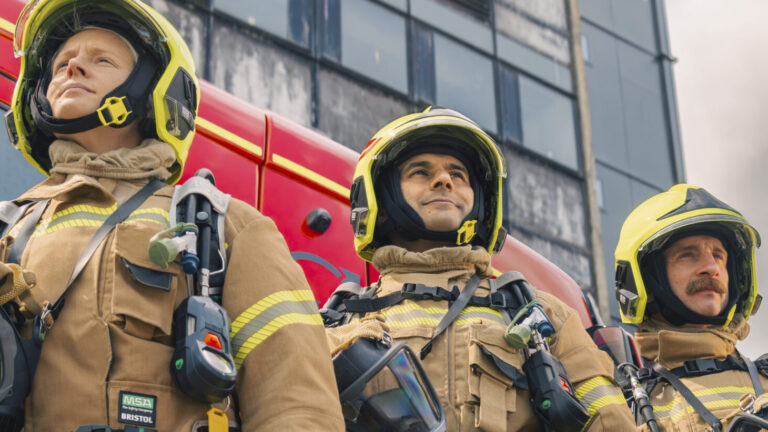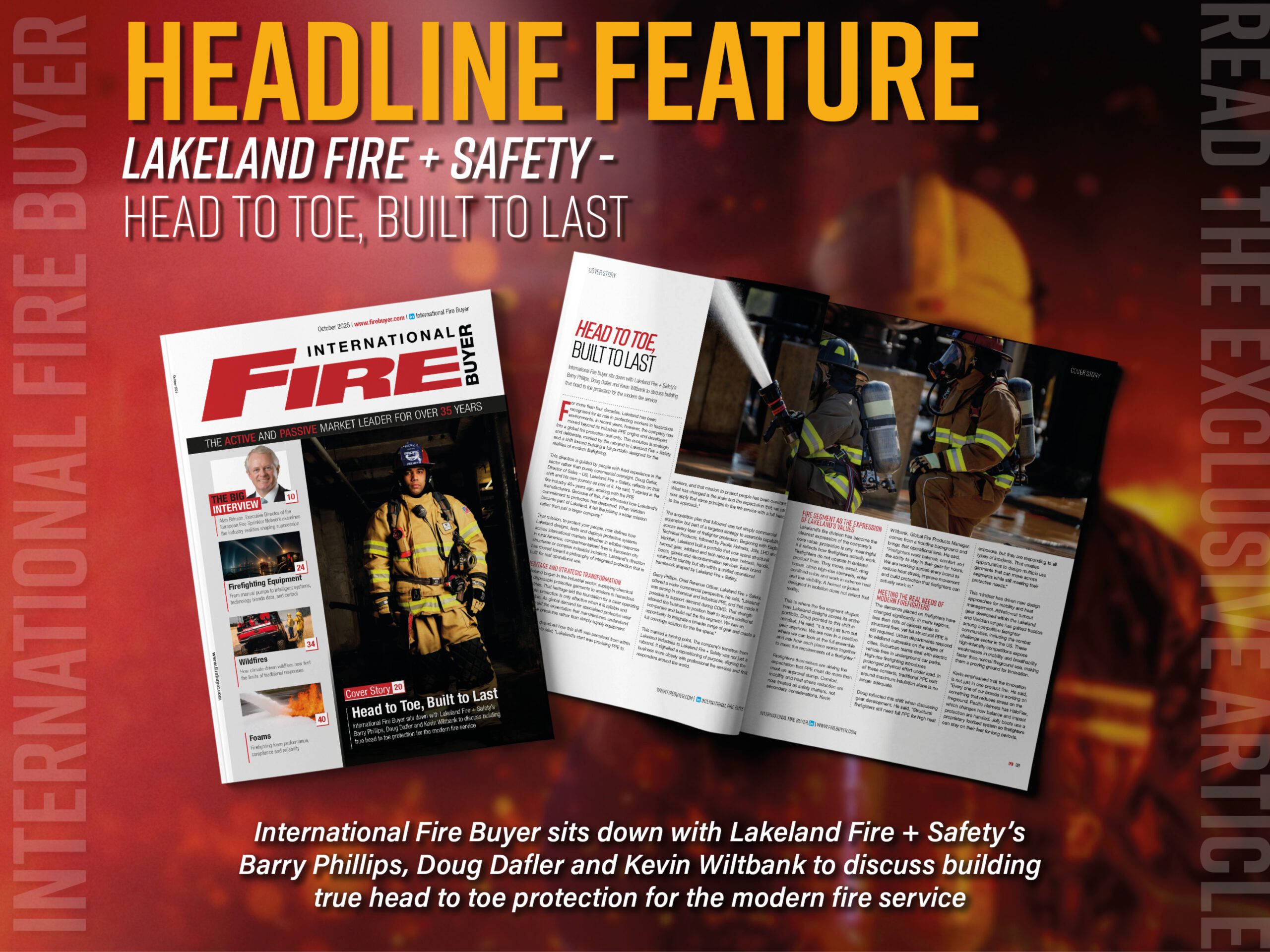

International Fire Buyer sits down with Lakeland Fire + Safety’s Barry Phillips, Doug Dafler and Kevin Wiltbank to discuss building true head to toe protection for the modern fire service
For more than four decades, Lakeland has been recognised for its role in protecting workers in hazardous environments. In recent years, however, the company has moved beyond its industrial PPE origins and developed into a global fire protection authority. This evolution is strategic and deliberate, marked by the rebrand to Lakeland Fire + Safety and a shift toward building a full portfolio designed for the realities of modern firefighting.
This direction is guided by people with lived experience in the sector rather than purely commercial oversight. Doug Dafler, Director of Sales – US, Lakeland Fire + Safety, reflects on that shift and his own journey as part of it. He said, “I started in the fire industry 40+ years ago, working with fire PPE manufacturers. Because of this, I’ve witnessed how Lakeland’s commitment to protection has deepened. When Veridian became part of Lakeland, it felt like joining a wider mission rather than just a larger company.”
That mission, to protect people, now defines how Lakeland designs, tests and deploys protective systems across international markets. Whether in wildfire response in rural America, compartmentalised fires in European city structures or complex industrial incidents, Lakeland’s direction has moved toward a philosophy of integrated protection that is built for real operational use.
Heritage and Strategic Transformation
Lakeland began in the industrial sector, supplying chemical and disposable protective garments to workers in hazardous industries. That heritage laid the foundation for a clear operating principle: protection is only effective when it is reliable and accessible. As global demand for specialised protective wear grew, so did the expectation that manufacturers understand operational pressures rather than simply supply equipment.
Doug Dafler described how this shift was perceived from within the industry. He said, “Lakeland’s start was providing PPE to workers, and that mission to protect people has been constant. What has changed is the scale and the expectation that we can now apply that same principle to the fire service with a full head to toe approach.”
The acquisition plan that followed was not simply commercial expansion but part of a targeted strategy to assemble capability across every layer of firefighter protection. Beginning with Eagle Technical Products, followed by Pacific Helmets, Jolly, LHD and Veridian, Lakeland built a portfolio that now spans structural turnout gear, wildland and tech rescue gear, helmets, hoods, boots, gloves and decontamination services. Each brand retained its identity but sits within a unified operational framework shaped by Lakeland Fire + Safety.
Barry Phillips, Chief Revenue Officer, Lakeland Fire + Safety, offered a wider commercial perspective. He said, “Lakeland was strong in chemical and industrial PPE, and that made it possible to support demand during COVID. That strength allowed the business to position itself to acquire additional companies and build out the fire segment. We saw an opportunity to integrate a broader range of gear and create a full coverage solution for the fire space.”