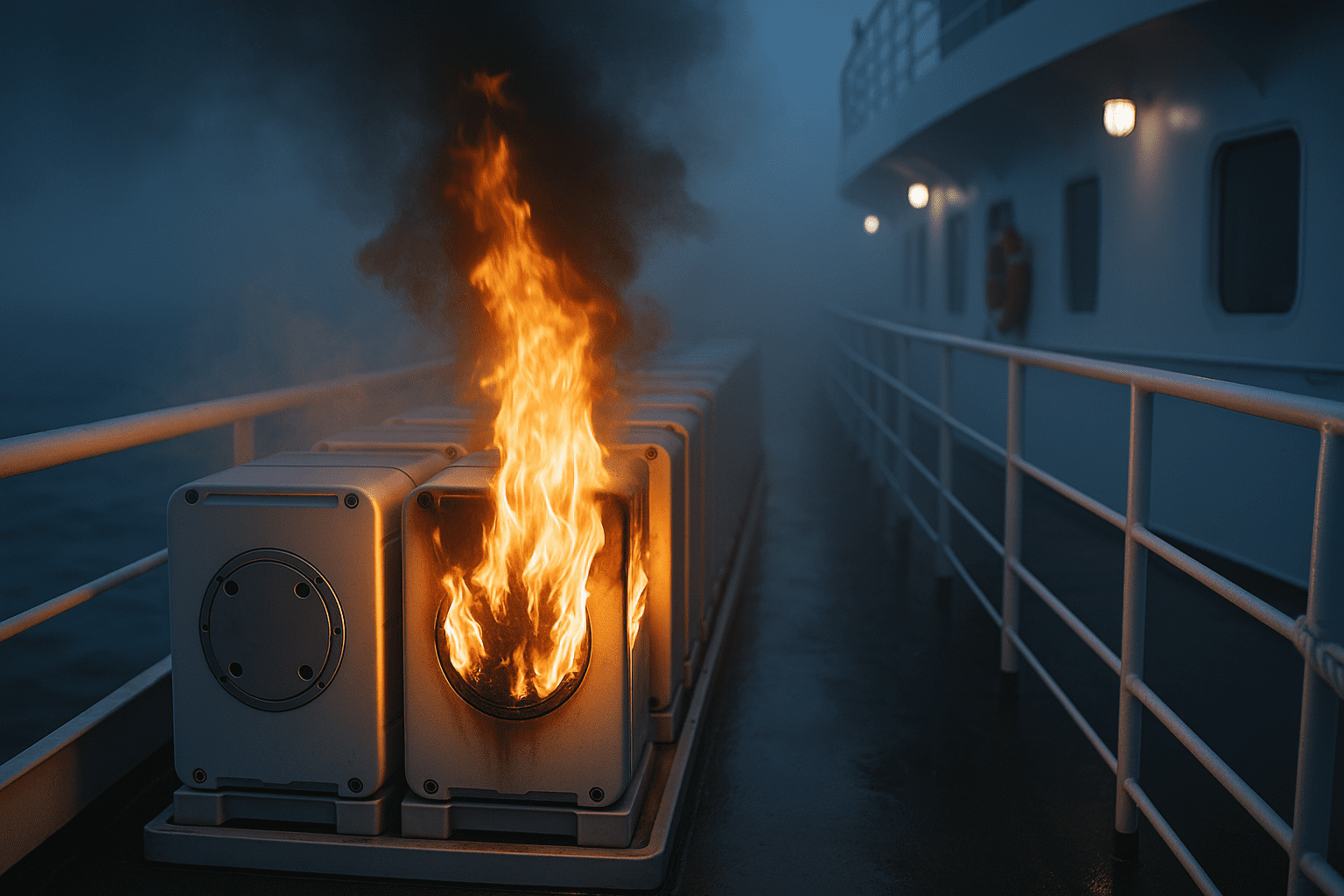

The US Coast Guard has issued a safety alert following a fire linked to a lithium-ion battery installation on a passenger vessel.
The incident, caused by loosely crimped lugs that overheated, did not result in injuries and caused only minimal damage, but investigators said it highlights serious risks unique to lithium-ion technology now being used more widely across the maritime sector.
The Coast Guard stressed that all integrated lithium-ion battery systems used for propulsion or electrical power on inspected vessels must undergo full engineering plan reviews, be fitted with supporting safety systems, and be thoroughly tested both during installation and throughout their operational life. Operators are also required to ensure proper maintenance by trained mariners, regardless of battery bank size or application.
Lithium-ion batteries are increasingly adopted because of their high energy density, which enables longer voyages and supports full vessel electrification. However, this same energy density brings greater danger: in the event of failure or short circuit, the batteries can enter “thermal runaway,” releasing high-temperature flammable gases that may ignite or explode. The heat accelerates further off-gassing, which feeds the fire in a chain reaction that is extremely difficult to suppress once it spreads to additional battery modules.
The Coast Guard noted that thermal runaway events also release toxic gases, often at concentrations above levels deemed immediately dangerous to life or health, posing additional risks to crew and passengers. Variations in battery chemistry further complicate safety strategies, as different lithium-ion types produce different off-gassing profiles.
Authorities emphasised the importance of robust battery management systems to prevent overcharging, undercharging and over-cycling. Operators are urged to ensure crews are trained in both routine maintenance and emergency response, including dedicated fire drills for lithium-ion battery systems. Vessels should be equipped with early detection, fire containment and water-based suppression strategies, as well as clear operational procedures based on manufacturer guidance.
The Coast Guard said inspectors may require plan reviews if systems are delivered without proper approval, and it advised regular checks for signs of deterioration such as bulging cells or corroded connections. With lithium-ion systems becoming more prevalent in maritime transport, regulators warned that close attention to design, inspection and emergency preparedness will be essential to prevent future casualties.