
The UK Government has set out its priorities for reforming fire and rescue services in England, outlining a renewed direction for the sector during the NFCC Spring Conference.
Speaking at the event, Fire Minister Chris Philp announced four key areas of focus: a revised National Framework, the creation of a new College of Fire and Rescue, greater emphasis on productivity, and stronger local governance through devolution. He confirmed that the Ministerial Advisory Group will support the reform process and praised the UK’s international reputation in the fire and rescue community. He also endorsed plans for the World Fire Congress, which is scheduled to take place in London in 2026.
Phil Garrigan, Chair of the National Fire Chiefs Council (NFCC), welcomed the Government’s proposals and its willingness to collaborate with the sector. He acknowledged the Minister’s appreciation of the challenges facing fire and rescue services and the recognition of the need to strengthen the infrastructure that supports them. Garrigan said the NFCC remains committed to ensuring that fire and rescue services are properly valued and do not become the forgotten emergency service.
Housing safety was also highlighted as a continuing Government priority, with Philp noting that new regulations on Residential Personal Emergency Evacuation Plans (PEEPs) have now been laid before Parliament. He said engagement with disability groups and families affected by the Grenfell Tower tragedy is ongoing, and confirmed that details of spending commitments are still being finalised.
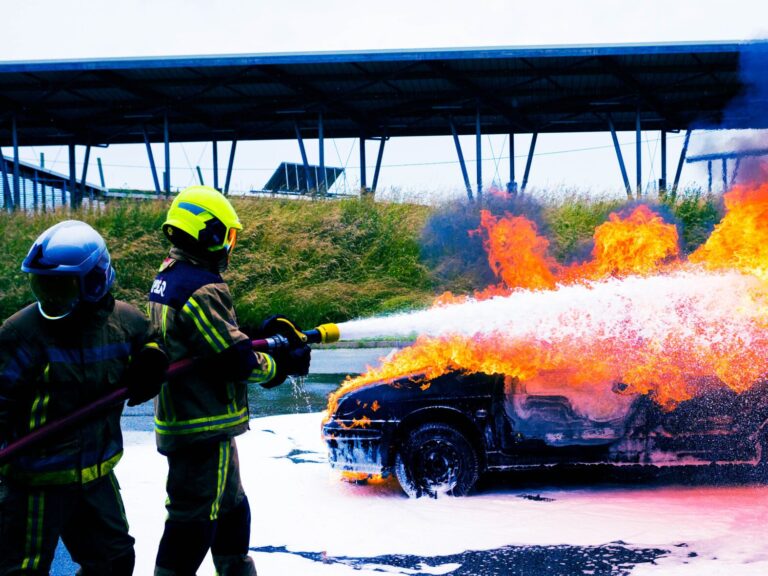
Meanwhile, the NFCC has issued a UK-wide alert warning of an increased risk of wildfires amid the current heatwave. With many parts of the country placed under an Amber alert by the UK Health Security Agency due to sustained high temperatures, the NFCC urged the public to act responsibly to help prevent fires. Garrigan warned that wildfires can start in an instant and escalate quickly, stressing the need for vigilance during the hot weather.
The NFCC has published guidance advising people not to use disposable barbecues in open spaces, to dispose of cigarettes and glass safely, and to follow any local restrictions. Fire and rescue services have already dealt with hundreds of wildfire incidents this year, and the NFCC emphasised that preventing such incidents is a shared responsibility. The public has been urged to report any wildfires or suspicious behaviour by dialling 999.
In addition to the fire risks, the NFCC also raised concerns over water safety during the summer months. It warned of the dangers posed by rivers, lakes, and other open water, particularly as many people underestimate the risk of cold water shock, which can affect even strong swimmers. According to NFCC data, more than a third of people who drowned in 2023 had not intended to enter the water.
Garrigan highlighted how often drownings occur unexpectedly and how easily people are caught off guard by the cold temperatures of the water, even during hot weather. The NFCC advised parents and carers to closely supervise children near water, and urged everyone to avoid alcohol before swimming or jumping into open water. In an emergency, the public is encouraged to follow the ‘Call, Tell, Throw’ method — call 999, tell the person to float, and throw a flotation aid — and to remember the ‘Float to Live’ technique if they find themselves struggling in water.
Looking ahead, the NFCC stressed the importance of long-term support from the Government to deliver meaningful reform and to help fire and rescue services respond to climate-related risks. Garrigan underlined the need for consistent funding to improve infrastructure, workforce training, and community engagement. Leadership, culture, and people-centred reform, he said, will be vital to achieving better outcomes for the sector.
Plans for the new College of Fire and Rescue are expected to include leadership development and national training standards, although full details have not yet been released.
The NFCC confirmed that it will continue to work closely with Government departments, local authorities, and other emergency service partners to implement reforms and to monitor the effectiveness of summer safety campaigns. Philp emphasised that collaboration will be essential in the months ahead, with updates on resource allocation expected later this year.
As the summer progresses, the NFCC said it remains committed to keeping the public informed, highlighting the importance of local services in educating communities and preventing risks. Seasonal guidance and real-time updates will continue to be issued through the NFCC’s website and public alert channels.