Staging Site!

Health & Safety Buyer - firebuyer.com

Introducing International Health & Safety Buyer

Hand Media International is proud to announce the launch of International Health & Safety Buyer, a new B2B multimedia platform dedicated to the global health and safety industry. This launch is a natural extension of Hand Media International’s established expertise. With International Fire Buyer and International Security Buyer already recognised as trusted market leaders and the authoritative voices across critical safety sectors both serving their respected markets for nearly four decades, our presence in health and safety allows us to build a strong bridge to an expanded readership. As regulatory frameworks tighten, digital transformation accelerates, and workplace wellbeing becomes a board-level priority, Health & Safety Buyer enters the market at a pivotal time. Businesses across industries such as manufacturing, construction and logistics are under increasing pressure to safeguard their people while meeting rising standards of compliance, sustainability and operational resilience. The publication will deliver in-depth coverage of the latest developments shaping the sector. From incident management and site safety to sustainable PPE, mental health programmes, and new training models, Health & Safety Buyer will offer essential insights for professionals tasked with protecting workforces and managing risk. Jon Pittock, Publisher at Hand Media International, commented: “Health & Safety Buyer represents another important step forward for our international portfolio and for the industries we serve. We have seen how rapidly the landscape of workplace safety is evolving, and our goal is to provide the insight and authority that professionals need to navigate these changes.” Delivered through a powerful multi-platform approach print editions, digital publications, newsletters, online content hubs, and global event partnerships, Health & Safety Buyer will create a trusted channel for thought leadership, knowledge-sharing, and targeted advertising opportunities for manufacturers and solution providers worldwide. Find out more here: Healthandsafetybuyer.com

Introducing International Health & Safety Buyer Read More »

Picture of FFE detector - Photo by FFE - Fire Buyer

Fireray Hub Beam Detector Gains Global Certification

FFE Ltd has announced the worldwide availability of its Fireray Hub Reflective optical beam smoke detector, now certified to both UL 268 (7th Edition) and EN 54-12 standards. The dual certification offers a single specification choice for international projects that require long-range smoke detection. Designed for large interior spaces of up to 120 metres with the long-range kit, the Fireray Hub Reflective includes Motorised Auto-Alignment for fast, single-person setup, Light Cancellation Technology to reduce false alarms in glazed environments, and Building Movement Tracking to maintain accuracy over time. A ground-level controller supports up to three detector heads, each with independent fire and fault signalling. Tom McGinnes, Product Manager at FFE, said: “With UL and EN certifications in place, customers can deploy Hub Reflective on multi-region programmes with confidence. “It’s a robust, installer-friendly beam solution that keeps large-space projects on time and within budget.” Targeted applications include aviation hangars, warehouses, hotels and retail atria, sports arenas, heritage sites and education facilities. About Fireray With over half a million units installed worldwide, Fireray is the first choice for installers and engineers looking for Optical Beam Smoke Detection over wide areas. Favoured by architects thanks to its compact design, and by installers and engineers that value the opportunity to speak directly to the designers at our UK HQ; Fireray is relied upon to protect some of the world’s most iconic and historic buildings.

Fireray Hub Beam Detector Gains Global Certification Read More »

Photo by Aico - Fire Buyer

Aico’s Roadshow Delivers Sector-Wide Engagement Across UK

Aico, in partnership with Trowers & Hamlins, have concluded their Social Housing Professionals Network (SHPN) Roadshow for 2025 – a nationwide initiative that brought together housing professionals from across the UK to discuss the pressing challenges and innovations shaping the future of social housing. The roadshow welcomed over 1,000 attendees from 400 organisations across the UK, making a total of 16 stops, including Stoke, Manchester, Belfast, Dundee, London, Bristol and Cardiff. Each session featured expert presentations and breakout discussions focussed on upcoming housing legislation, a region-specific overview, data strategies, and future-proofing homes. International law firm, Trowers & Hamlins, well known for being experts in the sector, brought insights to help housing professionals gain a deeper understanding of the legal landscape and its implications for their operations. Their in-depth understanding of disrepair issues and fire safety compliance placed them in the appropriate position to assist the attendees in ensuring adherence to regulatory standards. During the roadshows, Yetunde Dania, Dorota Pawlowski and Faye Craggs of Trowers & Hamlins, delivered insightful presentations on the recent developments in housing conditions claims, as well as updates on Awaab’s Law. Faye Craggs, Senior Associate for Trowers & Hamlins, commented “Aico have been ahead of the game for a long time. People now are really seeing the benefit in what they do. When Awaab’s Law comes in October, it’s going to have a massive effect on the sector. It’s the first time that we’ve had timescales for investigating complaints.” Aico facilitated discussions surrounding the use of actionable data and future technologies, including Aico’s Connected Home Solution. The Connected Home Solution combines domestic fire safety with environmental monitoring to provide a remote monitoring platform where users can view data on the fire safety and environmental conditions of their homes. Temperature, humidity and carbon dioxide level data can be used to monitor issues such as damp and mould, allowing housing professionals the ability to mitigate the risks before they become a cause for concern. Across the board, attendees delved into thought-provoking topics surrounding the housing sector. Mike Scourfield, Damp, Mould & Condensation Implementation Manager for Aster commented, “The new law coming in is really forcing us to focus and not become complacent in the way we’re working. It’s making sure that we’re responding to items as they arise.” To close each session, regional updates were presented by Aico’s Relationship Managers, providing insight into legislation updates in England, Scotland, Wales, and Northern Ireland. Evelyn Cleaton, Events Coordinator for Aico, has been organising the events and commented, “It was fantastic to see such a strong turnout of like-minded professionals at all 16 locations, all actively contributing to a great day. The energy and enthusiasm was great to see, and it was a powerful reminder of how valuable shared learning and discussion can be.”

Aico’s Roadshow Delivers Sector-Wide Engagement Across UK Read More »

Montresor Hotel - Hochiki - firebuyer.com

Hotel Montresor Tower enhances safety with Hochiki Latitude

Hotel Montresor Tower, a stylish four-star destination just outside Verona, Italy, has successfully upgraded its fire detection infrastructure with Hochiki’s advanced Latitude life safety platform. As part of a comprehensive refurbishment, the hotel partnered with installer TOLA & C. SRL to install a new Latitude 8‑loop control panel, complemented by voice alarm devices (VADs), call points, and ESP sensors. The Latitude system was chosen for its intuitive programming and powerful Hotel Mode, which offers controlled alarm delays, minimising unnecessary disruption while maintaining strict safety compliance in guest rooms. To preserve the venue’s contemporary aesthetic, sleek black‑finished ESP detectors were installed in the newly renovated conference centre. Elsewhere, legacy sensors were updated to the ESP range to comply with Italian standard UNI11224, which mandates system upgrades every 12 years to ensure reliability and performance. Director Luca Montresor commented on the upgrade: “We’ve been extremely satisfied with Hochiki’s technology over the years—it’s reliable, easy to maintain, and straightforward for our staff to operate. When it was time to expand and refurbish, there was no question we’d stay with Hochiki for the new system too” By integrating the Latitude panel and ESP devices, Hotel Montresor Tower has not only elevated its life safety infrastructure but ensured seamless visual integration and enhanced operational efficiency, future‑proofing the guest experience without compromise. Find out more about Hotel Mode from Hochiki Europe’s Latitude system and ESP range.

Hotel Montresor Tower enhances safety with Hochiki Latitude Read More »

Mount Vesuvius - firebuyer.com

Wildfires at Mount Vesuvius

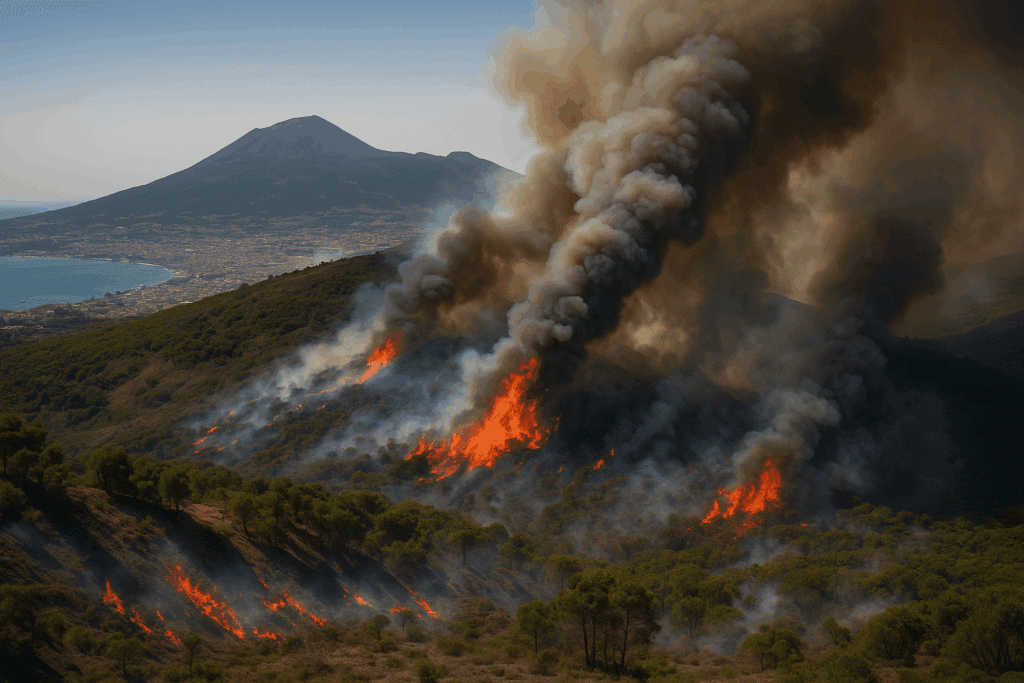
Tourist access to the world-renowned Mount Vesuvius has been suspended following a major wildfire sweeping the volcano’s slopes. The blaze, active since early August, has devastated hundreds of hectares of woodland, prompting a large-scale, multi-agency firefighting operation. Meanwhile, southern France faces its most intense wildfire in decades. Mount Vesuvius Under Threat The wildfire, which began several days ago, has expanded to roughly 3 km in width, affecting the Terzigno pine forest and adjacent woodland near Trecase, Ercolano, and Ottaviano. Thick smoke plumes are highly visible from both Naples and the archaeological remains at Pompeii. Six Canadair aircraft and numerous helicopters are deployed in aerial attacks, supported by drones for fire monitoring and a wide frontline comprising firefighters, military, forestry corps, police and civil protection volunteers. The Mayor of Terzigno described the situation as “very critical”, though no residential structures have been affected. Local park authorities have closed all trails within Vesuvius National Park to ensure public safety and to permit unfettered emergency operations—Pompeii itself remains open to visitors. Investigations strongly suggest arson as the cause of the fire. Authorities cite a high incidence of deliberate or negligent ignition in such fires—estimated at 90 %—and have called for a thorough inquiry into possible criminal motives. Fires Across Southern Europe In France’s Aude department, firefighters continue to battle the largest wildfire the region has seen since 1949. Despite some containment efforts, scorching heat and drying winds are complicating control measures. Climate as an Aggravating Factor Officials and specialists link the rise in wildfire frequency and severity to climate change. Across Italy, approximately 700 wildfires have occurred between January and July 2025, consuming over 320 km²—surpassing much of 2024’s total. Meanwhile, southern Europe’s unprecedented heatwaves—often topping 40 °C—are further extending wildfire seasons and increasing risk.

Wildfires at Mount Vesuvius Read More »

Intersec Saudi Arabia - securitybuyer.com

NFPA to highlight global fire safety at Intersec Saudi Arabia

Intersec Saudi Arabia, the premier industry platform for security, safety and fire protection, has formed a groundbreaking collaboration with the National Fire Protection Association (NFPA), which will be a highlight of this year’s Fire Protection and Technology Summit. Founded in 1896, NFPA is a global nonprofit organisation devoted to eliminating death, injury, property and economic loss due to fire, electrical and related hazards. The association delivers information and knowledge through more than 300 consensus codes and standards, research, training, education, outreach and advocacy. On 30 September, NFPA will host a series of sessions which will offer unparalleled expertise in fire protection around key themes including ‘Protecting GIGA Developments and Large-Scale Events in the Kingdom’, ‘Building Human Capital in Fire Protection’ and ‘Navigating New Fire Safety Regulations and Compliance’. Commenting on NFPA’s strategic participation at the event, Jim Pauley, President and CEO of NFPA, stated: “As Saudi Arabia undergoes rapid transformation aligned with Vision 2030, integrating internationally recognized fire and life safety standards is more vital than ever. NFPA is pleased to support the Kingdom by providing the knowledge, resources, and global expertise needed to safeguard lives, property, and infrastructure. We are honoured to be part of Intersec Saudi Arabia, where we can engage directly with local stakeholders and help drive meaningful progress in fire safety.” The event will open with keynote remarks from Pauley, alongside representatives from Saudi Civil Defense. Curated by the NFPA and chaired by the association’s Saudi Country Manager of International Business Development, Zahi Daher, the NFPA Day will bring together leading voices from government, industry and stakeholders to address emerging challenges and promote the development of more resilient communities. “The NFPA Day at Intersec Saudi Arabia is more than just a series of sessions – it’s a dynamic platform for exchanging knowledge, building local expertise, and fostering meaningful collaboration between industry leaders, government authorities, and safety professionals. Our goal is to elevate fire protection standards across the Kingdom, laying the foundation for safer communities today and for generations to come,” said Daher. The sessions will emphasise the crucial role of standards in fostering innovation, ensuring public safety and promoting cross-sector collaboration. Throughout the day, attendees will gain practical insights into NFPA standards, certifications, and training programs, as well as how they can be successfully utilised for Saudi Arabia’s specific needs. The day concludes with a networking session, offering opportunities for stakeholders to connect and explore partnerships that advance fire and life safety across the Kingdom. Bilal Al Barmawi, CEO and Founder of 1st Arabia Trade Shows & Conferences, said: “The NFPA Day at Intersec Saudi Arabia 2025 offers a dedicated platform to explore how international fire and life safety standards can be applied to support Saudi Arabia’s Vision 2030, accelerating fire protection and safety in the Kingdom.” The Fire Protection and Technology Summit at Intersec Saudi Arabia highlights the future of fire and emergency response, bringing together international leaders at the forefront of innovation. From smart city firefighting to high-rise rescue, HAZMAT response, and regional disaster collaboration, the summit provides fire safety professionals with the knowledge and expertise to address the unique challenges of Saudi Arabia. Highlights on the opening day of the Fire Protection and Technology Summit include a panel discussion exploring how cutting-edge intelligent systems, including AI and IoT, are revolutionising fire detection and prevention. Fire safety for mega events, including lessons from Hajj and Global events, will also be examined, along with a fascinating overview of the advanced fire safety systems designed for Saudi Arabia’s emerging space sector. The closing day of the summit on 1 October will shine a spotlight on the women breaking barriers and reshaping the fire protection and safety landscape in Saudi Arabia, when there will also be a special focus on building human capital and training the next generation of fire protection experts. Riham Sedik, Exhibition Director, Intersec Saudi Arabia, Messe Frankfurt Middle East, concluded: “At this year’s conference, we’re committed to reshaping the future of fire safety in the Kingdom by driving bold conversations with industry leaders, regulatory authorities, and international experts.” Intersec Saudi Arabia will be held from 29 September to 1 October at the Riyadh International Convention and Exhibition Centre (RICEC). Check out International Fire Buyer’s Interview with Eng Dana Kamal from the NFPA about international and regional fire and life safety standards, with a focus in the Middle East here. 

NFPA to highlight global fire safety at Intersec Saudi Arabia Read More »

Picture of AFAC representatives - Photo by AFAC - Fire Buyer

What to Expect: AFAC 2025

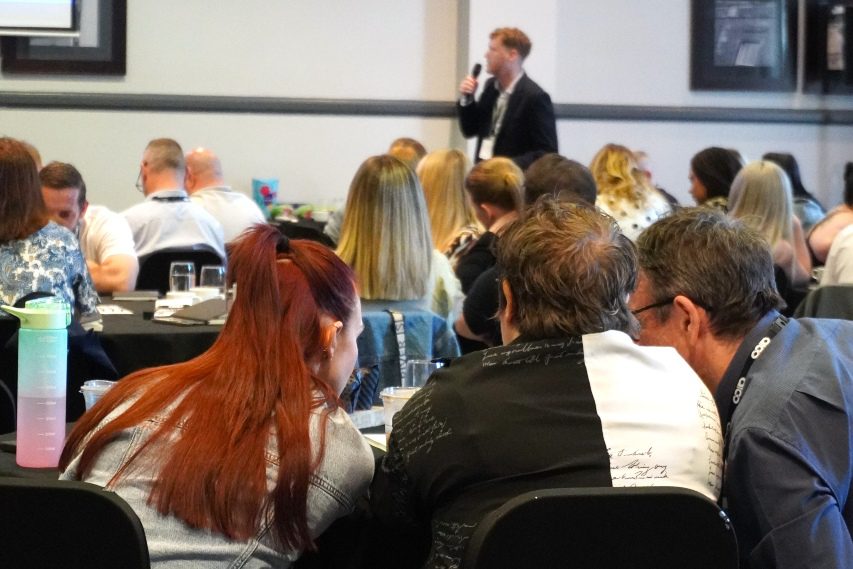
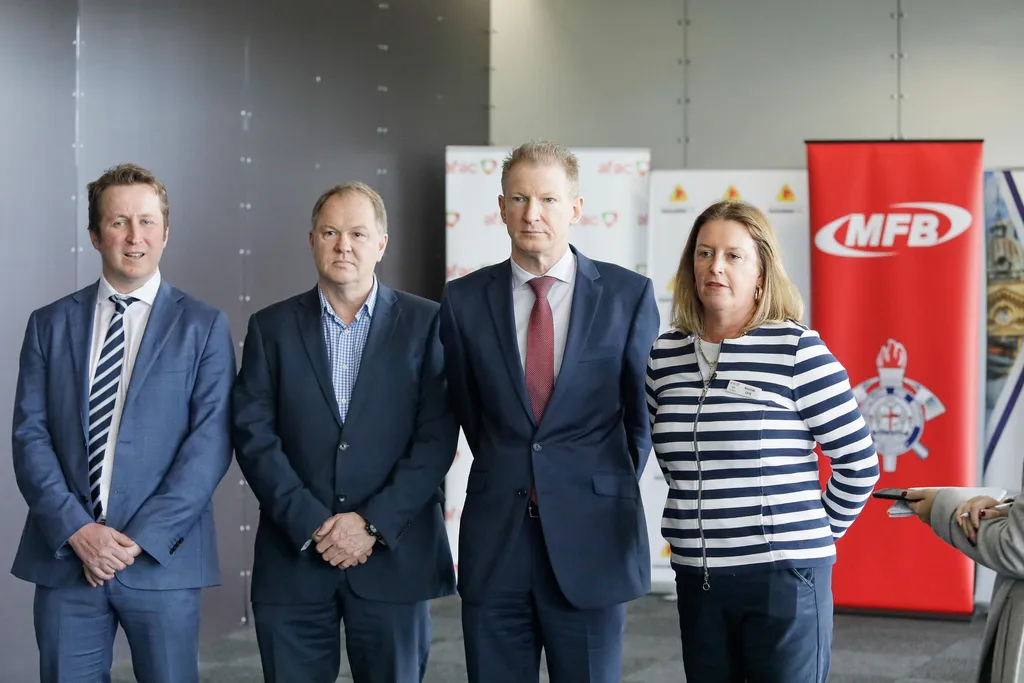
AFAC, Australia’s largest emergency management conference returns to Perth, bringing together experts from across the region to explore integrated resilience and future-ready response. From 26 to 29 August 2025, the Perth Convention and Exhibition Centre will host AFAC25 powered by INTERSCHUTZ, the Asia-Pacific region’s leading emergency management event. Organised by AFAC (the Australasian Fire and Emergency Service Authorities Council), this year’s conference is set to attract thousands of professionals across fire, rescue, emergency management, defence, and critical infrastructure sectors. Themed “From local to global: leveraging systems, capability and connection,” AFAC25 responds to the growing need for coordinated, adaptive response in an era marked by compounding climate risks and evolving public safety challenges. The event offers a unique space for operational leaders, researchers, frontline responders, and policymakers to converge, exchange insight, and align strategies. Running across four days, the event includes the AFAC Conference, the Australian Disaster Resilience Conference, the Institution of Fire Engineers (Australia) National Conference, and the Women and Firefighting Australasia Conference. This multi-stream approach ensures a rich, multidimensional agenda that reflects the complexity and diversity of the sector. AFAC25 will feature more than 100 speakers, including international experts and domestic leaders. Sessions will cover a broad range of themes, from disaster risk reduction and climate resilience to digital transformation and cross-sector capability building. Keynotes and panels are designed to foster systems thinking and enable practical takeaways for both high-level strategy and on-the-ground action. The accompanying exhibition, running from 26 to 28 August, remains a cornerstone of the event. Hundreds of global and local vendors will showcase the latest in fire suppression systems, emergency communications, drone technology, disaster response tools, and training solutions. Live demonstrations and technology showcases will offer attendees hands-on engagement with the tools shaping tomorrow’s emergency services landscape. A standout feature of this year’s event is the Professional Development Day on 29 August, dedicated to interactive workshops and skill-building sessions. Designed to promote interagency collaboration and leadership development, this day underscores AFAC’s commitment to nurturing talent and advancing capability within the sector. This year also marks the introduction of new Spotlight Sessions on the Expo floor. These short-format presentations will highlight real-world applications of innovation in emergency logistics, firefighting robotics, community resilience programs, and mental health support for responders. These sessions offer informal, yet deeply informative, opportunities to engage with leading voices across specialisms. AFAC25 will also feature a dedicated Emerging Leaders stream, aimed at professionals under 35 and those new to the sector. This initiative is designed to foster mentorship, peer learning and long-term engagement, ensuring the next generation of emergency management professionals are equipped to lead with confidence and insight. The event comes at a critical moment. With climate-related disasters intensifying and public expectations for safety and preparedness rising, the event serves as a vital forum for forging alliances and advancing shared goals. It continues to be recognised as a national benchmark for knowledge exchange, policy discussion, and professional development within the emergency services community.

What to Expect: AFAC 2025 Read More »

Command by Design: Reimagining Operational Flow in the Modern Firefighting Vehicle - Fire Buyer

Command by Design: Operational Flow in Modern Fire Trucks

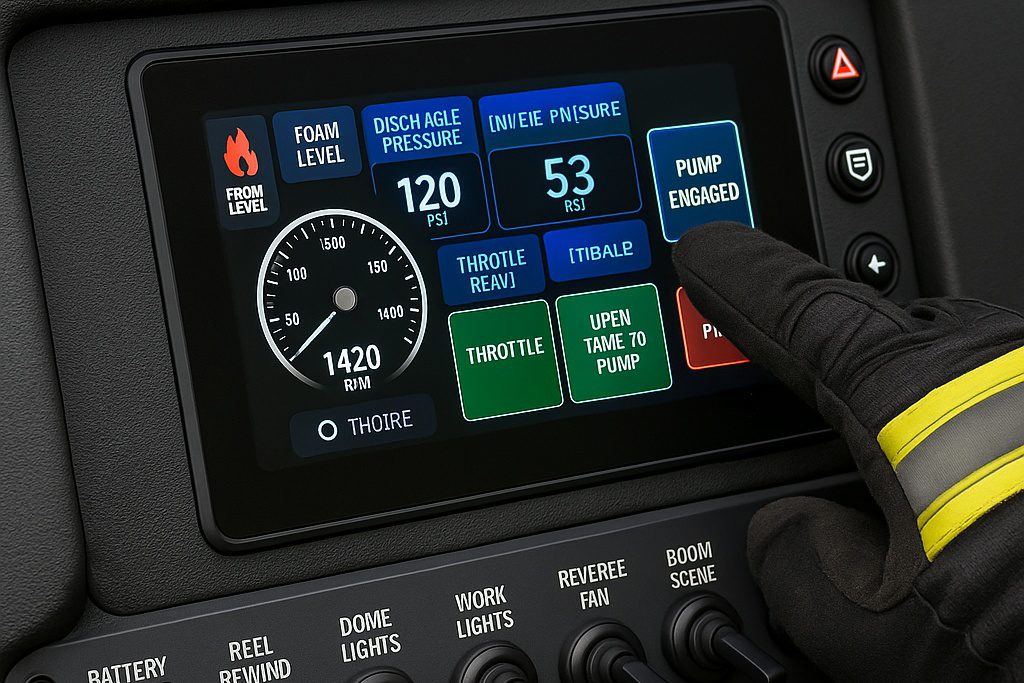
Mounting systems, lighting arrays, shutters, and hydraulic platforms are reshaping operational efficiency in firefighting vehicles. Rebecca Morpeth-Spayne explores the critical role these components play in enabling mission-ready command. Every second counts in fire response. From the moment the call comes in to the instant the crew disembarks, the configuration of a fire appliance can either streamline or stall the mission. While much attention has historically been given to pump capacity, suppression agents, and aerial reach, a quieter revolution has taken place around the ergonomics and architecture of the vehicle itself. It is in the lighting systems, mounting brackets, compartment access, and rooftop layouts that the subtler determinants of crew readiness reside. Firefighting vehicles have evolved from transport units to mobile toolboxes – each one tailored to the operating context it serves, whether municipal, industrial, airport, or wildland. Today, operational efficiency hinges not only on what a vehicle carries, but how that equipment is stowed, accessed, and activated under duress. In an era of complex incident profiles, dynamic risk, and heightened accountability, equipment design is becoming a form of command control. This design imperative is increasingly guided by real-world feedback loops. Post-incident debriefs now often highlight not only what tools were used, but how quickly and safely they were accessed. Vehicle layout is no longer the exclusive concern of engineers; it is the subject of interdisciplinary collaboration between frontline responders, industrial designers, and human factors specialists. Fire services are beginning to adopt iterative design approaches, where vehicle configurations evolve in response to operational learnings rather than being fixed at delivery. Mounting strategy is also being influenced by emerging vehicle footprints. As services shift towards compact, multi-role units – particularly in urban environments – every inch of internal wall and ceiling space must be justified. Tool mounts are no longer fixed to flat panels but are now integrated into fold-out trays, sliding drawers, and overhead rails. This kind of spatial layering enables a higher volume of equipment to be stored without compromising accessibility. Inside and out, the mounting of tools has moved beyond mere storage. Companies such as Ziamatic and Performance Advantage Company (PAC) are redefining tool accessibility with modular, vibration-resistant brackets that allow for rapid deployment and secure travel. These systems enable departments to customise layouts by call type or seasonal risk, enhancing response agility. Ziamatic’s mounts are especially known for integrating safety locking mechanisms that resist unintentional release during vehicle motion. Meanwhile, PAC’s Tool Mounting Kits and Adjustamount Systems cater to departments looking to standardise equipment storage across multiple vehicle types, minimising training variance and improving crew familiarisation. In high-tempo environments, seconds saved accessing a halligan tool or thermal camera can influence outcomes. As vehicles become more complex, so too does the choreography of movement around them – and clean, intuitive mounting solutions reduce cognitive load under pressure. Tool mounting also intersects with mental conditioning. Muscle memory, built through repeated drills, depends on tools being in the same place every time. Inconsistencies in mounting configurations can introduce hesitation under pressure. That’s why leading fire services are now conducting ‘flow audits’ — walkthroughs where firefighters simulate gear retrieval during drills, flagging bottlenecks and repositioning items to align with real-world muscle patterns. What seems like a minor tweak can yield major reductions in retrieval times and physical strain.

Command by Design: Operational Flow in Modern Fire Trucks Read More »

Feature - Boxed In - Fire Buyer

Boxed In: Suppression Strategies for Confined Firefighting

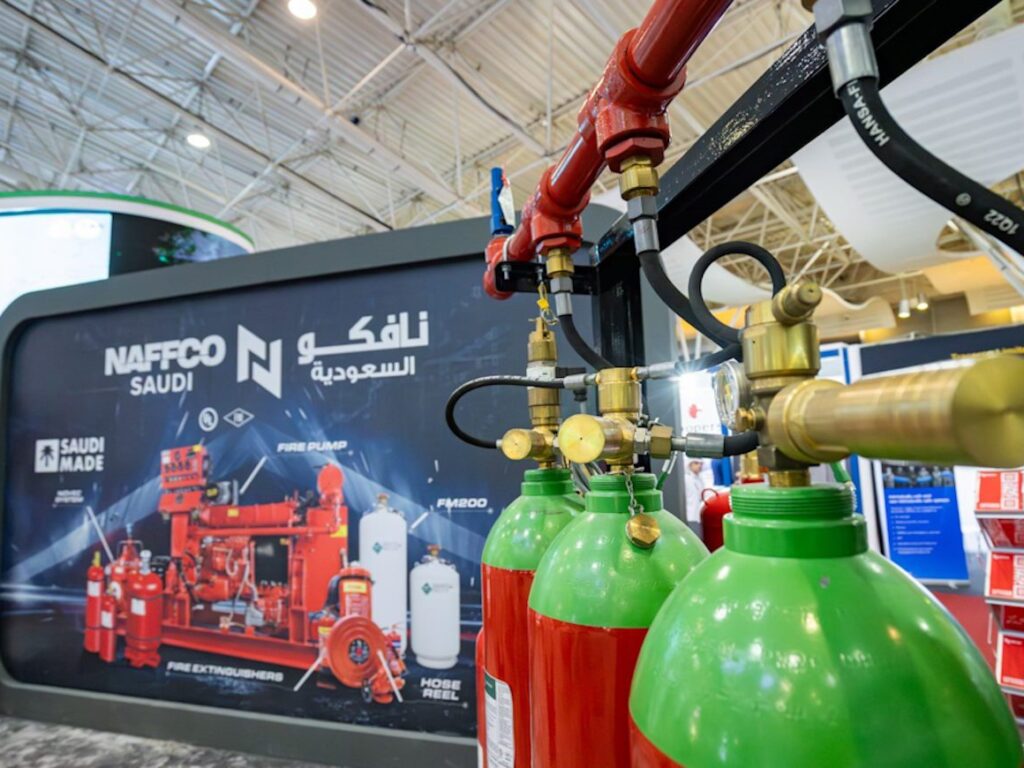
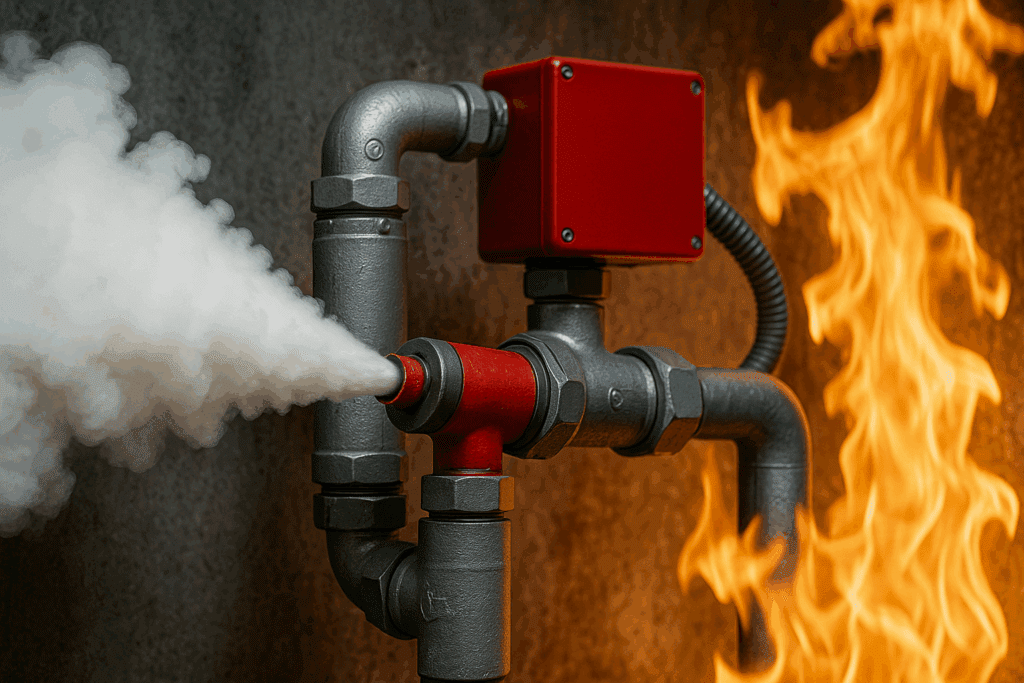
Joseph Clarke of Fire Buyer explores how fire suppression tactics and technologies are evolving to meet the unique demands of confined-volume environments – from control rooms to engine bays. Firefighting is a discipline shaped by context. While open-plan warehouses and multi-storey buildings offer familiar challenges of scale, pressure, and spread, a different set of hazards emerges when fire occurs in environments where volume, access, and ventilation are limited. These are the compact zones: engine compartments, control cabinets, telecom shelters, underground tunnels, offshore rig rooms, rail carriages, maritime holds, or autonomous vehicles. In these settings, the fire behaves differently, spreads faster, and becomes exponentially more dangerous in a shorter window. Confined spaces amplify thermal energy and restrict smoke dissipation, often creating oxygen-depleted, superheated environments. Combustion byproducts accumulate rapidly, rendering traditional firefighting tactics difficult, dangerous, or outright impossible. First responders might not be able to physically reach the source of ignition. Human intervention is either delayed or entirely precluded. This leaves one critical option: suppression must be built-in, autonomous, and optimised for minimal spatial intrusion. This is the reality confronting designers, engineers, and fire strategists working across sectors where risk is high, access is low, and tolerances are narrow. In these environments, fire suppression becomes not just a safeguard, but a systems engineering challenge. Increasingly, these risks intersect with modern infrastructure trends. As lithium battery installations, compact data hubs, and mobile energy units become commonplace, the scope of what constitutes a confined-risk environment continues to grow. These deployments often sit in remote or mission-critical locations, meaning that when an incident occurs, the focus can turn to protecting uptime, safeguarding human safety, and ensuring compliance across complex regulatory frameworks. Many of these environments are also governed by overlapping compliance regimes. For instance, data centres may be subject to both fire safety and environmental standards that dictate the types of suppression agents permitted. This necessitates careful evaluation not only of extinguishing performance but also of environmental impact, re-arming logistics, and chemical disposal requirements. In these cases, compact suppression must harmonise multiple standards without adding operational burden. Compact environments pose a multi-layered suppression challenge. Limited air volume increases the intensity of smoke buildup, while narrow compartments complicate discharge dispersion. System components such as tanks, nozzles, detectors, and actuation controls must operate within highly constrained geometries, often in vibration-prone, high-temperature, or mission-critical settings. Traditional sprinkler systems or large-capacity foam rigs are not viable in such environments. Instead, compact suppression depends on systems that are self-contained, requiring no external water or pressurised gas supply; non-intrusive, capable of fitting into or around existing machinery or enclosures; autonomous, able to detect, decide, and deploy without human intervention; and clean, leaving minimal residue and avoiding secondary damage. These stringent requirements have catalysed a wave of innovation in condensed aerosol systems, water mist technologies, and hybrid suppressants engineered specifically for small-space deployment. Additionally, noise sensitivity and electromagnetic compatibility are emerging as new constraints in specific sectors. For example, onboard suppression systems in rail transit or aviation must not interfere with control electronics or generate false alarms due to vibration. This requires a high level of integration testing and careful selection of activation thresholds. Developers are increasingly engaging in co-design with vehicle manufacturers and facility operators to ensure that suppression systems are both safe and functionally silent within sensitive enclosures.

Boxed In: Suppression Strategies for Confined Firefighting Read More »

Out of the Film, Into the Fire - Fire Buyer

Out of the Film, Into the Fire

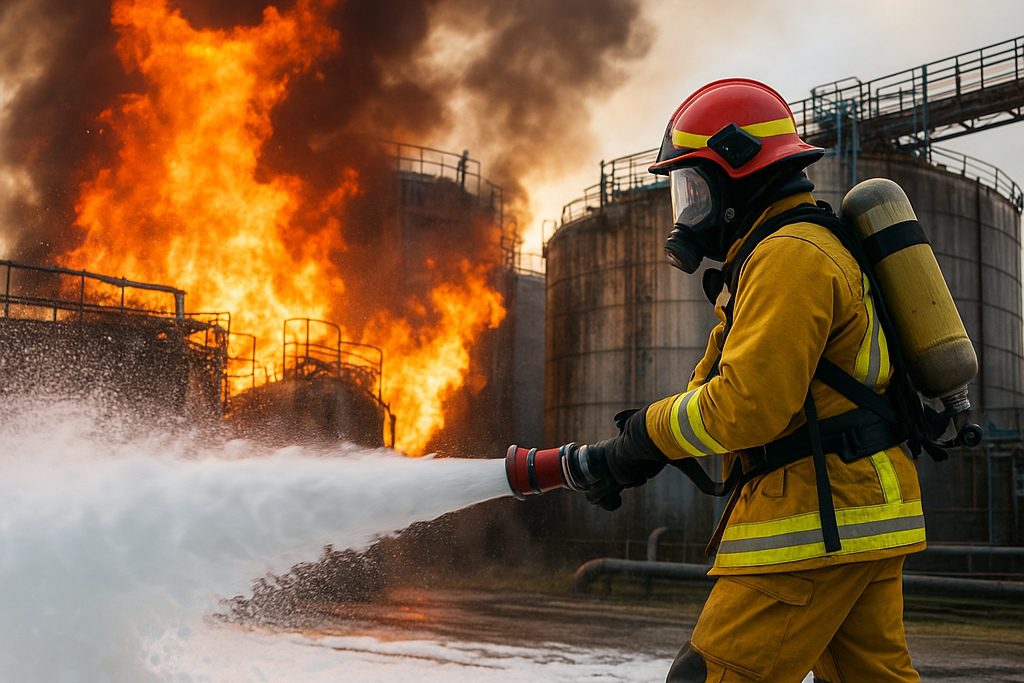
As the firefighting sector moves away from PFAS-based foams, Paul Joseph explores what it means to reformulate, requalify, and roll out safer suppressants under real-world conditions. From North America to Europe, regulatory pressure is accelerating the transition away from PFAS-based firefighting foams. The European Chemicals Agency (ECHA) and the U.S. Environmental Protection Agency (EPA) have signalled clear intent: PFAS, with their persistence and toxicity, have no long-term place in suppression systems. But if the end goal is clear, the pathway there is anything but. Across the industry, fire service leaders, industrial safety managers, and foam formulators are grappling with deadlines that do not always align with operational realities. For those tasked with specifying, procuring, and deploying Class B foams – especially in high-hazard sectors like aviation, petrochemicals, and defence – the transition is not just a matter of compliance. It’s a question of performance, infrastructure compatibility, and trust. Legacy AFFF products earned their reputation in the field: rapid flame knockdown, vapour suppression, and reliability under pressure. Fluorine-free foams (F3), by contrast, are often judged against these same criteria – yet they behave differently, interact with surfaces differently, and require different application techniques. Foam suppliers are focusing on third-party validation, real-world trials, and end-user education to build confidence in F3 formulations. Companies like Perimeter Solutions and Dafo Fomtec have invested heavily in refining the extinguishing capabilities of their fluorine-free products to meet recognised standards such as EN and ICAO level B. This tension – between lab test results and operational acceptance – has influenced the development priorities of firms like 3FFF and Bioex. These manufacturers have aimed to replicate the handling and application behaviour of AFFF while eliminating fluorinated content, reducing the learning curve for frontline users and minimising disruptions to standard operating procedures. One of the least glamorous yet most consequential challenges in the F3 transition is hardware compatibility. Many fixed systems, from aircraft hangar deluge rigs to petrochemical tank farms, were calibrated for the unique viscosity, expansion rates, and drainage times of AFFF. Switching to fluorine-free foam can require recalibration, new proportioning equipment, or full system replacement. For cash-strapped municipal services or legacy industrial sites, this cost barrier is significant. Angus Fire has publicly acknowledged this dilemma and works closely with clients to assess retrofit feasibility before recommending specific foam types. Its JetFoam range, for example, is designed to perform in both new and retrofitted systems. VS Focum adds another dimension to this discussion. Their research into foam physics has led to formulations that balance low viscosity with high burnback resistance – crucial for use in mobile response units where proportioning systems vary widely in age and accuracy.

Out of the Film, Into the Fire Read More »

Scroll to Top