Staging Site!

Richard Canham FFE-Firebuyer.com

Ask the Expert – FFE 

Richard Canham of FFE discusses how advanced, multi-technology fire detection systems are transforming safety across modern warehousing and logistics environments  Firstly, can you introduce yourself and say a little about your background and work at FFE?  I’m Richard Canham, Head of Global Sales at FFE, a Halma company specialising in fire detection technologies including beam smoke detection, flame detection, aspirating smoke detection and linear heat detection. I work with our distribution partners worldwide as they deliver FFE solutions into projects across Europe, the Americas, the Middle East and Asia. Our partners collaborate with system integrators, consultants and fire engineers, and my team supports them through training, exhibitions and joint customer visits. Warehousing and logistics has become a key vertical for us because it brings together all our technologies and concentrates many of the sector’s most demanding detection challenges.  How have changes in warehouse design and logistics operations influenced the way fire detection systems are specified and deployed today?  The modern warehouse is no longer a simple shed. Buildings are taller with denser storage, higher levels of automation and on-site IT and control rooms under one roof. Service levels are tighter and tolerance for downtime is much lower. This creates multiple distinct risk zones within one building, such as high bays, conveyors, charging areas, cold stores and control rooms, each of which behave differently in a fire.   Operators want earlier and clearer information while maintaining strong resilience against false alarms in dusty or high airflow environments. As a result, designers are moving away from a single ‘one system fits all’ mindset to application-led, multi-technology solutions. We now see more schemes that combine beams, Aspirating Smoke Detection (ASD), flame and linear heat detection, each placed where it performs best.  What are the most significant fire risks found in modern warehousing and logistics sites, and how do these determine the appropriate detection approach?  The principal risks sit in a few clear areas and each point to a suitable technology. High-bay storage and open volumes present large fuel loads beneath high ceilings, where beam smoke detection offers a practical and economical way to cover the overhead void.   Conveyors and sortation systems face localised heating from friction or failed bearings along long runs, which makes linear heat detection a natural fit because it senses temperature continuously along the belt.   Charging and maintenance areas bring together forklifts, pallet trucks and battery rooms, so optical flame detection is well suited here and is usually combined with general smoke or heat detection. Waste and marshalling areas often contain compactors, balers and bins loaded with cardboard and plastic wrap, where flame detection again provides rapid response.   When it comes to control rooms, IT spaces and small data rooms these are vulnerable to even small incidents, so ASD is preferred for very early warning. Cold stores require careful treatment because low temperatures and limited airflow affect smoke movement and detector behaviour, so ASD and linear heat detection are often combined.   Once the facility is mapped along these lines the detection strategy is straightforward to define.  TO READ THE FULL ARTICLE SEE OUR LATEST ISSUE HERE

Ask the Expert – FFE  Read More »
flir-thermal-imaging-camera-Firebuyer.com

Cover Story – Flir

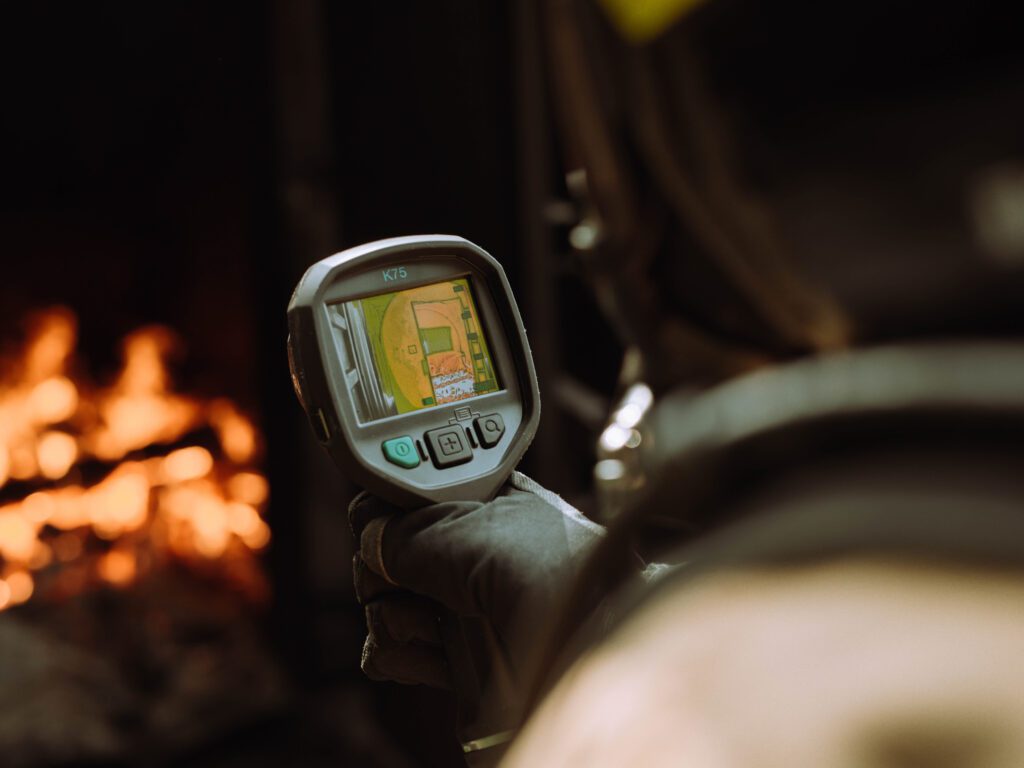
Fire Buyer International speaks with Flir’s Peter Dekkers on how the new K75 and K85 cameras enhance visibility, safety, and post-incident analysis    Firefighting has always demanded one essential capability, clear vision in chaotic situations. When dense smoke, heat and darkness obscure surroundings, seconds determine safety, rescue and containment.    In such conditions, the human eye is often incapable of meeting the challenge. Flames distort colour and perception, thick black smoke blinds even the most experienced crews.   Modern firefighting depends increasingly on technology that restores sight where its impossible for any to exist. Thermal imaging cameras (TICs) now stand alongside hoses, breathing apparatus and protective clothing as standard issue. They allow firefighters to see through smoke, identify hotspots and detect casualties in zero visibility.                              Flir’s new K75 and K85 thermal imaging cameras take this principle further. Designed to enhance awareness and improve operational efficiency, they offer clarity, connectivity and reliability from the first call to the final cleanup operations.   As Peter Dekkers, Director of Business Development at Flir explains: “These latest models support every step of the mission – from call to cleanup, ensuring that firefighters remain equipped with crucial visual information at all stages of their work.”   The Changing Face of Firefighting                                                                              Modern fire incidents are more complex than ever. Lightweight construction materials, synthetic furnishings, electric vehicles and lithium-ion battery storage all burn differently to traditional fuels. They produce hotter, faster-moving and more toxic fires, often filling enclosed spaces with thick black smoke in seconds.   In such conditions, even entering a structure becomes hazardous. Visibility can drop to zero, temperatures can exceed 600°C, and crews may lose orientation. Without a reliable TIC, finding the seat of the fire or trapped occupants is often a matter of touch and instinct.   Flir’s new K75 and K85 have been developed to remove this uncertainty. Built for the extreme realities of modern fire behaviour, they provide immediate thermal images that reveal danger zones and safe pathways and victims, long before they are visible to the naked eye.   “The K75 and K85 are engineered for frontline firefighting with their rugged IP67-rated construction, 2m drop resistance, and outstanding high-heat performance,” Dekkers continues. “Our engineers have optimised these next-generation cameras for reliable thermal visibility in low-light, no-light and smoke-obscured environments.”   K-Series Evolution   Launched in September, the K75 and K85 continue Flir’s proven K-Series line of handheld TICs. Both are built for the toughest environments, featuring heat-resistant housings, simple one-handed operation, and exceptional image quality.   The K85 delivers Flir’s highest resolution in a firefighting camera (640 × 480 pixels) while the K75 provides a 320 × 240 sensor option with identical rugged design and functionality. The cameras’ new single-range dynamic gain ensures smooth and uninterrupted imaging, even during rapid temperature transitions.   “In earlier TICs, firefighters experienced momentary image freezing or delays as cameras switched between gain ranges when moving from cool air into extreme heat,” Dekkers explains. “The K-Series eliminates this problem. The single-range gain allows the device to reveal hidden dangers instantly, without any colourisation lag or interruption.”  This feature is vital when every second counts. A split-second delay could mean missing a flashover, a trapped person, or a sudden shift in fire dynamics.   Precision When It Matters   Firefighters use thermal imaging for much more than simply locating flames. A well-designed TIC assists in navigating confined structures, assessing roof stability, locating hidden fire spread behind walls or ceilings, and identifying exit routes.   The K75 and K85 feature multiple imaging modes that adapt to different stages of the operation. Search Mode highlights cooler details, allowing crews to locate people against the hot background of a fire room. Detection Mode accentuates heat signatures, helping to identify hotspots during overhaul or potential reignition points.   TO READ THE FULL ARTICLE SEE OUR LATEST ISSUE HERE

Cover Story – Flir Read More »

Meiko-Firebuyer.com

Ask The Expert – MEIKO UK

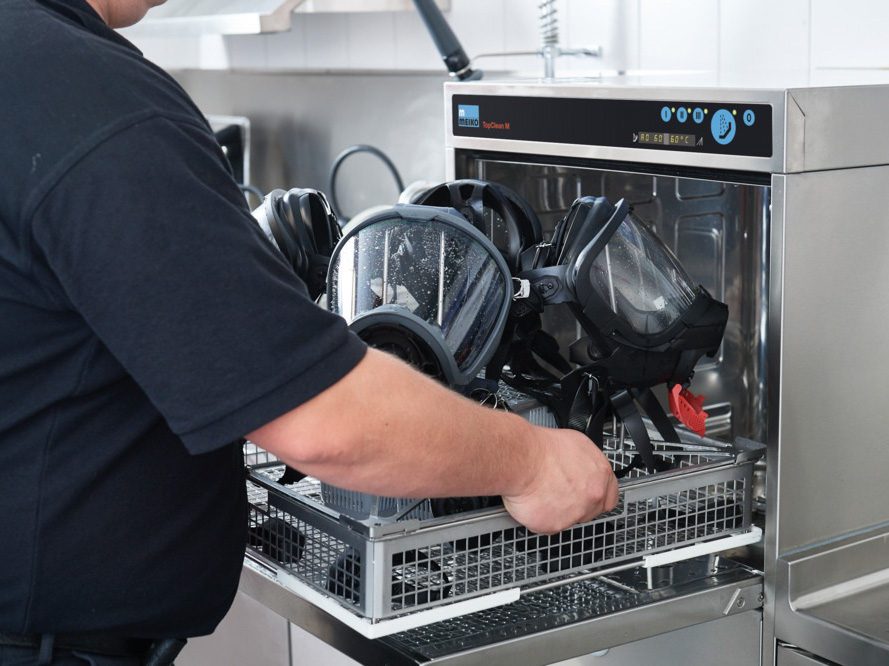
Jon Sharp, Specification Manager, MEIKO UK Protect and Care, discusses decontamination, PPE longevity and the role of engineered systems in fire service safety  Live on the MEIKO stand at The Emergency Services Show, Fire Buyer met with Specification Manager Jon Sharp to discuss decontamination technology first hand. The full video interview is available on firebuyer.com.  For readers who may not be familiar, who is MEIKO and what does the company specialise in?  MEIKO is a global manufacturer of cleaning and disinfection technology, founded in 1927 in Offenburg, Germany. For nearly a century, the company has been engineering solutions for hygiene-critical environments, from hospitality and healthcare to emergency services. Within the UK, MEIKO Protect and Care provides advanced decontamination technology designed specifically for first responders and fire services.  Our purpose is to protect those who protect others. We do that by developing systems that eliminate contaminants, carcinogens and harmful residues from personal protective equipment. When we talk about decontamination, we’re really talking about safeguarding lives, because the removal of carcinogens from PPE directly affects firefighter health and safety. That is why the technology has to perform consistently and precisely, every single time.  Decontamination is now a major talking point in the fire industry. Why is it so important to approach it with this level of engineering and consistency?  Decontamination is no longer optional; it’s a matter of duty of care. Firefighters are routinely exposed to toxic residues, hydrocarbons and particles that are carcinogenic. Those contaminants cling to gear and can remain active long after a fire is extinguished. If not properly removed, they can spread through vehicles, stations, and even into homes.  A structured, validated cleaning process ensures every piece of PPE is treated under controlled, repeatable conditions. It removes guesswork. Our systems use measured temperature, contact time, water flow and chemical dosing, all verified by sensors and programmed logic, that reaches up to 50 degrees Celsius according to the PPE manufacturer specifications. It is supported by an 85-litre tank and a 5.8-litre rinse, giving a balance between energy efficiency and effective disinfection. This means PPE is not only visibly clean but hygienically safe. The difference between a manual rinse and a controlled decontamination cycle can literally be the difference between risk and protection.  Let’s talk about the MEIKO TopClean D. What makes this machine stand out for fire services?  The MEIKO TopClean D is the flagship of our PPE decontamination line. It’s designed specifically for fire and rescue services handling multiple sets of breathing apparatus and protective gear. It combines volume capacity with repeatable performance.  This machine can process up to four complete SCBA sets or twelve individual masks, harnesses and lung demand valves in one cycle. It operates with three pre-programmed cycles, 4, 8, and 16 minutes, depending on the level of contamination and the items being cleaned. The water temperature reaches around 47 to 48 degrees Celsius, supported by an 85-litre tank and a 5.8-litre rinse, giving a balance between energy efficiency and effective disinfection.  The key feature is flexibility. The pull-out rack is ergonomically designed so users can easily load and unload without strain. The interior racks can be adapted for different configurations, meaning stations can decontaminate BA sets, masks or even medical equipment components within the same system.  TO READ THE FULL ARTICLE SEE OUR LATEST ISSUE HERE  

Ask The Expert – MEIKO UK Read More »

K Line-FireBuyer.com

Joint Firefighting Drill Conducted Simulating a Moored  Vessel Fire in Japan

Kawasaki Kisen Kaisha, Ltd. (“K” Line) recently conducted a fire drill at Daikoku-futo C4, Yokohama Port, managed by Yokohama Port Corporation. In the exercise a Tethys Highway car carrier operated by K Line, was used to carry out an operation jointly with the Yokohama City Fire Bureau. It was the first drill in Japan that was carried out simulating that a fire had started in a moored vessel. More than 100 relevant personnel participated in the drill, which was conducted simulating an emergency situation in which a fire broke out on board the vessel during cargo handling operations. Additionally, one crew member was missing and the Captain was left on board. It was a comprehensive drill that included a range of operations, including the identification of the source of the fire using aerial drones, searching for people in need of rescue, spraying water from elevated positions and fire boats, confirming evacuation routes for operators and crews, and practicing the use of the immediate notification system with relevant organisations and confirming its operational status, as well as rescuing people stranded on board a vessel. Going forward, the “K” Line Group will continue to strengthen its cooperative system involving related parties onshore by implementing drills like this in Japan and overseas. By doing so, the Group will maintain safety in navigation and cargo operations.    

Joint Firefighting Drill Conducted Simulating a Moored  Vessel Fire in Japan Read More »

Fire Doors – Modernising Fire Door Specifications  

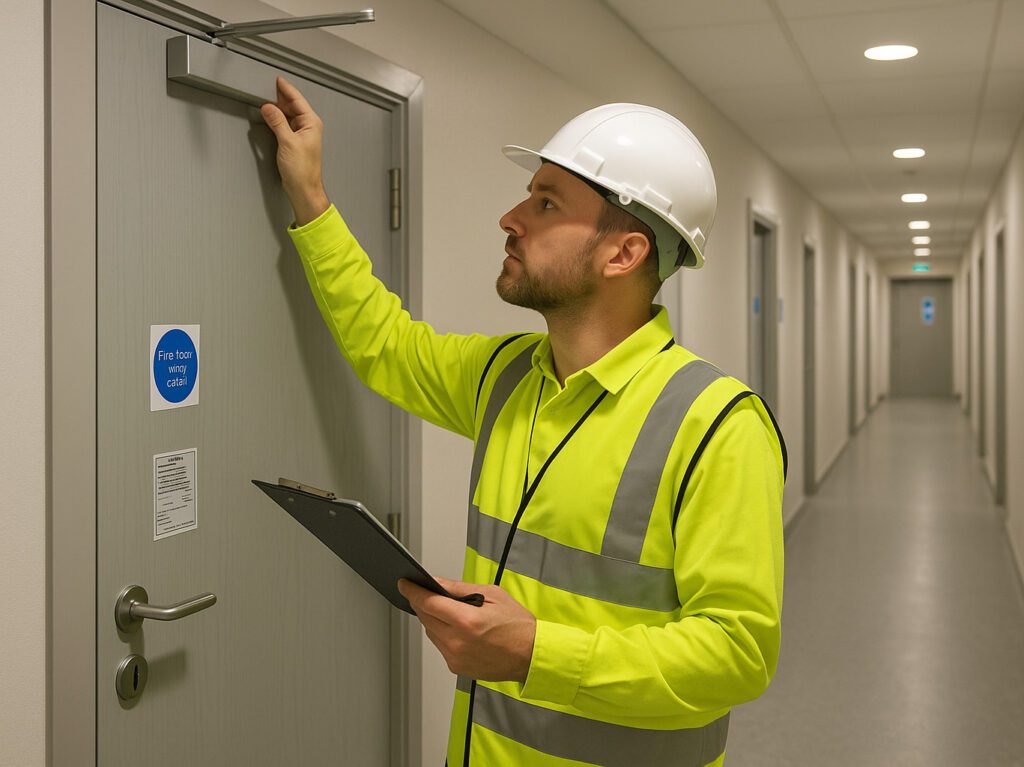
Fire-door compliance has moved from parts to full systems. Modern estates need certified doors, hardware and documentation proving integrity throughout. Joseph Clarke writes.    In a built-environment where fire safety regulation is evolving rapidly, asset owners and duty-holders face a dual challenge: upgrading hardware and doors while maintaining a coherent audit trail.    The transition from legacy specifications to the wider adoption of EN 1634-1 (and related test standards) demands a holistic approach. It is no longer enough simply to replace a leaf: the door, frame, seals, hardware and hold-open or self-closing mechanisms must form a tested, certified system.    Regulation Trends   Until recently, many fire-doors in the UK were specified under BS 476 or relied on legacy test regimes. Those remain relevant, but the industry’s move is unmistakably towards European-derived standards such as EN 1634-1 for fire resisting doorsets, and EN 1634-3 for smoke control. For facility managers, this means they must not only specify door leaves, frames and hardware that carry appropriate test evidence, but must treat the door assembly as a system. The door leaf alone is insufficient. Documentation, installation, certification and maintenance must align. Failure to do so leaves a compliance gap, and remaining risk.   In this landscape, modernising estates requires a roadmap: assess what is in place, identify zones of risk (residential flats, communal cores, plant or industrial, large-aperture logistics) and apply solutions tailored to each.   Hold-Open and Retention   Fire doors often need to be held open for access or ventilation, but that must not compromise their closing ability in an alarm event. Fireco’s Dorgard Pro system is a radio-activated fire-door retainer. It holds fire doors open legally and safely and critically releases them when the alarm calls. Such systems enable estate managers to balance access and ventilation with fire-safety integrity. In an upgrade programme one of the first tasks is to review all doors with hold-odevices. For example, are they a compliant retainer such as Dorgard Pro, wired into the alarm panel? The ability to monitor and record systems is increasingly expected. Without this, even a well-tested door leaf can be compromised by non-closing hardware.   Hardware Integrity    Once the hold-open is sorted, the next major element is door hardware: closers, latches, exit devices, hinges and associated ironmongery. Allegion UK (via its Briton brand) has published a ‘Fire Door Hardware Fundamentals’ guide aimed at responsible persons navigating the regulatory changes. The guide emphasises correct specification, installation and maintenance of hardware compatible with fire-door assemblies. Speaking on the launch of the guide last year, Pete Hancox, Country Manager at Allegion UK, commented: “At Allegion we believe it’s more important than ever before to understand essential procedures, standards and set guidelines, and in launching our latest Briton fundamentals guide, we’re aiming to bridge the gap between awareness and expertise by providing an invaluable resource to our customers.”   TO READ THE FULL ARTICLE SEE OUR LATEST ISSUE HERE:

Fire Doors – Modernising Fire Door Specifications   Read More »

aico_lifestyle-Firebuyer.com

Ask The Expert -Aico

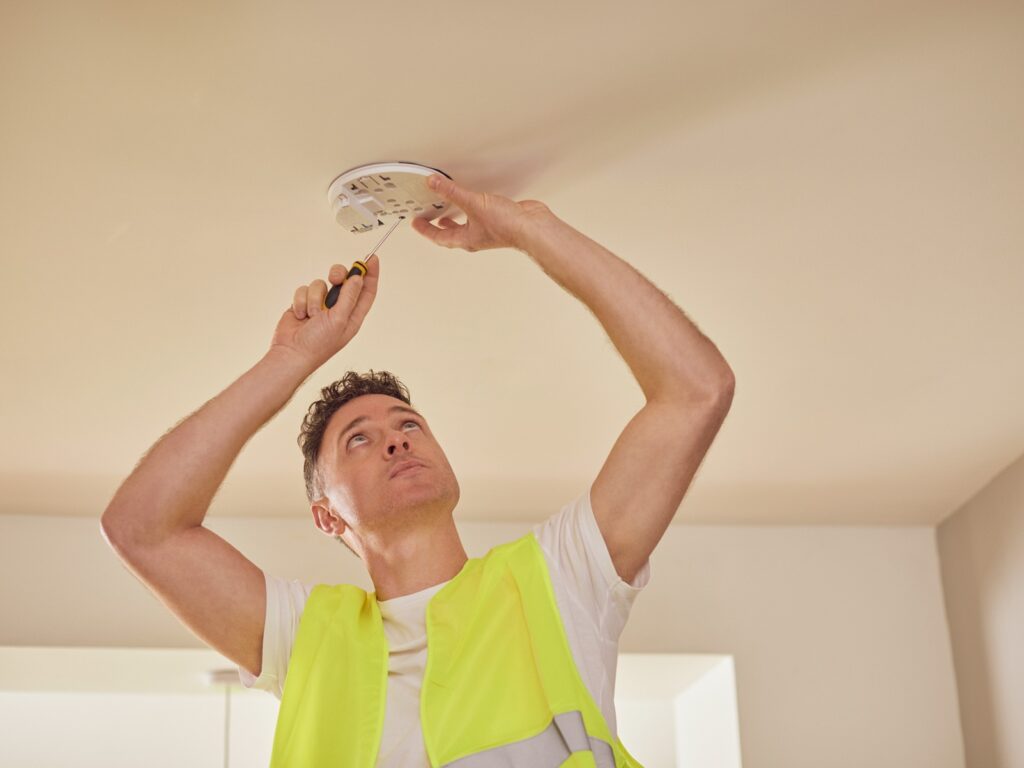
Andrew Speake, National Technical Manager at Aico, examines how diverging UK fire safety laws are reshaping domestic protection  How would you summarise the current landscape of domestic fire legislation across England, Scotland, Wales and Northern Ireland?  Fire safety legislation across the UK has evolved over the past decade, but clear differences remain between the four nations. England and Wales rely mainly on Building Regulations (Approved Document B) and the British Standard BS 5839-6, which defines best practice for domestic fire alarm systems. In these countries, the law largely applies to landlords, with homeowners encouraged rather than required to comply.  Scotland has gone further. Its national Tolerable Standard makes interlinked smoke and heat alarms, plus carbon monoxide detection where needed, a legal requirement in every home. Northern Ireland is moving in a similar direction, expanding alarm coverage to bedrooms and mandating interlinking for rented properties.  All four nations share the same safety goals, but Scotland’s universal and enforceable model leads the way. The rest of the UK is progressing more slowly and with less consistency.  Scotland’s approach is often cited as the most stringent in the UK. What are the key differences between Scottish and English legislation, and what lessons could be learned?  Scotland turned best practice into legal obligation. Every home must have interlinked alarms, smoke detection in living rooms and circulation spaces, heat detection in the kitchen, and CO detection where fuel-burning appliances are present.  In England, similar rules apply mainly to rental housing, with no universal standard for owner-occupied homes.  The lesson is simple: clarity drives compliance. When legislation is straightforward and universal, everyone involved understands their responsibility. Scotland’s model has already reduced fire incidents, saved lives, and proven cost-effective for the public.  How do devolved building regulations influence the effectiveness of fire safety compliance across the four nations?  Devolution has been both an advantage and a complication. Each nation can tailor rules to local housing conditions and risks, but this has led to inconsistency.  Scotland and Northern Ireland benefit from clear statutory minimums and stronger enforcement, leading to higher compliance. England and Wales rely more on advisory frameworks, resulting in variable outcomes influenced by local interpretation and resources.  A harmonised baseline across the UK would ensure a consistent level of protection for all households while still allowing regional flexibility.  With a new revision of the British Standard BS 5839-6 expected next year, what major changes or updates do you anticipate?  The next revision of BS 5839-6 is expected to focus on broader alarm coverage and responsiveness to emerging domestic fire risks. The committee may review whether current recommendations should expand to cover more areas of the home, particularly sleeping spaces and open-plan layouts.  Another key focus will likely be on risks linked to lithium-ion batteries, which are increasingly common in homes through e-bikes and energy storage systems. Discussion may also explore how connected technologies, such as IoT-enabled alarms, can enhance reliability and reduce false activations.  This revision offers an opportunity to ensure the Standard reflects modern risks and keeps pace with technological advancement in detection systems.  How well aligned are current building regulations and fire safety standards with emerging fire risks in modern homes, such as open-plan designs and increased use of lithium-ion batteries?  Regulations are playing catch-up. Open-plan living spaces, now a hallmark of modern housing, allow smoke and heat to spread rapidly, making alarm placement more challenging. The traditional “one alarm per storey” rule no longer fits contemporary layouts.  The growing use of lithium-ion batteries introduces a new risk profile. These fires ignite quickly, burn intensely, and produce toxic smoke. Both building regulations and standards will need to evolve to address these realities and better protect households against today’s risks.  Recent figures show that in many domestic fires, smoke doesn’t reach the alarm in time. What installation practices or system designs could better address this problem?  This issue often stems from limited coverage or poor alarm placement. Many homes still rely on detectors in circulation spaces only, meaning fires in bedrooms or living rooms may go unnoticed until too late.  Improvement starts with design. Alarms should be fitted inside bedrooms and living spaces, with all units interlinked so that when one activates, every alarm sounds. Multi-sensor alarms, combining optical and heat detection, offer faster, more reliable responses while reducing false alarms.  Wider coverage and interlinking are proven to save lives and must become the rule, not the exception.  TO READ THE FULL ARTICLE SEE OUR LATEST ISSUE HERE:

Ask The Expert -Aico Read More »

ACEDES-Firebuyer.com

Ask The Expert – ACEDES

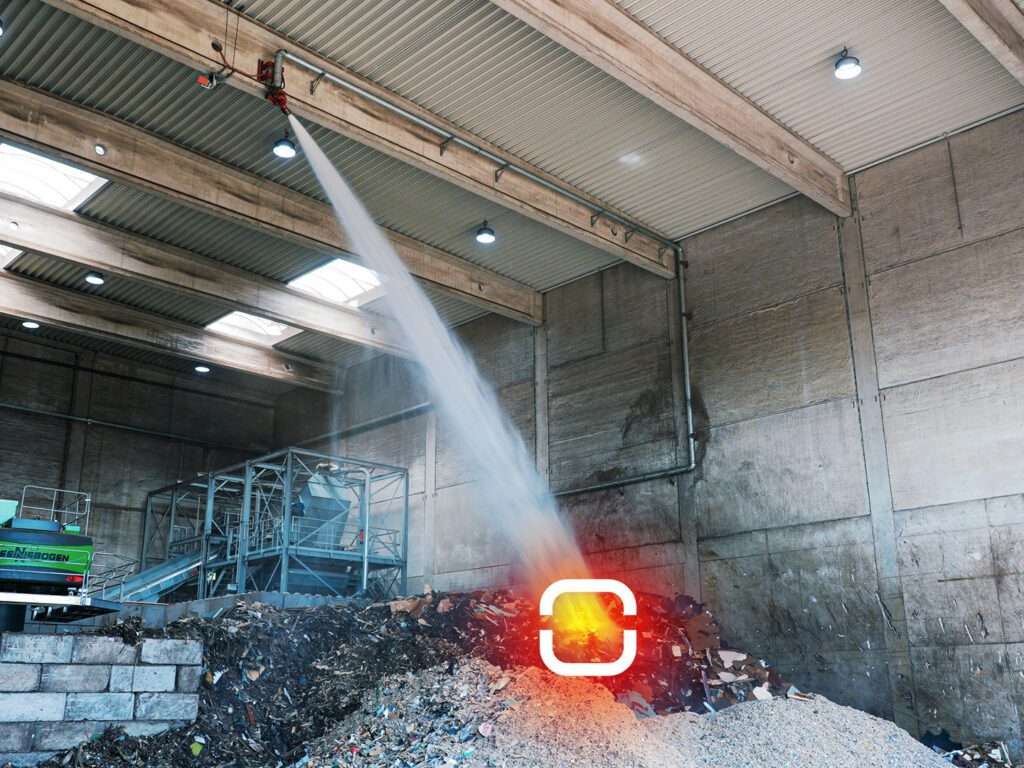
John McGrath, Business Development Manager, at ACEDES LLC explains how its intelligent detection and cooling technology prevents fires in recycling facilities  Fires in waste management and recycling facilities have become increasingly common, driven by the surge in discarded lithium-ion batteries from consumer electronics, vapes, and power tools.   Even a single damaged cell can ignite, setting off a chain reaction of costly damage and operational downtime. According to data from waste360.com, the number of reported fires in waste facilities has grown steadily since 2018, at a rate of about 12 additional fires each year, and this rate appears to be accelerating.  As John McGrath, Business Development Manager at ACEDES LLC, explains, the key to tackling this challenge is not merely extinguishing fires, but preventing them from developing in the first place.  “Our objective is to stop those fires before they even become fires,” he says. “Once you’re at the point of needing a sprinkler system, you’ve already suffered operational disruption and damage.”  ACEDES’ system represents a shift from traditional suppression methods to intelligent, autonomous prevention that does not depend on a person having to assess the situation either on site or remotely, reducing any delays.   Two Proven Technologies; One Solution  ACEDES is the product of collaboration between two leading German fire safety engineering companies, Orglmeister, renowned for intelligent infrared detection systems capable of identifying heat sources long before flames appear, and Firedos, specialists in foam proportioners and fire monitors.  Both companies recognised the growing market demand for early detection and rapid response systems in North America, leading them to establish ACEDES, headquartered in Houston, Texas.   “ACEDES stands for Autonomous Coupled Early Detection and Extinguishing Systems,” McGrath explains. “It’s designed to detect, target, and cool hotspots before they ignite.”  The company’s flagship technology, FalconEx™ combines the PYROsmart® pro, and Orglmeister’s thermal IR, video and AI detection algorithms with Firedos’ high-precision water monitors. The result is an integrated fire prevention solution for high-risk environments such as recycling plants, transfer stations, and industrial waste facilities.  How It Works  At the heart of the ACEDES system is the PYROsmart® pro system that incorporates infrared and traditional sensors, which continuously scans large indoor or outdoor areas using a combination of thermal and visual imaging. Unlike static flame or smoke detectors that rely on visible combustion, the infrared system detects elevated temperatures at the earliest stage of thermal development. Furthermore, it doesn’t suffer from delays in waiting for off-site humans to respond to alarms as the system has already qualified the areas that need action.  The unit pans and tilts across the monitored space, building a three-dimensional thermal map with extreme precision. In a conventional system installation, it can achieve pixel resolutions of just 1.4 square inches, compared with roughly 140 square inches for standard flame detectors, a 100-fold improvement in resolution.  “The system runs 24/7 continually updating the composite IR and video image in real time,” says McGrath.  When a hotspot is detected, the system calculates its X, Y, and Z coordinates in 3D space. This data is transmitted to a monitor controller, which automatically aims and activates a water monitor directed precisely at the hotspot. The monitor follows a pre-programmed spray pattern, cooling the affected area systematically rather than merely dousing a single point, while the PYROsmart® pro continues scanning the rest of the area.  TO READ THE FULL ARTICLE SEE OUR LATEST ISSUE HERE

Ask The Expert – ACEDES Read More »

Nicola Roberts - Women Talking Fire-Firebuyer.com

The Big Interview – Nicola Roberts

With two decades experience in fire safety, Nicola Roberts from Women Talking Fire explains her mission to elevate women, challenge bias and strengthen sector wide inclusion  Nicola Roberts has more than 20 years of experience in the fire safety industry. She began her career in facilities management at Makro, where she also earned a degree in the subject. Her career transitioned into fire and security when Swift Fire and Security, then a supplier to her company, offered her a position. Nicola went on to lead a small fire mechanical team, growing a £1 million division into £3.5 million within a few years. She later advanced to become Group Operations Director, then Fire Business Manager at Balfour Beatty. She currently serves as Head of Service for Siemens Smart Infrastructure, overseeing the service division across fire, security and building management systems (BMS).  Aside from her professional employment, Nicola is a committee member of Women Talking Fire (WTF) an independent UK-based networking and support group for women working in the fire safety industry, and also for male allies who support inclusion, equity and equal opportunity.   The organisation was established in May 2023 and its core ethos ‘Let’s talk, listen and learn together’ is intended to foster a sense of community, provide networking and professional development opportunities, and raise the visibility of women in what remains a male-dominated sector.   Among its activities, Women Talking Fire organises events such as technical conferences and awareness days. One example was an event held in partnership with Cheshire Fire & Rescue Service in September 2024.  What initially motivated you to become involved with Women Talking Fire, and how has your vision evolved since its inception?  Andrea White founded Women Talking Fire nearly three years ago. I have been a member of the committee since it started and now, I am the Chair. I met Andrea at the Fire Safety Event in Birmingham about four years ago and was instantly interested in the group and the movement she wanted to create. I am passionate about fire safety and more passionate about supporting women in the industry.  I come from a very supportive family, with hugely successful and powerful women. Influences including my grandmother, mother and sister have always meant that I have had the confidence and support to be an advocate for myself. Not everyone has this. I’ve learnt we need to advocate for others and I can be the voice for others and support them like I have been supported.  The initiative has gained recognition for advocating gender diversity in fire safety. What progress have you seen across the sector since it began?  I feel Women Talking Fire has started a strong inclusive community for women and male allies who are in the fire safety industry. I believe our presence is aiding inclusivity. One of the ways we have improved the sector is by being able to suggest women speakers at events so that women can be seen prominently. I believe if you can see it, you can be it.  How can organisations in fire safety, protection and rescue make inclusion a measurable part of their business strategy rather than a tick box exercise?  They need to support women in the workplace with flexible working arrangements and understand that, after having time off to have a family for example, they are just as capable if not more so than before. They also need to support wider learning opportunities and qualifications.  The fire sector is undergoing rapid technological and regulatory change. How does Women Talking Fire engage with these shifts while ensuring the conversation around diversity remains relevant?  We welcome all positive change both in terms of technology and regulation and have specialist members in both arenas who can discuss these. Women Talking Fire is a safe space for women and allies to talk without fear of judgement so debates can be had without anyone being belittled.  TO READ THE FULL ARTICLE SEE OUR LATEST ISSUE HERE 

The Big Interview – Nicola Roberts Read More »

Frederick Kauser-Esteri Group-Firebuyer.com

Innovator – Frederick Kauser

Frederick Kauser, Technical Advisor at Esteri Group, explains how advanced automation, safer decontamination processes and engineered durability are reshaping global hose management and firefighter protection  Firstly, can you say a little about your background and your history with the Esteri Group?  I am a retired career fire executive who spent 40-years in a metropolitan system spending time in all ranks and roles. My cohort witnessed the sharpest rise in occupational health risks impacting firefighters globally. And we were part of the greatest period of innovation and advancements in firefighting and rescue tools and equipment.  We experienced first-hand the impact that these improvements made over time.   Our members attended demonstrations, evaluated equipment in a training environment, designed specifications, and examined every option so we could make the best purchasing decisions for our agency and community.   Prior to my retirement in 2023, I purchased an existing turnout gear independent service provider and since have been focussing on reducing occupational health risks from contaminated PPE and fire hose.   This work led me to discover the Esteri Group in 2023. As part of an effort to improve fire hose decontamination, I was introduced to the Hosemaster which is the most advanced fire hose decontamination and testing appliance in the world.   Very quickly after meeting the company owner, I was invited to serve as the Technical Advisor for the company in the North American market. As part of the Esteri Group team, I provide fire departments with technical specifications, support the Esteri design and sales teams by translating feedback from the fire services, and help agencies implement Hosemaster into their care and maintenance programs.    What principles guide Esteri’s approach to designing firefighting technologies for both municipal and industrial use?  This family-owned company has been operating since the 1960’s and was originally in the business of building fire pumps for apparatus for the European fire service market. In the past twenty years they have used their craft expertise to expand and manufacture other types of firefighting equipment as well. And most recently, they have integrated automation and technology into their products.   The Esteri Group is an ethical and principled company that reflects the early values of the owner’s grandfather.  This company has the culture of a family-owned and operated business and the capital and experience to do things the right way.  Their pride can be observed in the workmanship and quality of components and finished products. The company is grounded in innovation and practicality. They can be trusted to deliver and support their products as promised.  Because I had this experience, it is easy for me to support their mission of improving the health, safety, and efficiency of firefighters.   Firefighting is a highly regulated sector. How does the company balance innovation with compliance and safety standards across different regions?  The company has considerable experience in manufacturing and distributing under a vast and complex global regulatory environment. The company fabricates pumps and equipment that is available internationally – where each country has its own regulations.   It goes without saying that the company is in the business of manufacturing equipment for one of the most safety-conscious industries in the world. I would say that health and safety are part of their operating and manufacturing DNA.   TO READ THE FULL ARTICLE SEE OUR LATEST ISSUE HERE

Innovator – Frederick Kauser Read More »

Emergency Lighting-Firebuyer.com

Exclusive Feature – Lighting & Evacuation

In this article Ed Hill explores how manufacturers are transforming emergency lighting and evacuation systems into smarter, energy-efficient and environmentally responsible solutions  Across every sector, the drive towards environmental responsibility has reshaped how we design, build and operate the spaces we live and work in. Energy efficiency is no longer a niche objective; it has become a shared goal in society, rooted in the understanding that small improvements in everyday systems can have a significant collective impact. From reducing carbon emissions to cutting waste and managing resources more intelligently, efficiency now defines good design as much as safety or functionality. Within this broader context, emergency lighting and evacuation systems are now part of the sustainability conversation. Once seen purely as safety tools, important, but largely static, they are now part of the same energy-conscious framework driving the rest of the built environment. Smarter, low-energy lighting, recyclable materials, longer-lasting batteries and intelligent monitoring have transformed how these systems perform and how much energy they consume. In short, efficiency and safety no longer sit on opposite sides of the table; they have to work together. Today’s manufacturers are redefining the role of emergency lighting and evacuation systems, blending life safety with sustainability and proving that responsible design can also mean better performance. The sustainability backdrop Evacuation systems occupy the crossroads of safety compliance and operational efficiency. Building managers must meet standards such as BS EN 54 and associated evacuation signalling regulations. Meanwhile, they are under pressure to reduce energy consumption, minimise maintenance costs, and improve system resilience. Traditional emergency lighting systems, often based on older light fittings, high-power standby circuits and manual testing regimes, are increasingly seen as costly and unsustainable.  As buildings become larger and more complex, and as ESG (environmental, social and governance) criteria rise in prominence, the requirement is shifting: evacuation systems must not only save lives, but they must also align with carbon-reduction and lifecycle-cost targets. Many owners and managers now ask not only will a system work when required but also what is its energy footprint, what maintenance does it need, and how long will its components last? LED and low-power systems The move to LED technology in emergency lighting is now mainstream. Zumtobel’s ONLITE range delivers LED escape-signs and emergency fittings that operate at far lower standby power and deliver long lifespans (for example around 50,000 hours) compared with older technologies. Similarly, Olympia Electronics highlights its use of LiFePO₄ battery technology (longer life, better recyclability) in its emergency-lighting systems. The Slim Light family from Olympia shows power consumptions as low as 2.7 W in non-maintained mode.  From an environmental standpoint, fewer kilowatt-hours consumed during standby hours, fewer battery replacements and longer product life each reduce total lifecycle carbon emissions. This is a measurable benefit for facility managers adopting net-zero targets. Additionally, reducing load on standby power supplies means smaller battery stores or less frequent re-charging cycles, further enhancing environmental credentials. The cumulative effect is not just energy saving in an emergency scenario but ongoing saving in daily standby operation and maintenance overheads. Passive signage and escape-routes An equally important pillar in energy-efficient evacuation systems is passive signage that does not require electrical power in an outage. Everlux specialises in photoluminescent safety signs and low-location lighting strips. These signs absorb ambient light and emit a visible glow for hours without needing mains supply.  The material is non-radioactive, non-phosphorous, lead-free and non-toxic. Because they require no standby electricity and minimal maintenance, photoluminescent systems reduce dependency on powered emergency lighting for way-finding and escape-route marking. In effect, they deliver a form of 24/7 availability with no draw on energy. From an environmental perspective, this is significant: zero active power draw, minimal consumables and long service life meaning less frequent replacements. When combined with LED emergency lighting, photoluminescent signage this creates a dual-layer strategy: active illumination plus passive signage, enhancing resilience while keeping ambient energy burden as low as possible. TO READ THE FULL ARTICLE SEE OUR LATEST ISSUE HERE

Exclusive Feature – Lighting & Evacuation Read More »

Scroll to Top