
In this article Ed Hill explores how manufacturers are transforming emergency lighting and evacuation systems into smarter, energy-efficient and environmentally responsible solutions
Across every sector, the drive towards environmental responsibility has reshaped how we design, build and operate the spaces we live and work in. Energy efficiency is no longer a niche objective; it has become a shared goal in society, rooted in the understanding that small improvements in everyday systems can have a significant collective impact. From reducing carbon emissions to cutting waste and managing resources more intelligently, efficiency now defines good design as much as safety or functionality.
Within this broader context, emergency lighting and evacuation systems are now part of the sustainability conversation. Once seen purely as safety tools, important, but largely static, they are now part of the same energy-conscious framework driving the rest of the built environment. Smarter, low-energy lighting, recyclable materials, longer-lasting batteries and intelligent monitoring have transformed how these systems perform and how much energy they consume. In short, efficiency and safety no longer sit on opposite sides of the table; they have to work together.
Today’s manufacturers are redefining the role of emergency lighting and evacuation systems, blending life safety with sustainability and proving that responsible design can also mean better performance.
The sustainability backdrop
Evacuation systems occupy the crossroads of safety compliance and operational efficiency. Building managers must meet standards such as BS EN 54 and associated evacuation signalling regulations. Meanwhile, they are under pressure to reduce energy consumption, minimise maintenance costs, and improve system resilience. Traditional emergency lighting systems, often based on older light fittings, high-power standby circuits and manual testing regimes, are increasingly seen as costly and unsustainable.
As buildings become larger and more complex, and as ESG (environmental, social and governance) criteria rise in prominence, the requirement is shifting: evacuation systems must not only save lives, but they must also align with carbon-reduction and lifecycle-cost targets. Many owners and managers now ask not only will a system work when required but also what is its energy footprint, what maintenance does it need, and how long will its components last?
LED and low-power systems
The move to LED technology in emergency lighting is now mainstream. Zumtobel’s ONLITE range delivers LED escape-signs and emergency fittings that operate at far lower standby power and deliver long lifespans (for example around 50,000 hours) compared with older technologies. Similarly, Olympia Electronics highlights its use of LiFePO₄ battery technology (longer life, better recyclability) in its emergency-lighting systems. The Slim Light family from Olympia shows power consumptions as low as 2.7 W in non-maintained mode.
From an environmental standpoint, fewer kilowatt-hours consumed during standby hours, fewer battery replacements and longer product life each reduce total lifecycle carbon emissions. This is a measurable benefit for facility managers adopting net-zero targets. Additionally, reducing load on standby power supplies means smaller battery stores or less frequent re-charging cycles, further enhancing environmental credentials. The cumulative effect is not just energy saving in an emergency scenario but ongoing saving in daily standby operation and maintenance overheads.
Passive signage and escape-routes
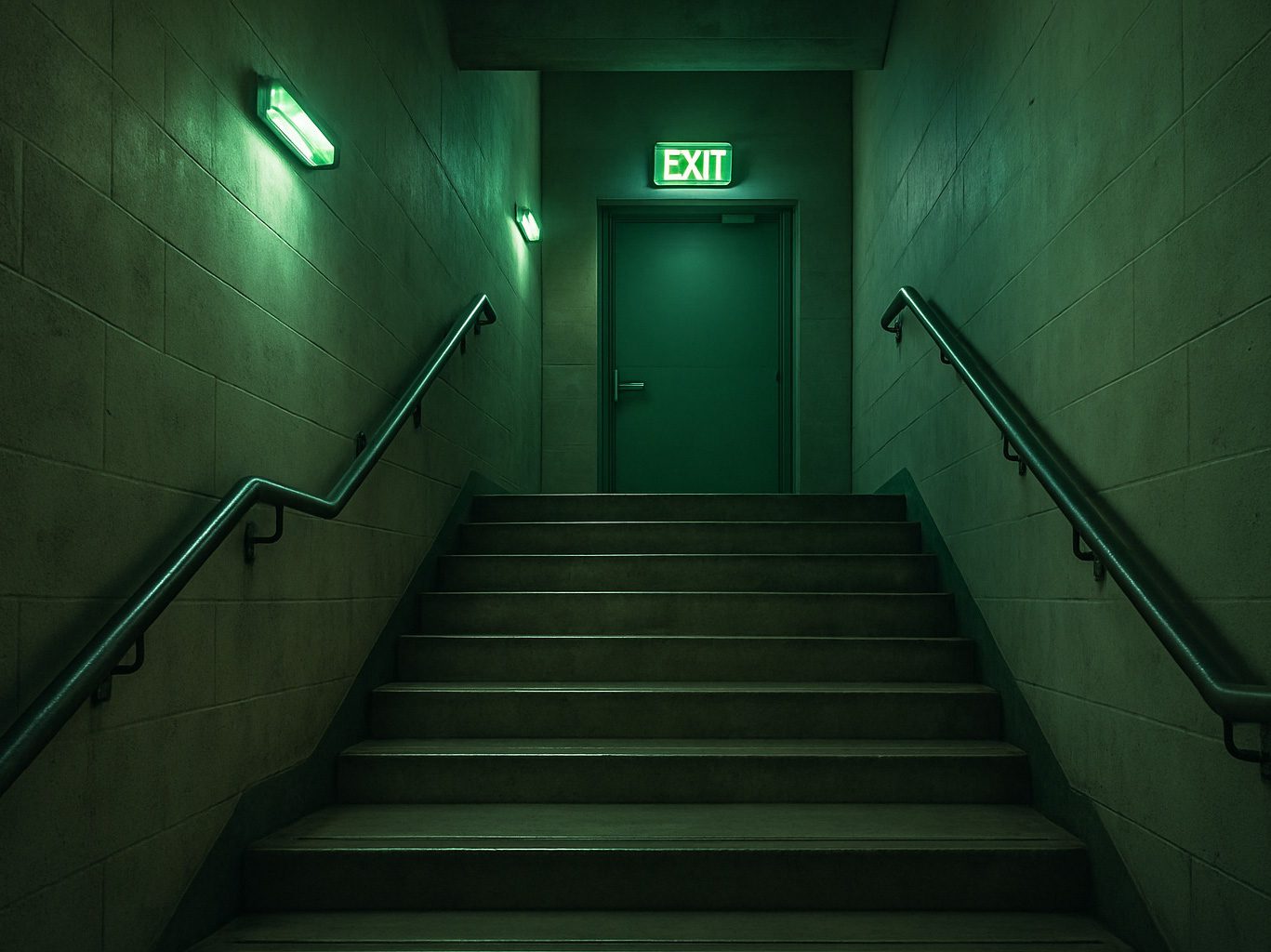
An equally important pillar in energy-efficient evacuation systems is passive signage that does not require electrical power in an outage. Everlux specialises in photoluminescent safety signs and low-location lighting strips. These signs absorb ambient light and emit a visible glow for hours without needing mains supply.
The material is non-radioactive, non-phosphorous, lead-free and non-toxic. Because they require no standby electricity and minimal maintenance, photoluminescent systems reduce dependency on powered emergency lighting for way-finding and escape-route marking. In effect, they deliver a form of 24/7 availability with no draw on energy. From an environmental perspective, this is significant: zero active power draw, minimal consumables and long service life meaning less frequent replacements. When combined with LED emergency lighting, photoluminescent signage this creates a dual-layer strategy: active illumination plus passive signage, enhancing resilience while keeping ambient energy burden as low as possible.
TO READ THE FULL ARTICLE SEE OUR LATEST ISSUE HERE