Despite component shortages and rising material prices, Electric vehicles (EVs) have continued their strong growth throughout 2022, with sales looking to be increased by over 60% compared with the previous year. One factor that is difficult to overlook is vehicle fire safety. In addition to the major automotive recalls seen in 2020 and 2021 for GM, Hyundai, Ford, and others, 2022 also highlighted issues in other vehicle segments. RATP (Régie Autonome des Transports Parisiens) had to recall 149 electric buses from BlueBus and India saw increasing numbers of electric scooter fires forcing regulation changes (more on that later). While vehicle fires with any drivetrain are rare, it is important to provide protection for vehicle owners/occupants by preventing a fire from propagating outside the battery pack or at least delaying it for as long as possible.
A key method for achieving this is by applying passive fire protection materials. These are materials that have a strong resistance to fire for as long as possible. These can be applied in several locations. A traditional EV battery consists of many battery cells that are combined to form a module; in turn, these are combined inside the battery enclosure to form a pack. This gives several opportunities for the application of fire protection materials. Materials can be applied around the pack, inside the enclosure, beneath the lid, around the modules, and between the cells. Many manufacturers will use a combination of options to provide the best protection possible.
Cell-To-Pack and Improving Packing Efficiency
However, a key trend in the EV battery industry is towards greater packing efficiency, with the aim of improving energy density while reducing complexity and cost. Simply put, having more of the battery taken up by the cells rather than all of the components that do not actually store energy. In fact, IDTechEx research has found that battery materials, not including the cells, have reduced by over 50% since 2015. This comes from more optimized material use and packaging strategies. A key step change here is in cell-to-pack designs.
In a cell-to-pack design, the modular structure is removed and all of the cells are packed directly together to form the pack. This reduces the number of components, leading to simpler manufacturing and reduced costs. This approach has been deployed by players such as BYD, CATL, Tesla, and several others, with more planning deployment in the future.
Fire Protection in Cell-To-Pack
While this strategy is certainly simpler, one might ask how this impacts fire safety. There are no longer groups of cells separated from each other; if one cell goes into thermal runaway, what stops it propagating across the entire pack? Materials can still be applied beneath the lid or coat the enclosure, but if all of the cells have entered thermal runaway, these options will have a much harder time preventing a fire from escaping the pack.
The dream goal for battery designers is to have a material that can sit between the cells and stop a thermal runaway event from propagating from one cell to another. Generally speaking, to do this, it needs a low thermal conductivity and strong flame resistance. This is easier said than done when also trying to improve energy density and reduce costs. A key methodology to achieving this is by replacing old functional materials with ones that can carry out that function while also providing fire protection. Another key concern for some incumbent technologies is material handling; materials like mica or ceramic blankets can be brittle or dusty.
So, the materials need to be thermally insulating, electrically insulating, lightweight, conformable, easy to work with, low cost and provide fire protection. This sounds like a tall order, but several options are becoming available. Aerogels have been gaining in popularity, and while these have also had issues with handling in the past, material suppliers are encapsulating them to avoid some of the concerns. IDTechEx have also seen the adoption of encapsulating foams that can be easily dispensed, expand in place, and help provide structure around the cells in addition to the properties above. “Drop-in” replacements are another option, for example, compression pads with fire protection additives to replace the compression pads typically used between pouch cells. Finally, there are even more early-stage alternatives, such as cell holders made from intumescent materials. This would provide propagation protection while also providing a structural framework for the cells.
How Will Safety Regulations Contribute?
Regulation is often a key driver for safety. China was an early adopter of thermal runaway-specific regulations with its 5-minute rule for warning vehicle occupants of a thermal event. A formal mandate similar to this is yet to be applied in other regions, but OEMs have started targeting this or more stringent requirements in their designs to pre-empt future regulations and improve overall safety.
India’s EV market had a key safety transition in 2022. The governing bodies set adjustments (to take place from October 2022) to the current standards. In addition to only using approved cells, battery design features like inter-cell spacing are also stated.
The key missing factor in any regulation at the moment is a requirement to prevent cell-to-cell thermal propagation. The regulations focus on fire leaving the pack, which ultimately is the key concern for human safety. However, if regulation was imposed to require cell-to-cell or even module-to-module propagation, this could help save costs for the OEM or vehicle owner by protecting the rest of the expensive battery cells and pack, and mean that pack-level materials have an easier job preventing further fire. This would present a huge opportunity for materials suppliers that can meet all of the requirements set out above.
With the increased focus on fire safety and the rapidly growing EV market, IDTechEx is predicting a 13-fold growth in the yearly demand for fire protection materials in 2033 compared with 2022. Given the already large EV market, this translates to large volumes of material required over the next decade.
IDTechEx’s report on Fire Protection Materials for EV Batteries analyses many battery designs and materials currently on the market, as well as the impact that cell-to-pack and other emerging battery designs will have. The report provides material benchmarks and ten-year market forecasts across material categories, including ceramic blankets/sheets (and other non-wovens), mica, aerogels, coatings (intumescent and other), encapsulants, encapsulating foams, compression pads, phase change materials, and others.
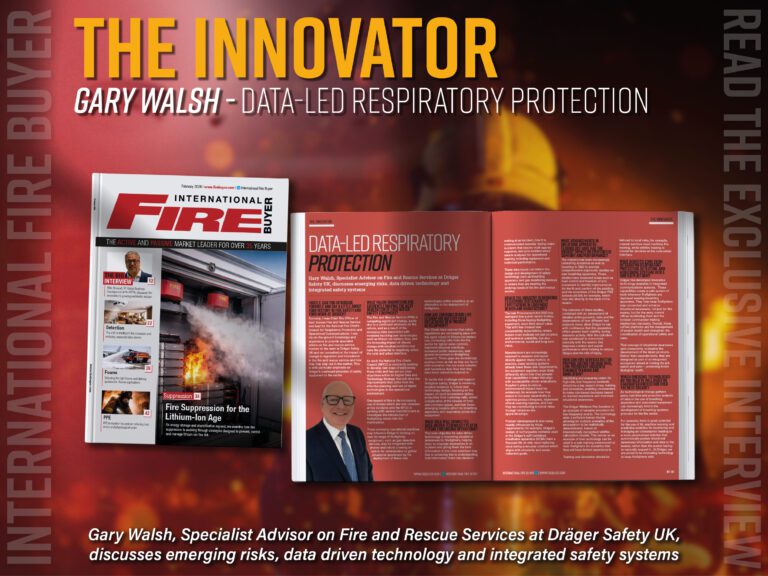
To read more news and exclusive features see our latest issue here.
Never miss a story… Follow us on:
 International Fire Buyer
@Firebuyer
Fire Buyer
Media Contact
Louis Curtis
Editor, International Fire Buyer
Tel: +44 (0) 1622 823 922
Email: editor@firebuyer.com