Staging Site!

Axon and Norfolk Fire and Rescue partner on body-worn cameras

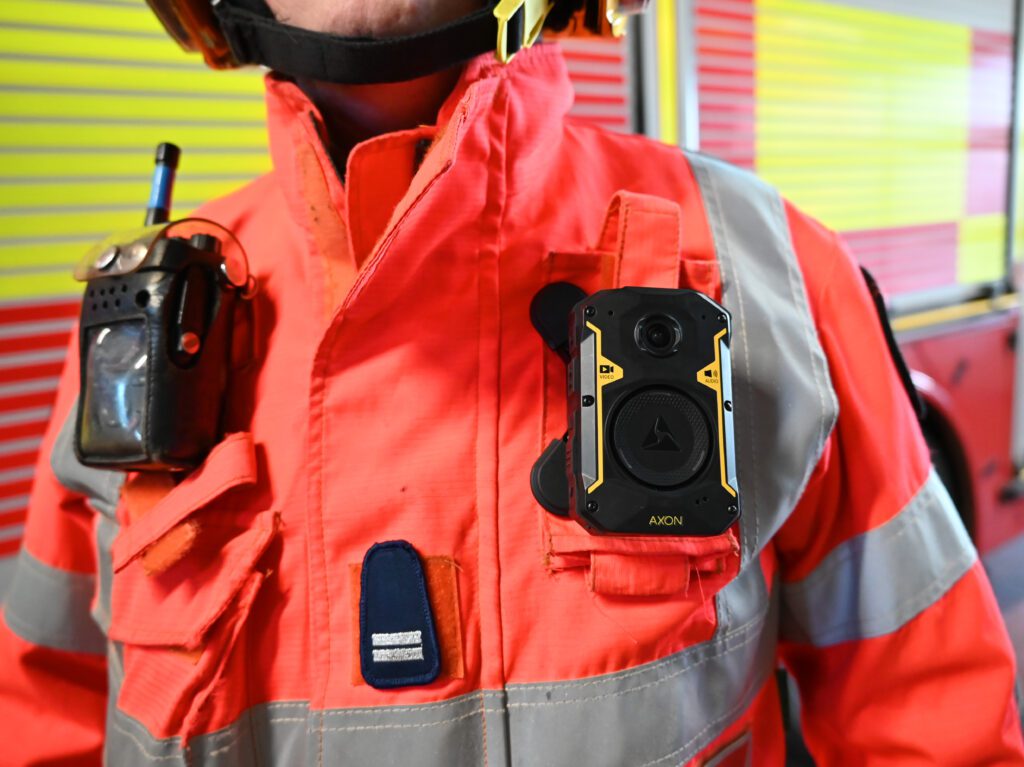
Axon, has partnered with Norfolk Fire and Rescue Service to roll out 160 advanced body-worn cameras across all 42 fire stations in the county in a bid to boost public safety. The Axon Body 4 cameras, the latest in Axon’s high-performance line, have been introduced to enhance both fire personnel and public safety across Norfolk. With live streaming capabilities, real-time location data, and two-way communication, the cameras enable quicker, more informed decision-making during complex fire incidents. Live streaming also improves fire personnel safety by identifying risks earlier and supporting better coordination with other emergency services, such as police and ambulance, ensuring resources are deployed at the right time to save lives. Technology Support The technology supports transparency, learning, and post-incident review, helping to strengthen public trust in fire and rescue services. Footage will also support training and development, as well as helping to enhance the safety of fire staff during incidents, home safety visits and property inspections. This is Axon’s second-largest deployment of body-worn cameras with a UK fire and rescue service, following West Yorkshire. The cameras were rolled out across the service in December, with nearly 100 hours of footage from over 500 video clips already having been stored. Axon already works with eight different UK fire services to roll out body-worn cameras in their daily operations, with 55% of UK police forces also using the tech. Outside the UK, Axon works with over 500 fire and emergency services worldwide. Cutting-Edge Cameras Alex Lowe, Senior Director for UK and Ireland at Axon, said: “We’re delighted that Norfolk Fire and Rescue Service is adopting our cutting-edge body-worn camera technology. Our cameras have been invaluable for first responders, and we’re excited to see them play an important role in ensuring fire personnel safety and enhancing public trust in Norfolk.” Scott Norman, Deputy Chief Fire Officer at Norfolk Fire and Rescue Service, said: “We’re keen to utilise technology wherever we can to keep the people of Norfolk safe, and these body-worn cameras are a great demonstration of that. “The devices will be brought in to support firefighters at all of our stations in Norfolk, helping us with learning at incidents, providing evidence for fire investigations, and enhancing the safety of our staff. Our teams have already said they’re benefitting from the technology, so I’m sure this will be a major boost for how our service operates, and for the communities we serve.” Cllr Margaret Dewsbury, Norfolk County Council Cabinet Member for Communities and Partnerships, said: “I am really pleased NFRS has taken this step to use body-worn cameras. This new technology will enhance the fantastic work already undertaken by the service, offering multiple benefits to keep fire staff and Norfolk’s communities safe.”  

Axon and Norfolk Fire and Rescue partner on body-worn cameras Read More »
Product Spotlight-KASK-Firebuyer.com

Product Spotlight – Engaging With The Extreme

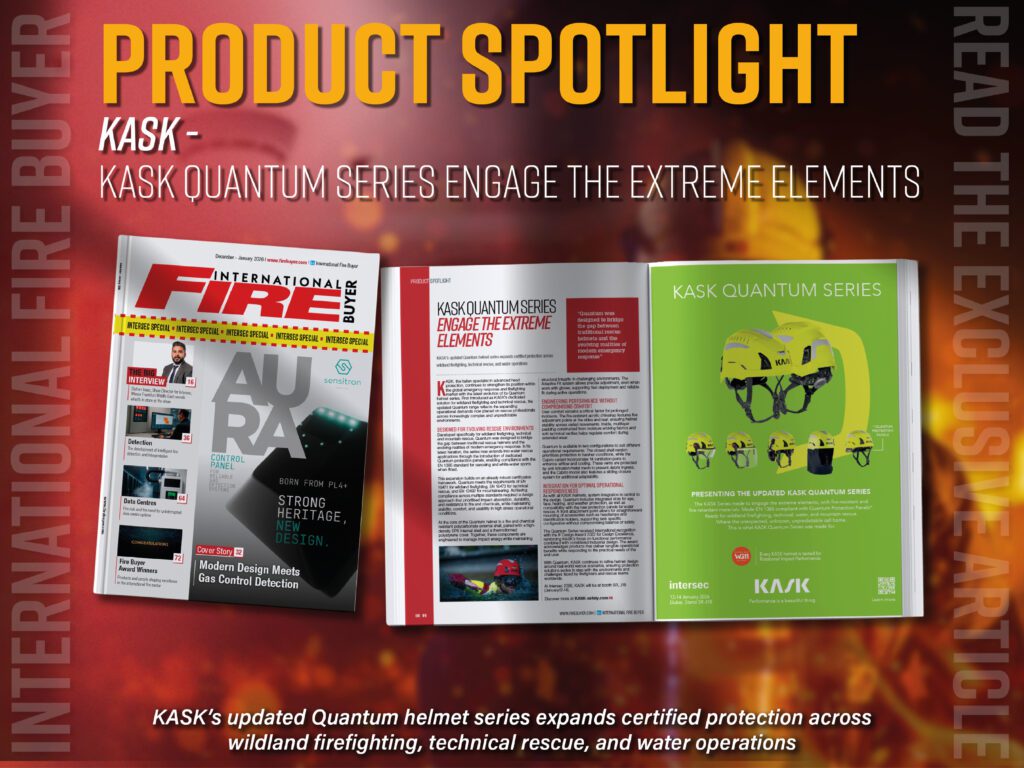
KASK’s updated Quantum helmet series expands certified protection across wildland firefighting, technical rescue, and water operations  KASK, the Italian specialist in advanced head protection, continues to strengthen its position within the global emergency response and firefighting market with the latest evolution of its Quantum helmet series. First introduced as KASK’s dedicated solution for wildland firefighting and technical rescue, the updated Quantum range reflects the expanding operational demands now placed on rescue professionals across increasingly complex and unpredictable environments.  Designed for evolving rescue environments  Developed specifically for wildland firefighting, technical and mountain rescue, Quantum was designed to bridge the gap between traditional rescue helmets and the evolving realities of modern emergency response. In its latest iteration, the series now extends into water rescue applications through the introduction of dedicated Quantum protection panels, enabling compliance with the EN 1385 standard for canoeing and white-water sports when fitted.  This expansion builds on an already robust certification framework. Quantum meets the requirements of EN 16471 for wildland firefighting, EN 16473 for technical rescue, and EN 12492 for mountaineering. Achieving compliance across multiple standards required a design approach that prioritised impact absorption, durability, and resistance to fire and chemicals, while maintaining stability, comfort, and usability in high stress operational conditions.  At the core of the Quantum helmet is a fire and chemical resistant polycarbonate external shell, paired with a high-density EPS internal shell and a thermoformed polystyrene cover. Together, these components are engineered to manage impact energy while maintaining structural integrity in challenging environments. The Adaptive Fit system allows precise adjustment, even when worn with gloves, supporting fast deployment and reliable fit during active operations.  Engineering performance without compromising comfort  User comfort remains a critical factor for prolonged incidents. The fire-resistant acrylic chinstrap features five adjustment points at the sides and rear, ensuring helmet stability across varied movements. Inside, multilayer padding constructed from moisture wicking fabrics and soft technical textiles helps regulate comfort during extended wear.  Quantum is available in two configurations to suit different operational requirements. The closed shell version prioritises protection in harsher conditions, while the Cabrio variant incorporates 14 ventilation ports to enhance airflow and cooling. These vents are protected by anti-intrusion metal mesh to prevent debris ingress, and the Cabrio model also features a sliding closure system for additional adaptability.  TO READ THE FULL ARTICLE SEE OUR LATEST ISSUE HERE:

Product Spotlight – Engaging With The Extreme Read More »

From The Expert-Stat-X-Firebuyer.com

From The Expert – Smarter Suppression and Detection for Electrics

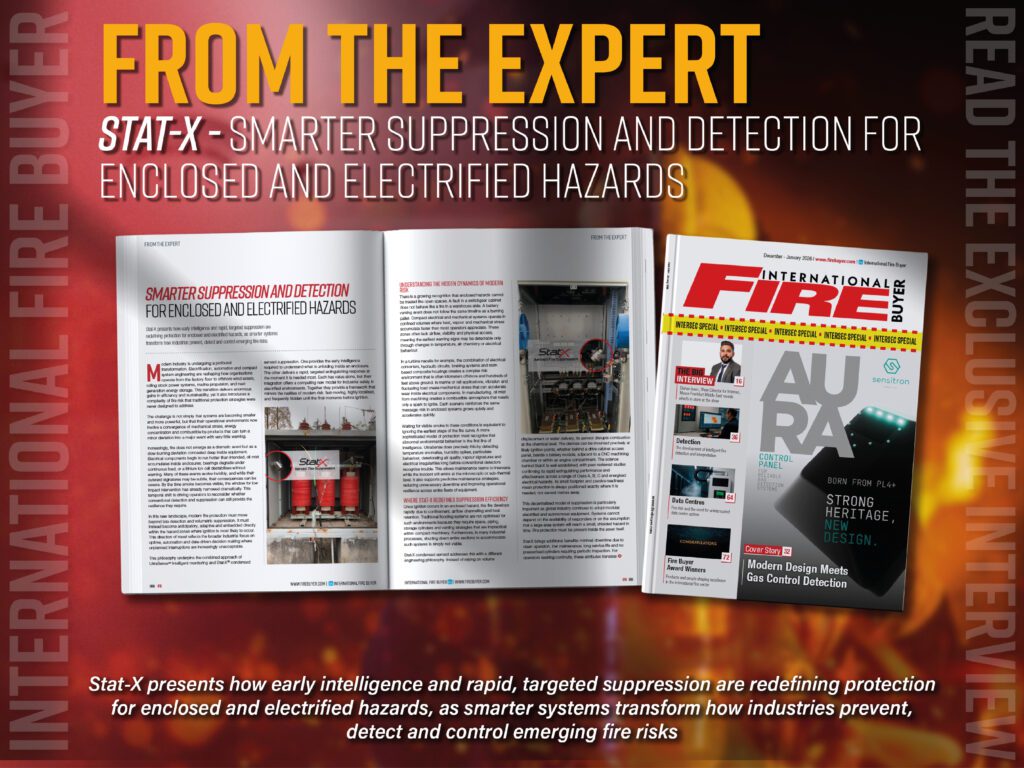
Early intelligence and rapid, targeted suppression are redefining protection for enclosed and electrified hazards, as smarter systems transform how industries prevent, detect and control emerging fire risks   Modern industry is undergoing a profound transformation. Electrification, automation and compact system engineering are reshaping how organisations operate from the factory floor to offshore wind assets, rolling stock power systems, marine propulsion, and next generation energy storage. This transition delivers enormous gains in efficiency and sustainability, yet it also introduces a complexity of fire risk that traditional protection strategies were never designed to address.   The challenge is not simply that systems are becoming smaller and more powerful, but that their operational environments now involve a convergence of mechanical stress, energy concentration and combustible by-products that can turn a minor deviation into a major event with very little warning.  Increasingly, fire does not emerge as a dramatic event but as a slow-burning deviation concealed deep inside equipment. Electrical components begin to run hotter than intended, oil mist accumulates inside enclosures, bearings degrade under continuous load, or a lithium ion cell destabilises without warning. Many of these events evolve invisibly, and while their outward signatures may be subtle, their consequences can be severe. By the time smoke becomes visible, the window for low impact intervention has already narrowed dramatically. This temporal shift is driving operators to reconsider whether conventional detection and suppression can still provide the resilience they require.  In this new landscape, modern fire protection must move beyond late detection and volumetric suppression. It must instead become anticipatory, adaptive and embedded directly within the hazard zones where ignition is most likely to occur. This direction of travel reflects the broader industrial focus on uptime, automation and data-driven decision making where unplanned interruptions are increasingly unacceptable.  This philosophy underpins the combined approach of UltraSense intelligent monitoring and Stat-X condensed aerosol suppression. One provides the early intelligence required to understand what is unfolding inside an enclosure. The other delivers a rapid, targeted extinguishing response at the moment it is needed most. Each has value alone, but their integration offers a compelling new model for industrial safety in electrified environments. Together they provide a framework that mirrors the realities of modern risk: fast-moving, highly localised, and frequently hidden until the final moments before ignition.  TO READ THE FULL ARTICLE SEE OUR LATEST ISSUE HERE:

From The Expert – Smarter Suppression and Detection for Electrics Read More »

KuhnOdice UK logo-Firebuyer.com

Mann McGowan and KuhnOdice Complete Merger

Mann McGowan and KuhnOdice Ltd (formerly CH Materials) have completed a merger, officially uniting under the new company name KuhnOdice UK. The move brings together decades of expertise, technical innovation, and market leadership to create a comprehensive, one-stop solution for the full spectrum of fire protection requirements. The merger represents a significant milestone for both organisations as they consolidate operations in Aldershot and align capabilities across product development, customer service, and technical support. Strengthening Market Position Merging together enhances the company’s ability to serve industries with a broader portfolio of technically advanced passive fire protection products, integrated manufacturing capabilities, and expanded R&D capacity. Innovation Leader The name KuhnOdice embodies decades of cutting-edge expertise: KuhnOdice has emerged from the German Rolf Kuhn GmbH and Odice S.A.S, which is based in France, two pioneering manufacturers among the first to identify and successfully unlock the transformative potential of intumescent materials for fire safety applications. Now united under the KuhnOdice brand, the group provides a market-leading portfolio of future-ready solutions with KuhnOdice UK set to play a leading role in driving growth and innovation across the British market. Jamie Scott, Director, KuhnOdice UK said: “Each company has built a strong reputation in the fire protection market, and as KuhnOdice UK Ltd we are perfectly positioned to deliver even greater value through innovation, expertise, and most importantly a seamless customer experience.” Peter Nisbet, Business Development, KuhnOdice UK added: “The integration of our teams gives us a unique platform to accelerate product development and strengthen our position as a trusted partner across the construction and fire safety sectors. We remain committed to supporting our customers with the same consistency, quality and technical excellence they have always relied on.”

Mann McGowan and KuhnOdice Complete Merger Read More »

Product Spotlight - Meiko-PPE

Product Spotlight – Safer Respiratory PPE Processing 

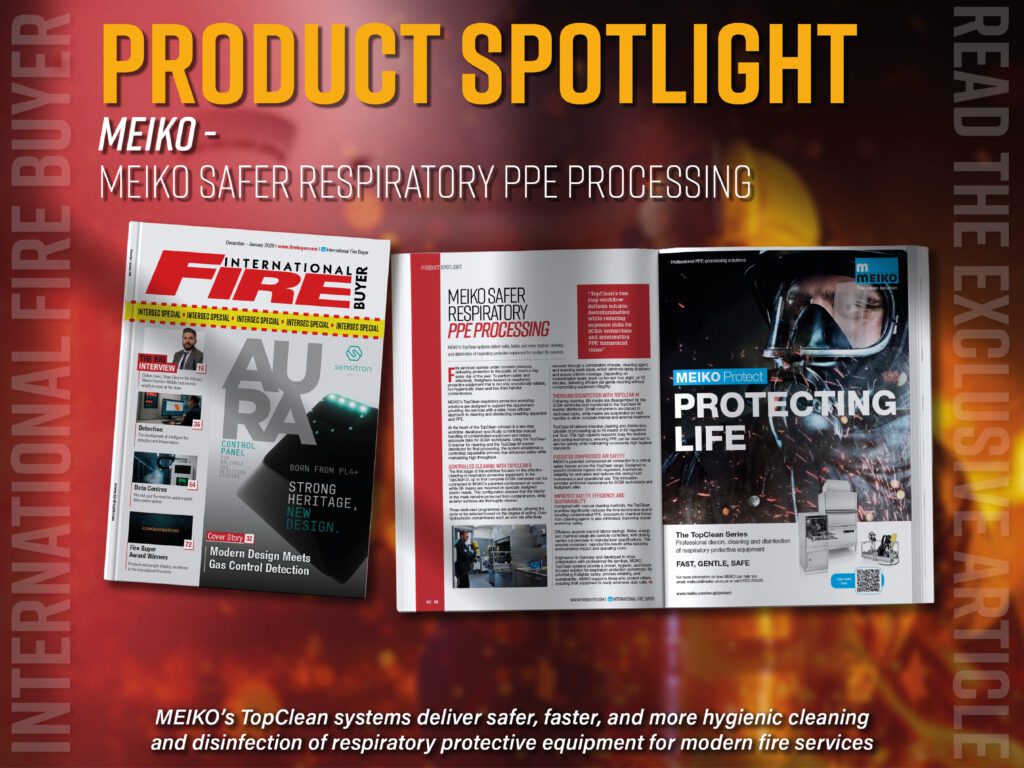
MEIKO’s TopClean systems deliver safer, faster, and more hygienic cleaning and disinfection of respiratory protective equipment for modern fire services  Fire services operate under constant pressure, delivering protection to the public 24 hours a day, every day of the year. To perform safely and effectively, firefighters depend on respiratory protective equipment that is not only operationally reliable, but hygienically clean and free from harmful contamination.   MEIKO’s TopClean respiratory protection workshop solutions are designed to support this requirement, providing fire services with a safer, more efficient approach to cleaning and disinfecting breathing apparatus and PPE.  At the heart of the TopClean concept is a two-step workflow developed specifically to minimise manual handling of contaminated equipment and reduce exposure risks for SCBA technicians. Using the TopClean D washer for cleaning and the TopClean M washer disinfector for final processing, the system establishes a controlled, repeatable process that enhances safety while maintaining high throughput.  Controlled cleaning with TopClean D  The first stage of the workflow focuses on the effective cleaning of respiratory protective equipment. In the TopClean D, up to four complete SCBA harnesses can be connected to MEIKO’s patented compressed air system, while BA masks are mounted on specially designed plastic heads. This configuration ensures that the interior of the mask remains protected from contamination, while exterior surfaces are thoroughly cleaned.  Three dedicated programmes are available, allowing the cycle to be selected based on the degree of soiling. Even hydrophobic contaminants such as soot are effectively removed through a combination of water, cleaning agent, and reversing wash pipes, which eliminate spray shadows and ensure uniform coverage. Depending on contamination levels, wash cycles last four, eight, or 16 minutes, delivering efficient yet gentle cleaning without compromising equipment integrity.  Thorough disinfection with TopClean M  Following cleaning, BA masks are disassembled by the SCBA technician and transferred to the TopClean M washer disinfector. Small components are placed in dedicated racks, while masks are suspended on rack handles to allow complete internal and external treatment.  TopClean M delivers intensive cleaning and disinfection, capable of processing up to 40 masks or 80 regulators per hour. This high capacity supports busy fire stations and central workshops, ensuring PPE can be returned to service quickly while maintaining consistently high hygiene standards.  Patented compressed air safety  MEIKO’s patented compressed air connection is a critical safety feature across the TopClean range. Designed to prevent moisture ingress into regulators, it enhances reliability for end users and reduces risk during both maintenance and operational use. This innovation provides additional reassurance for SCBA technicians and firefighters alike.  TO READ THE FULL ARTICLE SEE OUR LATEST ISSUE HERE:

Product Spotlight – Safer Respiratory PPE Processing  Read More »

C-TEC-Feature Spotlight-Firebuyer.com

Feature Spotlight – Integrated Fire Detection

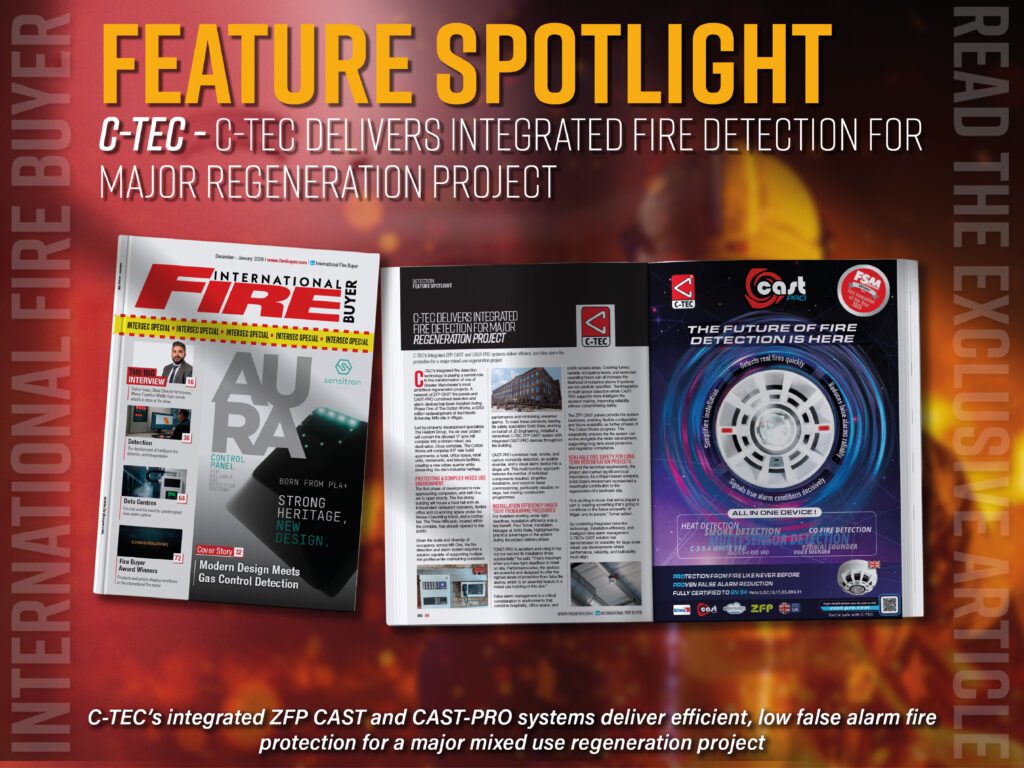
C-TEC’s integrated ZFP CAST and CAST-PRO systems deliver efficient, low false alarm fire protection for a major mixed use regeneration project  C-TEC’s integrated fire detection technology is playing a central role in the transformation of one of Greater Manchester’s most ambitious regeneration projects. A network of ZFP CAST fire panels and CAST-PRO combined detection and alarm devices has been installed during Phase One of The Cotton Works, a £250 million redevelopment of the historic Eckersley Mills site in Wigan.  Led by property development specialists The Heaton Group, the six year project will convert the disused 17 acre mill complex into a vibrant mixed use destination. Once complete, The Cotton Works will comprise 817 new build apartments, a hotel, office space, retail units, restaurants, and leisure facilities, creating a new urban quarter while preserving the site’s industrial heritage.  Protecting a Complex Mixed Use Environment  The first phase of development is now approaching completion, with Mill One set to open shortly. The five storey building will house a food hall with six independent restaurant operators, flexible office and co working space under the Weave Coworking brand, and a rooftop bar. The Three Mills pub, located within the complex, has already opened to the public.  Given the scale and diversity of occupancy across Mill One, the fire detection and alarm system required a solution capable of supporting multiple risk profiles while maintaining consistent performance and minimising unwanted alarms. To meet these demands, leading life safety specialists Solid State, working on behalf of JD Engineering, installed a networked C-TEC ZFP CAST system with integrated CAST-PRO devices throughout the building.  CAST-PRO combines heat, smoke, and carbon monoxide detection, an audible sounder, and a visual alarm device into a single unit. This multi function approach reduces the number of individual components required, simplifies installation, and supports faster commissioning, particularly valuable on large, fast moving construction programmes.  Installation Efficiency Under Tight Programme Pressures  For installers working under tight deadlines, installation efficiency was a key benefit. Paul Turner, Installation Manager at Solid State, highlighted the practical advantages of the system during the project delivery phase.  “CAST-PRO is excellent and using it has cut our second fix installation times substantially,” he said. “That’s important when you have tight deadlines to meet on site. Performance wise, the devices are powerful and designed to offer the highest levels of protection from false fire alarms, which is an essential feature in a mixed use building of this size.”  False alarm management is a critical consideration in environments that combine hospitality, office space, and public access areas. Cooking fumes, variable occupancy levels, and extended operating hours can all increase the likelihood of nuisance alarms if systems are not carefully specified. The integration of multi sensor detection within CAST-PRO supports more intelligent fire decision making, improving reliability without compromising safety.  The ZFP CAST panels provide the system backbone, enabling flexible configuration and future scalability as further phases of The Cotton Works progress. This adaptability ensures the fire system can evolve alongside the wider development, supporting long term asset protection and regulatory compliance. 

Feature Spotlight – Integrated Fire Detection Read More »

Hytera and Naffco-MoU-Firebuyer.com

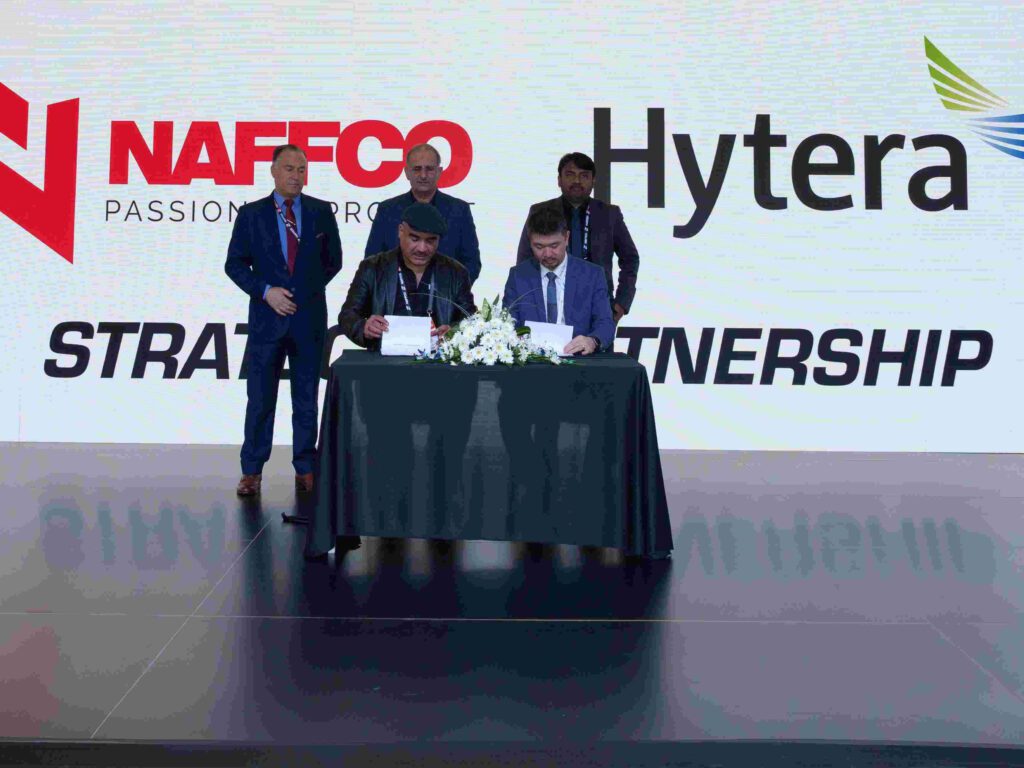
Hytera and NAFFCO deepen partnership with new MoU

Hytera Communications and NAFFCO Group have strengthened their strategic partnership with the signing of an enhanced Memorandum of Understanding (MoU). The agreement, signed at Intersec 2026, marks a new phase in the collaboration with both companies committing to deeper integration, joint innovation and long term cooperation focused on emergency response and public safety solutions. The MoU was signed by Eng. Khalid Al Khateb, CEO of NAFFCO Group, and Stanley Song, Vice President of Hytera, reinforcing the strategic alignment between the two organisations. Expanded cooperation Under the updated agreement, the partners will expand cooperation across solution co development, system integration, training and service support. By combining NAFFCO’s fire safety and emergency response vehicle expertise with Hytera’s mission critical communications technologies, the companies aim to deliver integrated and deployable solutions for emergency responders globally. “We are pleased to further our cooperation with Hytera on a larger international stage,” said Arkan Adel, CEO Representative at NAFFCO. “Hytera’s communication technologies complement our emergency vehicles and safety systems, enabling better coordination, faster response, and improved efficiency for emergency teams operating in complex and high-risk environments.” “Our strategic collaboration with NAFFCO is built on shared experience and proven results,” said Stanley Song, Vice President of Hytera. “By renewing this MoU at Intersec, we are reaffirming a long-term commitment to work more closely, from solution design to deployment and training, to support large-scale emergency services with communication systems they can rely on when it matters most.” Joint Showcase At Intersec, the companies jointly showcased their integrated approach. Hytera demonstrated its latest mission critical communications solutions, including the Integrated Command and Control platform and body worn camera systems, alongside NAFFCO’s specialist emergency vehicles. The display highlighted how integrated communications and vehicle systems can improve situational awareness, command efficiency and coordinated operations across multiple scenarios. The joint stand also attracted high level attention, including a visit from H.E. Mohamed Hamad Al Kuwaiti, Chairman of the UAE Cybersecurity Council, underlining the increasing importance of resilient and integrated communications within national safety and security frameworks.

Hytera and NAFFCO deepen partnership with new MoU Read More »

Rockwool Trining Academy-Firebuyer.com

ROCKWOOL Launches New Training Academy

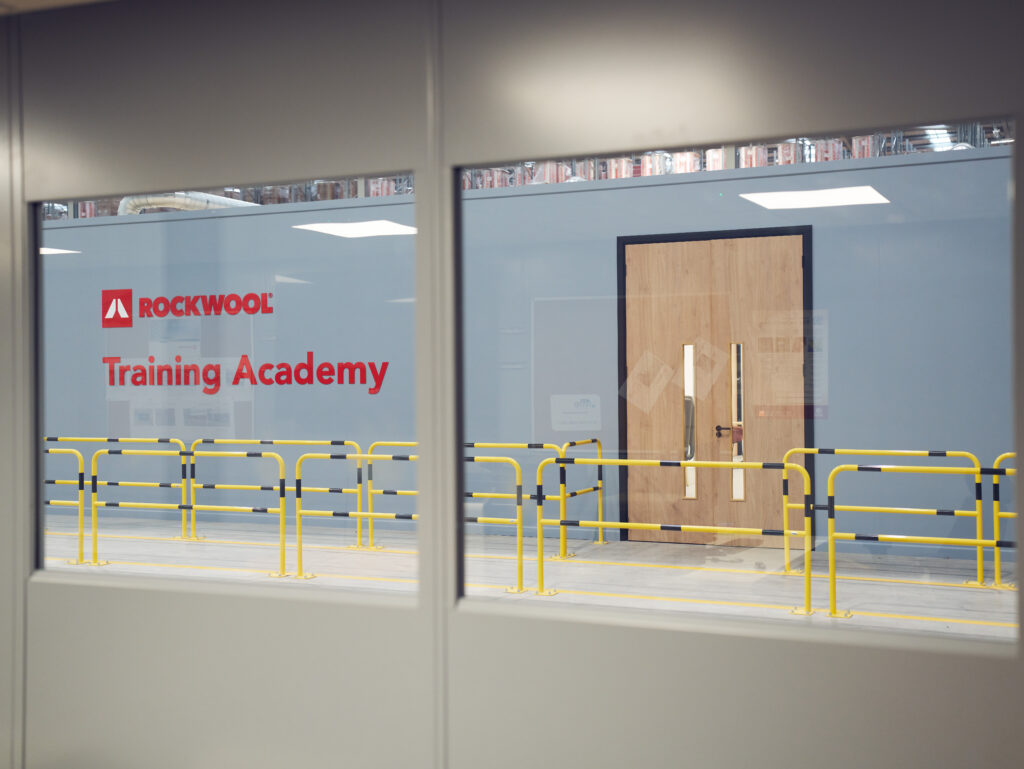
ROCKWOOL UK has launched a national training academy for construction and building safety professionals at its West Midlands global centre of excellence for fire-stopping. The purpose-built academy will deliver best practice learning and practical, hands-on training around the use and application of its products for construction professionals, including specifiers, installers and fire engineers, as well as estate managers from the public and private sectors. With fire-stopping courses beginning in January and further topics being added through 2026, the state-of-the-art training facility will provide industry professionals with expert-led practical sessions as well as specification and installation guidance to support high-quality building performance, compliance and safety. Flexible Learning The one-day fire-stopping course has been flexibly designed so it can be delivered specifically to meet the attendee’s level of experience, whether they be a novice, intermediate or advanced professional. Ben Peach, Product and Technical Solutions Director at ROCKWOOL UK & Ireland, said: “Designed by ROCKWOOL’s in-house experts, the training academy will provide guidance and hands-on experience to help people make informed choices around building design and performance. It provides a dedicated environment to strengthen technical knowledge and develop practical experience of working with ROCKWOOL products.” Best Practice Nick Wilson, Managing Director of ROCKWOOL UK & Ireland, added: “As the industry continues to adapt to the changes brought about by the Building Safety Act, ROCKWOOL is committed to supporting best practice and our education and training initiatives are key to that. We’re very pleased to deepen this commitment with the launch of the training academy and looking forward to welcoming partners to our flagship facility at Hams Hall.” Organisations can now register their interest in attending a course, or sign up to receive updates as new courses are introduced via the Training Academy’s online hub. To find out more go to https://www.rockwool.com/uk/education-and-training/training-academy/

ROCKWOOL Launches New Training Academy Read More »

Baskhron-Fire-Dex-Firebuyer.com

Fire-Dex Appoints Maged Baskhron as VP of Operations

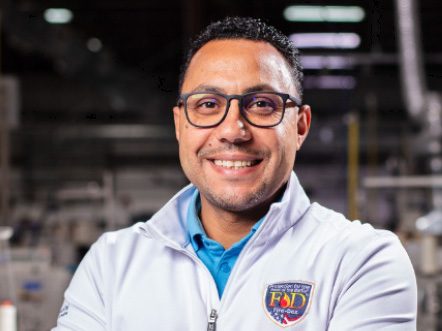
Fire-Dex, an American manufacturer of head-to-toe PPE for first responders has appointment of Maged Baskhron as Vice President of Operations. In this role, Baskhron will align operational and strategic goals, bolster cross-functional processes, and empower teams across the organisation. By prioritising associate well-being, product quality, and day-to-day execution, his work will reinforce Fire-Dex’s commitment to protecting both the people who make the gear and the crews who wear it. “Fire-Dex is mission-driven in a way you can feel on the factory floor and in the field,” Baskhron said. “I’m eager to help our teams do their best work—build it right, deliver it right, and keep safety as the starting point.” Volume and Values Baskhron will help Fire-Dex sharpen execution for the long term while staying true to its people-first culture and mission to Serve Those Who Serve. He brings global manufacturing experience and deep operational familiarity, having previously held roles as Project Manager and Industrial Engineer & Training Manager—partnering closely across the Fire-Dex business under longtime VP of Operations John Karban. Baskhron’s appointment also builds on Fire-Dex’s ongoing executive transition. The company recently announced that Lauren Burke DeVere will assume the role of CEO in early 2026, partnering with current CEO Steve Allison as he prepares to retire in early 2027. Karban will assume the role of President. Leadership Continuity This continuity highlights Fire-Dex’s commitment to promoting from within and ensuring the leadership structure is built for what’s next. That’s why Baskhron is intentional about trust, accountability and enabling teams to act. He explained: “To me, leadership is simple: show up for your people and be clear about what matters. When teams know the goal, have the support they need, and are relied on to make decisions, great work follows. That’s how we keep delivering for the departments and firefighters who need us to get it right.”  

Fire-Dex Appoints Maged Baskhron as VP of Operations Read More »

Ask Expert-Janus-Firebuyer,com

Ask the Expert-Engineering Clean Agent Fire Protection 

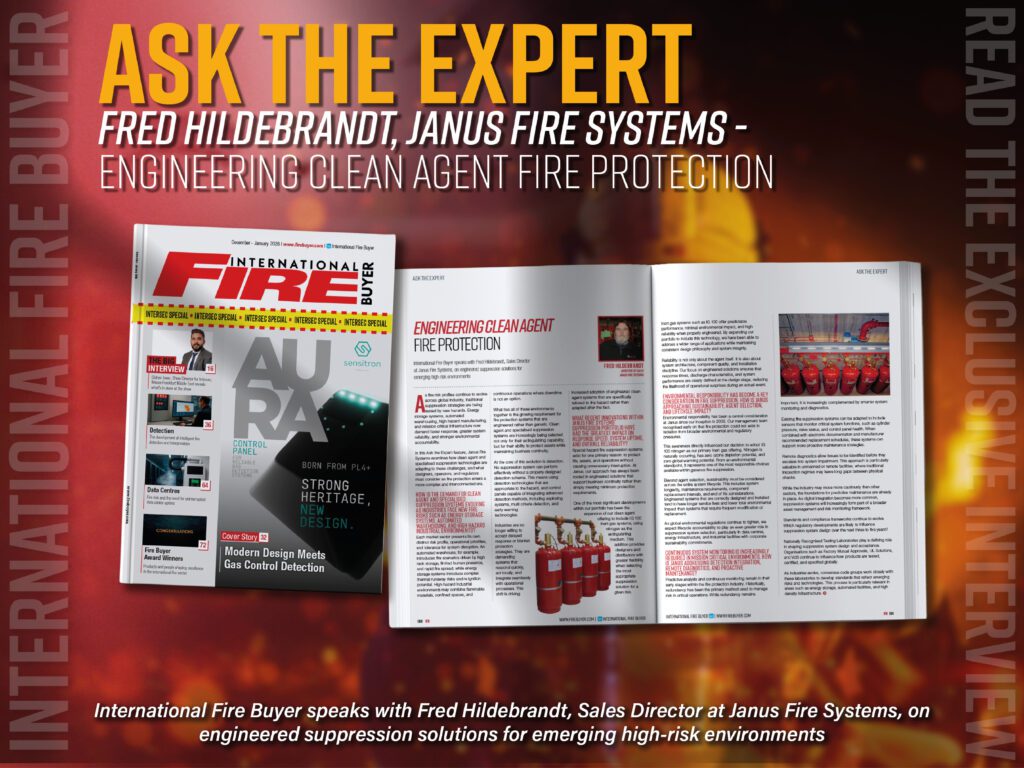
International Fire Buyer speaks with Fred Hildebrandt, Sales Director at Janus Fire Systems, on engineered suppression solutions for emerging high-risk environments  As fire risk profiles continue to evolve across global industry, traditional suppression strategies are being tested by new hazards. Energy storage systems, automated warehousing, high hazard manufacturing, and mission critical infrastructure now demand faster response, greater system reliability, and stronger environmental accountability.  In this Ask the Expert feature, Janus Fire Systems examines how clean agent and specialised suppression technologies are adapting to these challenges, and what designers, operators, and regulators must consider as fire protection enters a more complex and interconnected era.  How is the demand for clean agent and specialised suppression systems evolving as industries face new fire risks? Each market sector presents its own distinct risk profile, operational priorities, and tolerance for system disruption. An automated warehouse, for example, introduces fire scenarios driven by high rack storage, limited human presence, and rapid fire spread, while energy storage systems introduce complex thermal runaway risks and re ignition potential. High hazard industrial environments may combine flammable materials, confined spaces, and continuous operations where downtime is not an option.  What ties all of these environments together is the growing requirement for fire protection systems that are engineered rather than generic. Clean agent and specialised suppression systems are increasingly being selected not only for their extinguishing capability, but for their ability to protect assets while maintaining business continuity.  At the core of this evolution is detection. No suppression system can perform effectively without a properly designed detection scheme. This means using detection technologies that are appropriate to the hazard, and control panels capable of integrating advanced detection methods, including aspirating systems, multi criteria detection, and early warning technologies.  Industries are no longer willing to accept delayed response or blanket protection strategies. They are demanding systems that respond quickly, act locally, and integrate seamlessly with operational processes. This shift is driving increased adoption of engineered clean agent systems that are specifically tailored to the hazard rather than adapted after the fact.  What recent innovations within Janus Fire Systems’ suppression portfolio have had the greatest impact? Special hazard fire suppression systems exist for one primary reason: to protect life, assets, and operations without causing unnecessary interruption. At Janus, our approach has always been rooted in engineered solutions that support business continuity rather than simply meeting minimum protection requirements.  One of the most significant developments within our portfolio has been the expansion of our clean agent offering to include IG 100 inert gas systems, using nitrogen as the extinguishing medium. This addition provides designers and distributors with greater flexibility when selecting the most appropriate suppression solution for a given risk.  Inert gas systems such as IG 100 offer predictable performance, minimal environmental impact, and high reliability when properly engineered. By expanding our portfolio to include this technology, we have been able to address a wider range of applications while maintaining consistent design philosophy and system integrity.  Reliability is not only about the agent itself. It is also about system architecture, component quality, and installation discipline. Our focus on engineered solutions ensures that response times, discharge characteristics, and system performance are clearly defined at the design stage, reducing the likelihood of operational surprises during an actual event.  How is Janus approaching sustainability, agent selection, and lifecycle impact?  Environmental responsibility has been a central consideration at Janus since our inception in 2008. Our management team recognised early on that fire protection could not exist in isolation from broader environmental and regulatory pressures.  This awareness directly influenced our decision to adopt IG 100 nitrogen as our primary inert gas offering. Nitrogen is naturally occurring, has zero ozone depletion potential, and zero global warming potential. From an environmental standpoint, it represents one of the most responsible choices available within gaseous fire suppression.  Beyond agent selection, sustainability must be considered across the entire system lifecycle. This includes system longevity, maintenance requirements, component replacement intervals, and end of life considerations. Engineered systems that are correctly designed and installed tend to have longer service lives and lower total environmental impact than systems that require frequent modification or replacement.  As global environmental regulations continue to tighten, we expect lifecycle accountability to play an even greater role in suppression system selection, particularly in data centres, energy infrastructure, and industrial facilities with corporate sustainability commitments.  TO READ THE FULL ARTICLE SEE OUR LATEST ISSUE HERE

Ask the Expert-Engineering Clean Agent Fire Protection  Read More »

Scroll to Top