Staging Site!

Hochiki Team Intersec Award Winners-Firebuyer.com

Hochiki Middle East Wins Best Active Fire Safety Product

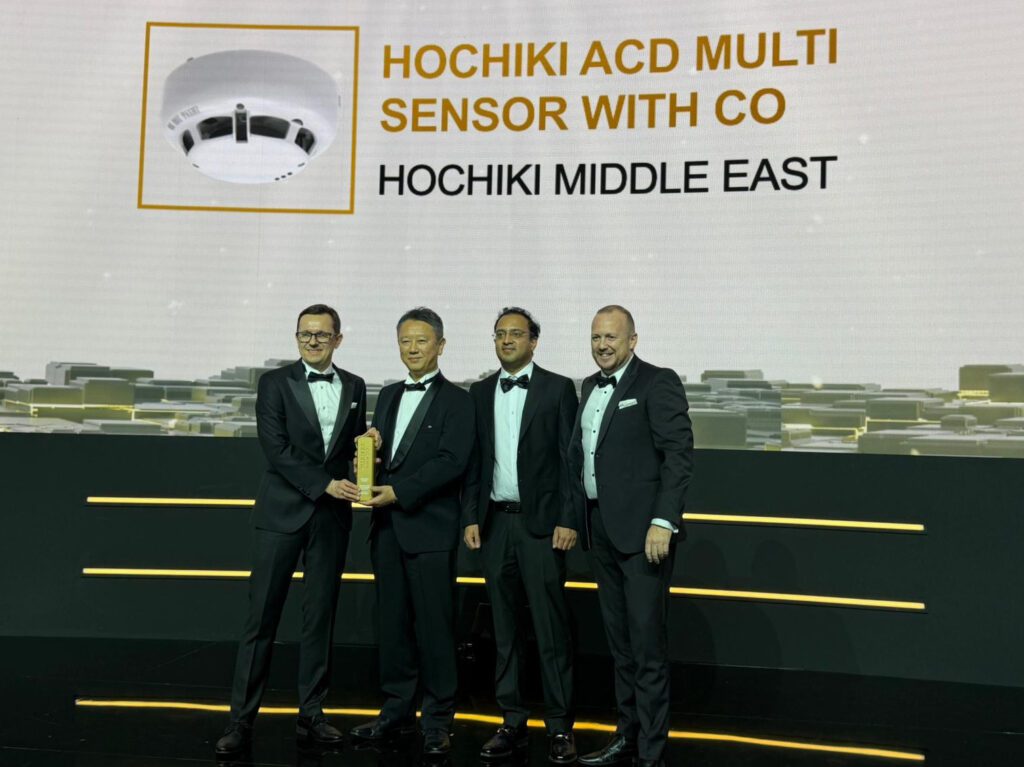
At the recent Intersec Awards in Dubai, Hochiki Middle East was  recognised for the Best Active Fire Safety Product for its ACD Multi-Sensor with CO, reaffirming the company’s commitment to innovation and life safety excellence. The award-winning ACD Multi-Sensor with CO combines advanced smoke and carbon monoxide detection technologies to deliver faster, more reliable fire detection while significantly reducing false alarms. Designed to perform in a wide range of challenging environments, the solution reflects Hochiki’s continued investment in intelligent, high-performance fire safety systems. Close Collaboration Commenting on the achievement, Subin Suhus, Senior Sales Manager at Hochiki Middle East, said: “This award is a proud moment for our entire team. The ACD Multi-Sensor with CO is the result of close collaboration with our partners and customers, and it addresses the real-world challenges faced by the fire safety industry. Being recognised at Intersec reinforces our commitment to delivering reliable, future-ready solutions to the region.” Global Commitment Shinsuke Kubo, Managing Director of Hochiki Middle East, added: “Winning at the Intersec Awards is a significant milestone for Hochiki Middle East and the wider Hochiki Group. It reflects not only the strength of our technology, but our global commitment to advancing life safety through innovation, rigorous engineering and long-term customer trust. We are honoured to stand alongside the industry’s leading brands.” The Intersec Awards celebrate excellence and innovation across the global safety, security and fire protection industries, making this win a notable achievement for Hochiki Middle East and its growing portfolio of advanced fire detection solutions. To learn more about the winning ACD Multisensor with CO visit the Hochiki website.

Hochiki Middle East Wins Best Active Fire Safety Product Read More »

Innovator-Victaulic-Firebuyer.com

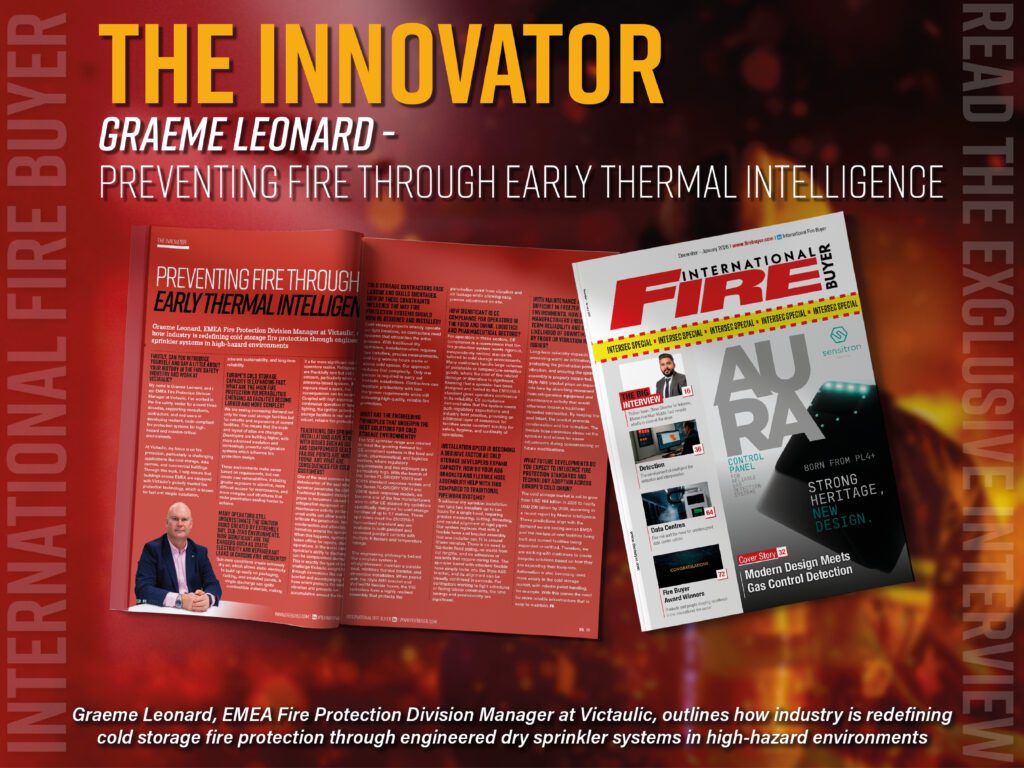
The Innovator – Engineering Fire Protection for the Cold Chain    

Graeme Leonard, EMEA Fire Protection Division Manager at Victaulic, outlines how Victaulic is redefining cold storage fire protection through engineered dry sprinkler systems, faster installation methods, and resilient solutions for increasingly complex, high-hazard environments  Firstly, can you introduce yourself and say a little about your history in the fire safety industry and work at Victaulic? My name is Graeme Leonard, and I am EMEA Fire Protection Division Manager at Victaulic. I’ve worked in the fire safety sector for around three decades, supporting consultants, contractors, and end users in developing resilient, code-compliant fire protection systems for high-hazard and mission-critical environments.   At Victaulic, my focus is on fire protection, particularly in challenging applications like cold storage, data centres, and commercial buildings. Through this work, I help ensure that buildings across EMEA are equipped with Victaulic’s globally trusted fire protection technology, which is known for fast and simple installation, inherent sustainability, and long-term reliability.   Europe’s cold storage capacity is expanding fast. What are the main fire protection vulnerabilities emerging as facilities become larger and more complex?  At Victaulic, we are seeing increasing demand not only for new cold storage facilities but for retrofits and expansions of current facilities. This means that the scale and layout of sites are changing. Developers are building higher, with more advanced insulation and increasingly powerful refrigeration systems which influence fire protection design.   These environments make sense based on requirements, but can create new vulnerabilities, including greater exposure to vibration, more difficult access for maintenance, and more complex roof structures that make penetration sealing harder to achieve. At the same time, the rapid construction schedules required to build new capacity leave little room for time-consuming installation techniques. Fire protection systems need to be engineered to cope with these environmental stresses while remaining quick and straightforward to install and maintain.   Many operators still underestimate the ignition risks created by extremely dry, sub-zero environments. How significant are the dangers such as static electricity and refrigerant leaks in causing fire incidents?  Sub-zero conditions create extremely dry air, which allows static electricity to build up easily on packaging, racking, and insulated panels. A single discharge can ignite combustible materials, making it a far more significant risk than many operators realise. Refrigerant leaks are thankfully rare but still a major concern, particularly when using ammonia-based systems. If flammable vapours meet a spark, the consequences can be severe. Coupled with high electrical loads and continuous operation of fans and lighting, the ignition potential in cold storage facilities is real and demands robust, reliable fire protection.   Traditional dry sprinkler installations have struggled with issues such as ice build-up and compromised seals. What failure points are most often found, and what are consequences for cold storage customers? One of the most common issues is the deterioration of the seal where the sprinkler penetrates the chiller roof. Traditional threaded installations are prone to movement caused by refrigeration equipment or maintenance activity on the roof. Even small shifts can allow warm air to infiltrate the penetration, leading to condensation and ultimately ice formation around the sprinkler head. When this happens, systems may be taken offline for repairs, disrupting operations. In the worst case, the sprinkler’s ability to discharge water can be compromised during a fire. This is exactly the type of reliability challenge Victaulic sought to address through innovations like our Style AB6 bracket and accompanying flexible hose which protects the seal from vibration and prevents ice accumulation around the head.    TO READ THE FULL ARTICLE SEE THE LATEST ISSUE HERE

The Innovator – Engineering Fire Protection for the Cold Chain     Read More »

Quick Fire-December26-Firebuyer.com

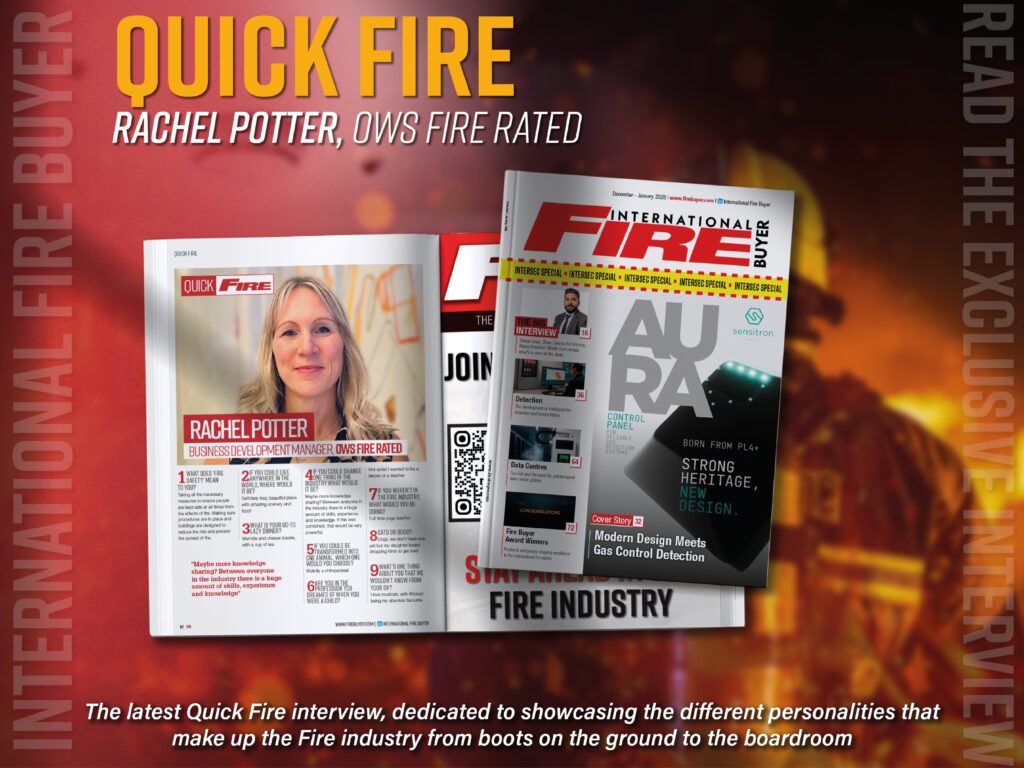
Quickfire – Rachel Potter, Business Development Manager, OWS Fire Rated 

Rachel Potter, Business Development Manager, OWS Fire Rated discusses life both inside and outside of the Fire Safety Industry What does ‘fire safety’ mean to you? Taking all the necessary measures to ensure people are kept safe at all times from the effects of fire. Making sure procedures are in place and buildings are designed to reduce the risk and prevent the spread of fire.  If you could live anywhere in the world, where would it be? Definitely Italy, beautiful place with amazing scenery and food!  What is your go-to lazy dinner? Marmite and cheese toastie, with a cup of tea.  If you could change one thing in the industry what would it be? Maybe more knowledge sharing? Between everyone in the industry there is a huge amount of skills, experience and knowledge. If this was combined, that would be very powerful.  If you could be transformed into one animal, which one would you choose? Weirdly a chimpanzee!   Are you in the profession you dreamed of when you were a child? Not quite! I wanted to be a lawyer or a teacher  TO READ THE FULL ARTICLE SEE THE LATEST ISSUE HERE  
Quickfire – Rachel Potter, Business Development Manager, OWS Fire Rated  Read More »

Drager Training Centre Newcastle-Firebuyer.com

Dräger Supports Tunnelling and Mining Safety at Innovative Newcastle Training Centre

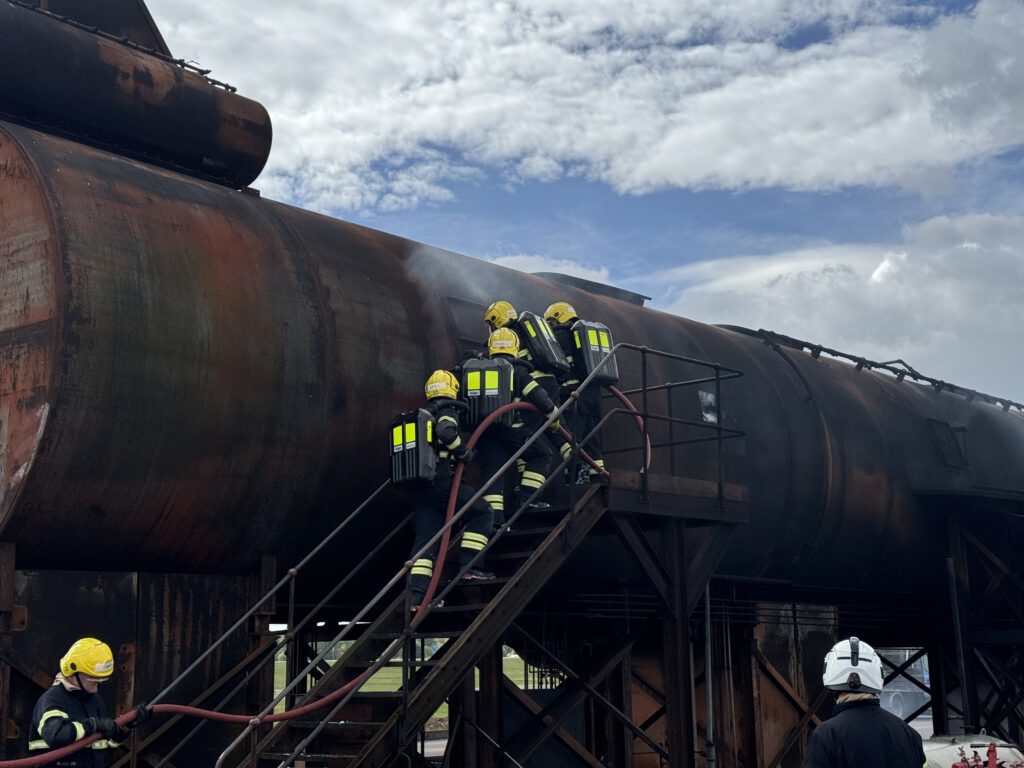
Dräger, an international leader in medical and safety technology, is supplying breathing apparatus (BA) sets to an innovative new training course created by Triton Risk Management and Newcastle International Training Academy. It uses the fuselage of an aircraft simulator to create an environment suitable for training tunnelling and mining professionals. The realistic, scenario-based training is supported by classroom learning, and is designed to ensure the safety of emergency responders by preparing them for the full range of incidents they may face in tunnelling and mining emergencies. Triton and Newcastle International Training Academy is utilising the Dräger’s PSS® BG4, a closed-circuit BA, and PSS® 7000, one of Dräger’s range of extremely ergonomically comfortable BA which allow for increased movement and flexibility when worn. As part of Dräger’s extended duration series, the BG4 is specially designed for the demanding tasks seen in underground and tunnel environments. Realistic Training Dräger’s BA sets are used in training to ensure competency with equipment, help foster a realistic training environment and ensure trainees are protected from the fire and smoke created in the simulated environments. Tom Pearson, Marketing Manager, Engineered Solutions and Government Agencies at Dräger, said they were thrilled to support this excellent approach to training: “We have worked with Newcastle International Training Academy for many years in training aviation emergency responders. In its partnership with Triton, it’s great to see cross-sector expertise working to create an intelligent training programme that makes sustainable, and cost-effective use of existing simulation equipment. “We are delighted to support the programme with our BA technology, helping to further the safety of tunnelling and mining professionals.” Jonathan Davies from Triton Risk Management said Dräger’s equipment helped to create a realistic training environment for emergency responders: “Dräger’s equipment allows the trainees to run through preparation checks, so they learn how to be more efficient when putting on the BA. Having the opportunity to practice wearing them within a classroom environment helps responders to feel prepared – ultimately meaning they are safer.” Cross Sector Expertise Victoria Woodhouse, Commercial Training Manager from Newcastle International Training Academy said the training course is a great example of cross-sector expertise working to benefit industry safety and emergency response: “This showcases a highly positive development, with equipment originally designed for aviation safety now enhancing safety standards across other industries. Our longstanding partnership with Dräger has established them as a trusted and valued provider for this training.”

Dräger Supports Tunnelling and Mining Safety at Innovative Newcastle Training Centre Read More »

Data Centre feature Jan26-Firebuyer.com

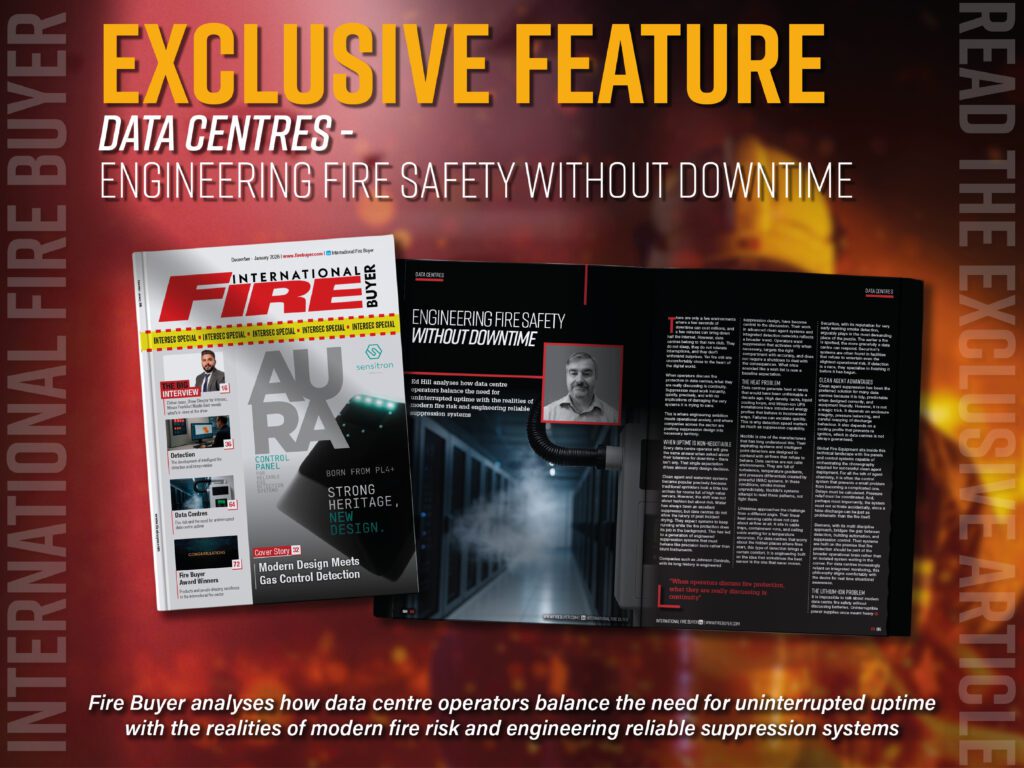
Exclusive Feature – Engineering Fire Safety Without Downtime 

Ed Hill analyses how data centre operators balance the need for uninterrupted uptime with the realities of modern fire risk and engineering reliable suppression systems   There are only a few environments where a few seconds of downtime can cost millions, and a few minutes can bring down half the internet. However, data centres belong to that rare club. They do not sleep, they do not tolerate interruptions, and they don’t withstand surprises. Yet fire still sits uncomfortably close to the heart of the digital world.  When operators discuss fire protection in data centres, what they are really discussing is continuity. Suppression must work instantly, quietly, precisely, and with no implications of damaging the very systems it is trying to save.  This is where engineering ambition meets operational anxiety, and where companies across the sector are pushing suppression design into necessary territory.  When Uptime Is Non-Negotiable Every data centre operator will give the same answer when asked about their tolerance for downtime – there isn’t any. That single expectation drives almost every design decision.  Clean agent and watermist systems became popular precisely because traditional sprinklers look a little too archaic for rooms full of high value servers. However, the shift was not about fashion but about risk. Water has always been an excellent suppressor, but data centres do not allow the luxury of post incident drying. They expect systems to keep running while the fire protection does its job in the background. This has led to a generation of engineered suppression systems that must behave like precision tools rather than blunt instruments.  Companies such as Johnson Controls, with its long history in engineered suppression design, have become central to the discussion. Their work in advanced clean agent systems and integrated detection networks reflects a broader trend. Operators want suppression that activates only when necessary, targets the right compartment with accuracy, and does not require a shutdown to deal with the consequences. What once sounded like a wish list is now a baseline expectation.  The Heat Problem Data centres generate heat at levels that would have been unthinkable a decade ago. High density racks, liquid cooling loops, and lithium-ion UPS installations have introduced energy profiles that behave in inconvenient ways. Failures can escalate quickly. This is why detection speed matters as much as suppression capability.  Hochiki is one of the manufacturers that has long understood this. Their aspirating systems and intelligent point detectors are designed to contend with airflows that refuse to behave. Data centres are not calm environments. They are full of turbulence, temperature gradients, and pressure differentials created by powerful HVAC systems. In these conditions, smoke moves unpredictably. Hochiki’s systems attempt to read these patterns, not fight them.  Linesense approaches the challenge from a different angle. Their linear heat sensing cable does not care about airflow at all. It sits in cable trays, containment runs, and ceiling voids waiting for a temperature excursion. For data centres that worry about the hidden places where fires start, this type of detection brings a certain comfort. It is engineering built on the idea that sometimes the best sensor is the one that never moves.  Securiton, with its reputation for very early warning smoke detection, arguably plays in the most demanding piece of the puzzle. The earlier a fire is spotted, the more gracefully a data centre can respond. Securiton’s systems are often found in facilities that refuse to entertain even the slightest operational risk. If detection is a race, they specialise in finishing it before it has begun.  TO READ THE FULL ARTICLE SEE THE LATEST ISSUE HERE
Exclusive Feature – Engineering Fire Safety Without Downtime  Read More »

FIA Logo-Firebuyer.com

FIA Members Asked to Comment on New Communication Standard

A proposal to develop a new British Standard for emergency audio communication systems is currently under consideration by BSI committee EPL/100, which covers audio systems for emergency communication. The Fire Industry Association has confirmed it has been informed of the proposal and is drawing it to the attention of its membership. The proposed document would take the form of a British Code of Practice and would address the use of sound systems for emergency purposes in premises where a formal communication plan is required. According to BSI, the intention is to provide clearer and more coherent guidance in an area where existing advice is currently limited or fragmented. Scenario Scope The scope of the proposed standard would include emergency sound systems used under the Terrorism (Protection of Premises) Act 2025, commonly referred to as Martyn’s Law. This would cover communication requirements for scenarios such as lockdown and evacuation. It would also apply to fire emergencies, particularly in high rise residential buildings, where audio communication systems operate independently of the fire detection and alarm system. This aspect is seen as especially significant in the post Grenfell regulatory environment, where the ability to deliver clear, timely and evolving instructions to occupants during an incident is regarded as critical to life safety. BSI has indicated that the proposed Code of Practice would focus on communication outcomes rather than prescriptive technical solutions. Areas expected to be covered include planning and system design, audibility and intelligibility of messages, and the testing, management and ongoing operation of emergency audio systems. The standard is intended to sit alongside existing fire, security and product standards, complementing them rather than duplicating existing requirements. Industry Feedback The FIA is inviting its members to review the proposal and consider its potential impact on duty holders, system designers, operators, residents and enforcing authorities. BSI is currently seeking industry feedback on the need for the standard, its proposed scope and the value it could deliver in practice. The consultation on the proposal is open until 19 February. FIA members wishing to contribute are encouraged to submit their comments directly to BSI via the Standards Development Portal, noting that registration may be required.  

FIA Members Asked to Comment on New Communication Standard Read More »

Magirus and EmiControls -Firebuyer.com

Magirus and EmiControls strengthen partnership

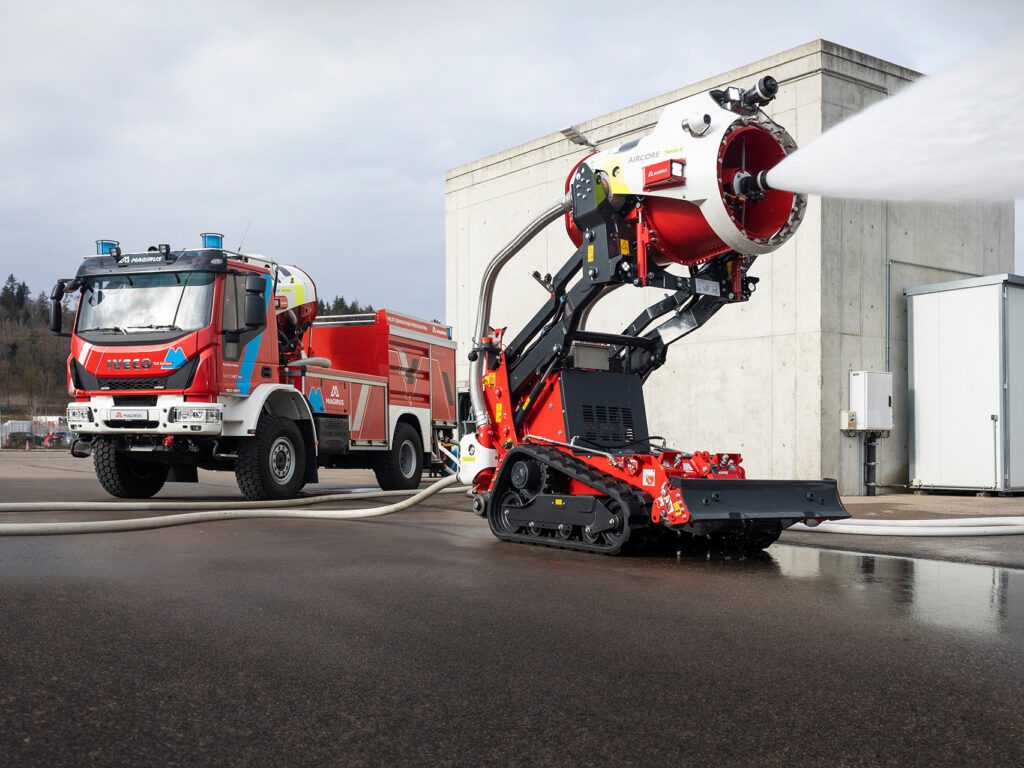
Magirus and EmiControls are strengthening their partnership with a minimum three‑year term. They have set ambitious growth targets, aiming to quadruple their joint sales volumes. Clearly defined regional market responsibilities will support more focused and effective market development. Enhanced coordination and governance structures will ensure sustainable cooperation and consistently high quality. Joint AirCore solutions from Magirus and EmiControls Technology that emergency and rescue services can rely on, even under extreme conditions – this is the shared commitment of Magirus and EmiControls. In industrial and vegetation fires, as well as tunnel operations, effective smoke and pollutant suppression is a critical factor for the safety of both responders and those affected. To meet these demanding requirements with powerful and reliable system solutions, Magirus has successfully partnered for over a decade with EmiControls GmbH of Bolzano, Italy – a leading manufacturer of water mist turbines and modular robotic solutions. A highlight of this long-standing partnership is the AirCore TAF: a multifunctional robot based on cutting-edge water mist technology. This proven partnership is now being strategically advanced and expanded: both companies have signed a new cooperation agreement with a minimum term of three years, reaffirming their commitment to a long-term collaboration. A Partnership With Clear Goals and Defined Markets Magirus and EmiControls have set ambitious targets for their future cooperation: within the next three years, they aim to quadruple their joint sales volumes. To achieve this, the companies will leverage their respective strengths – Magirus’ expertise in high-performance firefighting and rescue vehicles, and EmiControls’ innovative water mist and turbine technologies. Another key element of the expanded partnership is a regional division of markets, enabling focused market development and clear responsibilities. This approach lays the foundation for scaling their solutions internationally with greater precision. “Our collaboration with Magirus has proven extremely successful over many years. With this new agreement, we aim to significantly scale our solutions internationally,” says Martin Eppacher, CEO of EmiControls. The long-term nature of the partnership provides the planning security needed to drive investments, market development, and product integration. Both companies share the goal of sustainably developing their cooperation beyond the current term. Structures for Sustainable Growth, Quality and Reliability As part of the renewed collaboration, Magirus and EmiControls are placing a strong emphasis on robust and transparent partnership structures. Clearly defined responsibilities, coordinated planning and decision-making processes, and closer operational and strategic integration will form the basis for securing growth, quality, and delivery reliability over the long term. “We are not pursuing short-term gains, but consciously focusing on long-term, sustainable partnerships with clear goals and dependable structures,” stresses Fatmir Veselaj, CEO of Magirus. “Our collaboration with EmiControls is a cornerstone of our system strategy. Together, we aim to achieve significant growth while ensuring the highest standards of quality and reliability.” Integrated System Solutions for Demanding Operations The intensified cooperation between Magirus and EmiControls is designed to provide emergency crews worldwide with integrated, high-performance systems for complex operational scenarios. Combining vehicle technology and robotics with innovative extinguishing solutions based on water mist and turbine technology delivers a decisive advantage in major incidents, wildland fires, industrial emergencies, and tunnel operations – enhancing safety for both responders and affected individuals. Both companies see this partnership as a logical step towards pooling their expertise and jointly developing solutions to protect communities. In doing so, Magirus and EmiControls reaffirm their commitment to supporting emergency crews with modern, reliable technology and integrated system solutions of the highest quality.

Magirus and EmiControls strengthen partnership Read More »

Hochiki Fashion House-firebuyer.com

Hochiki systems protect luxury fashion logistics operation

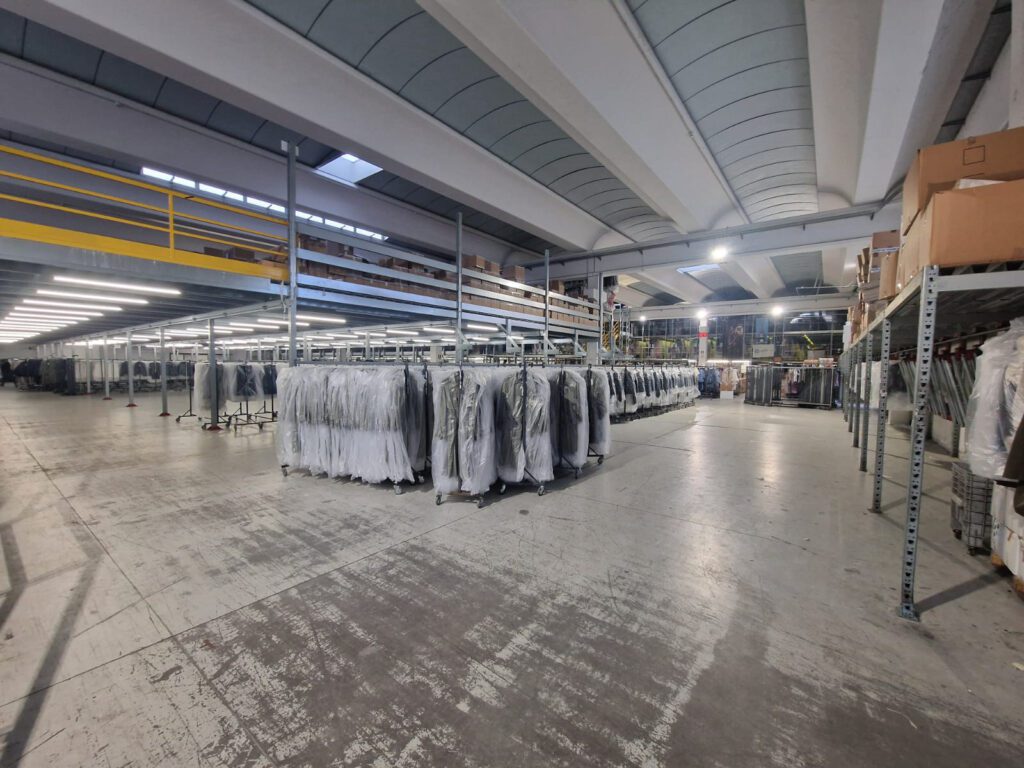
IRIS 2002 SRL, a specialist logistics provider serving the Italian luxury fashion industry, has enhanced fire safety across its warehousing operation using Hochiki’s Latitude fire control panels networked with Hochiki ESP intelligent (addressable) fire detection and alarm devices, helping protect people, high value inventory and continuity in a demanding, high throughput environment. The installation was delivered by Hochiki Italia’s distributor DSA Technology SRL, working with authorised installation specialists EM Sistemi Di Sicurezza, to design a tailored solution for a complex site that includes a dedicated hanging garment section with an overhead trolley system and loading platform. A large, open plan warehouse challenge With operations spanning a three floor, 6,600 sqm garment warehouse and a wider 9,000 sqm facility, IRIS 2002 required a comprehensive system that could maintain protection without disrupting critical logistics activity. The open plan design also created a practical signalling challenge, as the absence of structural columns made traditional Visual Alarm Device placement impractical in parts of the warehouse. Flexible detection and clear audio-visual signalling To address the site’s detection and evacuation needs, the team specified Hochiki YBO-BSB2 base sounder beacons, mounted beneath ESP intelligent sensors to provide combined audible and visual warnings. The base sounder beacons offer 51 EN54 approved audio tones and a high intensity flash, supporting compliant signalling in environments with high background noise. The ESP addressable sensor range was selected for its suitability across large, mixed warehouse zones and for features designed to reduce unwanted alarms, including automatic drift compensation and variable sensitivity. At the heart of the solution, Hochiki Latitude fire control panels were installed across all three warehouses, with the entire system monitored from a single control station. With Latitude’s remote monitoring option, facilities and health and safety teams can access the system 24/7 and gain real time visibility of panel status and site conditions, supporting a more proactive approach to compliance, oversight and operational continuity. Simple installation, intuitive operation EM Sistemi Di Sicurezza highlighted the practical benefits of system flexibility during delivery: “The flexibility of Hochiki’s system made the design and installation process easy.” DSA Technology SRL also emphasised fast commissioning and end user usability: “Configuration and programming were extremely simple, reducing commissioning times. The user interface is clear and intuitive, ensuring immediate and safe management of the system for end operators.” A strong reference point for safer logistics facilities This installation is a practical example of how logistics warehouse environments can be kept safer using a joined up, addressable fire detection and alarm system, one that combines scalable control, robust detection, clear audio-visual notification and simple ongoing operation. For facilities managers balancing compliance, uptime and the realities of busy sites, it shows the value of selecting life safety technology that is engineered for real buildings, real constraints and real working conditions.    

Hochiki systems protect luxury fashion logistics operation Read More »

Lockheed EMBERPOINT venture-Firebuyer.com

US Corporations Launch New Venture to Tackle Wildfires

Lockheed Martin, PG&E Corporation, Salesforce and Wells Fargo have announced the launch of EMBERPOINT LLC, a new venture aimed at transforming the way catastrophic wildfires are prevented, detected and fought. The initiative brings together advanced technology, utility sector experience and financial backing to support firefighters and emergency responders facing increasingly severe wildfire conditions. Announced in Washington this week EMBERPOINT is described by the partners as a purpose-built company designed to integrate next-generation wildfire solutions into a single operational framework. The venture will focus on early detection, fire spread prevention and improved coordination during response and mitigation operations. Leveraging Digital Technology According to the founding partners, EMBERPOINT will leverage artificial intelligence, autonomous systems and integrated command and control technologies to support first responders in the field. By providing access to proven, state-of-the-art systems without the need for agencies or utilities to fund costly development programmes, the initiative aims to make advanced wildfire technology more widely accessible. Lockheed Martin will contribute its layered approach to wildfire prediction and detection, alongside military-grade autonomous response and suppression capabilities. These systems are intended to help firefighters rapidly identify ignition points and intervene at the earliest possible stage, when fires are most controllable. PG&E Corporation, through its subsidiary Pacific Gas and Electric Company, will bring operational experience in wildfire mitigation and risk management. The utility has deployed multiple layers of protection across diverse and high-risk environments, although any contributions from Pacific Gas and Electric Company remain subject to regulatory approval. Salesforce will provide the digital backbone of the venture, integrating multiple data streams into a unified, real-time response platform. Using Agentforce and Slack, the company aims to enable faster, cross-organisation coordination between utilities, emergency services and other stakeholders during wildfire incidents. Wells Fargo is supporting the initiative through a capital investment. Increasing Wildfire Threat The partners highlight the escalating wildfire threat as the driving force behind the collaboration. Wildfires are becoming larger, more intense and more frequent, causing billions of dollars in damage annually while placing growing financial pressure on communities, utilities and taxpayers. “As heroic firefighters put their lives on the line, further integrated technologies and data can help them respond faster and stay safer,” the companies said in a joint statement. Lockheed Martin Chairman, President and CEO Jim Taiclet said the scale of the problem demands a new approach. “It’s time to change the way we think about wildfires and bring the best of American technology and know-how to this growing threat to lives and property,” he said. “This new partnership brings four leading companies in the aerospace, electrical power, tech and financial industries together to address this national problem.” PG&E Corporation CEO Patti Poppe described EMBERPOINT as part of a longer-term effort to reduce wildfire risk. “Today’s announcement marks the next step in a broader, multi-phase effort to end catastrophic wildfires,” she said, adding that the company intends to pair on-the-ground experience with advanced technology while continuing to deliver safe and reliable energy. Salesforce Chief Corporate Development and Investments Officer John Somorjai said the company’s AI platforms could be applied to real-world emergency challenges. “We look forward to integrating our world-class AI capabilities with the specialised expertise of our partners to combat the escalating threat of wildfires,” he said. The EMBERPOINT team and technology stack will be developed over the coming months, with initial demonstrations planned for 2026.

US Corporations Launch New Venture to Tackle Wildfires Read More »

DTi Seal-Firebuyer

DTi Introduces FST Compliant Sealings for Rail Vehicles

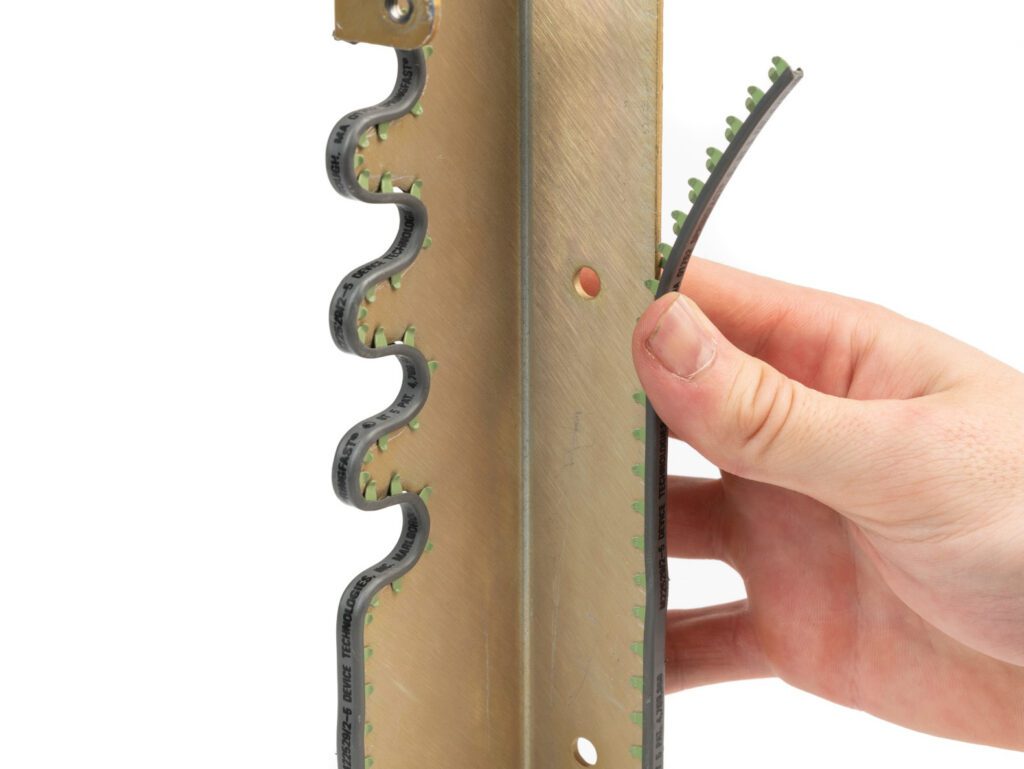
Rail operators and rolling stock manufacturers continue to face increasing regulatory and operational pressure to improve fire safety, system reliability and passenger comfort. Fire protection standards are tightening globally, while expectations around availability, maintenance efficiency and onboard experience continue to rise. DTi device technologies GmbH is addressing these challenges with its Seal-Fast silicone sealing systems and Spring-Fast SL-FST metal substrate grommet edging, designed specifically to meet international fire, smoke and toxicity (FST) requirements while improving installation efficiency and long-term reliability. Risks of PVC Conventional solutions such as PVC edge trims and adhesive-based nylon grommets are widely used across rail applications but present well-documented risks. PVC is not compliant with modern FST standards and can emit chlorine-based gases at elevated temperatures. Nylon grommets applied with adhesive are labour intensive to install, degrade over time and can contribute to increased toxic smoke loads during a fire event. DTi’s Seal-Fast silicone seals are engineered for use in doors, windows, equipment enclosures and exterior housings where protection from heat, smoke, fumes, dust and moisture is critical. Manufactured from high performance silicone and reinforced with steel or stainless steel wire, the seals provide strong edge retention, impact resistance and long service life under vibration and thermal cycling. The seals are compliant with major international standards including EN 45545-2, NFPA 130, UL94 V-0, UL 50E and relevant ASTM specifications, allowing OEMs to specify a single solution across multiple regions. Low compression set characteristics ensure the seals recover their original shape after repeated door cycles, maintaining smoke and fire integrity over the vehicle lifecycle. Complementing the sealing systems is DTi’s Spring-Fast SL-FST grommet edging, designed to protect wiring looms and cable runs from abrasion at sharp metal cut-outs. Wiring is a critical safety system in modern rail vehicles, carrying power and data to braking, HVAC, passenger information and entertainment systems. Damage to cable insulation can lead to system failures, electrical arcing or, in the worst case, fire initiation. Spring-Fast SL-FST uses a steel substrate for permanent edge retention and is encapsulated in a fully FST compliant thermoplastic. Unlike traditional grommets, it requires no adhesive and installs using finger pressure alone. DTi reports that this reduces installation time by at least 49 percent and delivers a 9.5 fold improvement in productivity compared with glued nylon alternatives. According to DTi, the product has recorded a zero failure rate over more than 30 years of service across rail, defence and industrial applications. The elimination of adhesives also removes a common source of long-term degradation and reduces the toxic contribution of bonded materials in fire scenarios. Global Rail Applications Seal-Fast silicone seals are already deployed across multiple international rail programmes, including locomotive engine compartments, door and window systems, power supply enclosures and exterior brake system housings in Europe, North America and Asia. “Metal reinforcement, FST compliance and silicone material performance are the three fundamentals for safe long-term sealing in rail applications,” says Nick Petri, Managing Director of DTi device technologies. “When any one of those is missing, reliability and fire performance are compromised.” As regulators and operators place greater emphasis on fire safety engineering and lifecycle risk reduction, components such as sealing gaskets and grommet edging are receiving increased scrutiny. DTi’s Seal-Fast and Spring-Fast SL-FST systems offer rail OEMs a route to improved compliance, reduced installation cost and enhanced operational resilience, while supporting safer passenger environments across global rail networks.

DTi Introduces FST Compliant Sealings for Rail Vehicles Read More »

Scroll to Top