Staging Site!

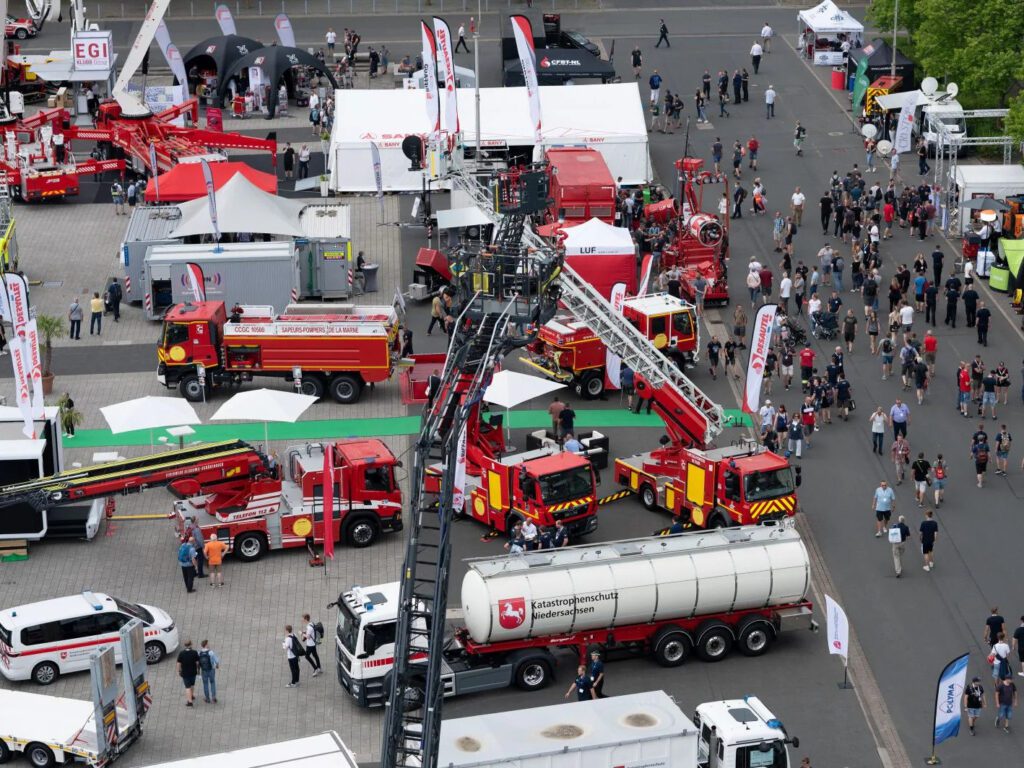
Interschutz showground-Firebuyer.com

Interschutz Presents the Firefighting World of Tomorrow

Fire services worldwide are facing increasingly complex threat scenarios, from extreme climate events to hybrid risks and digital vulnerabilities. Against this backdrop, Interschutz 2026 will return to Hanover from 1 to 6 June, positioning itself as a global showcase for the next generation of firefighting, rescue and civil protection technology. Recognised as the world’s leading trade fair for the sector, Interschutz will present advances across vehicles, equipment, digital systems and operational concepts. Exhibits will span the halls and outdoor demonstration areas, supported by a comprehensive conference programme. The focus is clear: integrating hardware and software to meet rising operational demands through connectivity and digitalisation. Researchers and manufacturers are increasingly working in partnership to align technological innovation with real-world requirements. Digital tools, data-driven systems and artificial intelligence are becoming embedded in frontline operations, fleet management and training. Interschutz 2026 aims to demonstrate how these developments are reshaping both preventive and defensive fire protection. “Digital technology and AI are just two of the keywords that will significantly shape Interschutz,” says Thilo Horstmann, Head of Interschutz at Deutsche Messe. “Manufacturers will present genuine innovations and the best solutions for fire and disaster protection. Interschutz is and will remain the international world-leading trade fair for the sector.” Global Platform for Technology The core focus area of firefighting will once again encompass preventive and defensive fire protection. Leading manufacturers will present vehicles and systems designed to address evolving operational risks. Rosenbauer, regarded as a global leader in defensive fire and disaster protection technology, returns as a key exhibitor. The Ziegler Group will showcase its portfolio of firefighting vehicles and equipment, covering fire suppression, emergency response and rescue management. Magirus, known for its aerial ladder platforms, is also preparing a significant presence for 2026. BMW will exhibit vehicles and motorcycles configured for use by police, fire services, emergency physicians and rescue organisations. Beyond apparatus and vehicles, Interschutz will highlight firefighting technology, extinguishing agents, fire station and workshop design, and concepts for education and training. Associations, professional organisations and specialist service providers will also present their capabilities. International engagement remains a defining feature of the event. High-level firefighting delegations have registered from Germany and overseas, including Singapore, Taiwan, several South American countries, Sweden and Denmark. Some of the longest journeys will be made by representatives from Australia and New Zealand. Alongside product launches, live demonstrations, lectures and competitions, Interschutz continues to function as a global networking forum, facilitating knowledge transfer and cross-border cooperation. Protective Equipment and Integrated Solutions Personal protection and life-saving technologies will form another major strand of the exhibition. Dräger, operating under the motto “Technology for Life”, will present advanced firefighting equipment, including respiratory protection and personal protective equipment designed to minimise health risks in hazardous environments. The company’s systems are widely deployed internationally. S-Gard will exhibit protective clothing engineered to withstand extreme heat, moisture and exposure to toxic substances, reflecting growing awareness of occupational health risks in fire and rescue operations. Türkiye is expected to be strongly represented among exhibitors. Volkan will showcase technologically advanced emergency vehicles and specialist components for fire and rescue services. From France, family-owned Groupe DESAUTEL will present its holistic approach to fire protection, spanning prevention, equipment supply and operational readiness. From the United Arab Emirates, NAFFCO will underline its role as a global manufacturer and solution provider in firefighting, fire protection and safety technology. The company positions itself as a comprehensive provider, delivering vehicles, protection systems, services and technical expertise for civil security and civil protection. FEU Leadership Conference to Debut A significant addition to the 2026 programme is the inaugural FEU Leadership Conference, organised by the Federation of European Fire Officers. Taking place on 3 and 4 June during Interschutz, the conference is expected to attract more than 300 senior leaders from fire and civil protection agencies across Europe and partner countries. Held under the shared theme ‘Safeguarding Tomorrow’, the conference aims to establish a strategic European platform for those shaping the future of fire and civil protection services. The agenda reflects mounting pressures on emergency services, including geopolitical instability, hybrid threats, digital vulnerabilities, extreme weather events and rising public expectations. Senior representatives from the European Commission, NATO, national fire and civil protection authorities, and international fire service leaders from the United States, Australia, Singapore and other countries are scheduled to participate. The discussions will focus on how European emergency services must adapt to remain operationally capable, resilient and strategically aligned in an increasingly disruptive environment. Further information and ticket details are available via the Interschutz website. As fire services confront a rapidly shifting risk landscape, Interschutz 2026 will serve not only as a technology showcase but as a strategic forum for defining the firefighting world of tomorrow.

Interschutz Presents the Firefighting World of Tomorrow Read More »
Flir - International Fire Buyer

Ask the expert – Flir

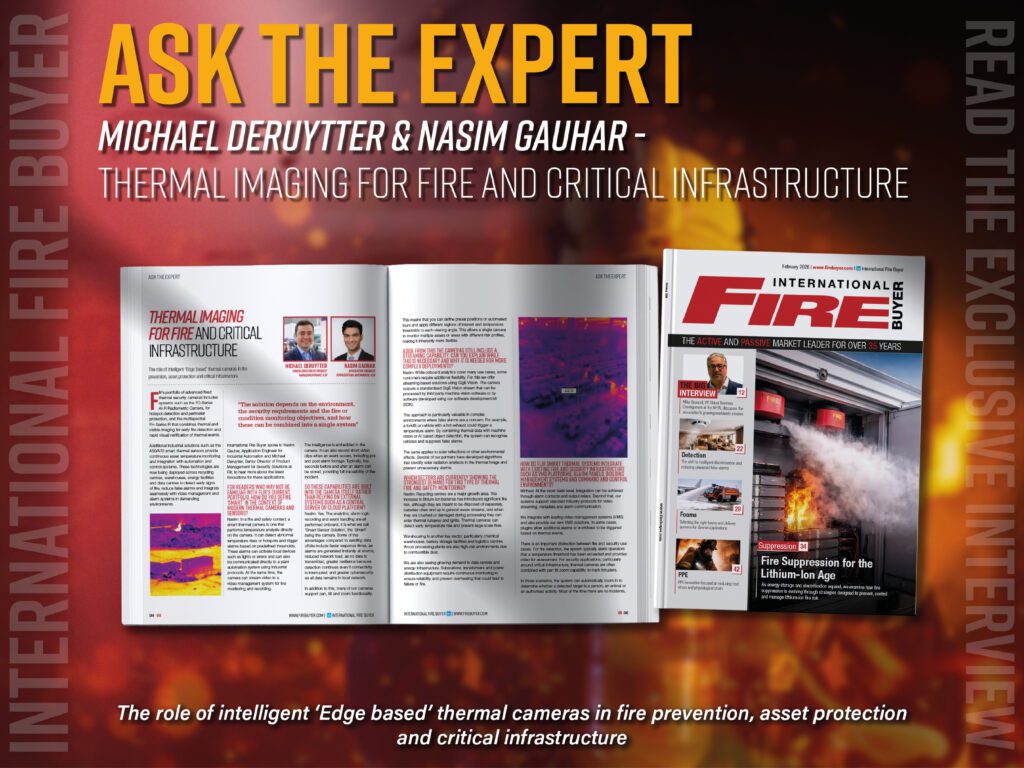
Nasim Gauhar, Application Engineer for Industrial Automation and Michael Deruytter, Senior Director of Product Management for Security Solutions at Flir, discuss the role of intelligent ‘Edge based’ thermal cameras in fire prevention, asset protection and critical infrastructure.  Flir’s portfolio of advanced fixed thermal security cameras includes systems such as the FC-Series AI-R Radiometric Camera, for hotspot detection and perimeter protection, and the multispectral FH-Series R that combines thermal and visible imaging for early fire detection and rapid visual verification of thermal events. Additional industrial solutions such as the A50/A70 smart thermal sensors provide continuous asset temperature monitoring and integration with automation and control systems. These technologies are now being deployed across recycling centres, warehouses, energy facilities and data centres to detect early signs of fire, reduce false alarms and integrate seamlessly with video management and alarm systems in demanding environments. For readers who may not be familiar with Flir’s current portfolio, how do you define ‘smart’ in the context of modern thermal cameras and sensors? Nasim: In a fire and safety context, a smart thermal camera is one that performs temperature analysis directly on the camera. It can detect abnormal temperature rises or hotspots and trigger alarms based on predefined thresholds. These alarms can activate local devices such as lights or sirens and can also be communicated directly to a plant automation system using industrial protocols. At the same time, the camera can stream video to a video management system for live monitoring and recording. The intelligence is embedded in the camera. It can also record short video clips when an event occurs, including pre and post alarm footage. Typically, five seconds before and after an alarm can be stored, providing full traceability of the incident. So these capabilities are built into the camera itself rather than relying on external systems such as a central server or cloud platform? Nasim: Yes. The analytics, alarm logic, recording and event handling are all performed onboard. It is what we call ‘Smart Sensor Solution’ – the ‘Smart’ being the camera. Some of the advantages compared to sending data offsite include faster response times, as alarms are generated instantly at source, reduced network load, as no data is transmitted, greater resilience because detection continues even if connectivity is interrupted, and greater cybersecurity as all data remains in local network. In addition to this, many of our cameras support pan, tilt and zoom functionality. This means that you can define preset positions or automated tours and apply different regions of interest and temperature thresholds to each viewing angle. This allows a single camera to monitor multiple assets or areas with different risk profiles, making it inherently more flexible. TO READ THE FULL ARTICLE READ THE LATEST ISSUE HERE.

Ask the expert – Flir Read More »

Anthony D. Parfitt, Chairman & Founder of Ci Global - International Fire Buyer

Award Spotlight – Ci Global

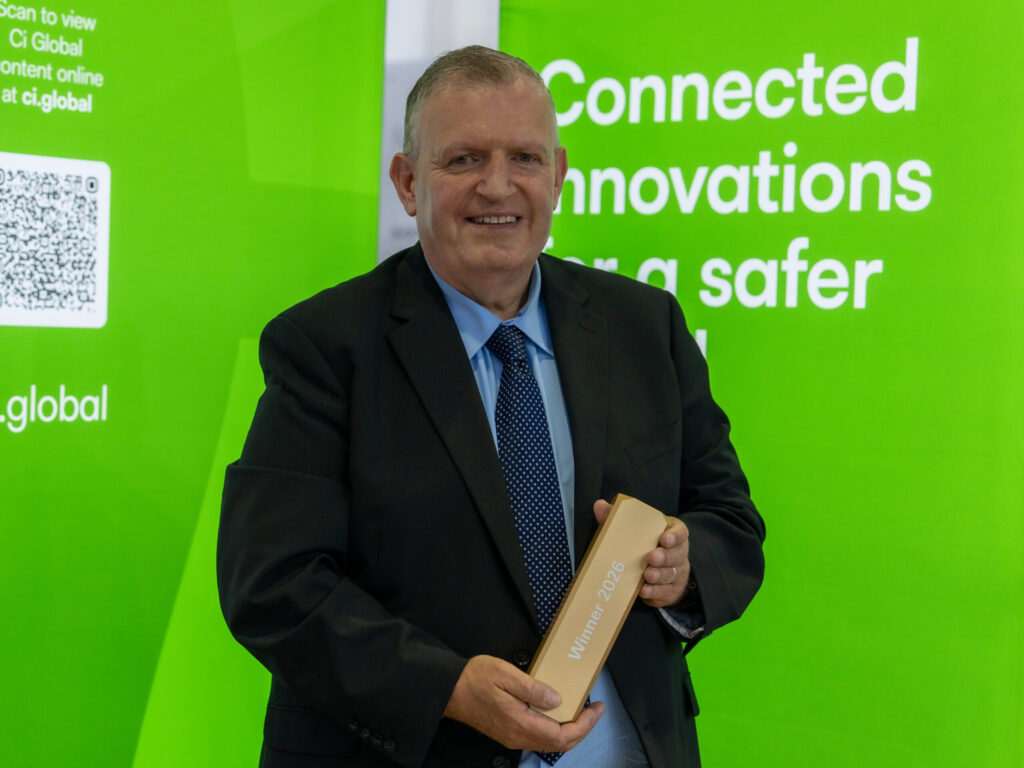
Anthony D. Parfitt, Chairman & Founder of Ci Global, explains how Intersec’s Best Passive Fire Safety Product award reflects a move from fire response to electrical fire prevention. For decades, passive fire safety has meant static, built-in protection – systems and materials that sit quietly in the background, requiring no power, activation, or human intervention. Their purpose has not been to prevent fire from occurring, but to resist it once ignition has taken place – slowing spread, preserving structural integrity, and buying time for evacuation and response. In practice, fire safety strategy has therefore focused on managing consequences rather than eliminating causes. Containment, evacuation, alarm, and suppression systems assume that risk cannot be removed entirely, and that safety begins only once smoke, heat, or flame is present. Prevention, where it exists, has largely been understood as good practice: correct installation, compliance with standards, and ongoing maintenance. That mindset has shaped the way buildings are designed and protected for generations. The approach behind the award-winning system, Ci Safe, starts with a simple observation: a significant proportion of electrical fires originate locally – at sockets, plugs, and connection points where electricity is actively being used. Ci Safe is an intelligent fire and building safety system that continuously monitors electrical behaviour at those points of use. When abnormal conditions emerge – such as excessive heat build-up or unsafe electrical patterns – power is automatically removed before ignition can occur. The system operates autonomously, without relying on human intervention, turning the socket itself into an active safety device rather than a passive termination point. The Best Passive Fire Safety Product award at Intersec this year recognised a rethinking of a long-standing model. Not a rejection of traditional passive fire safety, but an extension of it – and the possibility that, for certain categories of fire risk, particularly electrical fires, safety no longer has to begin at the point of ignition. The contradiction inside modern buildings That shift matters because the buildings we are trying to protect have changed. Today’s buildings are electrically dense, digitally connected environments. Power flows continuously through sockets, devices, chargers, appliances, data infrastructure, and integrated building systems. Loads fluctuate constantly. Usage patterns evolve. Electrical systems are pushed harder, for longer, than at any time in the past. Yet one of the most critical layers of protection remains rooted in a model developed for a far simpler, less electrically intensive era. Much of fire safety strategy is still structured around a reactive sequence: wait for a fault to escalate, detect smoke or heat, trigger alarms, and respond. By the time those systems activate, energy has already been released in an uncontrolled way. At that point, prevention has given way to mitigation. This creates a fundamental mismatch. Buildings are dynamic and increasingly complex, but protection against one of their most common sources of fire risk is still designed to intervene only once visible danger has emerged. What the Intersec judges recognised is that this no longer has to be the case. Advances in sensing, autonomous decision-making, and edge-level control now make it possible to identify abnormal electrical behaviour where it most often begins – at the point of use – and to intervene before heat, smoke, or flame are present. TO READ THE FULL ARTICLE READ THE LATEST ISSUE HERE.

Award Spotlight – Ci Global Read More »

Product spotlight - Hochiki

Product spotlight – Hochiki

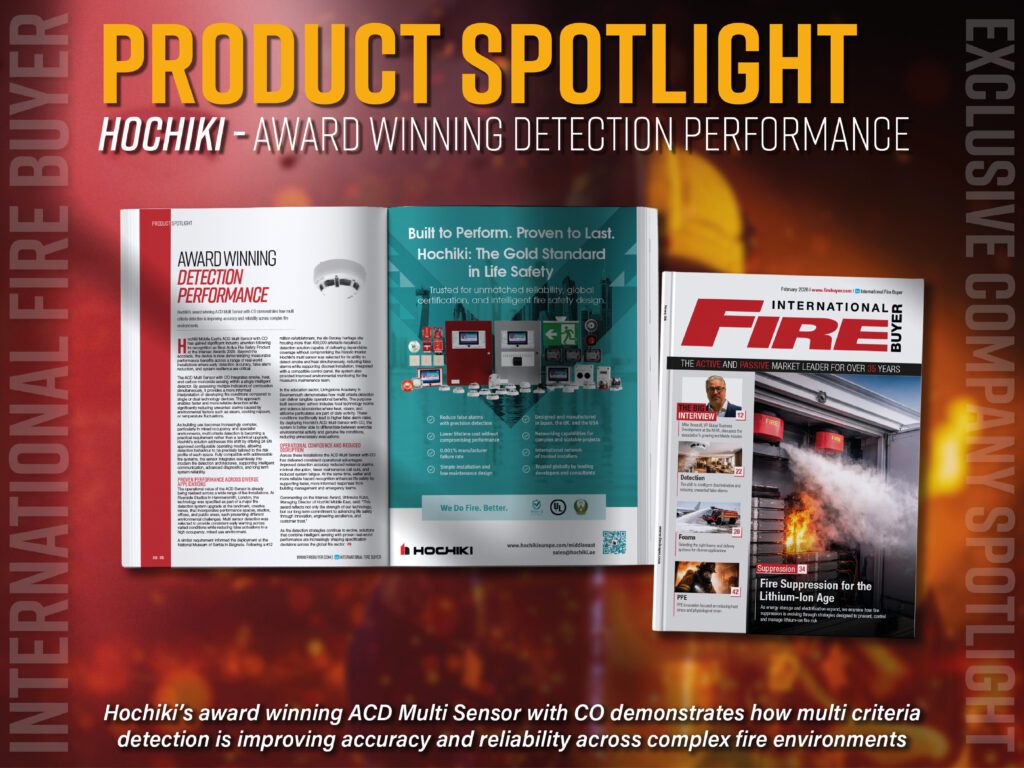
Hochiki’s award winning ACD Multi Sensor with CO demonstrates how multi criteria detection is improving accuracy and reliability across complex fire environments. Hochiki Middle East’s ACD Multi Sensor with CO has gained significant industry attention following its recognition as Best Active Fire Safety Product at the Intersec Awards 2026. Beyond the accolade, the device is now demonstrating measurable performance benefits across a range of real-world installations where early detection accuracy, false alarm reduction, and system resilience are critical. The ACD Multi Sensor with CO integrates smoke, heat, and carbon monoxide sensing within a single intelligent detector. By assessing multiple indicators of combustion simultaneously, it provides a more informed interpretation of developing fire conditions compared to single or dual technology devices. This approach enables faster and more reliable detection while significantly reducing unwanted alarms caused by environmental factors such as steam, cooking vapours, or temperature fluctuations. As building use becomes increasingly complex, particularly in mixed occupancy and specialist environments, multi criteria detection is becoming a practical requirement rather than a technical upgrade. Hochiki’s solution addresses this shift by offering 24 EN approved configurable operating modes, allowing detection behaviour to be precisely tailored to the risk profile of each space. Fully compatible with addressable fire systems, the sensor integrates seamlessly into modern fire detection architectures, supporting intelligent communication, advanced diagnostics, and long term system reliability. Proven Performance Across Diverse Applications The operational value of the ACD Sensor is already being realised across a wide range of live installations. At Riverside Studios in Hammersmith, London, the technology was specified as part of a major fire detection system upgrade at the landmark, creative venue, that incorporates performance spaces, studios, offices, and public areas, each presenting different environmental challenges. Multi sensor detection was selected to provide consistent early warning across varied conditions while reducing false activations in a high occupancy, mixed use environment. A similar requirement informed the deployment at the National Museum of Serbia in Belgrade. Following a €12 million refurbishment, the six-0storey heritage site housing more than 400,000 artefacts required a detection solution capable of delivering dependable coverage without compromising the historic interior. Hochiki’s multi sensor was selected for its ability to detect smoke and heat simultaneously, reducing false alarms while supporting discreet installation. Integrated with a compatible control panel, the system also provided improved environmental monitoring for the museum’s maintenance team. In the education sector, Livingstone Academy in Bournemouth demonstrates how multi criteria detection can deliver tangible operational benefits. The purpose-built secondary school includes food technology rooms and science laboratories where heat, steam, and airborne particulates are part of daily activity. These conditions traditionally lead to higher false alarm rates. By deploying Hochiki’s ACD Multi Sensor with CO, the system is better able to differentiate between everyday environmental activity and genuine fire conditions, reducing unnecessary evacuations. TO READ THE FULL ARTICLE READ THE LATEST ISSUE HERE.

Product spotlight – Hochiki Read More »

Product spotlight - Advanced - International Fire Buyer

Product Spotlight – Advanced

Advanced’s Axis AX delivers UL listed, scalable fire protection, combining networked architecture, voice evacuation, and smoke control for complex buildings. Advanced continues to build momentum across the North American fire market with a UL listed portfolio engineered to meet the operational and regulatory demands of modern buildings. Central to this offering is the Axis AX fire protection system, a platform already trusted across high rise developments, public infrastructure, commercial estates, and complex multi building sites requiring scalable, networked life safety solutions. Fully UL 864 10th Edition listed, Axis AX has been designed to deliver reliability and flexibility across a wide range of applications. Its distributed network architecture supports connections of up to 200 panels, enabling decentralised control while maintaining a single, system wide view. This approach reduces cabling, simplifies installation, and lowers overall project cost, particularly on large or phased developments. The system adapts easily to site specific requirements, whether that involves voice evacuation, HVAC integration, or advanced command centre functionality. A Robust Solution for the Real-World For small to mid-sized installations, Axis AX offers a clean and robust solution with straightforward configuration and intuitive programming. Installers consistently highlight the ease of use of the software environment, with many technicians becoming proficient within minutes. This simplicity does not come at the expense of performance. The platform is fully compliant with regional codes and has demonstrated reliability across demanding real-world environments, from dense urban high rises in New York to complex hospitality and commercial sites in Las Vegas. On larger or highly engineered projects, Axis AX supports fully customised command centres incorporating fire fighter telephones, annunciation, audio modules, and advanced system graphics. A key differentiator is DynamixSmoke, Advanced’s intelligent smoke and damper control solution. DynamixSmoke allows complex smoke management and HVAC strategies to be programmed directly within the fire system, removing the need for separate, standalone control panels. This integrated approach improves response times, reduces wiring and points of failure, simplifies maintenance, and enhances overall system integrity. Synchronized Vocal Clarity in Complex Environments Voice evacuation is an increasingly critical component of life safety strategies across North America, particularly in high occupancy and mixed use buildings. Advanced addresses this requirement through its PerfectSync technology, which ensures fully synchronised audio delivery across networked amplifiers. This maintains clarity and intelligibility throughout the site, even on large and acoustically challenging installations. Combined with integrated fire fighter telephones, flexible switch card routing, and intelligent amplifier management, Axis AX provides a unified life safety communication platform rather than a collection of disconnected subsystems. Advanced’s continued investment in the region is reinforced through its exclusive partnership with Harding, providing US and Canadian customers with local distribution, technical expertise, and responsive support. Together, the companies are addressing emerging market needs including cloud-based monitoring, deeper BMS integration, and more sustainable system design, areas already reflected within Advanced’s wider research and development roadmap. With its combination of scalability, compliance, and practical engineering, Axis AX is positioned as a strong choice for projects that demand dependable fire protection without unnecessary complexity. TO READ THE FULL ARTICLE READ THE LATEST ISSUE HERE.

Product Spotlight – Advanced Read More »

Product Spotlight - TLX Fire & Security International Fire Buyer

Product Spotlight: TLX Fire & Security

TLX Fire & Security has launched a supervised solenoid valve supporting high pressure fire suppression systems while simplifying compliance and installation. TLX Fire & Security has expanded its fire suppression portfolio with the launch of a Supervised Direct-Acting Solenoid Valve, developed to meet the demands of modern, high pressure suppression systems. Recognised as a UL 429 and UL 429A component, the valve is rated for operating pressures of up to 150 bar and is intended for use across clean agent, inert gas, CO2 and hybrid fire suppression systems that rely on valve integrated actuation. Integrated supervision and regulatory compliance The new solenoid valve has been engineered with system supervision at its core. It incorporates the same integrated supervisory technology found in TLX’s established range of linear electric actuators for fire suppression. As a result, it complies with the supervision requirements of NFPA 2001 Section 4.3.4.1 and EN 15004-1, providing continuous monitoring of the actuation device without the need for external components. A key differentiator is the patented integration of the supervisory function directly into the removable coil assembly. By eliminating the requirement for an additional supervisory switch or module, TLX has removed extra wiring and connection points that can complicate installation and introduce potential failure modes. Activation and supervision are both handled through factory installed wiring using a standard six wire configuration, simplifying system design and supporting consistent installation practices across different suppression platforms. The valve assembly consists of two main elements: a removable coil assembly and a threaded valve body. The coil housing is manufactured from electroless nickel plated carbon steel, offering corrosion resistance and durability in demanding environments. The valve body itself can be supplied in either brass or stainless steel, allowing system designers to select materials that best suit the agent type, pressure rating and environmental conditions of the application. Configurable design for multiple suppression applications Flexibility is further enhanced through two distinct configuration options. For valve integrated actuation systems, the solenoid valve includes a normally closed release valve and is available with either 1/8 inch or 1/4 inch NPT threads. Where selector valve functionality is required, the standard valve body can be replaced with a threaded collar that is fully customisable to interface correctly with the system’s selector valve design. This adaptability supports a wide range of system architectures without the need for bespoke actuation solutions. Installation focused mechanical features Installation and maintenance considerations have clearly informed the mechanical design. The coil assembly is able to rotate freely on the valve body, allowing independent orientation of the wiring and discharge tubing. This reduces installation constraints and helps installers achieve clean, compliant routing in confined or complex system layouts. In addition, the coil assembly incorporates a captured fastener. This prevents the fastener from being misplaced during routine testing or maintenance and ensures correct seating of the coil on the valve body, providing clear confirmation that the assembly has been properly installed. The Supervised Direct-Acting Solenoid Valve represents the latest addition to TLX Fire & Security’s fire suppression product line. Beyond the component itself, TLX positions the valve as part of a wider engineering support offering. System manufacturers can leverage TLX’s technical expertise to support compliance and certification processes, including UL, FM, CE, LPCB and VdS listings. For manufacturers seeking a supervised, high pressure actuation solution that aligns with current regulatory standards while simplifying system design, this new solenoid valve provides a practical and technically robust option.

Product Spotlight: TLX Fire & Security Read More »

Cover story - Fire Suppression for the Lithium-Ion Age - International Fire Buyer

Cover story – Fire Suppression for the Lithium-Ion Age

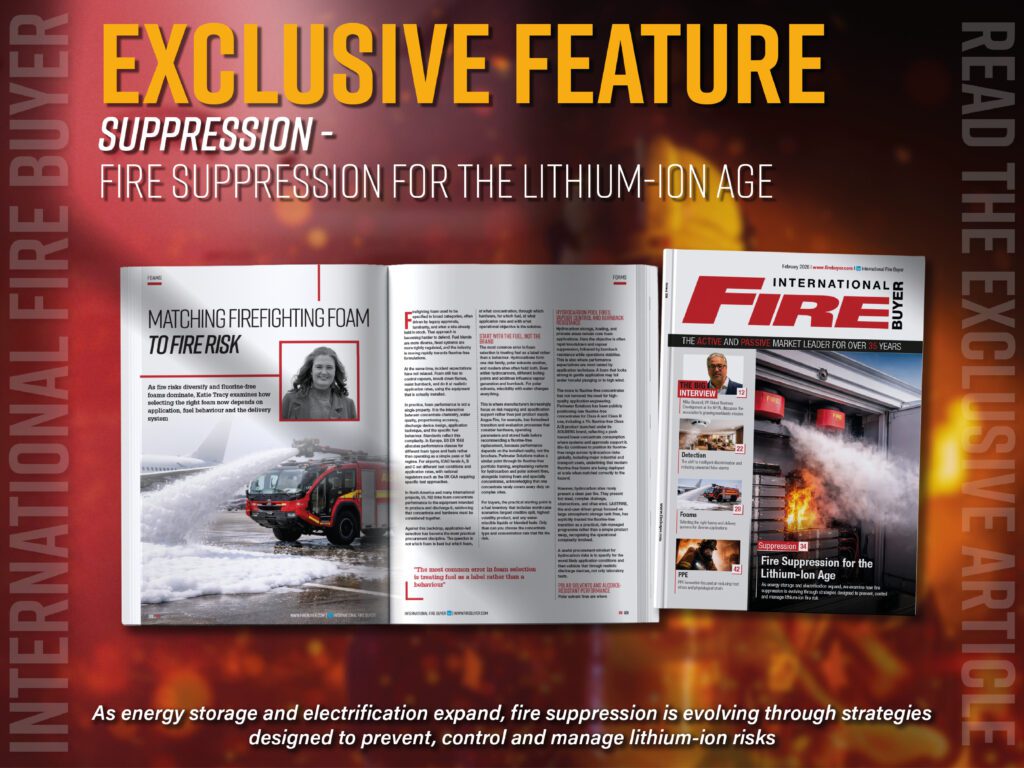
As energy storage and electrification expand, fire suppression is evolving through strategies designed to prevent, control and manage lithium-ion risks. Lithium-ion batteries have shifted fire risk from a relatively familiar problem, surface flames and fuel load, to a more complex failure mode that can be self sustaining, fast escalating and difficult to extinguish. As battery energy storage systems (BESS) expand to support renewables, and as electrification moves into transport, ports, logistics and heavy equipment, suppression is being forced to evolve. Those in the industry are increasingly asking a blunt question: what actually works, in the real world, when a cell fails and thermal runaway starts? The honest answer is that there is no single universal ‘best’ suppression method. Battery incidents are multi-phase events that can include off-gassing, jet flames, heat release, re-ignition, toxic by-products and, in some configurations, explosion risk. Strategy is now layered. Prevention and early intervention sit alongside containment, cooling, controlled burn-down, and post-event management. Suppression selection, therefore, is becoming about objectives as much as equipment. Why Lithium-Ion Changes the Suppression Problem A lithium-ion battery fire is not simply a conventional Class A or Class B event relocated into a container. Thermal runaway can propagate cell-to-cell and module-to-module. Even where flames are knocked down, residual heat and ongoing chemical reactions can drive re-ignition. Industry guidance continues to stress the scale of water demand often required to control large arrays and the need to think in terms of control and containment rather than instant extinguishment. This is the context in which innovation is happening. Some technologies aim to stop fire growth in an enclosure and buy time. Others focus on interrupting flame chemistry, reducing heat release and limiting propagation. Others are designed to deliver sustained cooling or to support incident management with reliable water supply, proportioning and application hardware. Moving From Suppression to Prevention A noticeable trend is the growth of systems designed to act before thermal runaway becomes a full fire. Johnson Controls has formalised this approach with its Lithium-Ion Risk Prevention System, which is designed to continuously monitor batteries for off-gases associated with early cell malfunction, prior to thermal runaway. This matters because it reshapes what ‘suppression’ means in a BESS context. If the system can provide credible early warning and automated mitigation actions, such as shutdown and ventilation control, then fixed suppression can be tasked more realistically with controlling an incipient fire rather than being expected to stop a fully developed runaway event. For International Fire Buyer readers, the procurement implication is clear. When evaluating suppression for BESS, ask whether the solution starts at prevention, moves through early intervention, and ends with a defensible plan for containment and cooling. Buyers who only compare extinguishing agents risk missing the bigger risk management architecture. Condensed Aerosol as an Enclosure-Focused Tool Condensed aerosol suppression has gained visibility in battery storage because it can be deployed inside enclosures and containers without large cylinders, complex pipework or significant space penalty. FirePro positions its condensed aerosol technology as proven through extensive testing for suppressing lithium-ion battery fires and limiting propagation to adjacent packs, with applications explicitly including energy storage systems. FirePro also explains the suppression mechanism as interrupting chemical chain reactions in the flame rather than relying on oxygen depletion. TO READ THE FULL ARTICLE READ THE LATEST ISSUE HERE.

Cover story – Fire Suppression for the Lithium-Ion Age Read More »

Innovator Gary Walsh - International Fire Buyer

Innovator – Gary Walsh

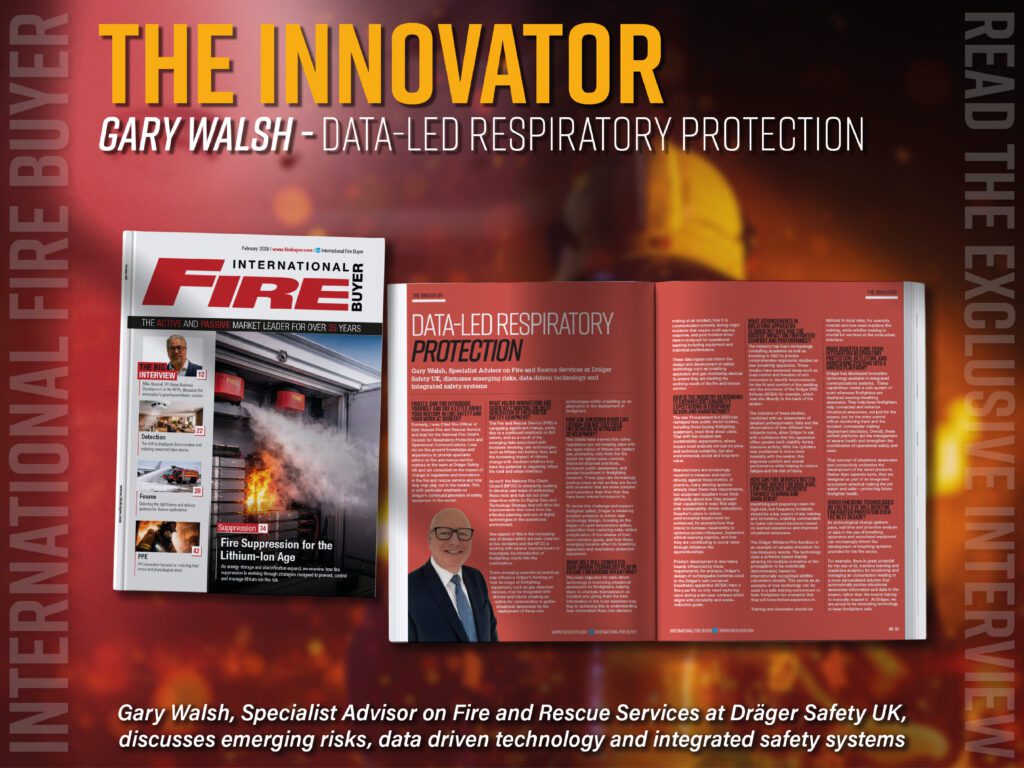
Gary Walsh, Specialist Advisor on Fire and Rescue Services at Dräger Safety UK, discusses how emerging risks, data driven technology and integrated safety systems are shaping the next generation of firefighter protection. Firstly, can you introduce yourself and say a little about your history in fire safety and your work at Dräger? Formerly, I was Chief Fire Officer of East Sussex Fire and Rescue Service and lead for the National Fire Chief’s Council for Respiratory Protection and Operational Communications. I use my on-the-ground knowledge and experience to provide specialist advice on fire and rescue service matters to the team at Dräger Safety UK and am consulted on the impact of change in regulation and innovations in the fire and rescue service and how they may play out in the market. This is with particular emphasis on Dräger’s continued provision of safety equipment to the sector. What major innovations are currently shaping the next generation of firefighter safety equipment? The Fire and Rescue Service (FRS) is navigating significant change, partly due to a continued emphasis on fire reform, and as a result of the emerging risks associated with incidents involving new technologies such as lithium-ion battery fires, and the increasing impact of climate change with resultant wildfires that have the potential to negatively affect the rural and urban interface. As such the National Fire Chiefs Council (NFCC) is constantly seeking to develop new ways of addressing these risks and has set out clear objectives within its Digital Data and Technology Strategy that will drive the improvements that come from the effective planning and use of digital technologies in the operational environment. One aspect of this is the increasing use of drones which are now common at live incidents and the NFCC is working with several manufacturers to investigate the introduction of firefighting robots into the marketplace. These emerging operational practices may influence Dräger’s thinking on how its range of firefighting equipment, such as gas detection devices, may be integrated with drones and robots creating an option for commanders to gather situational awareness by the deployment of these new technologies within a building as an alternative to the deployment of firefighters. How are emerging risks like lithium-ion battery fires influencing new product development? Fire Chiefs have warned that safety regulations are not keeping pace with the rapid rollout of lithium-ion battery use, prompting calls from the fire sector for tighter sales controls, improved disposal practices, increased public awareness, and greater investment in firefighting research. These gaps are increasingly putting crews at risk as they are faced with scenarios that are more complex and hazardous than fires that they have been trained to respond to. To tackle this challenge and support firefighter safety, Dräger is reviewing incident evidence to inform new technology design, focusing on the impact of rapid temperature spikes, projectiles from rupturing cells, added complication of the release of toxic and corrosive gases, and how these emerging hazards affect its breathing apparatus and respiratory protection equipment. TO READ THE FULL ARTICLE READ THE LATEST ISSUE HERE.

Innovator – Gary Walsh Read More »

ASFP expands to Australia and New Zealand - Firebuyer.com

ASFP expands to Australia and New Zealand

The Association for Specialist Fire Protection (ASFP) is expanding its operations to Australia and New Zealand. Coventry-based ASFP have signed an agreement to set up branches in Australia and New Zealand. The new branches will follow the operational model of the ASFP in Great Britain and Ireland. Expansion These will be managed by Paul Ryan, who was the Director of Ryanfire Products and Vice President of the Fire Protection Association New Zealand. Mr Ryan said: “Having spent most of my career in the passive fire protection profession in Britain, the Middle East and finally New Zealand, I know how important passive fire protection is to the overall design and construction application. “If it’s not designed right, it won’t be procured and installed correctly. It has taken a lot of commitment, time and effort to reach this agreement, with a few wobbly moments along the way, but we all wanted the right thing to happen in the right way for the greater good. “It’s going to be exciting times evolving the ASFP in new markets, but I know I have the full backing and support from the team in Britain. This is a great moment for passive fire in New Zealand and Australia, with design, construction, and occupant safety the ultimate winners.” Monumental Moment The setting up of the branches will also improve the complex area of the design and construction chain for all wider stakeholders, from principal designers and contractors to engineers, products, testing and certification, installation and post occupation trades and service providers of remedial and retrospective work, and finally those signing off completed buildings and works. In addition to the technical elements, the new branches will offer comprehensive training courses, both online and later face-to-face. Mike Ward, Managing Director of the ASFP, said: “This is a monumental moment for the global passive fire protection community. “Many designers, engineers, principal contractors, testing and certification members, and product manufacturers operate outside of Britain and Ireland.” Passive Fire Community “By creating a global passive fire community, it supports those members as well as new members who may use those products and services, or have their own. “It closes the circle of the relationship and creates continuity in the language of best practice. We hope to set up additional ASFP branches in other parts of the world, and we truly believe this is just the start. “Beyond this, we are looking at how ASFP can engage and collaborate with our passive fire peers around the world. We may have different standards and code, but best practice is a universal language.”

ASFP expands to Australia and New Zealand Read More »

Hochiki and Render Alarms at Willis Aviation Services Ltd - firebuyer.com

Hochiki Europe and Render Alarms team up for aviation safety

A fire detection system has been installed at an aviation base. Hochiki Europe’s ESP intelligent fire detection system will now be used at Willis Aviation Services Limited’s maintenance base at Teesside International Airport. Tailored System Two of the hangars, spanning 45,000 square metres, house offices and engineers working on highly valuable aircrafts with potentially flammable materials. Willis Aviation partnered with safety specialists Render Alarms in Middlesborough to design a fully tailored system built around Hochiki’s advanced intelligent detection technology. At the heart of the installation is Hochiki’s ESP intelligent fire detection system, offering open-protocol flexibility and future-proof performance aligned with the forthcoming BS 5839-1 2025 standard. Alarm Systems The system also includes adjustable smoke and heat detectors for the office space to provide highly reliable detection while helping to reduce unwanted alarms, an essential factor in maintaining operational continuity. In the workshop areas, wall-mounted sounder beacons deliver clear visual alerts in high-noise conditions, ensuring warnings are both seen and heard. Finally, the expansive and structurally complex hangar voids, Hochiki’s FIRElink aspirating detection system was specified, using laser-based technology to monitor large areas efficiently with enhanced sensitivity and reduced maintenance requirements. Luke Render, the lead engineer on the project, said: “Hochiki’s bases are a gamechanger, one base fit all devices. The sensors effortlessly twist-fit onto the bases, which significantly reduced the install and commission time, without compromising quality.”

Hochiki Europe and Render Alarms team up for aviation safety Read More »

Scroll to Top