
George Michael, International Business Development Manager for FirePro provides expert insight into the basic design considerations for condensed aerosol systems
In the forward-thinking landscape of fire suppression technologies, FirePro stands out with its advanced Condensed Aerosol Systems. Emerging prominently in the 1990s due to stringent environmental regulations, these systems have revolutionised fire safety with its approach to extinguishing fires. Unlike traditional methods that deplete oxygen, condensed aerosol systems disrupt the chemical reactions of fire at the molecular level, utilising a potassium carbonate-based agent.
This From the Expert delves into the critical aspects of system design, highlighting the importance of precise agent quantity calculations, the integrity of protected enclosures, and the specific application densities required for effectiveness. It underscores the system’s environmental benefits, its compliance with international standards, and its straightforward installation process. FirePro’s expertise in this domain not only enhances safety across various applications but also aligns with the global shift towards more sustainable fire suppression solutions. George Michael, International Business Development Manager for FirePro provides their knowledge and understanding of this subject matter and presents the technicalities around condensed aerosol systems.
Introduction
Condensed aerosol technology gained popularity in the 90’s due to the phase-out of Ozone-depleting substances – a result of the Montreal Protocol enforced on January 1, 1989. With almost three decades of worldwide use, the technology is regulated according to international standards and guidelines, such as the UL 2775, NFPA 2010, EN15276, ISO15779, VdS regulations, LPS 1656, LPS1204 Issue 3.2, BRLK23001, and IMO MSC.1 / Circ.1270 for Sea Going Vessels under SOLAS74.
Alike conventional gas suppression systems, Condensed Aerosol is classified as a Total Flooding agent. For system design and installation, the physical and technical parameters of the protected area, such as the class of fire, volume and height need to be taken into consideration. However, unlike its gas counterparts, the efficiency of fire suppression using condensed aerosol lies predominately in interrupting the chemical chain reactions occurring within the flame, rather than cooling or depleting the oxygen content in the protected enclosure.
Upon detection and confirmation of a fire, the solid aerosol forming compound contained within the generators, transforms from a solid state into a rapidly expanding two-phase fire suppression agent, consisting of potassium carbonate (K2CO3) – the active agent – as particulates of size smaller than 10 μm suspended in a gaseous blend. The gas-type 3D properties of condensed aerosol facilitate its even distribution in the protected volume, as well as its flow into the natural convection currents of combustion.
System Components
A fire suppression system consists of several components that work together to detect, extinguish and/or control fires. The fundamental elements include a detection system, responsible for identifying the presence of a fire, a control panel that orchestrates the system’s operation, and various alarm devices to alert occupants and other systems.
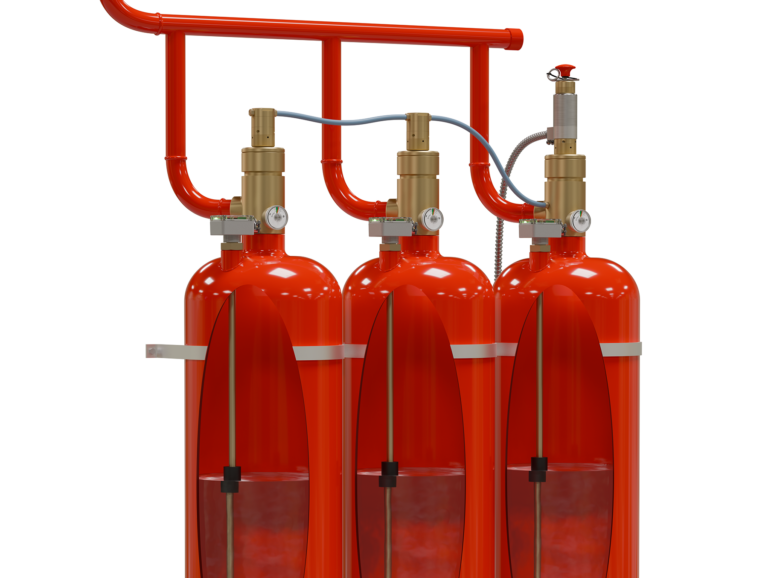
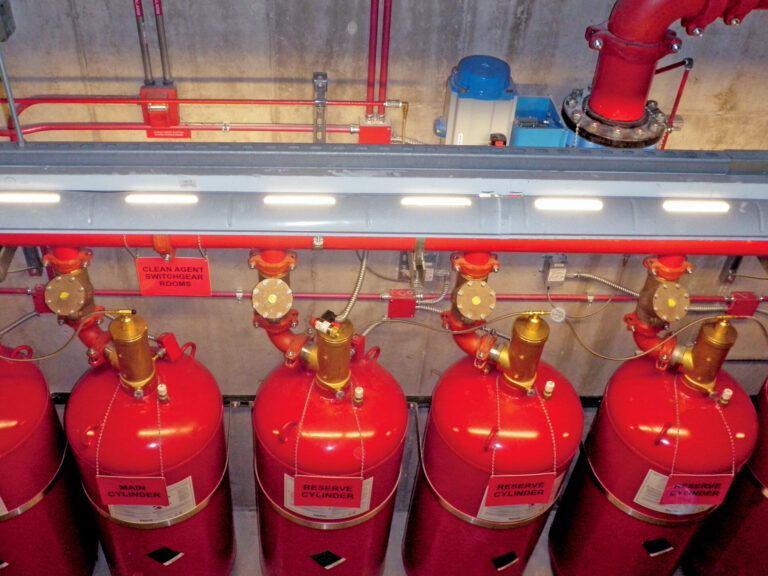
Expanding on the foundational elements of condensed aerosol fire suppression systems, the core components are the pre-engineered, non-pressurised generators. When activated, these generators release the designed amount of fire suppression agent in the enclosure. The Aerosol generators are an all-in-one device and are the equivalent of the agent/cylinder, piping and nozzles of conventional gaseous systems. The quantity and model of generators to be used are determined by the agent density required, which differs from one manufacturer to another and is derived from fire suppression tests. These tests are defined in protocols set out by relevant standards such as UL2775, EN15276 part 1 and ISO15779, conducted by accredited bodies and listing Authorities.
Design Principles for Total Flooding Systems:
Designing a condensed aerosol system is regulated by engineering standards which also address the way these systems are installed, commissioned and maintained. Such standards are EN15276 part 2, ISO15779 and NFPA 2010. For the system to be compliant to these standards, all components must be certified, approved or listed.
In the forward-thinking landscape of fire suppression technologies, FirePro stands out with its advanced Condensed Aerosol Systems. Emerging prominently in the 1990s due to stringent environmental regulations, these systems have revolutionised fire safety with its approach to extinguishing fires. Unlike traditional methods that deplete oxygen, condensed aerosol systems disrupt the chemical reactions of fire at the molecular level, utilising a potassium carbonate-based agent.
This From the Expert delves into the critical aspects of system design, highlighting the importance of precise agent quantity calculations, the integrity of protected enclosures, and the specific application densities required for effectiveness. It underscores the system’s environmental benefits, its compliance with international standards, and its straightforward installation process. FirePro’s expertise in this domain not only enhances safety across various applications but also aligns with the global shift towards more sustainable fire suppression solutions. George Michael, International Business Development Manager for FirePro provides their knowledge and understanding of this subject matter and presents the technicalities around condensed aerosol systems.
Introduction
Condensed aerosol technology gained popularity in the 90’s due to the phase-out of Ozone-depleting substances – a result of the Montreal Protocol enforced on January 1, 1989. With almost three decades of worldwide use, the technology is regulated according to international standards and guidelines, such as the UL 2775, NFPA 2010, EN15276, ISO15779, VdS regulations, LPS 1656, LPS1204 Issue 3.2, BRLK23001, and IMO MSC.1 / Circ.1270 for Sea Going Vessels under SOLAS74.
Alike conventional gas suppression systems, Condensed Aerosol is classified as a Total Flooding agent. For system design and installation, the physical and technical parameters of the protected area, such as the class of fire, volume and height need to be taken into consideration. However, unlike its gas counterparts, the efficiency of fire suppression using condensed aerosol lies predominately in interrupting the chemical chain reactions occurring within the flame, rather than cooling or depleting the oxygen content in the protected enclosure.
Upon detection and confirmation of a fire, the solid aerosol forming compound contained within the generators, transforms from a solid state into a rapidly expanding two-phase fire suppression agent, consisting of potassium carbonate (K2CO3) – the active agent – as particulates of size smaller than 10 μm suspended in a gaseous blend. The gas-type 3D properties of condensed aerosol facilitate its even distribution in the protected volume, as well as its flow into the natural convection currents of combustion.
System Components
A fire suppression system consists of several components that work together to detect, extinguish and/or control fires. The fundamental elements include a detection system, responsible for identifying the presence of a fire, a control panel that orchestrates the system’s operation, and various alarm devices to alert occupants and other systems.
Expanding on the foundational elements of condensed aerosol fire suppression systems, the core components are the pre-engineered, non-pressurised generators. When activated, these generators release the designed amount of fire suppression agent in the enclosure. The Aerosol generators are an all-in-one device and are the equivalent of the agent/cylinder, piping and nozzles of conventional gaseous systems. The quantity and model of generators to be used are determined by the agent density required, which differs from one manufacturer to another and is derived from fire suppression tests. These tests are defined in protocols set out by relevant standards such as UL2775, EN15276 part 1 and ISO15779, conducted by accredited bodies and listing Authorities.
Design Principles for Total Flooding Systems:
Designing a condensed aerosol system is regulated by engineering standards which also address the way these systems are installed, commissioned and maintained. Such standards are EN15276 part 2, ISO15779 and NFPA 2010. For the system to be compliant to these standards, all components must be certified, approved or listed.
To read more exclusive articles and latest news, see our last issue here.
Never miss a story… Follow us on:
International Fire Buyer
@Firebuyer
Fire Buyer
Media Contact
Rebecca Spayne Managing Editor, International Fire Buyer
Tel: +44 (0) 1622 823 920
Email: editor@firebuyer.com